
Loading model
About
A modern realistic submarine interior for building a boat of any length and fitting it out. The hull is modular: 2 m pressure hull ring sections on a 3.8 m outer diameter with internal frames, stringers, cable runs and bilge pipework, a cutaway variant with the shell above the centre line removed so a compartment can be seen into, 2 by 3 m deck plate sections plain, grated and with a hatch in them, and a watertight bulkhead with a dogged oval door that stands across a ring joint. Around them the fit-out a boat actually carries: a search periscope with folding training handles and a head that trains, the attack scope in its graduated well, a helm with two control yokes, a ballast board with blowing levers and vent handwheels, a chart table with a lit tracing top, sonar, radar and fire control consoles, a switchboard, gauge clusters, a chronometer board, an engine order telegraph, a klaxon and deckhead lamps that come rigged for red. Forward, two torpedo tube breeches with swinging doors, a weapon on its loading cradle, a stowage rack and a rack of compressed air bottles. Aft, a six cylinder diesel, the main motor with its tail shaft, a battery bank, tanks and a tool locker. Between them the crew spaces: a three tier bunk stack, a wardroom table and bench, a galley range and sink, a coffee urn, a heads cubicle, lockers, crates, a folding step, first aid, breathing apparatus, an extinguisher and a hose reel. Doors, hatches, drawers, valve wheels, yokes, levers, the periscope head and handles, the telegraph, the hose drum and the tail shaft are named nodes on their own pivots and ship rigid open, close, spin, steer, tilt and fold clips: node transforms only, no skinning. Cabling, flexible hose, bunk curtains, chain lashings, the sonar trace and water are static, because a flexible run is a linkage and a trace is a shader rather than geometry, and neither is reachable with one rigid node transform. Every dial face, builder's plate and locker label is abstract, so no navy, class, boat, pennant number, crest, builder or instrument maker is depicted anywhere. Every file is self-contained CC0 geometry with no collision or navigation data.
Files load directly from the CDN. Choose the pieces you need. Colliders, navigation and gameplay scripts are supplied by your game.
Use with an AI agent
Copy this prompt into your AI chat, then describe what you want to build with the pack.
Use the “Submarine Interior and Control Room” pack in my project.

Manifest (JSON, every model with its CDN URL): https://3dassets.dev/api/v1/packs/submarine-interior-and-control-room
Starter scene (one GLB with every piece placed): https://cdn.3dassets.dev/assets/36520/v1/model.glb
Pack page: https://3dassets.dev/packs/submarine-interior-and-control-room
Description: Modular submarine interior: pressure hull rings and deck plates, a dogged watertight door, periscopes, a helm with two yokes, ballast, sonar and fire control consoles, torpedo tubes and a weapon on its cradle, bunks, a galley, a diesel and the machinery aft.

- 58 GLB models, 12.3 MB in total
- Units: metres, +Y up, shared scale and palette across the pack
- Licence: CC0 1.0 Universal (no attribution required)
- Loading: three.js GLTFLoader; no additional decoders required. Load models individually from the manifest, or the starter scene as one file.
Also available as a JSON manifest or via the MCP server.
Common questions
How do I use Submarine Interior and Control Room with my AI development tools?
How do I get started?
Which game engines and tools can I use Submarine Interior and Control Room with?
How do I import this pack into Unity, Godot, Unreal or Blender?
Can I use Submarine Interior and Control Room in a commercial game, and do I need to credit anyone?
Can I load it from the CDN instead of downloading it?
Do I have to download the whole pack?
Do the models in Submarine Interior and Control Room fit together?
Game kit
Submarine Interior and Control Room
Modular submarine interior: pressure hull rings and deck plates, a dogged watertight door, periscopes, a helm with two yokes, ballast, sonar and fire control consoles, torpedo tubes and a weapon on its cradle, bunks, a galley, a diesel and the machinery aft.
One GLB with every piece placed in a starter scene. Each model is also below on its own.
View demoEverything in this pack

Pressure Hull Ring Section (Submarine Interior and Control Room)
A 2 m length of pressure hull on a 3.8 m outer diameter: a 150 mm shell, three internal ring frames with an inner face bar, twelve longitudinal stringers, two clipped cable runs and a lagged service pipe down each bilge.

Pressure Hull Ring Section, Cutaway (Submarine Interior and Control Room)
The same 2 m hull ring with the shell above the centre line removed and a rolled edge rail down each cut, so the frames, stringers, cable runs and bilge pipework stand as an open cage over a visible compartment.

Deck Plate Section (Submarine Interior and Control Room)
A 2 by 3 m deck plate section 140 mm deep: three transverse bearers and two edge coamings carrying a chequered steel plate. It lays the walking flat inside a hull ring section 550 mm below the centre line, and its deck-aft and deck-fore ports run the flat the length of the boat.
 Animated
Deck Plate Section with Hatch (Submarine Interior and Control Room)
The same deck plate section built as four rails round a 780 mm opening, with a raised coaming and a dished lid hinged on its after edge.

Deck Plate Section, Open Grating (Submarine Interior and Control Room)
The same deck plate section decked in open steel grating instead of plate: twenty two bearer bars on seven cross bars, which is what a machinery space or a bilge access run is floored with. Shares the deck-aft and deck-fore ports.
 Animated
Watertight Bulkhead with Dogged Door (Submarine Interior and Control Room)
A watertight bulkhead filling a 3.5 m internal hull: stiffened plating, a bolted blank inspection plate and a 720 by 1520 mm oval doorway with a 200 mm sill, closed by a dogged door. The leaf carries six dogs and its dogging wheel and swings on the door node.

Watertight Bulkhead, Open Doorway (Submarine Interior and Control Room)
The same watertight bulkhead with the door leaf removed, leaving the coamed doorway open. Use it where a compartment has to stay walkable, or as the after face of a bulkhead whose door is modelled on the far side.
 Animated
Overhead Hatch and Ladder (Submarine Interior and Control Room)
The climb out of a compartment: a 2.3 m ladder of two stiles and eight rungs from the deck flat to a 1 m trunk coaming at the hull crown, with a grab rail round it and a dished lid hinged on its after edge.
 Animated
Conning Tower Base (Submarine Interior and Control Room)
The bottom 2.4 m of a fin: a faired tower 2.7 m long and 1.5 m across with free flood slots down each flank, step irons up the after side, a bridge coaming, two masthead fairings and an access trunk with a hinged lid on the hatch node.

Cable Run and Junction Box (Submarine Interior and Control Room)
A 2 m hung cable tray carrying four bundles, with two hull hangers and a junction box on the outboard face with a bolted blank cover and four glands. The cable is static: a flexible run is not reachable with one rigid node transform, so it is modelled in the position it hangs in.

Service Pipe Run (Submarine Interior and Control Room)
A 2 m run of three service pipes on two hull brackets, flanged at both ends and banded for identification: a 120 mm sea water main, an 88 mm air line and a 72 mm hydraulic line. Its pipe-aft and pipe-fore ports carry the run the length of a compartment.
 Animated
Pipe Junction with Valve Wheels (Submarine Interior and Control Room)
A junction in a 120 mm sea water main: a globe valve with a 340 mm handwheel on the main, a branch tee dropping to the bilge with its own 240 mm wheel, a pressure dial on a standpipe and two hull brackets. Both wheels turn about Z on the wheel-stop and wheel-branch nodes.
 Animated
High Pressure Air Manifold (Submarine Interior and Control Room)
A bulkhead mounted air manifold 1.24 m wide: a flanged 150 mm header on a stiffened back plate, four branch valves with 220 mm handwheels, a drain trap and a bank of four pressure dials over them. Each wheel turns about Z on its own wheel-1 to wheel-4 node.
 Animated
Search Periscope (Submarine Interior and Control Room)
A 3.1 m search periscope through the deck: a gland and well with a brass training ring, a stepped barrel, an eyepiece housing with a rubber brow and a bearing dial, and an optics head with a window band.
 Animated
Attack Periscope Stand (Submarine Interior and Control Room)
The attack periscope housed in its well: a 1.3 m stand with a brass bearing ring graduated in 24 divisions, a capped barrel stub, a boxed hoist frame and a hoist handwheel on the wheel-hoist node. Stands on the deck beside the search periscope.
 Animated
Helm Station with Control Yokes (Submarine Interior and Control Room)
The driving position: a 1.7 m console with a raked desk, two aircraft style control yokes on canted columns, a bank of eight dials over a row of eight switches, a small order screen, red and amber order lamps and a foot rail.
 Animated
Ballast Control Panel (Submarine Interior and Control Room)
The trim and blowing position: a 1.5 by 1.85 m panel with a lit mimic board of plain blocks and links, six indicator lamps, four blowing levers in a quadrant, two 300 mm vent handwheels and a bank of four gauges.
 Animated
Planesman's Seat (Submarine Interior and Control Room)
A bolted pedestal seat for a watchkeeper at the planes: a deck plate, a clamped column with a foot ring, and a padded pan and raked back on arms. The seat swivels about Y on the seat node.
 Animated
Watchkeeper's Stool (Submarine Interior and Control Room)
The same pedestal at standing watch height with a shallow back pad instead of a full one, for a plotter or a sonar operator. The seat swivels about Y on the seat node.
 Animated
Navigation Chart Table (Submarine Interior and Control Room)
The plot: a 1.6 by 0.9 m chart table with a lit tracing top inside a brass fiddle rail, two chart drawers on drawer-1 and drawer-2, a rack of five rolled charts below, a dividers tray and a plotting light on a jointed arm.

Sonar Console with Waterfall Display (Submarine Interior and Control Room)
A 1.1 m sonar position: a console with a tall waterfall screen over a bearing strip, nine switches and two tuning knobs on the raked desk, and a headset hook on the cheek.

Radar Repeater (Submarine Interior and Control Room)
A pedestal radar repeater 1.6 m tall: a round screen behind a brass bezel under a raked reading hood, five switches and two brilliance knobs. The screen is a plain lit disc with no trace, sweep or range ring drawn on it.

Fire Control Console (Submarine Interior and Control Room)
A 1.35 m fire control position: two lit panels over a bank of three dials, ten switches, six solution knobs on the raked desk and a guarded firing key. Every face is abstract, with no scale, plot or marking that names a weapon, a target or a boat.
 Animated
Electrical Switchboard (Submarine Interior and Control Room)
A 1.3 by 1.95 m switchboard: twenty four moulded breakers in three rows, two isolator handles that rock on lever-iso-1 and lever-iso-2, a bank of three meters, a bolted blank plate, an amber warning strip and an earthing bar.

Depth Gauge Cluster (Submarine Interior and Control Room)
A bulkhead board of three depth and trim gauges in brass bezels, the largest 380 mm across, with four lamps under them on a stiffened back plate 1.04 m wide. The dial faces carry tick marks and a needle and no numerals, so no depth, scale or maker is stated.

Chronometer and Barograph Board (Submarine Interior and Control Room)
A timber instrument board 460 mm wide carrying a chronometer and a gimballed barograph in brass bezels, with a blank builder's plate between them. Both faces are tick marks and a needle only, naming no maker and no reading.
 Animated
Engine Order Telegraph (Submarine Interior and Control Room)
A brass pedestal engine order telegraph 1.6 m tall with a glazed dial each side and a handle that rocks across its quadrant on the telegraph node. The dials carry tick marks and no words, so no order and no maker is named.

Klaxon with Alarm Push (Submarine Interior and Control Room)
A twin trumpet klaxon on a bulkhead bracket 280 mm wide, with a red alarm push under the smaller horn. It is static: the diaphragm inside a horn is not something a rigid node transform reaches.

Deckhead Light Fitting (Submarine Interior and Control Room)
A caged bulkhead lamp on a swan neck bracket, 300 mm deep: a spun reflector, a clear lens and a six bar guard over it. Static geometry; the light itself is the scene's, not the model's.

Deckhead Light, Rigged for Red (Submarine Interior and Control Room)
The same caged bulkhead lamp with a red lens in it, which is what a control room is lit by when the watch has to keep its night vision. Use it to light a compartment red without changing the fitting.

Sound Powered Telephone (Submarine Interior and Control Room)
A bulkhead telephone 260 mm wide: a handset on its cradle, a brass selector and a red call push, with the lead modelled in the position it hangs. The lead is static, because a flexible cord is not reachable with one rigid node transform.
 Animated
Torpedo Tube Breech (Submarine Interior and Control Room)
The inboard end of a 540 mm torpedo tube: a saddled tube barrel, a breech ring and a dished breech door with its locking ring, handwheel and interlock handle, all carried on the breech node so the door swings as one piece.

Torpedo on Loading Cradle (Submarine Interior and Control Room)
A 5.8 m weapon on its loading cradle: a plain finned body 500 mm across with four tail fins, a five bladed propeller and three identification bands, sitting in two timber bolsters with webbing straps over them on a four wheeled frame with tow handles at both ends.

Torpedo Stowage Rack (Submarine Interior and Control Room)
A two tier stowage rack 4.9 m long: six uprights with grab bars, longitudinal beams, roller saddles on both tiers and lifting eyes on the upright heads, with one plain finned weapon lashed on the lower tier.
 Animated
Compressed Air Bottle Rack (Submarine Interior and Control Room)
A framed rack of six compressed air bottles lying in two rows of three, 1.9 m long and 1.3 m tall: end plates, four rails, bottle valves with 140 mm handwheels on the wheel-bottle-1 to wheel-bottle-6 nodes, a riser and cross pipe manifold, and webbing straps over the top row.

Bunk Stack with Curtains (Submarine Interior and Control Room)
A three tier bunk stack 1.96 m long and 2.2 m tall: corner posts, steel pans with crowned mattresses, pillows, fiddle rails, stowage nets under each pan, reading lamps at the heads, and curtain rails with the curtains gathered back at both ends of every berth.

Wardroom Table (Submarine Interior and Control Room)
A 1.7 by 0.82 m wardroom table on a single bolted pedestal with a foot rail: a timber top inside a brass fiddle rail, a crumb tray underneath and a condiment fiddle at one end.
 Animated
Wardroom Bench (Submarine Interior and Control Room)
A 1.7 m bench seat that is also a locker: a timber carcass with a padded lid hinged on its after edge on the hatch node, a raked back pad on two brackets and a brass grab rail along the top.
 Animated
Galley Range (Submarine Interior and Control Room)
A 920 mm galley range: a four ring hob inside a brass sea fiddle, an oven with a glazed drop door on the door-oven node, four control knobs and a pilot lamp. Nothing on it is lettered, so no maker is named.
 Animated
Galley Sink Unit (Submarine Interior and Control Room)
A 1.1 m stainless sink unit with two pressed bowls, a swan neck mixer and a cupboard under it closed by two doors on the door-1 and door-2 nodes.

Coffee Urn (Submarine Interior and Control Room)
A 600 mm stainless coffee urn on a rubber mat: a brass lid, a tap over a drip tray, a sight glass and two carrying handles. Static geometry.
 Animated
Heads Cubicle (Submarine Interior and Control Room)
A 0.96 by 1.04 m heads cubicle 2.1 m tall: three panelled sides and a deckhead frame, a pan on its pedestal, a small basin, a flushing valve on the wheel-flush node and a louvred door on the door node.
 Animated
First Aid Locker (Submarine Interior and Control Room)
A 560 mm bulkhead first aid locker with a single door on the door node, marked with a plain raised red cross. No wording, service or maker appears on it.
 Animated
Emergency Breathing Apparatus Station (Submarine Interior and Control Room)
A 1.2 m breathing station: four masks on hooks over a charging manifold with four connection valves on the wheel-eba-1 to wheel-eba-4 nodes, and an amber warning strip along the top.

Fire Extinguisher on Bracket (Submarine Interior and Control Room)
A 550 mm extinguisher in two bracket bands on a bulkhead plate, with a squeeze handle, a pressure dial and its horn hose hanging where it hangs. No wording or maker appears on the body.
 Animated
Fire Hose Reel (Submarine Interior and Control Room)
A 680 mm swinging arm hose reel on a bulkhead plate: a red drum with five turns of hose wound on it turning about Z on the reel node, a nozzle on its clip and a supply valve on the wheel-hose node.
 Animated
Stores Locker (Submarine Interior and Control Room)
A 920 mm two door stores locker 1.94 m tall with a plinth, a capping rail, drop handles and a plain coloured label strip on each door. Both doors swing on the door-1 and door-2 nodes. The labels are colour only, so nothing is named.
 Animated
Stores Locker, Low (Submarine Interior and Control Room)
The same two door stores locker at 920 mm, which is what goes under a bunk run or against a bulkhead where a tall one would not clear the deckhead. Both doors swing on the door-1 and door-2 nodes.

Stores Crate (Submarine Interior and Control Room)
A 0.8 by 0.56 m timber stores crate 540 mm tall with corner irons, top and bottom cleats, two lashing eyes and a plain coloured label strip. Static geometry, and nothing on it is lettered.

Stores Crate, Small (Submarine Interior and Control Room)
The same ironbound timber crate at 0.52 by 0.38 m, for stacking on the larger one or stowing under a bench.
 Animated
Folding Step (Submarine Interior and Control Room)
A bulkhead folding step 600 mm wide: a gripped tread on two stays, modelled down and folding flat against its plate on the step node, with a grab rail over it.

Life Ring on Bracket (Submarine Interior and Control Room)
A 780 mm life ring on a two arm bulkhead bracket, banded in four sectors with a grab line looped round it. Static geometry, and it carries no boat name, port or marking.

Diesel Engine Block (Submarine Interior and Control Room)
A 3.2 m six cylinder diesel: a bedplate on resilient mounts, a crankcase and block, six heads with rocker covers, an exhaust manifold down one flank and a charge air trunk down the other, a blower forward and a flywheel housing aft.
 Animated
Electric Motor and Shaft Coupling (Submarine Interior and Control Room)
A 1.4 m ribbed main motor on a bedframe with a terminal box, brush covers and a blank builder's plate, and 1.6 m of tail shaft aft of it through a bearing pedestal and a stuffing box.

Battery Bank (Submarine Interior and Control Room)
A tanked battery bank 2.4 by 1.0 m: a coamed tray holding twelve cells in two rows with vent caps and brass links, a vent trunk with two risers over them, a grating lid to walk on, two meters on the outboard face and an amber warning strip. Static geometry.
 Animated
Fresh Water Tank (Submarine Interior and Control Room)
A welded fresh water tank 1.6 by 0.9 m and 1.5 m tall on two saddles with hold down straps: a bolted manhole on the crown, an external sight glass, a flanged draw connection with a stop valve on the wheel-tank node and a blank builder's plate.
 Animated
Tool Locker (Submarine Interior and Control Room)
A 1 m tool locker 1.66 m tall: a shadow board of plain tool silhouettes behind a single door on the door node, and one deep drawer under it on the drawer node. The silhouettes are outlines only, naming no tool and no maker.

Cutaway Pressure Hull (Submarine Interior and Control Room)
A 26 m run of pressure hull built from the pack's own 2 m ring sections, shown as a cutaway: every ring forward of the sealed after compartment has the shell above the centre line removed, so the frames and stringers stand as an open cage and all three compartments are looked...
Similar packs
 49 models
Spaceship Interior Deck Kit
Modular spaceship interiors: corridors, junctions, sliding bulkhead doors, an airlock, room shells for a bridge, engineering, crew quarters, medbay and cargo bay, and the furniture that fills them.
AI used in 49 of 49 files · Claude Fable 5.1
 73 models
Nuclear Power Station and Control Room
Modular nuclear station: containment sections, a vessel head with rod drives, a refuelling machine, a spent fuel pond, turbine, generator and condenser, a curved control desk with dial banks, mimic boards and annunciators, health physics gear, switchgear and plant runs.
AI used in 73 of 73 files · Claude Opus 5
 45 models
Dog Agility and Training Field
44 stylized dog agility models: hurdles, tyre, spread and long jumps, an A frame, dog walk, seesaw, rigid and fabric tunnels, weaves and a pause table, with ported grass tiles, ring rope and gate, timing and judging kit, crates, gazebos, a club shed and a course set in a ring.
AI used in 45 of 45 files · Claude Opus 5
 97 models
Lootable Apartment Interiors
Modular apartment interiors to loot: room partitions and doors, kitchen and bathroom carcasses, wardrobes, hall storage and everyday fittings for a suburban outbreak or zombie survival game.
AI used in 97 of 97 files · Claude Fable 5.1
 49 models
Ice Hockey Arena and Locker Room
Realistic ice hockey models for a whole rink and the room behind it: modular ice pans and dasher boards, glass, goals, benches, the resurfacer and ice crew kit, player and goalie gear, and a locker room of stalls and fittings.
AI used in 49 of 49 files · Claude Opus 5
 45 models
Escape Room and Puzzle Venue
Realistic escape room models: modular puzzle room walls, a door with a magnetic lock, a false bookcase door, padlocks, dials, levers, valve boards and safes, plus the games master desk, prop store, reception, lockers and signage of the venue around them.
AI used in 45 of 45 files · Claude Opus 5
 62 models
Cruise Ship Deck and Lounge
A walkable cruise ship deck: ported teak and steel deck plates, promenade bulwarks, superstructure and balcony runs, lifeboats in swinging davits, a pool, hot tub, loungers and parasols, a bar, buffet and food stations, and a lounge of sofas, a grand piano and a bandstand.
AI used in 62 of 62 files · Claude Opus 5
 103 models
Cats, Dogs and Pets at Home
Stylized cats, dogs and small pets as static posed studies, with pet furniture, toys, care items and living-room context.
AI used in 103 of 103 files · Claude Fable 5.1
 129 models
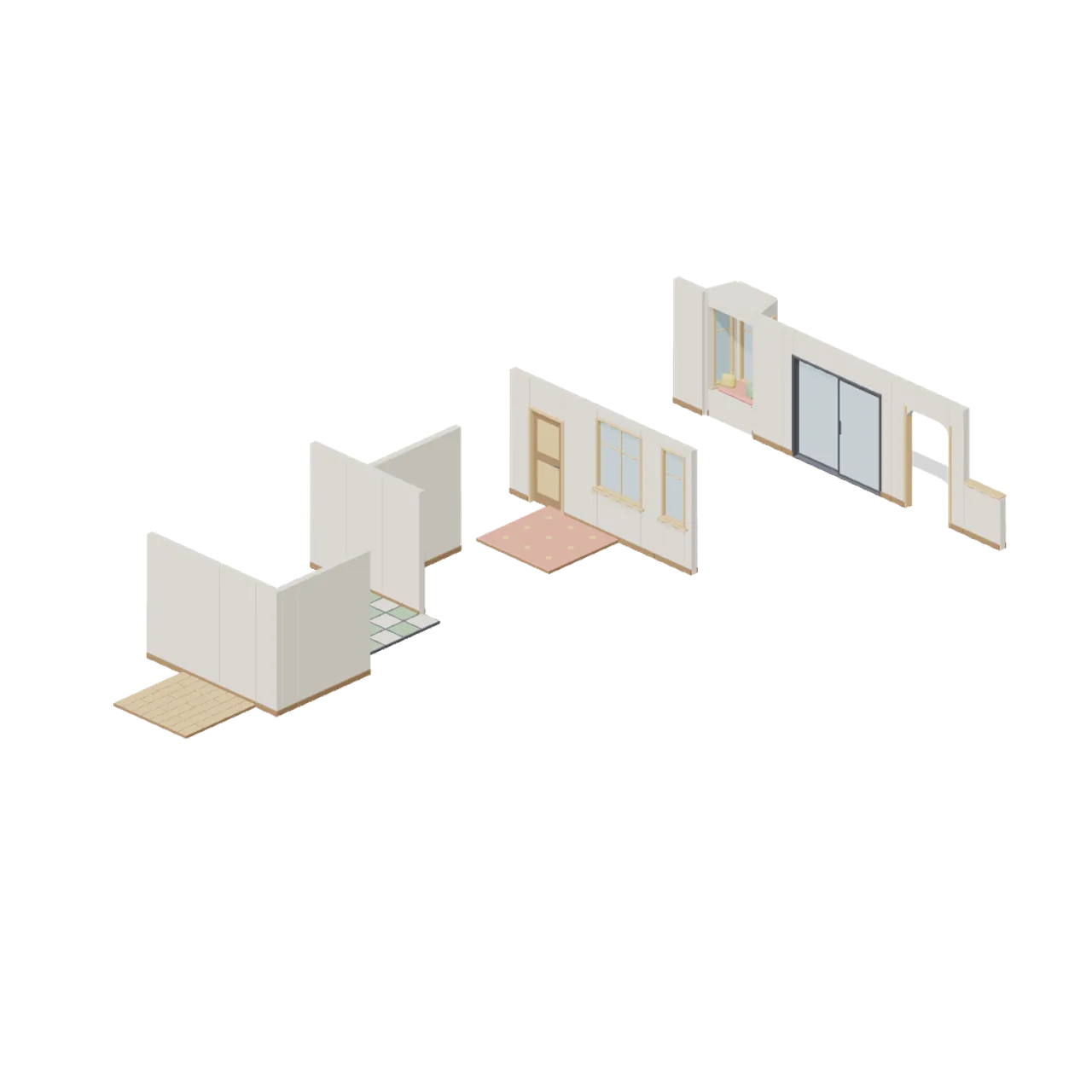
Cozy Home Interiors
Stylized modular room shells, living, kitchen, bedroom, bath, hobby and mood props for warm domestic scenes.
AI used in 129 of 129 files · Claude Fable 5.1
 80 models
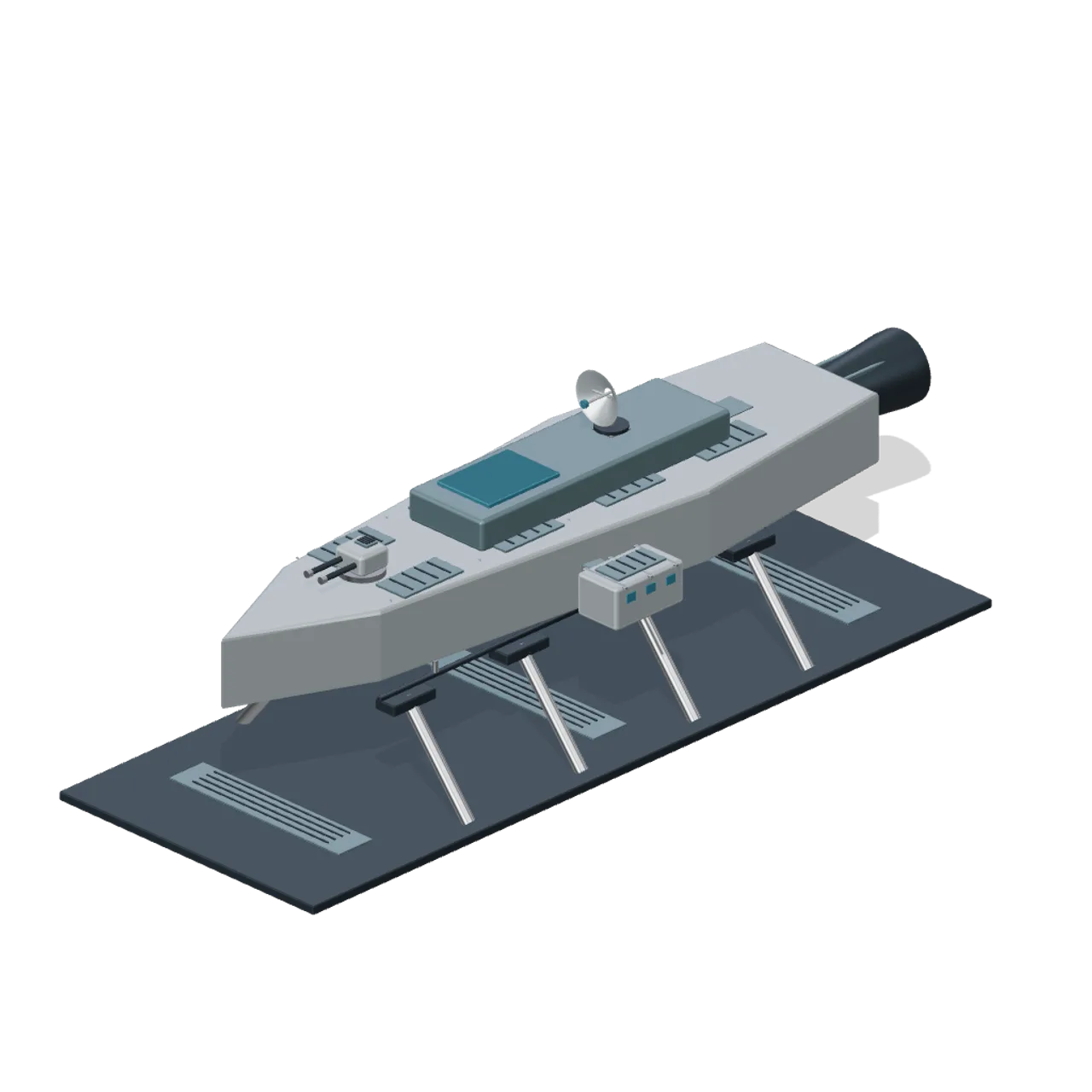
Modular Spaceships and Space Fleet
Original socketed hulls with modular equipment, station structures, utility craft and debris.
AI used in 80 of 80 files · Claude Fable 5.1