Loading model
About
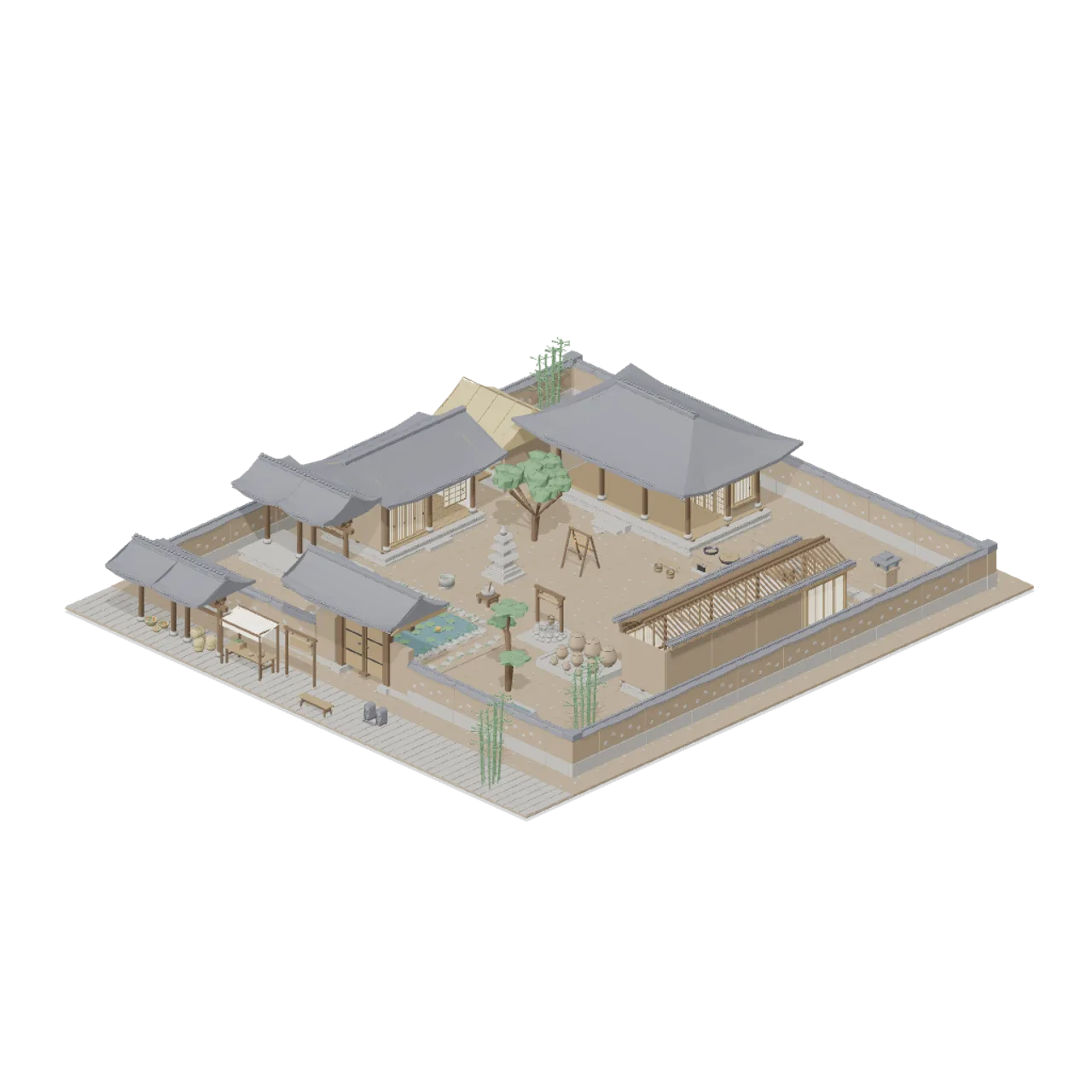
Everything a developer needs to build a Korean hanok village and the street through it, for a historical, folk tale or village life setting. The architecture is modular on a 3 m grid: a dressed stone plinth base, a raised maru floor of joists and boards, a post and beam frame bay, a walled room bay with a four leaf papered front, hipped and gabled tile roof cassettes closed by a ridge tile run, an eave run of round end tiles, an exposed rafter set, beaten earth courtyard ground, a stone street, a stepped lane, an underfloor ondol flue run, and boundary wall straights, corners and end piers of stone and clay under a tiled capping. The set pieces are a three bay main house with the open maru floor between two papered rooms under a hip and gable roof, a smaller side wing, a gate house whose two heavy timber leaves swing, a thatched outbuilding, a free standing sliding lattice door set in a plain and a diamond lattice, a fixed and a lifting hanji window, a chimney stack, an ondol firebox and a kitchen hearth with two iron cauldrons. The yard and the rooms are furnished: a jangdokdae terrace with fermentation jars in three sizes, a chest of drawers, a rice chest, a low table, floor cushions, a folding screen, a charcoal brazier, a hanging lantern, a standing lamp, a bench, a hand loom, a mortar and pestle stand, a water trough, a stone basin, a well head, buckets, a firewood stack, straw sacks of grain, a stack of roof tiles, a persimmon drying rack, a market stall with an awning, produce baskets, a blank hanging sign board, a stone pagoda ornament, a persimmon tree, a pine, bamboo, stepping stones, a pond edge run and a pond water module. Movement is rigid node transforms only: the sliding papered leaves, the swinging gate, the lifting window, the firebox door, the cauldron lid, the jar lids, the chest lid, the drawers, the screen panels, the bobbing lantern, the turning windlass and the turning cloth beam of the loom. What does not move is deliberate and is said in each description: hanji paper, thatch, straw rope, hanging cloth and the strings of drying persimmons are flexible material, which needs a joint per element or a shader, and one rigid node transform reaches none of it, so they ship in the single pose they hang in; fire, smoke and water are effects and fluid rather than geometry, so the firebox and the hearth are modelled cold and every water surface is a flat pane. There are no people or animals in the pack and nothing here is skinned. Nothing depicts a real village, house, palace, temple, dynasty landmark or institution, no real building is reproduced, and every board, banner and painted field is a blank shape inside a plain border: there is no hangul, no hanja and no script of any kind anywhere in the pack. All original CC0 geometry, no brands and no logos.
Files load directly from the CDN. Choose the pieces you need. Colliders, navigation and gameplay scripts are supplied by your game.
Use with an AI agent
Copy this prompt into your AI chat, then describe what you want to build with the pack.
Use the “Korean Hanok Village and Street” pack in my project.

Manifest (JSON, every model with its CDN URL): https://3dassets.dev/api/v1/packs/korean-hanok-village-and-street
Starter scene (one GLB with every piece placed): https://cdn.3dassets.dev/assets/38093/v1/model.glb
Pack page: https://3dassets.dev/packs/korean-hanok-village-and-street
Description: A Korean hanok village: timber framed houses on stone plinths with raised maru floors and tiled upturned eaves, papered sliding doors, a gate house, clay walls, an ondol firebox and kitchen hearth, a jangdokdae of fermentation jars, a well and a market street.

- 62 GLB models, 5.6 MB in total
- Units: metres, +Y up, shared scale and palette across the pack
- Licence: CC0 1.0 Universal (no attribution required)
- Loading: three.js GLTFLoader; no additional decoders required. Load models individually from the manifest, or the starter scene as one file.
Also available as a JSON manifest or via the MCP server.
Common questions
How do I use Korean Hanok Village and Street with my AI development tools?
How do I get started?
Which game engines and tools can I use Korean Hanok Village and Street with?
How do I import this pack into Unity, Godot, Unreal or Blender?
Can I use Korean Hanok Village and Street in a commercial game, and do I need to credit anyone?
Can I load it from the CDN instead of downloading it?
Do I have to download the whole pack?
Do the models in Korean Hanok Village and Street fit together?
Game kit
Korean Hanok Village and Street
A Korean hanok village: timber framed houses on stone plinths with raised maru floors and tiled upturned eaves, papered sliding doors, a gate house, clay walls, an ondol firebox and kitchen hearth, a jangdokdae of fermentation jars, a well and a market street.
One GLB with every piece placed in a starter scene. Each model is also below on its own.
View demoEverything in this pack
 Animated
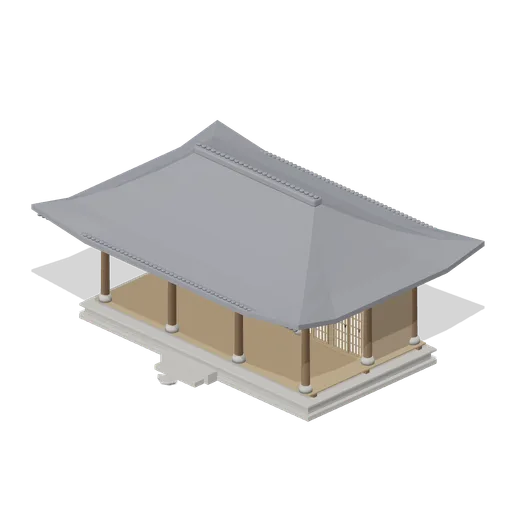
Hanok Main House (Korean Hanok Village and Street)
A three bay timber framed hanok on a stone plinth: an open maru floor in the middle, a papered room each side and a hip and gable tiled roof on exposed rafters.
 Animated
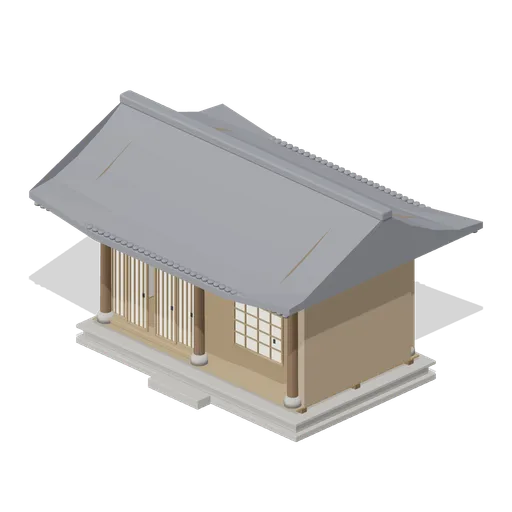
Hanok Side Wing (Korean Hanok Village and Street)
A smaller two bay hanok wing on a low plinth with a papered sliding front, a lattice window and a plain gabled tiled roof, for the side of a courtyard.
 Animated
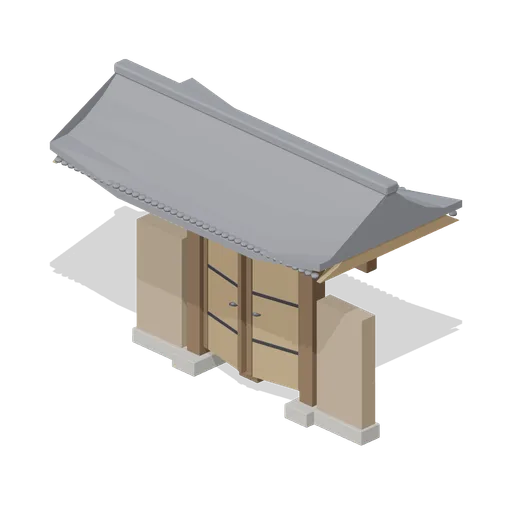
Village Gate House (Korean Hanok Village and Street)
A raised tiled gate house with two heavy timber leaves on iron straps, a stone threshold and clay flanking walls, sized to stand in a village wall run.
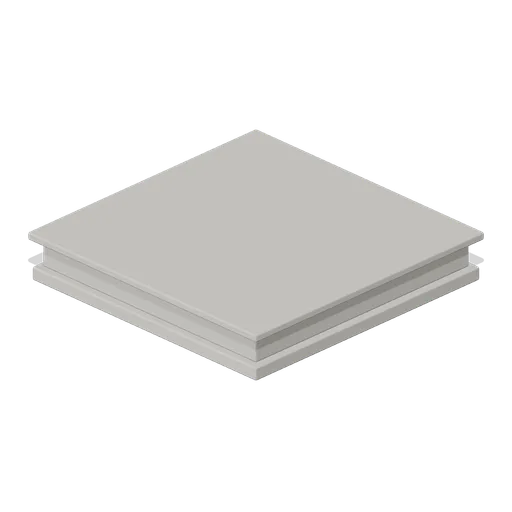
Stone Plinth Base Module (Korean Hanok Village and Street)
A 3 m square dressed stone plinth course in three steps, the raised base a hanok floor is laid on. Tiles on a 3 m grid.
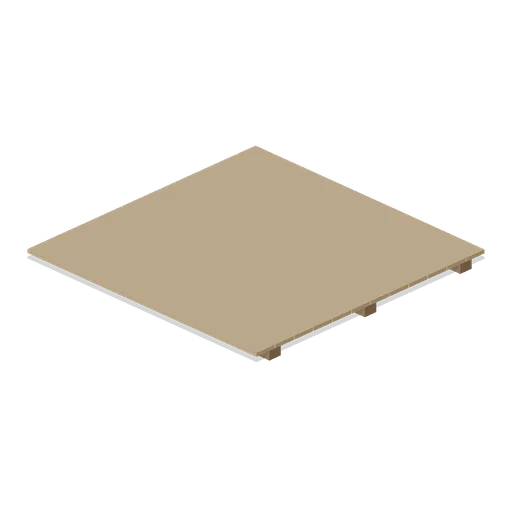
Hanok Maru Floor Module (Korean Hanok Village and Street)
A 3 m square of raised maru floor: three joists carrying twelve hardwood boards with an open gap between each. Sits on the plinth module.
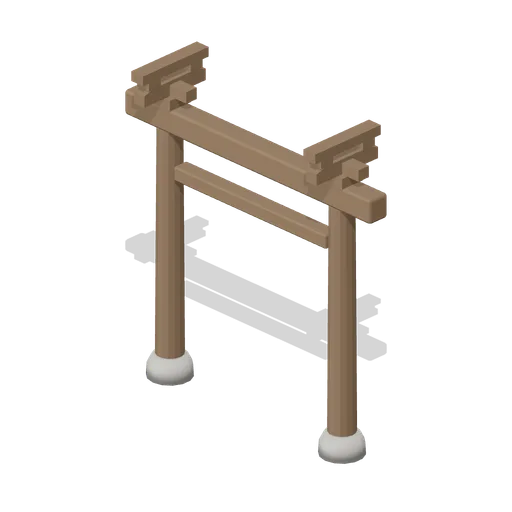
Hanok Post And Beam Frame (Korean Hanok Village and Street)
One bay of hanok frame: two round timber posts on stone footings under a tie beam and a lintel, with a bracket over each post head.
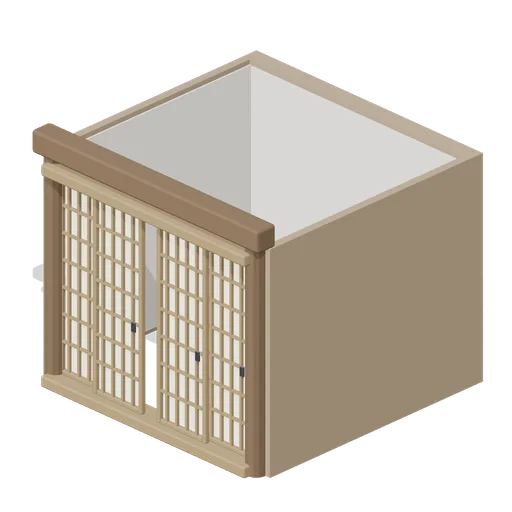 Animated
Hanok Room Module (Korean Hanok Village and Street)
One walled bay of a hanok: clay walls rendered white inside, corner posts, a header beam and a four leaf papered front whose two inner leaves slide.

Hipped Tile Roof Module (Korean Hanok Village and Street)
A 3 m bay of hipped tiled roof with lifted eave corners, a round end tile course along both eaves and a ridge run over it.

Gabled Tile Roof Module (Korean Hanok Village and Street)
A 3 m bay of gabled tiled roof with a round end tile course along both eaves and a plain ridge, for a run between two gable ends.
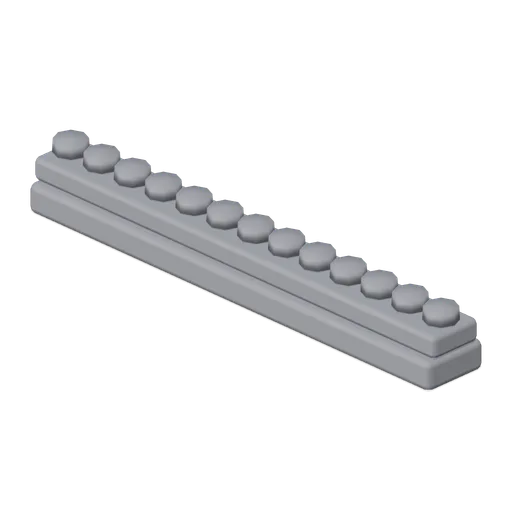
Roof Ridge Tile Run (Korean Hanok Village and Street)
A 3 m run of ridge tiling: a stacked clay course with a capping of round tiles along the top, to close the ridge of a roof run.
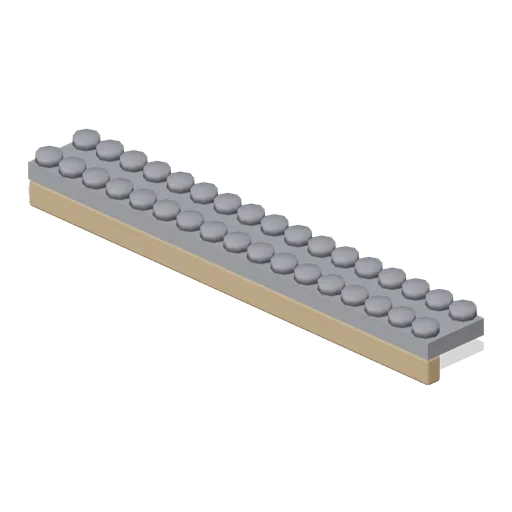
Eave Tile Run (Korean Hanok Village and Street)
A 3 m run of eave: a fascia board, a course of round end tiles and a lifted corner tile, the edge a tiled roof reads by at a distance.
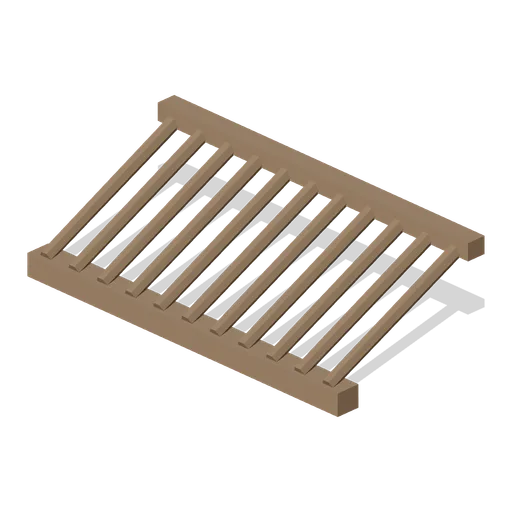
Exposed Rafter Set (Korean Hanok Village and Street)
A 3 m bay of round rafters on their purlin, left exposed the way a hanok soffit is, rising from the eave line toward the ridge.
 Animated
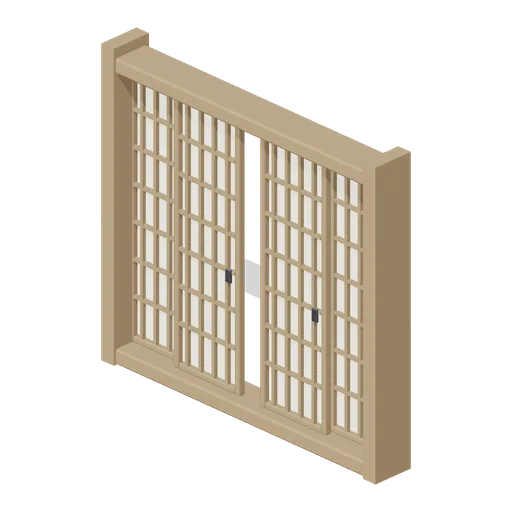
Sliding Lattice Door Set (Korean Hanok Village and Street)
A free standing set of four papered lattice leaves in a timber frame, the inner pair sliding behind the outer pair on a grooved sill.
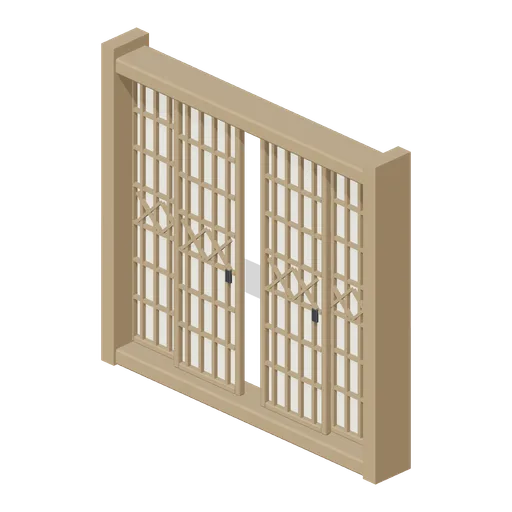 Animated
Sliding Lattice Door Set, Diamond Lattice (Korean Hanok Village and Street)
The same four leaf sliding door set with a diagonal lattice over the hanji paper instead of the plain grid, for a room with a finer front.
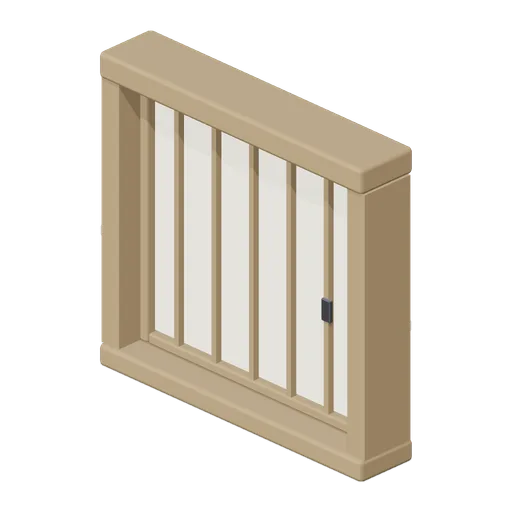
Hanji Lattice Window (Korean Hanok Village and Street)
A fixed lattice window panel on its sill board, hanji paper stretched behind an upright bar lattice, sized to sit in a clay wall.
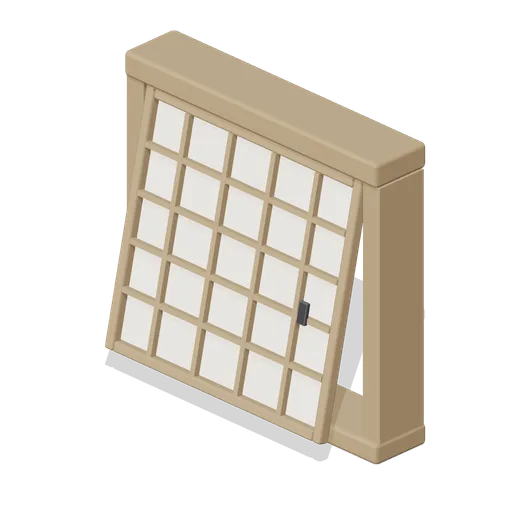 Animated
Lifting Lattice Window (Korean Hanok Village and Street)
The same window with a top hinged leaf that lifts out and is propped, which is how a hanok room is opened to the yard in summer.
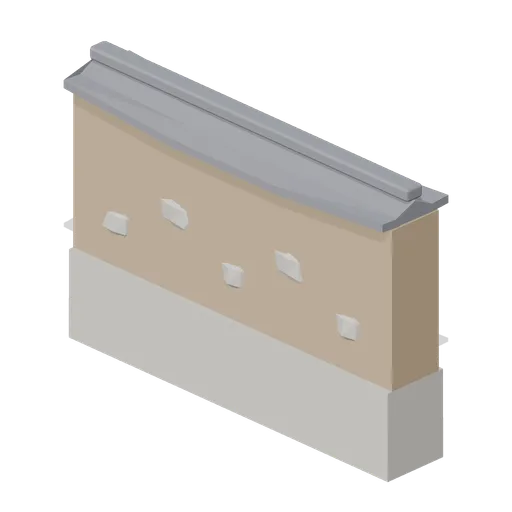
Village Wall Straight (Korean Hanok Village and Street)
A 3 m run of village boundary wall: a rough stone footing course, a clay body with stones bedded in it and a tiled capping with a ridge tile.
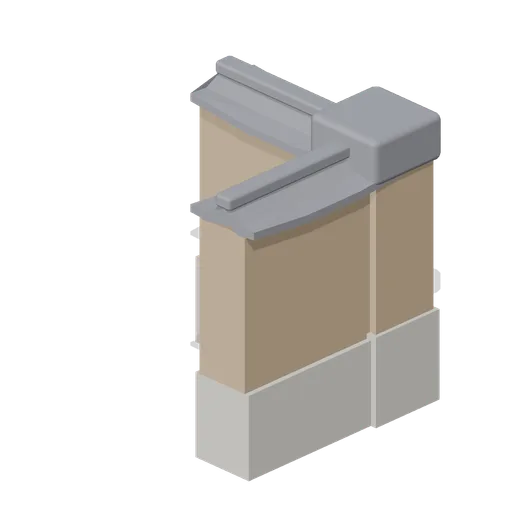
Village Wall Corner (Korean Hanok Village and Street)
A corner of village wall on the 3 m grid: two half runs of stone and clay meeting in a square pier under a continuous tiled capping.

Village Wall End Pier (Korean Hanok Village and Street)
A square stone and clay pier with a tiled cap, to stop the end of a wall run at a gate or an opening.
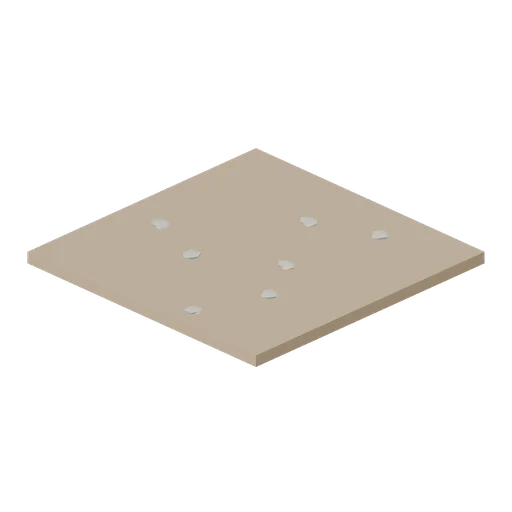
Courtyard Ground Module (Korean Hanok Village and Street)
A 3 m square of beaten earth madang, the swept yard a hanok stands round, with a few small stones bedded in the surface.
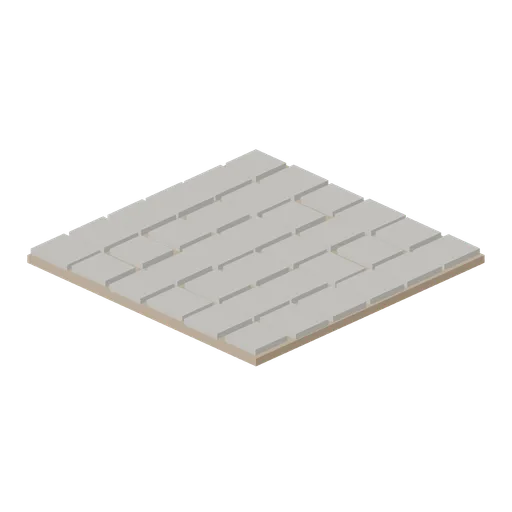
Stone Street Module (Korean Hanok Village and Street)
A 3 m square of village street laid in irregular stone setts on an earth bed, with the joints left open between them.
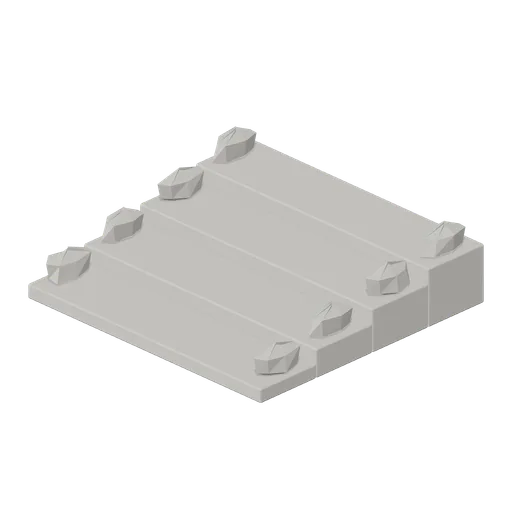
Stepped Lane Module (Korean Hanok Village and Street)
A 3 m wide flight of four shallow stone steps with a rubble kerb each side, the way a village lane climbs a slope.
 Animated
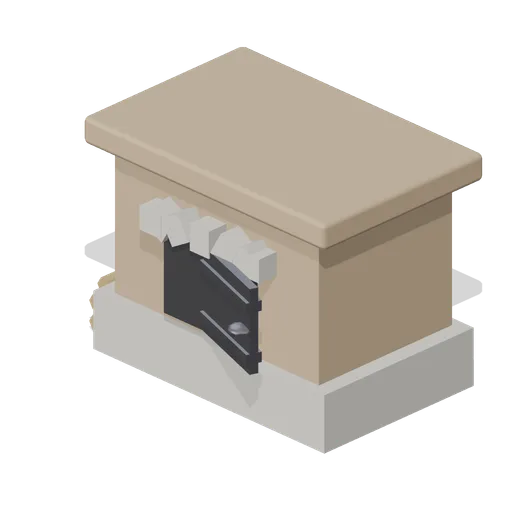
Ondol Firebox (Korean Hanok Village and Street)
The agungi that heats a hanok floor: a clay and stone block with an arched mouth, an iron door on a hinge, an ash pit and a stack of split wood beside it.
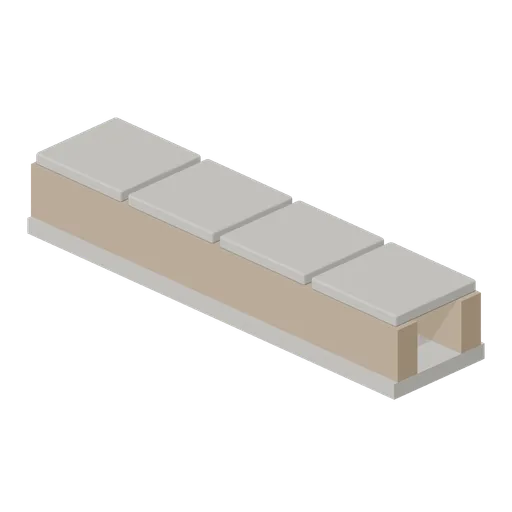
Ondol Flue Run (Korean Hanok Village and Street)
A 3 m run of underfloor flue: a clay duct on a stone bed with removable cover slabs over it, the heat path from the firebox to the chimney.
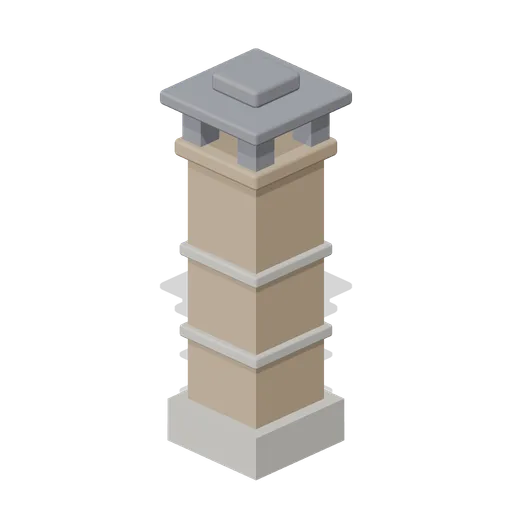
Chimney Stack (Korean Hanok Village and Street)
A free standing clay and stone chimney with a banded shaft and a small tiled cap, which is where a hanok flue comes up, well clear of the house.
 Animated
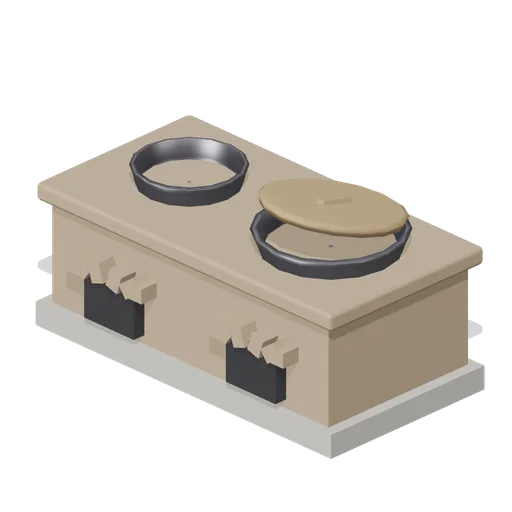
Kitchen Hearth Block (Korean Hanok Village and Street)
The raised clay hearth of a hanok kitchen with two iron cauldrons sunk into it, a lifting wooden lid on the larger one and two stoke holes below.
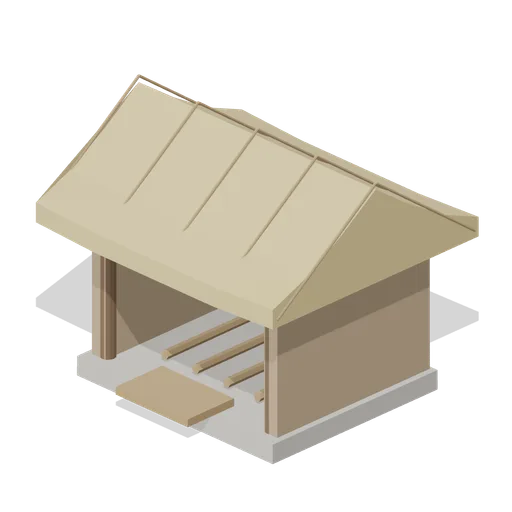
Thatched Outbuilding (Korean Hanok Village and Street)
A small store with clay walls on a stone footing, an open timber front and a straw thatched gable roof held down by a net of rope.
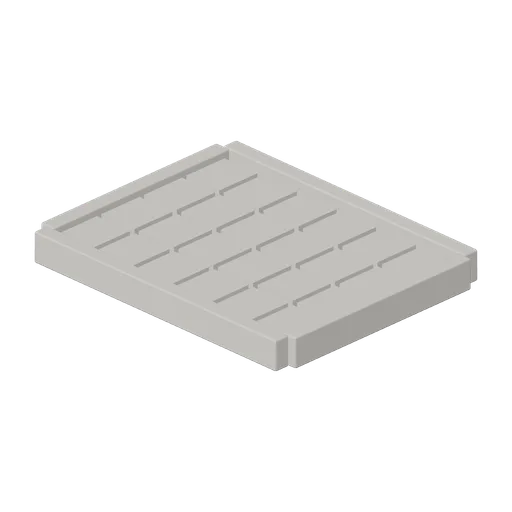
Jangdokdae Terrace (Korean Hanok Village and Street)
The raised stone terrace a household stands its fermentation jars on, with a kerb of dressed blocks and a swept flagged top.
 Animated
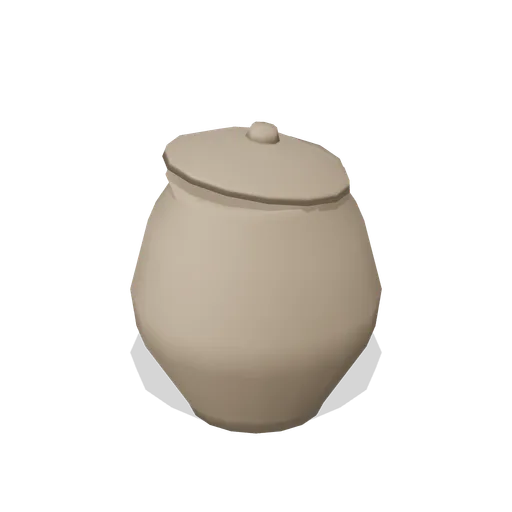
Onggi Jar, Large (Korean Hanok Village and Street)
A large bellied earthenware onggi jar with a shallow lid that lifts, the kind a household keeps soy and bean paste in.
 Animated
Onggi Jar, Medium (Korean Hanok Village and Street)
The same onggi jar at two thirds the size, for the middle row of a jangdokdae terrace.
 Animated
Onggi Jar, Small (Korean Hanok Village and Street)
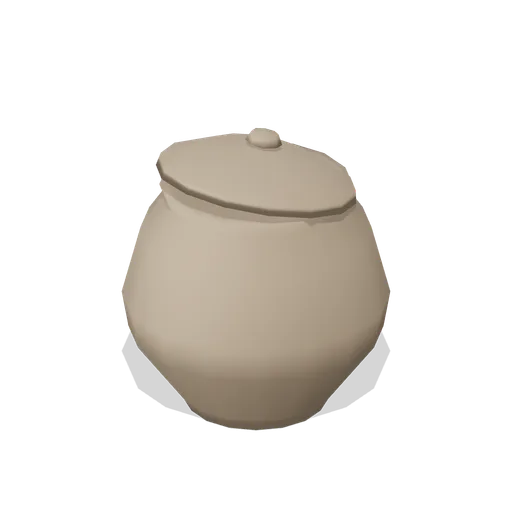
The smallest onggi jar, a squat lidded pot for pickles and seasoning, for the front row of a terrace or a kitchen shelf.
 Animated
Chest Of Drawers (Korean Hanok Village and Street)
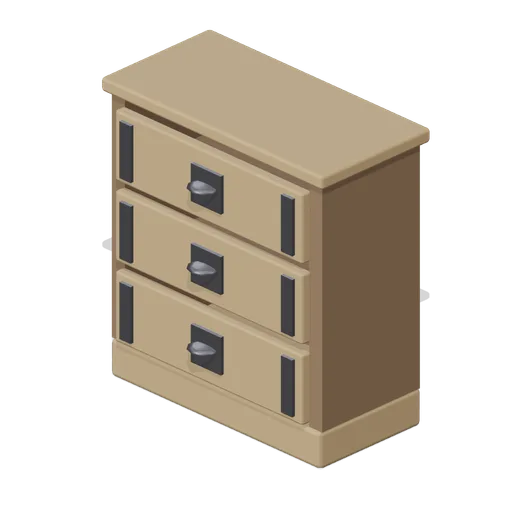
A hardwood chest on a plinth with three drawers on runners and iron plates and pulls, the storage of a hanok room.
 Animated
Wooden Rice Chest (Korean Hanok Village and Street)
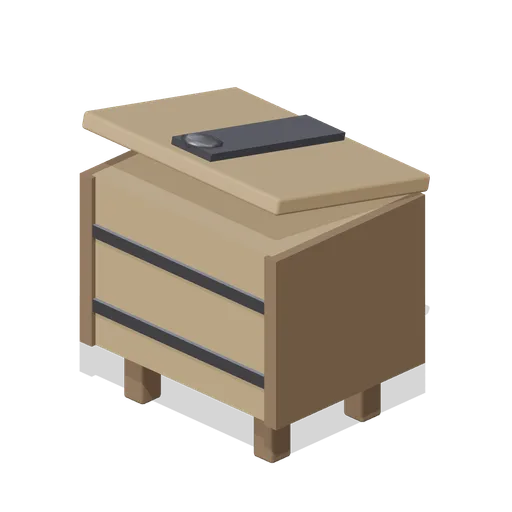
A heavy plank grain chest on short legs with an iron banded lid that lifts, the store a household measures its rice out of.
Low Table (Korean Hanok Village and Street)
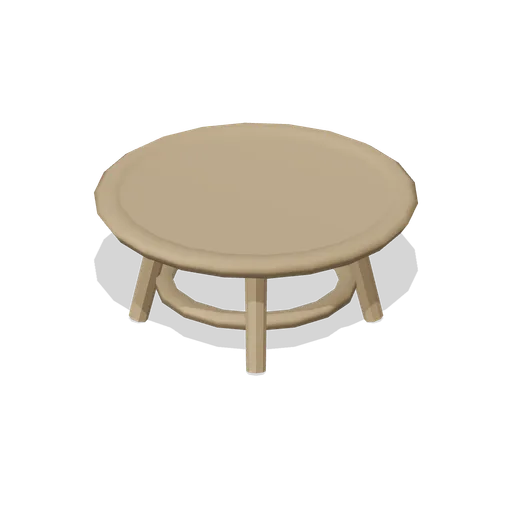
A small lacquered soban with a rimmed round top on four turned splayed legs, low enough to eat from on the floor.
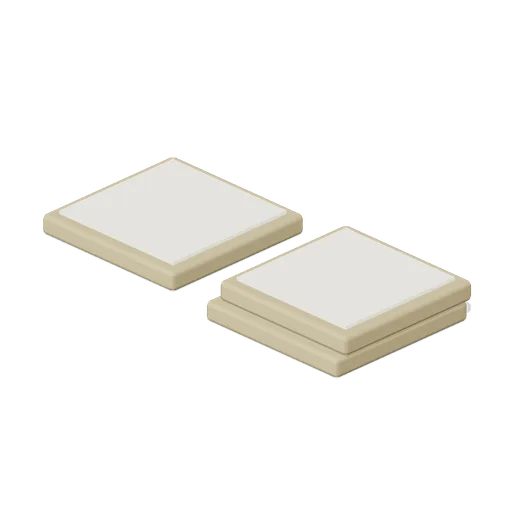
Floor Cushion Set (Korean Hanok Village and Street)
Three flat woven floor cushions, one laid out and two stacked, in plain bands with no pattern that reads as writing.
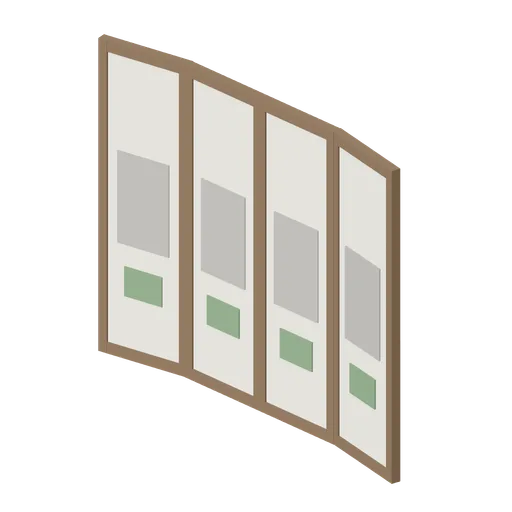 Animated
Folding Screen (Korean Hanok Village and Street)
A four leaf paper screen in a timber frame, the two outer leaves hinged so they fold forward, its fields painted in plain bands and blocks.
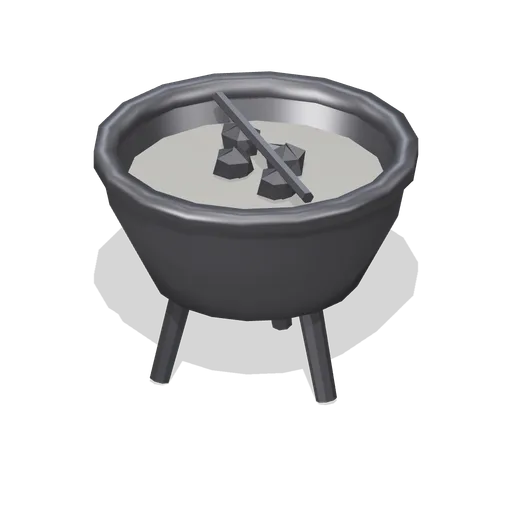
Charcoal Brazier (Korean Hanok Village and Street)
A cast iron brazier on three legs with a ring rim, a bed of ash and charcoal and a pair of tongs laid across it.
 Animated
Hanging Paper Lantern (Korean Hanok Village and Street)
A cylindrical hanji lantern on wooden rings, hung from a hook on a short cord, with a plain painted band round the paper.

Standing Paper Lamp (Korean Hanok Village and Street)
A floor standing lamp: a square hanji shade in a timber frame on a turned post and a spread foot, for a room or a veranda.
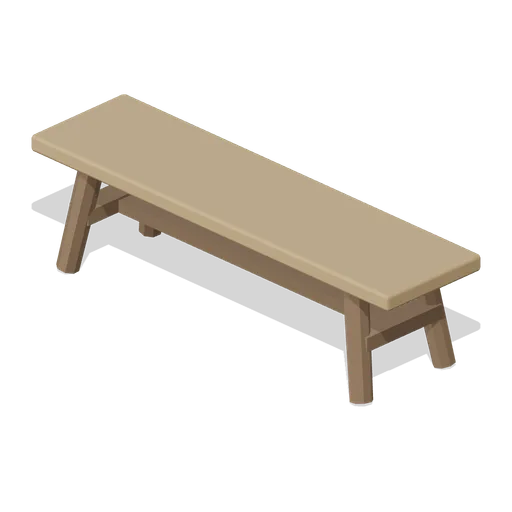
Wooden Bench (Korean Hanok Village and Street)
A plank bench on four splayed legs with a rail under each end, the seat a household keeps by the veranda for work and rest.
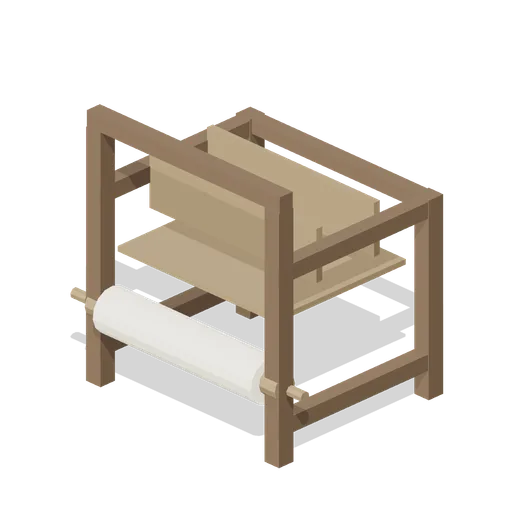 Animated
Hand Loom (Korean Hanok Village and Street)
A timber frame loom with a turning cloth beam, a heddle frame, a reed and a stretch of plain woven cloth on it.
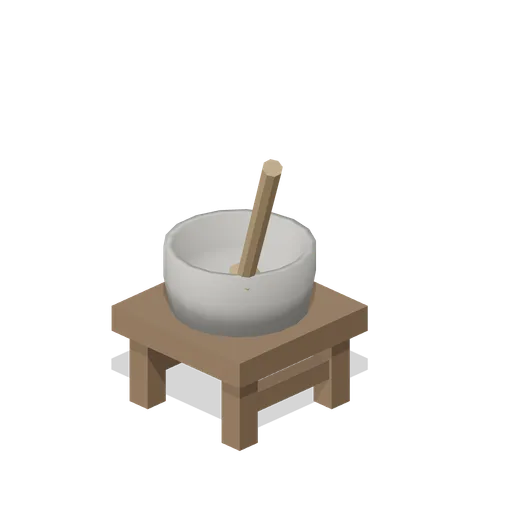
Mortar And Pestle Stand (Korean Hanok Village and Street)
A stone mortar bedded in a timber stand with a long wooden pestle leaning in it, for husking grain in the yard.
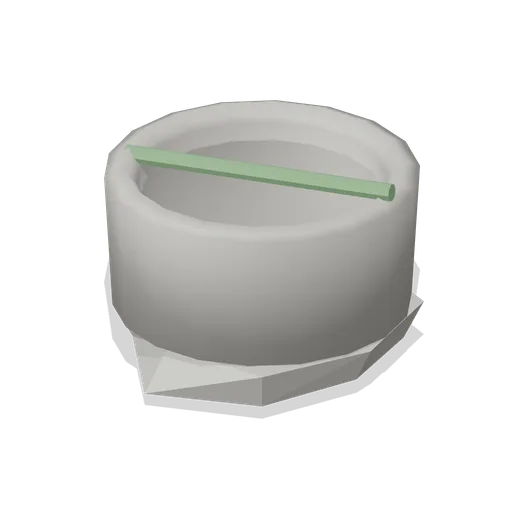
Stone Water Basin (Korean Hanok Village and Street)
A carved stone basin on a rough footing with a still pane of water in it and a bamboo dipper across the rim.
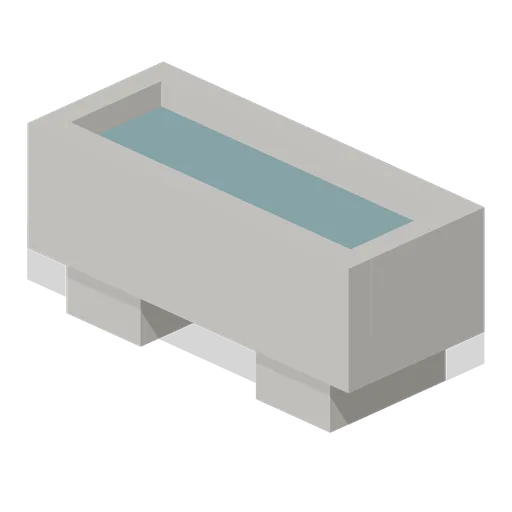
Water Trough (Korean Hanok Village and Street)
A hollowed stone trough on two block supports with a still surface of water in it, for a yard or a street corner.
 Animated
Well Head (Korean Hanok Village and Street)
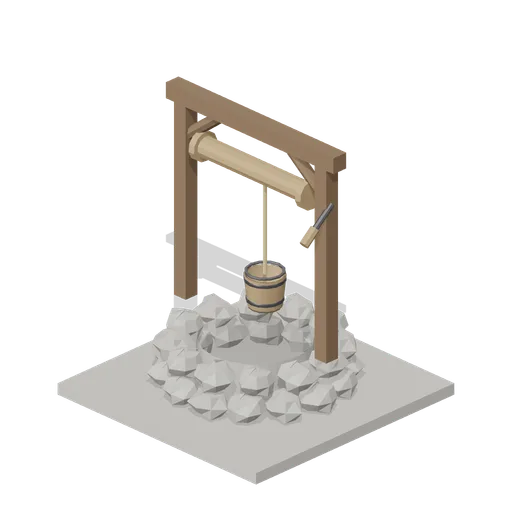
A village well: a ring of rough stone on a flagged apron, a timber frame over it and a windlass that turns, with a bucket on the rope.

Wooden Bucket Pair (Korean Hanok Village and Street)
Two staved and hooped water buckets with a shouldered carrying yoke laid across them, for the well or the kitchen door.
Firewood Stack (Korean Hanok Village and Street)
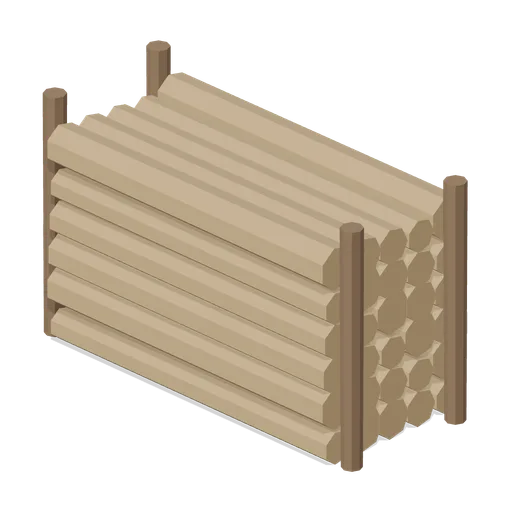
A stack of split logs laid in courses against two stakes, the winter fuel of an ondol firebox.
Straw Rice Sack Stack (Korean Hanok Village and Street)
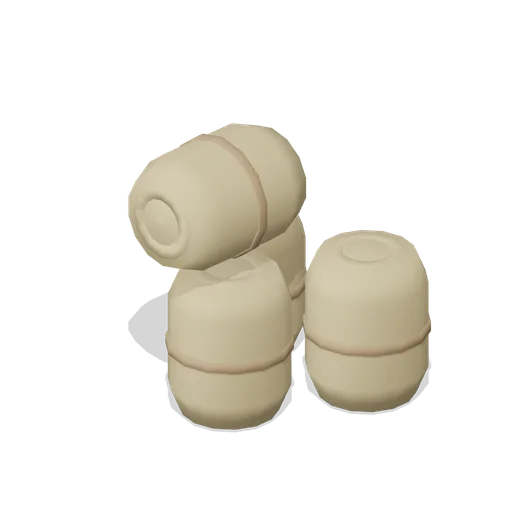
Four woven straw sacks of grain tied at both ends, three standing and one laid over them, for a store or a market pitch.
Clay Roof Tile Stack (Korean Hanok Village and Street)
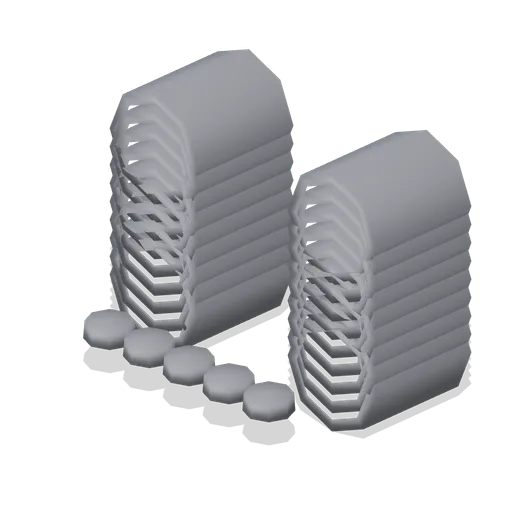
Two stacks of curved roof tiles and a row of round end tiles beside them, the spare material a village keeps by the wall.
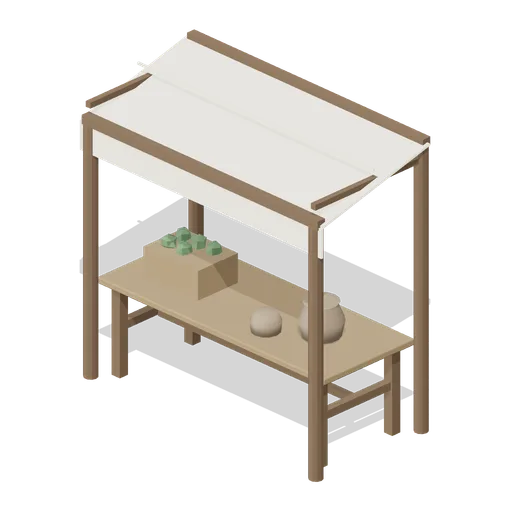
Market Stall With Awning (Korean Hanok Village and Street)
A village market pitch: a plank trestle board on timber legs under a hemp awning on four poles, with a crate and a jar of stock on the board.
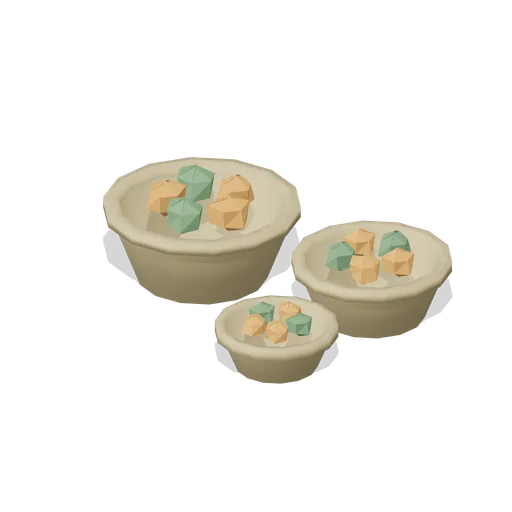
Produce Basket Set (Korean Hanok Village and Street)
Three woven straw baskets of vegetables and roots at different sizes, for a market pitch, a kitchen door or a store.
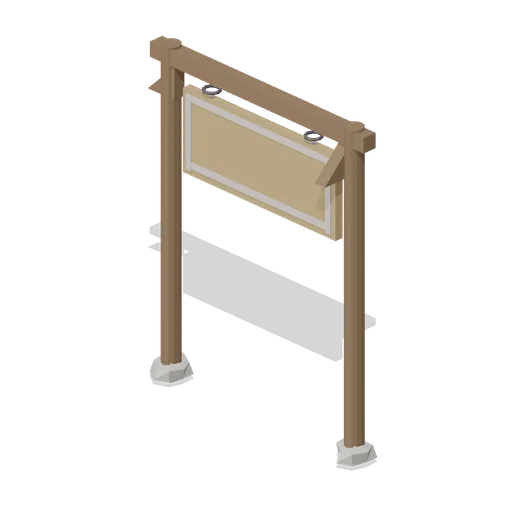
Hanging Sign Board (Korean Hanok Village and Street)
A timber shop board hung from an iron ring on a bracket over two posts, its faces left blank but for a plain painted border.
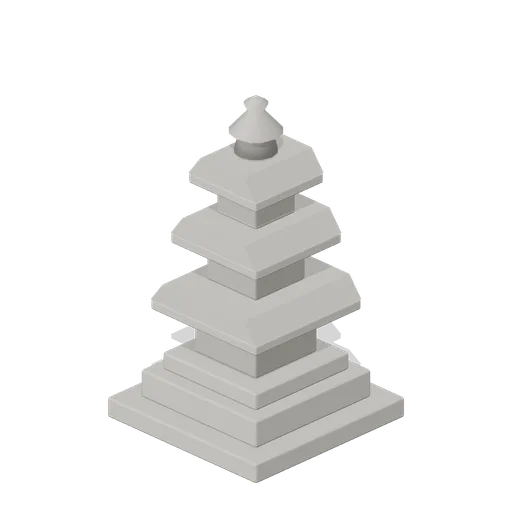
Stone Pagoda Ornament (Korean Hanok Village and Street)
A three tier stone pagoda ornament on a stepped base, each tier a body block under a wide tapered roof stone, with a carved finial.
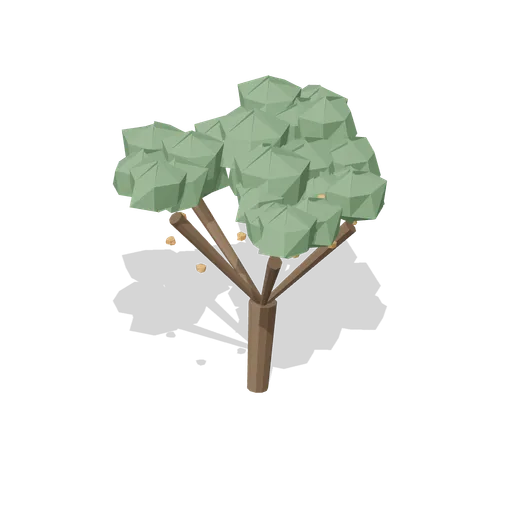
Persimmon Tree (Korean Hanok Village and Street)
A yard persimmon with a short forked trunk, a broad canopy and ripe orange fruit hanging in it, the tree a hanok courtyard usually has one of.
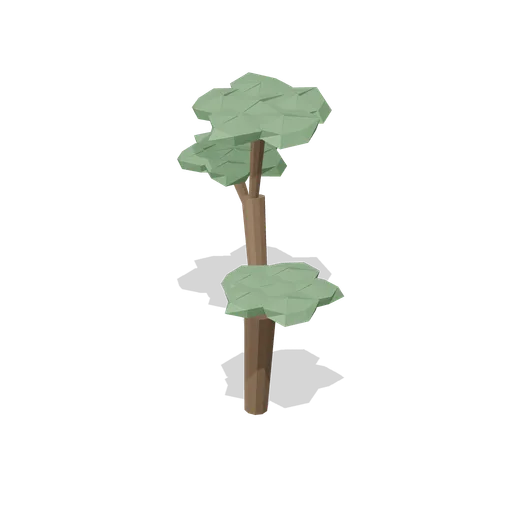
Pine Tree (Korean Hanok Village and Street)
A leaning village pine with a bare twisting trunk and three flat plates of needles, the shape a Korean yard pine is pruned into.
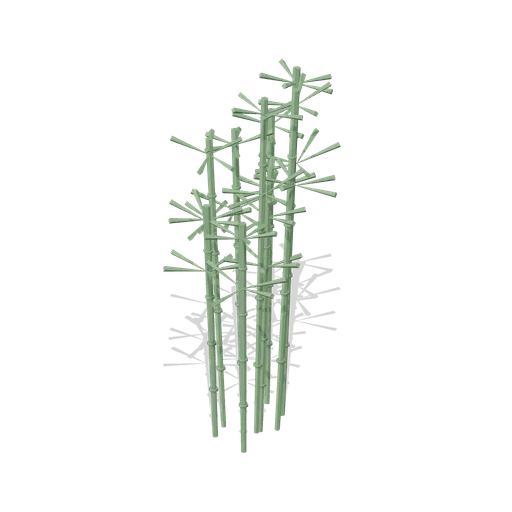
Bamboo Clump (Korean Hanok Village and Street)
A clump of nine bamboo culms with jointed rings and sprays of leaves near the top, for the back of a yard or a wall corner.
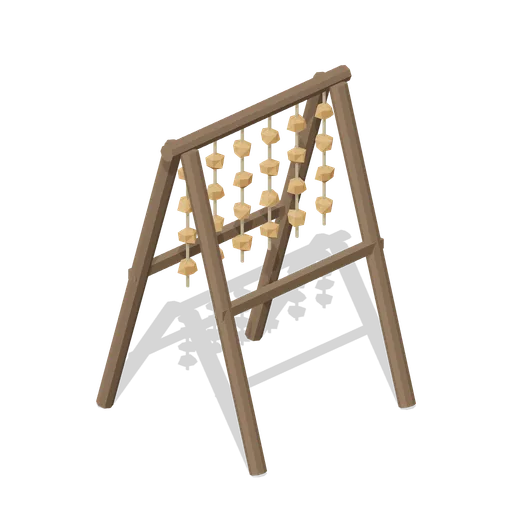
Persimmon Drying Rack (Korean Hanok Village and Street)
A timber A frame hung with strings of peeled persimmons drying in the sun, a yard fixture through the autumn.
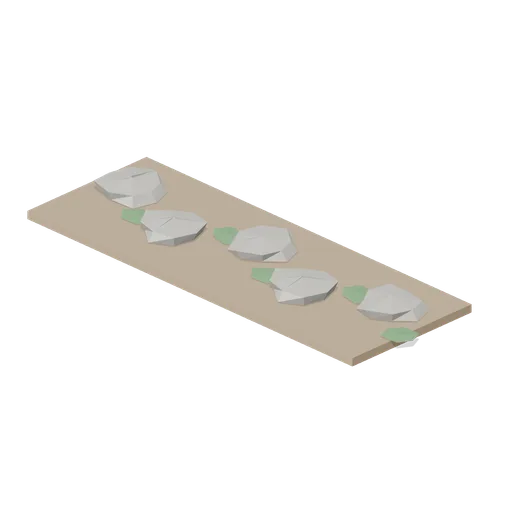
Stepping Stone Path (Korean Hanok Village and Street)
A 3 m run of flat stepping stones bedded in earth with moss between them, the way across a yard or a wet corner.
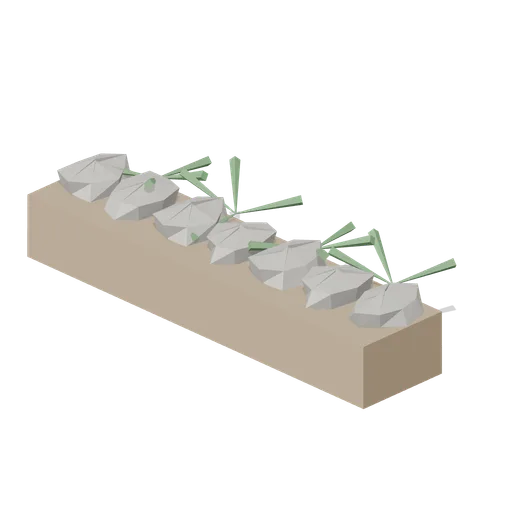
Lotus Pond Edge Straight (Korean Hanok Village and Street)
A 3 m run of pond edge: a coping of rough stone blocks over a bank of packed clay, with reeds growing at the water line.

Pond Water Module (Korean Hanok Village and Street)
A 3 m square of still pond water with a silt bed under it, lily pads on the surface and two lotus flowers standing out of it.
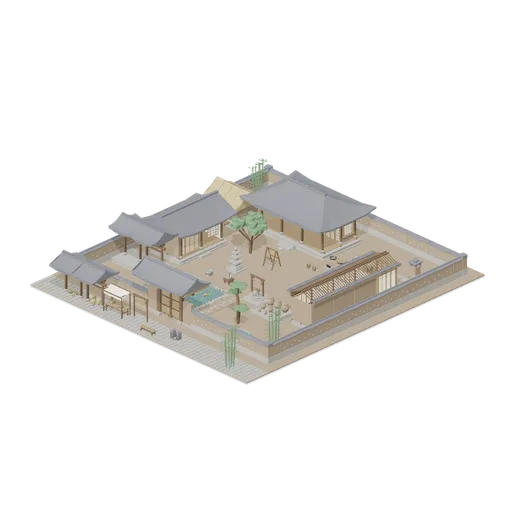
Walled hanok plot and village street (Korean Hanok Village and Street)
A whole village plot laid from 3 m modules on a 30 m square of beaten earth, with the street running past its gate. The tile roofed gate house stands on the south axis of a clay and stone boundary wall, with a paper lantern hanging each side of it and a stepping stone path...
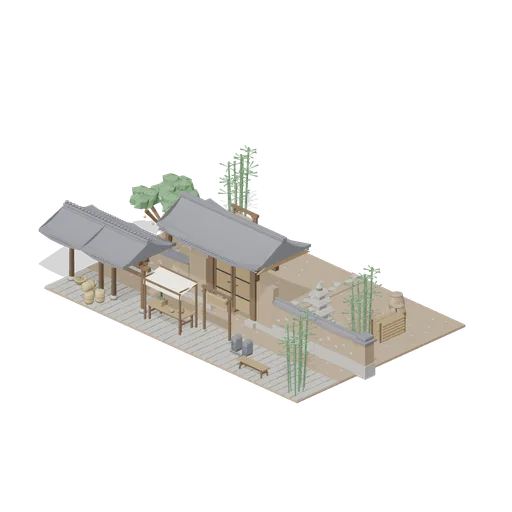
Village gate and market street (Korean Hanok Village and Street)
The gate end of the plot on its own at working scale, open topped like the plot scene so everything inside the wall stays visible from a walk at eye height. The tile roofed gate house stands on the axis of a clay and stone boundary wall that runs the full frontage and is...
Similar packs
 60 models
Andean Terraces and Stone Village
Highland terrace farming and a stone village: retaining wall modules in three heights with their beds and crops, irrigation channels, a rope gorge bridge, stone huts, storehouses, a granary, a lookout tower, gateways, hearths, looms, jars and baskets, in one assembled valley.
AI used in 60 of 60 files · Claude Opus 5
 70 models
Halloween Slasher Street
A dead end 1980s suburban street on Halloween night: a modular clapboard house kit, yard and street furniture, carved pumpkins and graveyard dressing, and the props a slasher film leaves behind.
AI used in 70 of 70 files · Claude Fable 5.1
 78 models
Casino Floor and Back Rooms
Stylized gaming tables, machines, chips, floor architecture and back-of-house security.
AI used in 78 of 78 files · Claude Fable 5.1
 91 models
Pixel Modern City Street
Ninety pixel art city street models: a 4 m road and pavement grid, a 4 m facade kit that closes into real blocks, cars, a bus and bikes with working wheels and doors, twenty pieces of street furniture, a park corner and twelve people.
AI used in 91 of 91 files · Claude Fable 5.1
 49 models
Street Food Market and Food Trucks
48 stylized street food market models: food trucks, vans and trailers with rolling wheels and lifting serving hatches, gazebo, trestle, grill, wok and bar stalls, ported floor tiles, counters, queue rail and festoon lighting, seating, service kit and the food left on the tables.
AI used in 49 of 49 files · Claude Opus 5
 52 models
Village Hall and Community Events
Realistic kit for a hired village hall dressed for an event: parquet floor and wall modules, a demountable stage with drapes, stacking chairs, trestle and round tables, a serving hatch kitchen, bunting, and the jumble, cake, book and raffle stalls.
AI used in 52 of 52 files · Claude Opus 5
 62 models
Indian Bazaar Street and Temple
61 realistic South Asian street models: modular shopfronts with roll shutters, jali balconies, a small shrine with a stepped tower, porch and bell, spice, cloth, tea, sweet and garland stalls, an auto rickshaw, cots, pots, poles and cabling, and an assembled street.
AI used in 62 of 62 files · Claude Opus 5
 61 models
Greek Island Village and Harbour
A whitewashed Greek island village and its fishing harbour on a 4 m grid: cube house blocks with blue shutters that open, stepped lanes, a domed chapel, a taverna terrace, a quay with boats and creels, and a windmill whose ten sails turn.
AI used in 61 of 61 files · Claude Opus 5
 63 models
Botanical Glasshouse and Palm House
A Victorian botanical glasshouse in one realistic family: modular cast iron bays, corner bays, an apse, barrel vault and lantern ridge on a 3 m grid, plinth, eaves, gallery and spiral stair, heating and misting, the potting end, and a planted palm house collection.
AI used in 63 of 63 files · Claude Opus 5
 91 models
Rural Scavenging Settlements
Modular rural buildings to scavenge: timber and stone cottage walls, sheds, gable and hipped roofs, porches, cellars, woodsheds, outhouses, a village well and a bus shelter, with village props.
AI used in 91 of 91 files · Claude Fable 5.1