Loading model
About
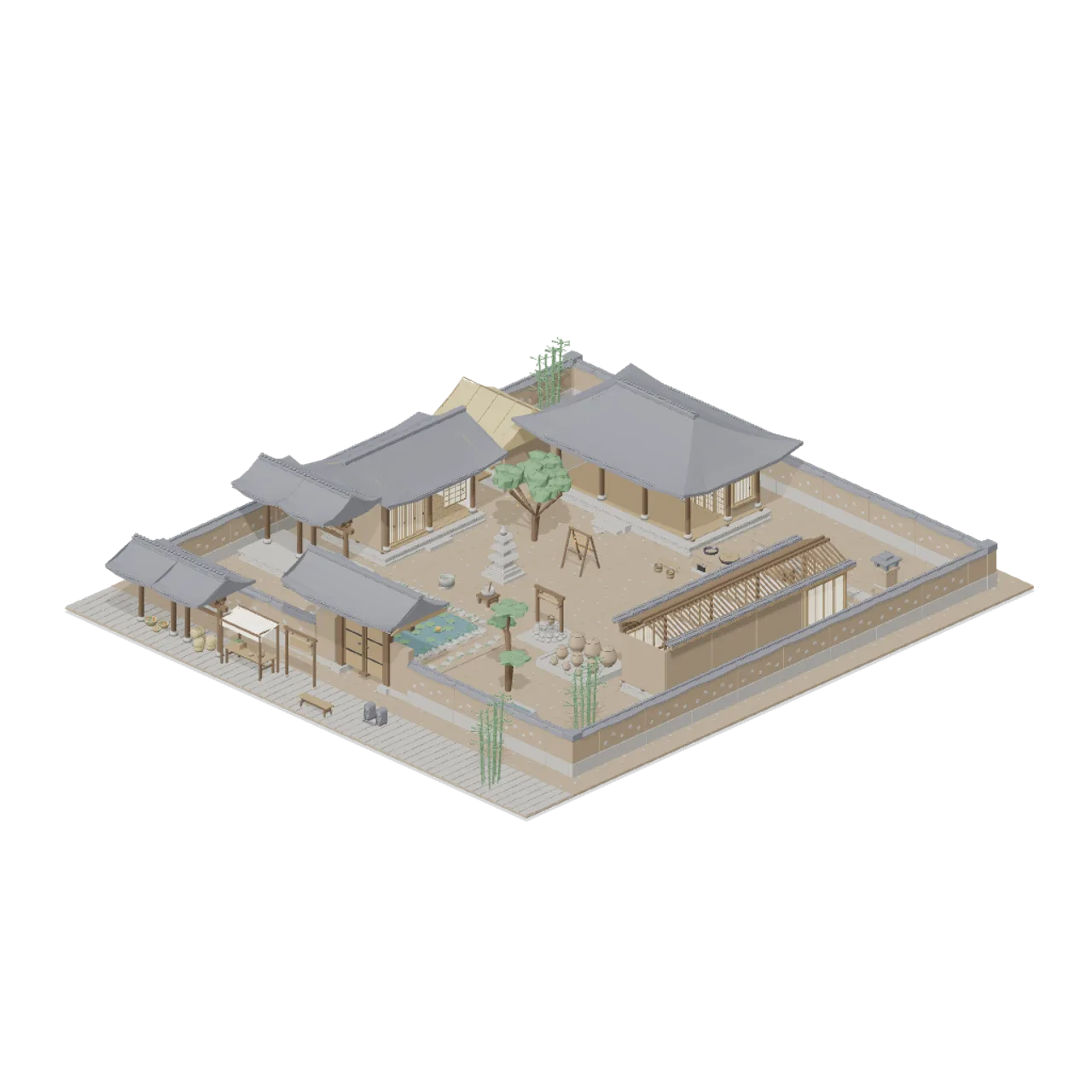
A whole village plot laid from 3 m modules on a 30 m square of beaten earth, with the street running past its gate. The tile roofed gate house stands on the south axis of a clay and stone boundary wall, with a paper lantern hanging each side of it and a stepping stone path leading in. The main house sits at the head of the yard on its stone plinth, three bays of timber frame with the open maru floor in the middle and a papered room each side, and the side wing closes the west. The east range is deliberately open topped: plinth, raised maru floor and walled room modules with the rafter and eave runs carried round both sides at roof height, so the roof line reads while the maru, the chest, the low table, the cushions, the folding screen, the brazier, the rice chest, the lamp and the loom inside stay visible and walkable. A walk through the scene has no vertical movement, so a roofed interior would be neither reachable nor photographable, which is why the roof cassettes are proved instead on the two bay store in the south west corner, where two frames on two plinths carry two hipped cassettes closed by ridge runs and a stepped lane climbs to the plinth. The kitchen hearth with its two cauldrons, the ondol firebox, its underfloor flue run and the chimney line the north east of the yard with the firewood beside them, the jangdokdae terrace carries nine fermentation jars in three sizes, and the yard holds the well, the water trough, the mortar and pestle, the stone basin, the persimmon drying rack, a persimmon tree, a pine, bamboo and a stone pagoda ornament, with a lotus pond of four water modules inside its coping in the south. Outside the wall the street carries a market shed of two gabled cassettes over the trestle stall, the produce baskets, the straw sacks, a bench, a stack of roof tiles and a hanging sign board whose faces are blank. Every board and painted field in the scene is an abstract shape and carries no characters of any script.
Use with an AI agent
Copy this prompt into your AI chat, then describe what you want to build with the asset.
Use the “Walled hanok plot and village street (Korean Hanok Village and Street)” asset in my project.

Model: https://cdn.3dassets.dev/assets/38093/v1/model.glb
Asset page: https://3dassets.dev/assets/korean-hanok-village-and-street-walled-h-d28cafda-starter-scene
Description: A whole village plot laid from 3 m modules on a 30 m square of beaten earth, with the street running past its gate. The tile roofed gate house stands on the south axis of a clay and stone boundary wall, with a paper lantern hanging each side of it and a stepping stone path...

- Dimensions (X × Y × Z): 30 × 6.138 × 33.415 metres
- Triangles: 89.8k
- Animations: none
- Licence: CC0 1.0 Universal (https://creativecommons.org/publicdomain/zero/1.0/)
- Loading: Three.js GLTFLoader; no additional decoders required.
Also available as JSON, Markdown, or via the MCP server.
Import manually
Choose your framework, then copy the code into your project to load the asset.
import { GLTFLoader } from 'three/addons/loaders/GLTFLoader.js'

const loader = new GLTFLoader()
loader.load('https://cdn.3dassets.dev/assets/38093/v1/model.glb', (gltf) => {
  scene.add(gltf.scene)
})
Common questions
How do I use this model with my AI development tools?
How do I get started?
Which game engines and tools can I use this model with?
How do I import this model into Unity, Godot, Unreal or Blender?
Can I use this model in a commercial game, and do I need to credit anyone?
Can I load it from the CDN instead of downloading it?
Do I need Draco, Meshopt or KTX2 to load it?
Walled hanok plot and village street (Korean Hanok Village and Street)
A whole village plot laid from 3 m modules on a 30 m square of beaten earth, with the street running past its gate. The tile roofed gate house stands on the south axis of a clay and stone boundary wall, with a paper lantern hanging each side of it and a stepping stone path...
More in Environments & Scenes
Working Fishing Harbor (Fishing Harbour and Boats)
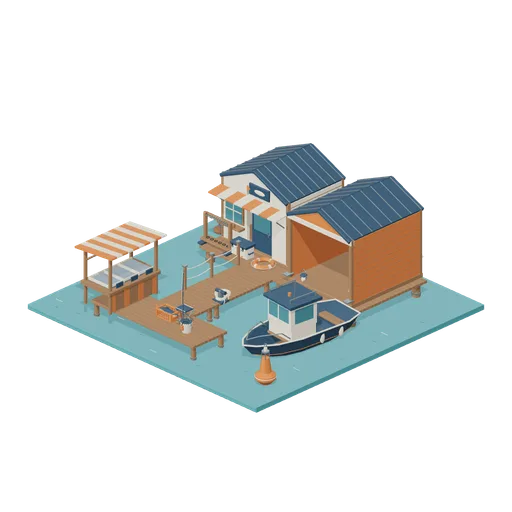
A complete miniature harbor with tackle shop, open boathouse, joined quay and piers, moored cabin launch, market, and fishing activity.
Metro station with an island platform and units at both faces (Modern Rail and Metro Network)
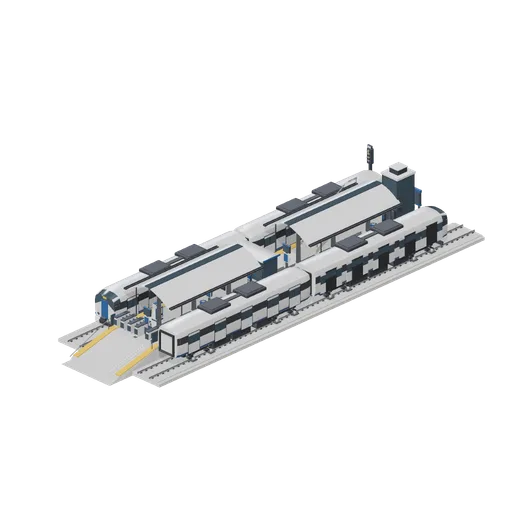
A two track metro station: an island platform with canopies, seating, displays, a shelter, a gate line and an end ramp, slab track each side and a two car metro unit standing at each face, one with its doors open. A glazed lift shaft and a stair flight on the deck give access...
Gaming Floor (Casino Floor and Back Rooms)
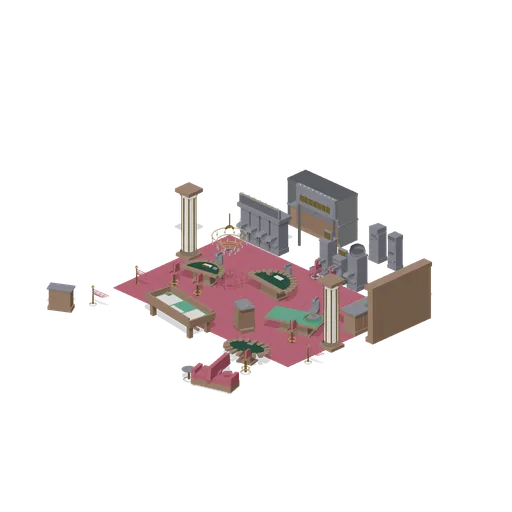
Gaming floor demonstration: a pit of blackjack, roulette, craps and poker tables with dealer chairs and stools on patterned carpet, a slot bank and machine row beyond, a bar with back bar and lounge seating, rope stanchions marking the pit, and the cashier cage on the back...
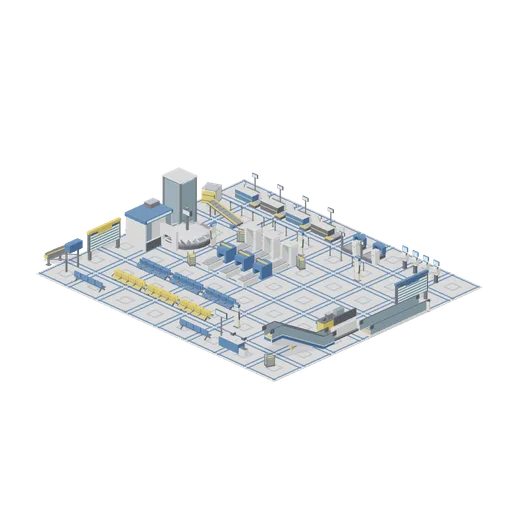
Departures Concourse (Airport Terminal and Ground Operations)
A 32 by 28 metre departures concourse floored on the 4 m tile grid: a row of staffed check-in desks with self-service kiosks and bag drop units behind a managed queue, three security lanes with tray return trolleys, a gate lounge of beam seating around a gate desk, retail and...
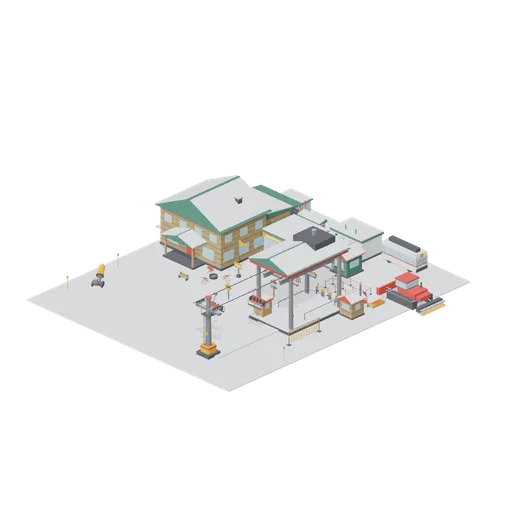
Resort Base Area (Ski Resort and Snow Park)
Base area on a 40 by 48 m tile grid: lift drive terminal with queue maze and pass gates, a 12 m cable span with two hanging chairs, lodge hall with wing, rental shop with racks, ticket office, bus stop with shuttle, groomer and slope-side furniture. Static layout; no...
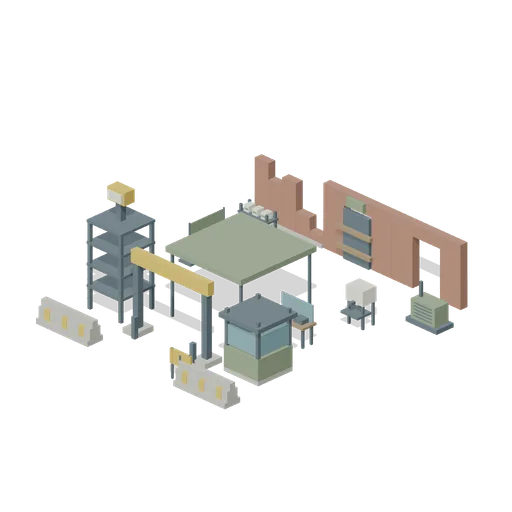
Checkpoint to Safehouse (Zombie Quarantine Streets)
A clear3m+ inspection route through a gate and canopy towards a braced safehouse, with separated triage and supplies.
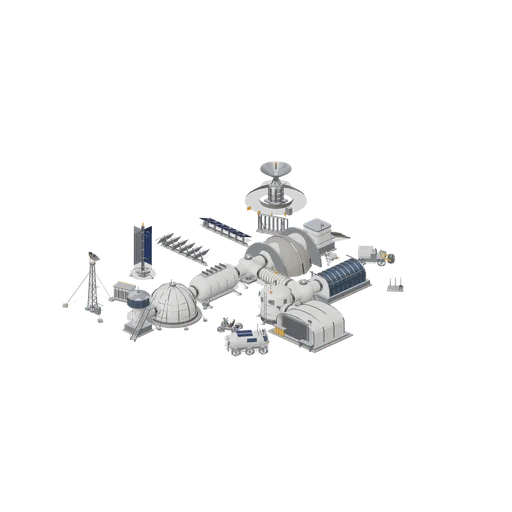
Lunar Colony Overview (Moon Base Colony and Lunar Rovers)
A working surface base: two tunnel junctions link a crew habitat, an inflatable dome, an observation turret, a greenhouse, a medical module, a regolith shielded habitat, an airlock and a vehicle workshop, every mate made through the hab-port interface 2.4 m above the...
Working Airfield At Dusk (Aircraft Fleet and Airfield)
A whole general aviation airfield laid out tight as one place: a 70 metre lit runway with a threshold at each end, a parallel taxiway turning north into a twenty four bay apron, a hangar built from its arch modules and closed at both ends with a light single half out of the...
Body to Finish Line (Car Factory Production Line)
A 48 by 18 m car assembly plant built from the hall kit: nine roof trusses on twenty two steel columns, a closed back wall and both end walls with a roller shutter, a window band and personnel doors, a deck and ridge lantern roof over the back half and a mezzanine walkway...
Walled Market Quarter (Fantasy MMO City And Townsfolk)
A hand painted fantasy city quarter inside a forty eight metre circuit of curtain wall, with a wall walk on corbels, arrow loops, four quoined corner towers, two round flanking towers, a postern in the west wall and the great gatehouse in the south wall, its portcullis and...
Fortified forest outpost (FPS Survival Forest Outpost)
A free survival game scene: a fortified scavenger outpost in dense conifer forest around a half derelict research station. A ring of timber palisade and chain link closes a 28 by 20 metre compound, with a two leaf palisade gate on the south track under a lit red lamp and...
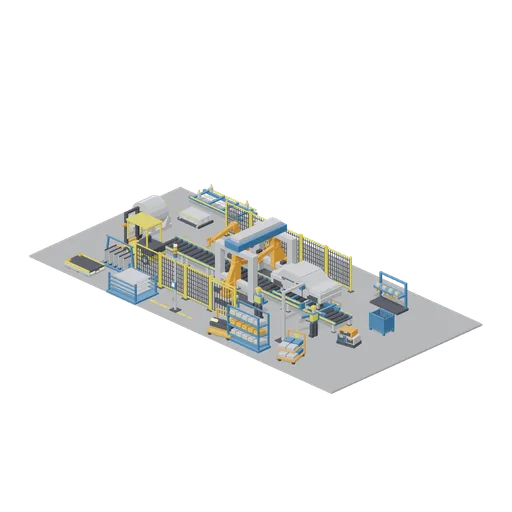
Framing Cell and Press Feed (Car Factory Production Line)
A single 20 by 12 m body shop cell on the plant floor: seven skid conveyor sections carry a body in white on its carrier skid through the framing gate, three welding robots work it from inside a run of yellow guarding with an access gate, and the panel racks, blank stack and...
Similar assets
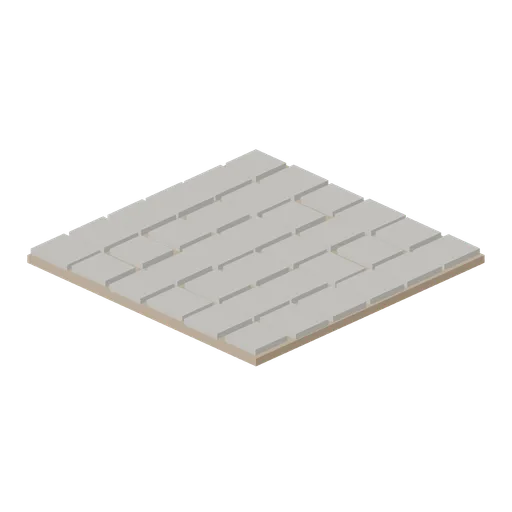
Stone Street Module (Korean Hanok Village and Street)
A 3 m square of village street laid in irregular stone setts on an earth bed, with the joints left open between them.
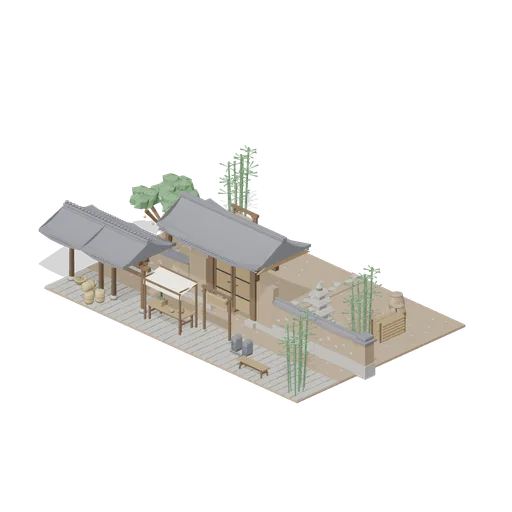
Village gate and market street (Korean Hanok Village and Street)
The gate end of the plot on its own at working scale, open topped like the plot scene so everything inside the wall stays visible from a walk at eye height. The tile roofed gate house stands on the axis of a clay and stone boundary wall that runs the full frontage and is...

Village Hall Wall Module (Village Hall and Community Events)
A 2 m by 3.2 m village hall wall module: cream painted plaster over a stained dado rail, a white skirting and a high window with a glazing bar and a moulded cill at 2 m. Modules butt on the 2 m module, so a hall wall of any length is a run of them.
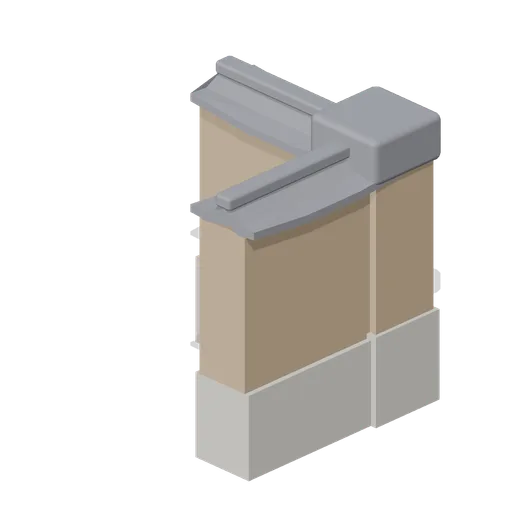
Village Wall Corner (Korean Hanok Village and Street)
A corner of village wall on the 3 m grid: two half runs of stone and clay meeting in a square pier under a continuous tiled capping.
 Animated
Hanok Room Module (Korean Hanok Village and Street)
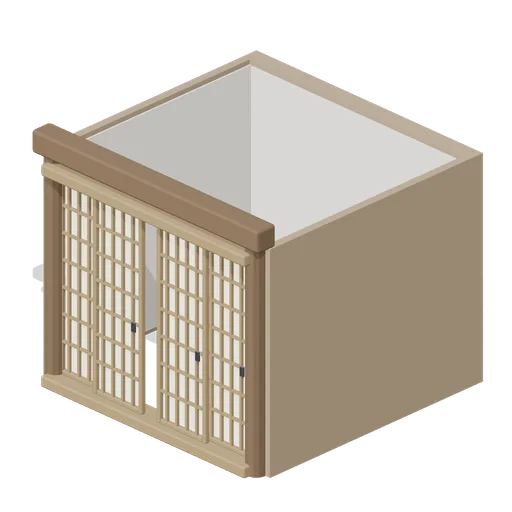
One walled bay of a hanok: clay walls rendered white inside, corner posts, a header beam and a four leaf papered front whose two inner leaves slide.
Village Wall Straight (Korean Hanok Village and Street)
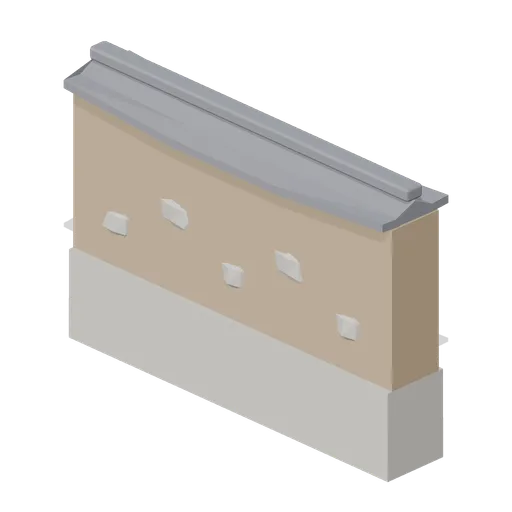
A 3 m run of village boundary wall: a rough stone footing course, a clay body with stones bedded in it and a tiled capping with a ridge tile.

Village Wall End Pier (Korean Hanok Village and Street)
A square stone and clay pier with a tiled cap, to stop the end of a wall run at a gate or an opening.
Hanok Maru Floor Module (Korean Hanok Village and Street)
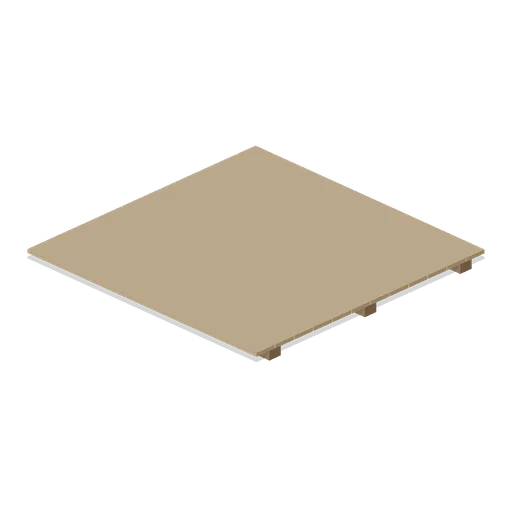
A 3 m square of raised maru floor: three joists carrying twelve hardwood boards with an open gap between each. Sits on the plinth module.
 Animated
Village Gate House (Korean Hanok Village and Street)
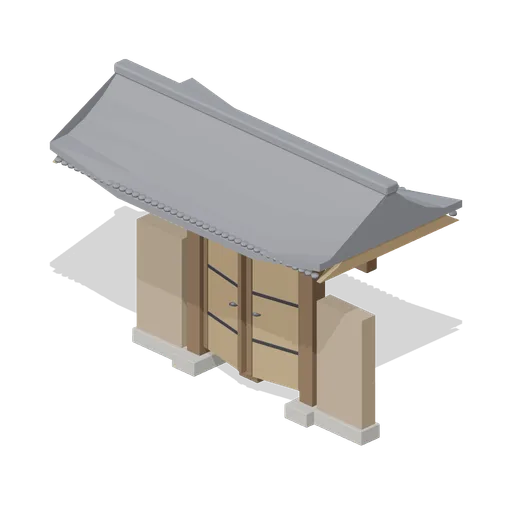
A raised tiled gate house with two heavy timber leaves on iron straps, a stone threshold and clay flanking walls, sized to stand in a village wall run.
Courtyard Ground Module (Korean Hanok Village and Street)
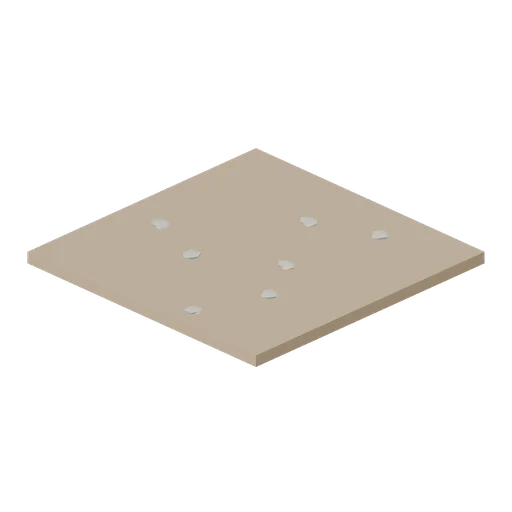
A 3 m square of beaten earth madang, the swept yard a hanok stands round, with a few small stones bedded in the surface.

Acoustic Wall Panel Module (Music Recording Studio and Instruments)
A 1.2 m wall module 2.4 m tall: a stud wall with a skirting and a framed 50 mm acoustic absorber in grey fabric on its face, with wall-left and wall-right ports at half height so modules run into each other, into a window module or into a corner bass trap.
Stone Plinth Base Module (Korean Hanok Village and Street)
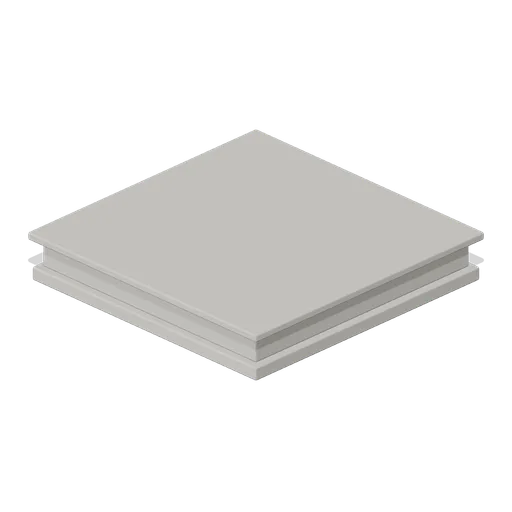
A 3 m square dressed stone plinth course in three steps, the raised base a hanok floor is laid on. Tiles on a 3 m grid.