
Loading model
About
A modern South Asian bazaar street, built as modules so a developer can run it as long as they like. The frontage is a 4 m grid: a shopfront bay with a steel roll shutter that winds up into its fascia, the same bay shipped open for trade with its counter and back shelves in view, a balcony storey with a pierced jali screen, a turned balustrade and a drying rail, a chamfered two storey corner block, a painted plaster wall run, a stepped doorway with teal leaves, an arched colonnade bay, a compound wall with barred gates that swing, an external staircase and the black water tank on its angle frame that stands on every roof. The ground is tarmac road tiles, kerbed pavement, a pavement with a road gully in it and stone yard paving, all ported on four edges or both ends. The shrine is deliberately generic: a square sanctum with a five tier stepped tower and a brass finial, an open sided pillared porch, a carved band course, a lamp column, a flagpole, a bell on a timber frame, an offering tray, clay lamps, a tulsi planter, a painted niche and a stepped tank edge, with one abstract carved stone on a plinth that depicts nobody. Trade is a fruit and vegetable stall, a spice pitch of open sacks, a cloth stall with a bolt rack, a tea stall with a kettle, stove and glass rack, a sweet counter with a drawer, a garland stall, a vending barrow, a beam scale with weights, tin trunks, a rope and basket rack and chained awning spans. The street itself carries an auto rickshaw, a roadster bicycle, a handcart, a scooter, a motorcycle, charpoys, plastic stools, water pots, a public tap, a bin, a trough, a transformer pole, chained cable spans, wall cabling, a satellite dish, a blank hoarding, bunting, speaker horns and planting. Clips are rigid node transforms only: wheels roll, the shutter opens and closes, the gates swing, the drawer runs out, the trunk lid lifts, the bell swings, the scale tilts and the tap handle turns. Garlands, cloth bolts, awning sheets, overhead cables, bunting, drying laundry and water are modelled solid and are static, because flexible material needs a joint per element that one rigid node transform cannot give, and steam, flame and smoke are not modelled at all. There are no people and no animals in this pack, so there are no skinned meshes. Nothing carries a brand, a logo, a number plate or a readable word in any script: every sign board, shutter, hoarding and panel is blank or painted with abstract bands and blocks, and no real business, temple or product is reproduced. Original AI-generated CC0 geometry, prepared for human review. No physics, gameplay, colliders, navigation or embedded lights.
Files load directly from the CDN. Choose the pieces you need. Colliders, navigation and gameplay scripts are supplied by your game.
Use with an AI agent
Copy this prompt into your AI chat, then describe what you want to build with the pack.
Use the “Indian Bazaar Street and Temple” pack in my project.

Manifest (JSON, every model with its CDN URL): https://3dassets.dev/api/v1/packs/indian-bazaar-street-and-temple
Starter scene (one GLB with every piece placed): https://cdn.3dassets.dev/assets/36582/v1/model.glb
Pack page: https://3dassets.dev/packs/indian-bazaar-street-and-temple
Description: 61 realistic South Asian street models: modular shopfronts with roll shutters, jali balconies, a small shrine with a stepped tower, porch and bell, spice, cloth, tea, sweet and garland stalls, an auto rickshaw, cots, pots, poles and cabling, and an assembled street.

- 62 GLB models, 6.2 MB in total
- Units: metres, +Y up, shared scale and palette across the pack
- Licence: CC0 1.0 Universal (no attribution required)
- Loading: three.js GLTFLoader; no additional decoders required. Load models individually from the manifest, or the starter scene as one file.
Also available as a JSON manifest or via the MCP server.
Common questions
How do I use Indian Bazaar Street and Temple with my AI development tools?
How do I get started?
Which game engines and tools can I use Indian Bazaar Street and Temple with?
How do I import this pack into Unity, Godot, Unreal or Blender?
Can I use Indian Bazaar Street and Temple in a commercial game, and do I need to credit anyone?
Can I load it from the CDN instead of downloading it?
Do I have to download the whole pack?
Do the models in Indian Bazaar Street and Temple fit together?
Game kit
Indian Bazaar Street and Temple
61 realistic South Asian street models: modular shopfronts with roll shutters, jali balconies, a small shrine with a stepped tower, porch and bell, spice, cloth, tea, sweet and garland stalls, an auto rickshaw, cots, pots, poles and cabling, and an assembled street.
One GLB with every piece placed in a starter scene. Each model is also below on its own.
View demoEverything in this pack

Street Road Module (Indian Bazaar Street and Temple)
A 4 x 4 m tarmac road tile: a 120 mm charcoal slab with a broken centre line down it and two paler patches of repair. Four edge ports, so tiles butt into a carriageway of any length or width.

Pavement Module (Indian Bazaar Street and Temple)
A 4 m length of raised footway: a 140 mm kerb along the road edge, a stone footway behind it and six flagstones laid on top so the joints read. 2.4 m deep, and the shop plinth sits against the back edge. End ports at both ends.

Pavement Drain Module (Indian Bazaar Street and Temple)
The same 4 m footway with a road gully in it: a recess at the kerb line holding a seven bar iron grate in a frame, and the flagstones set back behind it. Same kerb height and the same end ports as the plain pavement, so it drops into a run anywhere.

Stone Paving Module (Indian Bazaar Street and Temple)
A 4 x 4 m stone paved yard tile, laid to the same 240 mm datum as the footway: a bed with sixteen flags on it in two greys so the joints read. Four edge ports, for a temple forecourt, a compound yard or a widened pavement.
 Animated
Shopfront Bay with Roll Shutter (Indian Bazaar Street and Temple)
A 4 m shop bay closed for the night: a stone plinth, plaster walls, a 2.9 m opening under a steel roll shutter, a crimson canopy on stay rods and a blank painted sign board over it. A timber counter and a three shelf back fitting stand inside. Bays butt along X.

Shopfront Bay Open for Trade (Indian Bazaar Street and Temple)
The same 4 m shop bay trading: the roll shutter is already wound up into the fascia behind the canopy and the 2.9 x 2 m opening is clear, so the counter and the back shelves are in view from the street. The shutter is held open here and does not animate.

Balcony Bay with Jali Screen (Indian Bazaar Street and Temple)
The storey over a shop: a saffron painted front with a pierced jali screen in a 2.1 m opening, a stone balcony on two brackets with a turned teal balustrade, a drying rail with two cloths on it and a parapet round the flat roof. Sits on a shopfront bay at 3.9 m.

Corner Building Block (Indian Bazaar Street and Temple)
A two storey corner plot, 5 x 5 m and 7.4 m tall: plaster over a stone plinth with the street corner chamfered off, a shuttered shop on each face, a teal entrance door on the chamfer with a balcony over it, jali screened upper windows and a parapet round the roof.

Painted Plaster Wall Run (Indian Bazaar Street and Temple)
A 4 m run of street wall: a stone plinth, a plaster face 3.1 m high, a saffron painted skirt and a teal panel on both sides and a stone coping over the top. No lettering anywhere on it. End ports, so runs butt into a frontage of any length.

Stepped Doorway (Indian Bazaar Street and Temple)
A house door off the street: three stone steps up to a 1.4 m opening in a plaster wall, a timber frame and reveal, two teal leaves with painted panels and brass handles, a saffron head band and a stone coping. 2.6 m wide, 3.3 m tall. The leaves are shut and static.

Arched Colonnade Bay (Indian Bazaar Street and Temple)
A 4 m bay of covered arcade: two pairs of plaster piers on a stone plinth, a nine voussoir arch turned across each face at 2.1 m springing and a stone roof slab with a projecting cornice over. 2.6 m deep, 3.6 m tall. End ports, so bays butt into a colonnade.

Rooftop Water Tank on Frame (Indian Bazaar Street and Temple)
The tank on every flat roof on the street: a 1.16 m black plastic cylinder with a lid boss, sitting in a timber cradle on a braced steel angle frame 1.6 m high with padded feet, and a down pipe running off the side. 1.64 m across overall.

External Staircase (Indian Bazaar Street and Temple)
The stair that reaches the roof from the yard: fourteen stone treads at 185 mm rise on a plaster stringer wall, a landing slab at the top and a steel tube handrail on eight standards. 1.4 x 3.8 m in plan, 3.8 m to the landing. Static.
 Animated
Compound Wall with Gate (Indian Bazaar Street and Temple)
The wall round a yard or a shrine: 4.6 m of plaster wall on a 2.2 m gateway, piers with stone caps and finials, a coping course, a saffron painted panel each side and two barred teal gate leaves hinged on the inner piers. 2.9 m to the finials. The leaves swing.

Street Shrine with Stepped Tower (Indian Bazaar Street and Temple)
A small street shrine, 3.7 m square at the plinth and 7.5 m tall: a two course plinth, a sanctum with a saffron framed doorway, and a stepped tower of five receding tiers with moulded bands, corner blocks and a brass finial. An empty stone pedestal stands inside.

Carved Tier Band (Indian Bazaar Street and Temple)
A 2 m course of shrine carving to run round a tower or a wall head: a moulded stone base, four framed saffron panels on each face, a dentil band of eight blocks and a projecting coping. 920 mm tall, 620 mm deep, with end ports so courses butt into a run of any length.

Pillared Porch (Indian Bazaar Street and Temple)
The open porch a shrine is entered through: a 3.4 m square stone platform in two courses, four turned columns with painted bands, beams both ways over them and a flat roof with a projecting cornice and a low parapet. 3.64 m to the coping, open on all four sides.
 Animated
Temple Bell on a Frame (Indian Bazaar Street and Temple)
A brass bell hung where it can be reached: two timber posts on stone pads, a beam across them with a brass saddle, and a 660 mm bell with a hanger and a clapper on its own pivot at the beam. 2.1 x 2.5 m overall. The bell swings; the frame is static.

Offering Tray (Indian Bazaar Street and Temple)
A 640 mm brass tray with a rolled rim, as it is left at a shrine: a small bowl, a ring of orange and red flower heads and two pinches of coloured powder on it. 170 mm tall to the flowers. Static; the loose contents are modelled as one solid with the tray.

Oil Lamp Row (Indian Bazaar Street and Temple)
Five small clay oil lamps on a stone ledge, 1.16 m long and 250 mm tall: each lamp is a shallow bowl with a rolled rim and a wick standing at the lip. No flame, no light source and no glow; the lamps are geometry only.

Lamp Column (Indian Bazaar Street and Temple)
The lamp column that stands in front of a shrine: a stepped stone base, a round shaft and three tiers of eight brass lamp cups on short stone arms, capped with a moulded head and a brass ball. 4.2 m tall, 1.1 m square at the base. No light source.

Step Tank Edge (Indian Bazaar Street and Temple)
A 4 m module of the stepped edge of a water tank: five 300 mm stone courses cut back to the water, a wall and a coping behind them and a flat teal water plate at the bottom. 2.9 m across and 1.66 m tall. The water is a static plate with no shader.

Temple Flagpole (Indian Bazaar Street and Temple)
The flagpole beside a shrine: a stepped stone base, a tapered steel shaft with a brass collar and ball at the head, and a saffron pennant with a red hem hanging from it. 6.4 m tall on a 1 m base. The pennant is modelled solid and is static.

Tulsi Planter (Indian Bazaar Street and Temple)
The masonry planter a tulsi plant is kept in beside a doorway: a 920 mm stone base, a plaster column with saffron painted panels, a moulded head, a terracotta basin of soil and a bushy plant in it. 1.94 m tall. Static, with the foliage modelled as clustered solids.

Painted Shrine Niche (Indian Bazaar Street and Temple)
A shrine niche built into a street wall: a plaster panel 1.3 x 2.2 m with a saffron and red painted surround, a recessed arched opening left empty, a stone ledge under it with two clay lamps on it and a coping over. Nothing is depicted, named or lettered in the niche.

Carved Figure on a Plinth (Indian Bazaar Street and Temple)
A carved stone standing on a two course plinth: an abstract banded form tapering through five mouldings to a rounded head, 2.9 m tall on a 1.2 m base, with a marigold garland over it. The form is deliberately abstract and depicts nobody; nothing is named or inscribed.

Fruit and Vegetable Stall (Indian Bazaar Street and Temple)
A 2.2 m produce stall: a timber trestle with a sloped display board over it, four crates of fruit on the table, three heaps on the board, two more crates underneath and a crimson sheet awning on four steel poles at 2.25 m. The awning is static sheet.

Produce Crate Stack (Indian Bazaar Street and Temple)
Three slatted timber crates stacked at the back of a stall with a fourth beside them, the top two heaped with fruit. 960 x 980 x 800 mm overall. The produce is modelled as clustered solids, merged with the crates into one static model.

Open Jute Sack Group (Indian Bazaar Street and Temple)
Four jute sacks standing open the way a grain or pulse pitch keeps them: three tall sacks with rolled collars and a low one beside them, each showing a heap of goods at the mouth, with a plain coloured tag on the side. 1.3 x 0.78 x 1.2 m. Static.

Spice Stall with Open Sacks (Indian Bazaar Street and Temple)
A 2 m spice pitch: a timber table with six open sacks of ground spice on it, each rolled down to a cone of colour, three brass scoops lying beside them and two bigger sacks open on the ground. 2 x 1.2 m and 1.2 m tall. The sacking is modelled solid and static.

Cloth Stall with Bolt Rack (Indian Bazaar Street and Temple)
A 2.3 m cloth pitch: a timber counter with eleven folded stacks laid out on it, a steel rack behind holding seven bolts on end and three laid across at shoulder height. 2.3 x 1.1 x 2.3 m. The cloth is modelled as solid rolls and folds and is static.

Tea Stall with Kettle and Glass Rack (Indian Bazaar Street and Temple)
A 1.9 m tea pitch: a timber counter with a steel top, a two burner stove with a kettle and a pan on it, a three shelf rack of eighteen small glasses beside it and a blank painted board over the counter. 2.3 x 1.1 x 2.26 m. No flame, steam or light.
 Animated
Sweet Counter with Trays (Indian Bazaar Street and Temple)
A 1.8 m sweet counter: a timber carcass with a glazed steel case on it holding six trays of sweets on two levels, a red painted band across the front of the case and a cash drawer on runners under the counter. 1.8 x 0.84 x 1.56 m. The drawer opens.

Flower Garland Stall (Indian Bazaar Street and Temple)
A 2 m garland pitch: a steel frame with nine flower garlands hanging from the front rail at different lengths, a timber counter under them with five baskets of loose heads on it and a big basket on the ground. 2 x 0.9 x 2.2 m. The garlands are solid and static.
 Animated
Vending Barrow (Indian Bazaar Street and Temple)
The two wheeled barrow a hawker trades from: a slatted timber tray on a frame with a shelf under it, long handles with a prop leg, 760 mm spoked wheels, and two crates of produce on the deck. 1.6 x 0.76 x 2.2 m. Both wheels roll on their own axles.
 Animated
Weighing Scale with Weights (Indian Bazaar Street and Temple)
A brass beam scale on a timber table: a column and fulcrum, a 940 mm beam with a pan hung on each end by four cords, a load in one pan and four graded weights standing on the table beside it. 1 x 0.7 x 1.55 m. The beam and both pans rock as one node.
 Animated
Stacked Tin Trunks (Indian Bazaar Street and Temple)
Two painted metal trunks stacked at the back of a shop: a teal trunk under a crimson one, both with steel corner straps, banding and a brass hasp, and a separating tray between them. 1 x 0.92 x 0.6 m. The top lid hinges open on its back edge.

Rope and Basket Rack (Indian Bazaar Street and Temple)
The rack a cordage and basket pitch works from: a timber frame 1.7 m wide with five woven baskets hung off the front rail on handles, three pairs of coiled rope stacked under it and two more baskets on the ground. 1.7 x 0.6 x 2.1 m. Static.

Awning Run on Poles (Indian Bazaar Street and Temple)
A 6 m pavement awning: two steel poles on pads with props and two rails carrying a sloping saffron sheet with a scalloped valance. 3 m at the back, 2.42 m at the eaves, 1.4 m out, so a stall trades under it. Ports sit outside the poles, so a run stands on a pair.
 Animated
Auto Rickshaw (Indian Bazaar Street and Temple)
The three wheeler that works this street: a teal body on a 2.6 m frame with a sloped nose, a screen, a canopy roof on posts over an open cab, a bench seat and a driver saddle, and 600 mm wheels. No plates, operator names or markings anywhere on it. All three wheels roll.
 Animated
Bicycle with Carrier (Indian Bazaar Street and Temple)
A black roadster bicycle leaning on its stand: a straight tube frame, a timber saddle, 680 mm spoked wheels with mudguards, a steel rear carrier and a woven basket over the front wheel. 1.76 m long and 1.1 m tall. Both wheels roll on their own axles.
 Animated
Handcart (Indian Bazaar Street and Temple)
The flat handcart a load is pushed through a bazaar on: a slatted timber deck 2.3 m long with side rails, four 440 mm wheels, a push bar at one end, and three jute sacks and a crate loaded on it. 1.4 x 1.5 x 2.3 m. All four wheels roll.
 Animated
Scooter (Indian Bazaar Street and Temple)
A step through scooter on its stand: a legshield and floor, a crimson body with round side panels, a saddle and pillion pad, a handlebar with a headlamp and mirror, and 520 mm wheels with a front mudguard. 1.72 m long, 1.2 m tall. No plate or markings. Both wheels roll.
 Animated
Parked Motorcycle (Indian Bazaar Street and Temple)
A commuter motorcycle parked on its side stand: a teal tank, a long seat, a finned engine block and exhaust, a tube frame and forks, and 600 mm spoked wheels with a front mudguard. 1.62 m long, 1.12 m tall. No plate, badge or markings. Both wheels roll.

Plastic Stool (Indian Bazaar Street and Temple)
The moulded plastic stool every tea stall keeps a stack of: a 340 mm round seat with a rolled rim on four splayed legs with a tie ring, 430 mm tall. Static, and sized to the tea stall counter and the charpoy.

Plastic Stool Stack (Indian Bazaar Street and Temple)
Five plastic stools stacked the way they are kept between customers, each turned a little on the one below. 340 mm across and 990 mm tall. One static model; the stools are merged and do not separate.

Charpoy String Cot (Indian Bazaar Street and Temple)
The string cot kept outside every shop: four turned timber legs, a pegged frame 1.9 x 0.92 m and a deck of eleven cross tapes over six long ones, woven at 480 mm. The tapes are modelled as solid straps and the cot does not fold.

Water Pot Set (Indian Bazaar Street and Temple)
Three earthenware water pots on rope rings, 520, 440 and 340 mm across, two with metal lids and a steel mug beside them. 0.92 x 0.5 x 0.8 m overall. Static; there is no water surface inside the pots.
 Animated
Public Tap (Indian Bazaar Street and Temple)
The standpipe a street draws water at: a paved apron with a drain grate, a plaster post with a stone cap and a saffron head, a brass bib tap with a three spoke handle, and a pot and a can waiting under it. 1.5 x 1.57 x 1.2 m. The handle turns; there is no water.

Street Bin (Indian Bazaar Street and Temple)
A municipal bin on the pavement: a 560 mm teal drum on a steel stand with a tipping bracket, three banding rings, a blank painted panel on the front and some rubbish showing over the rim. 0.72 x 1.04 x 0.72 m. Static, and the drum does not tip.

Street Water Trough (Indian Bazaar Street and Temple)
The stone trough a street keeps filled at the kerb: a 1.9 m block with a hollowed basin, a teal water plate in it and a short standpipe at one end. 1.9 x 1.18 x 0.8 m. Static, with no animals and no water shader.

Utility Pole with Transformer (Indian Bazaar Street and Temple)
The pole the whole street is wired from: a 6.8 m concrete pole with two cross arms of four insulators, a pole mounted transformer on a braced platform with cooling fins and bushings, a meter box at head height and a strapped bundle of seven service cables running up it. Static.

Overhead Cable Span (Indian Bazaar Street and Temple)
A 6 m span of street wiring: two concrete poles with timber cross arms and insulators, three power lines and a heavier bundle slung between them with a real sag, and a service drop to a building. 5.6 m to the arms. Ports sit outside the poles, so spans chain.

Wall Cable Bundle and Meter Boxes (Indian Bazaar Street and Temple)
The servicing on a shop wall: a steel meter cabinet and a teal junction box, nine cables running up the plaster in three straps, and a coil of slack hung on a hook beside them. 1.4 x 1.8 m of wall, 210 mm proud. Hangs on any flat frontage. Static.

Satellite Dish (Indian Bazaar Street and Temple)
A 660 mm offset dish on a wall bracket: a backing plate, a tilted dish on a short mast, a feed arm and head, and a cable running down off the bracket. 0.66 x 0.62 x 0.86 m, origin at the wall plate so it mounts at any height. Static.

Blank Hoarding Frame (Indian Bazaar Street and Temple)
A 4 m roadside hoarding with nothing on it: two braced steel posts, a framed board 4 x 1.8 m carrying a blank painted panel with two abstract colour bands, and diagonal bracing behind. 3.4 m to the top. No text, logo or image; paint your own on the panel.

Bunting Line (Indian Bazaar Street and Temple)
A 5 m line of bunting on two steel poles: a sagging wire with twelve triangular flags in five colours hanging from it at 2.6 m. The flags are flat solids and the whole line is static, because cloth needs a joint per flag that a rigid node cannot give.

Speaker Horn on a Pole (Indian Bazaar Street and Temple)
A pair of horn loudspeakers on a 3.6 m steel pole, facing opposite ways off a yoke, with drivers behind them and the feed cable taped up the pole in three straps. 1.16 m across the horns. Static and silent; there is no audio in a GLB.

Potted Plant Group (Indian Bazaar Street and Temple)
Three planted pots kept beside a door: two terracotta and one painted, 320 to 520 mm across with soil discs and bushy foliage over them. 0.96 x 0.9 x 0.86 m overall. Static, with the foliage modelled as clustered solids.

Plastic Stool Blue (Indian Bazaar Street and Temple)
The same moulded plastic stool in blue: a 340 mm round seat with a rolled rim on four splayed legs with a tie ring, 430 mm tall. Geometry is identical to the red stool; only the material differs.

Awning Run on Poles Crimson (Indian Bazaar Street and Temple)
The same 6 m awning span in crimson with a saffron valance, so a chained run of awnings alternates colour down a pavement. Geometry, pole position and end ports are identical to the saffron span.

Bazaar Street and Shrine at Trading Hours (Indian Bazaar Street and Temple)
A 32 m bazaar street laid in one continuous surface: a tarmac carriageway down the middle, kerbed footways either side and a paved yard along the east frontage. Five shop bays run down the west side with their roll shutters up, counters and back shelves in view, jali screened...
Similar packs
 70 models
Halloween Slasher Street
A dead end 1980s suburban street on Halloween night: a modular clapboard house kit, yard and street furniture, carved pumpkins and graveyard dressing, and the props a slasher film leaves behind.
AI used in 70 of 70 files · Claude Fable 5.1
 46 models
Japanese School and City Street
A school on a 3 m classroom grid with its grounds and gate, and the shopping street outside it on a 4 m shopfront grid: sliding classroom doors, sash windows, shop shutters, lockers, bicycles and cherry trees.
AI used in 46 of 46 files · Claude Fable 5.1
 61 models
Pharmacy and High Street Chemist
A modern high street chemist: glazed shopfront bays, a shutter, gondola aisles of abstract stock, till counters, collection lockers, a consultation room, and a dispensary of counters, benches, cabinets, a safe and a cold chain fridge. No branding and no readable text anywhere.
AI used in 61 of 61 files · Claude Opus 5
 91 models
Pixel Modern City Street
Ninety pixel art city street models: a 4 m road and pavement grid, a 4 m facade kit that closes into real blocks, cars, a bus and bikes with working wheels and doors, twenty pieces of street furniture, a park corner and twelve people.
AI used in 91 of 91 files · Claude Fable 5.1
 47 models
Skate Park and Street Sports
46 stylized skate park models: modular concrete ramps, bowl walls and coping, stairs and rails, boards, a BMX and a scooter with rolling wheels, safety gear, fencing, a graffiti wall and park furniture, in one assembled park.
AI used in 47 of 47 files · Claude Opus 5
 49 models
Street Food Market and Food Trucks
48 stylized street food market models: food trucks, vans and trailers with rolling wheels and lifting serving hatches, gazebo, trestle, grill, wok and bar stalls, ported floor tiles, counters, queue rail and festoon lighting, seating, service kit and the food left on the tables.
AI used in 49 of 49 files · Claude Opus 5
 52 models
Zombie Quarantine Streets
Zombie outbreak streets: fractured and breached walls, blown storefronts, checkpoint gates and guard booths, jersey barriers, sandbags and barricades, triage and field kitchen props, rubble and wrecked cars.
AI used in 52 of 52 files · Claude Fable 5.1
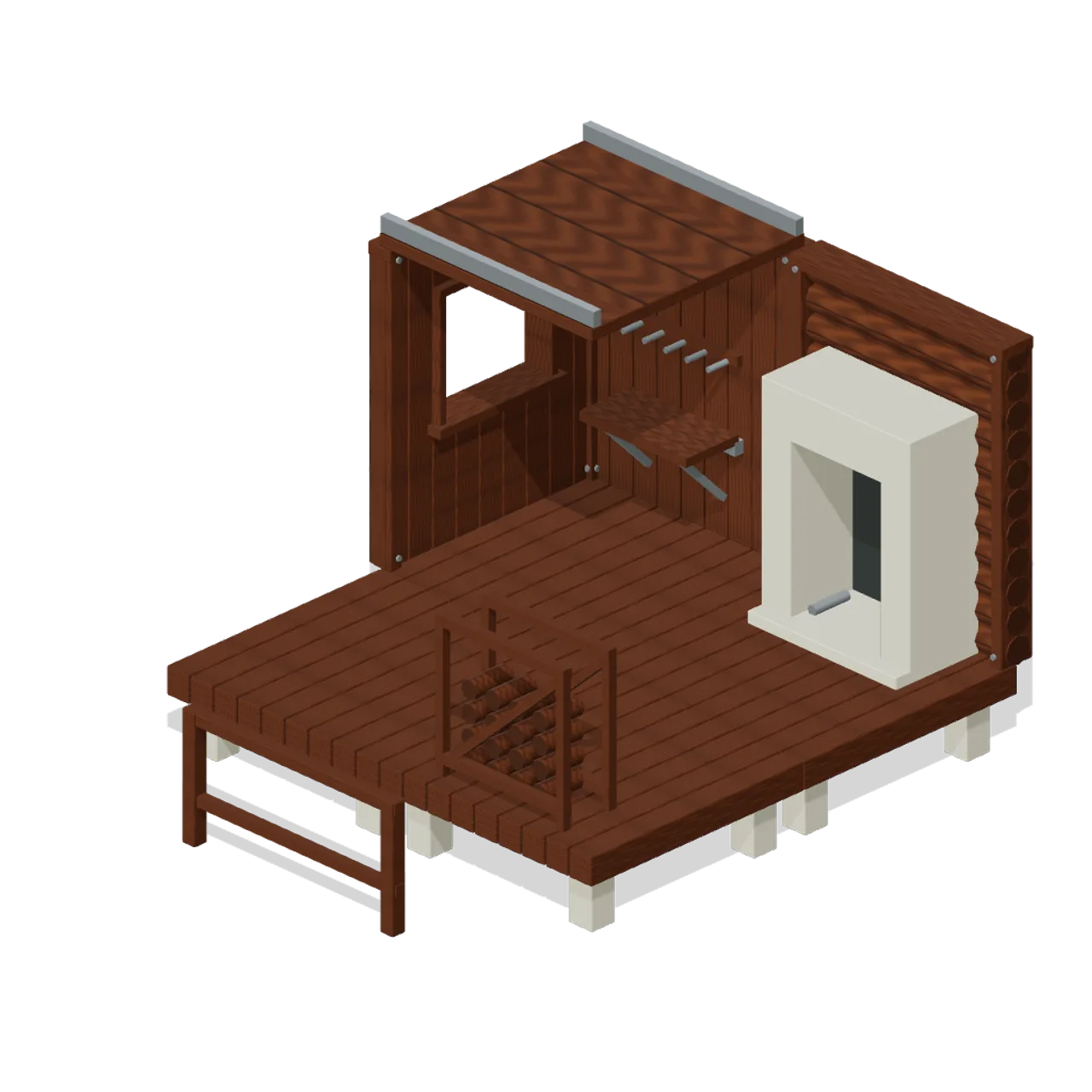 182 models
Modular Survival Base Builder
A 180-piece modular base builder: foundations, floors, walls with doors and windows, roofs, stairs and ramps in timber, log, wattle, corrugated and rubble finishes, all snapping to one grid.
AI used in 182 of 182 files · Claude Fable 5.1
 80 models
Modular Spaceships and Space Fleet
Original socketed hulls with modular equipment, station structures, utility craft and debris.
AI used in 80 of 80 files · Claude Fable 5.1
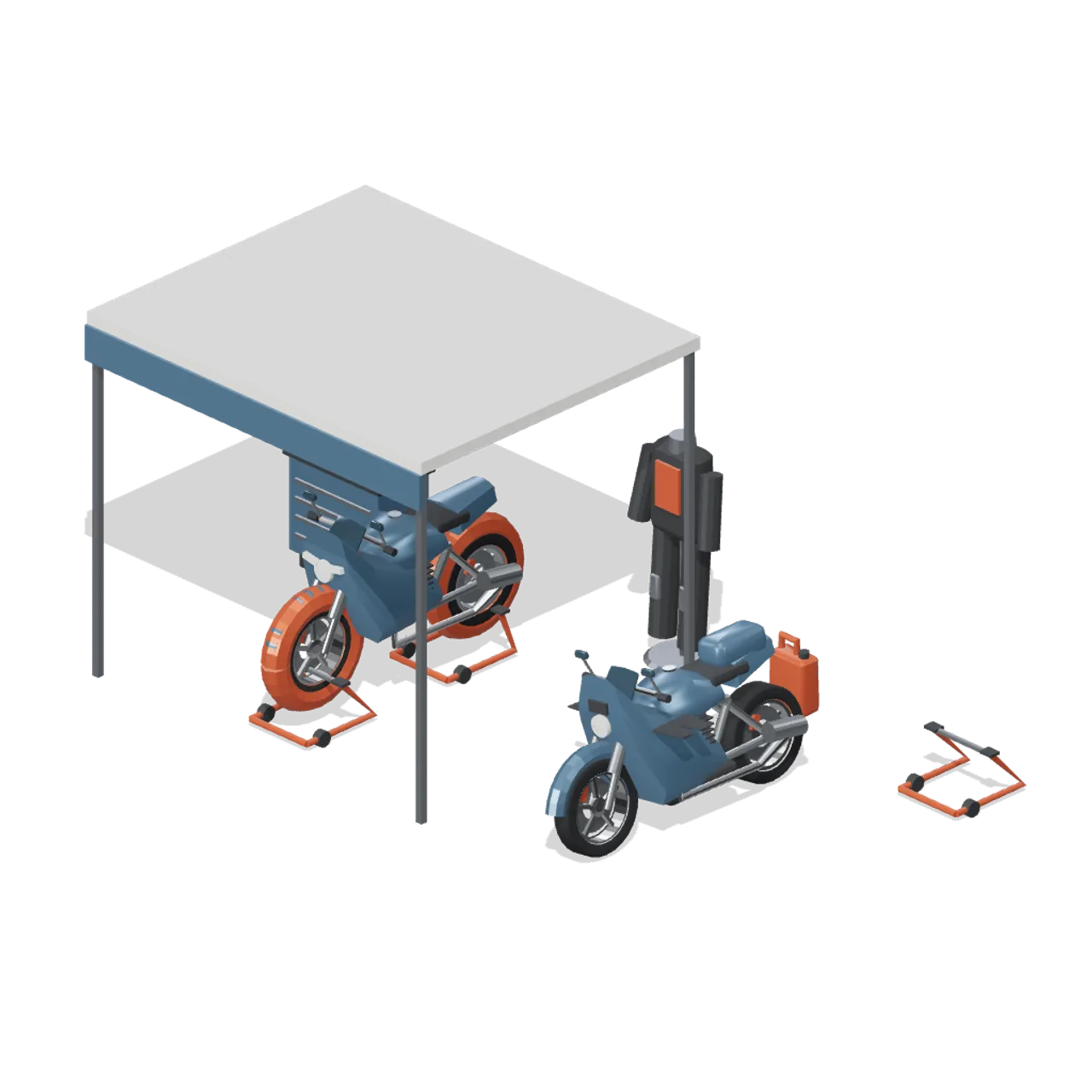 69 models
Motorcycle Racing and Street Bikes
Original race and street motorcycles with riding gear, paddock equipment, showroom fixtures and safety furniture.
AI used in 69 of 69 files · Claude Fable 5.1