Loading model
About
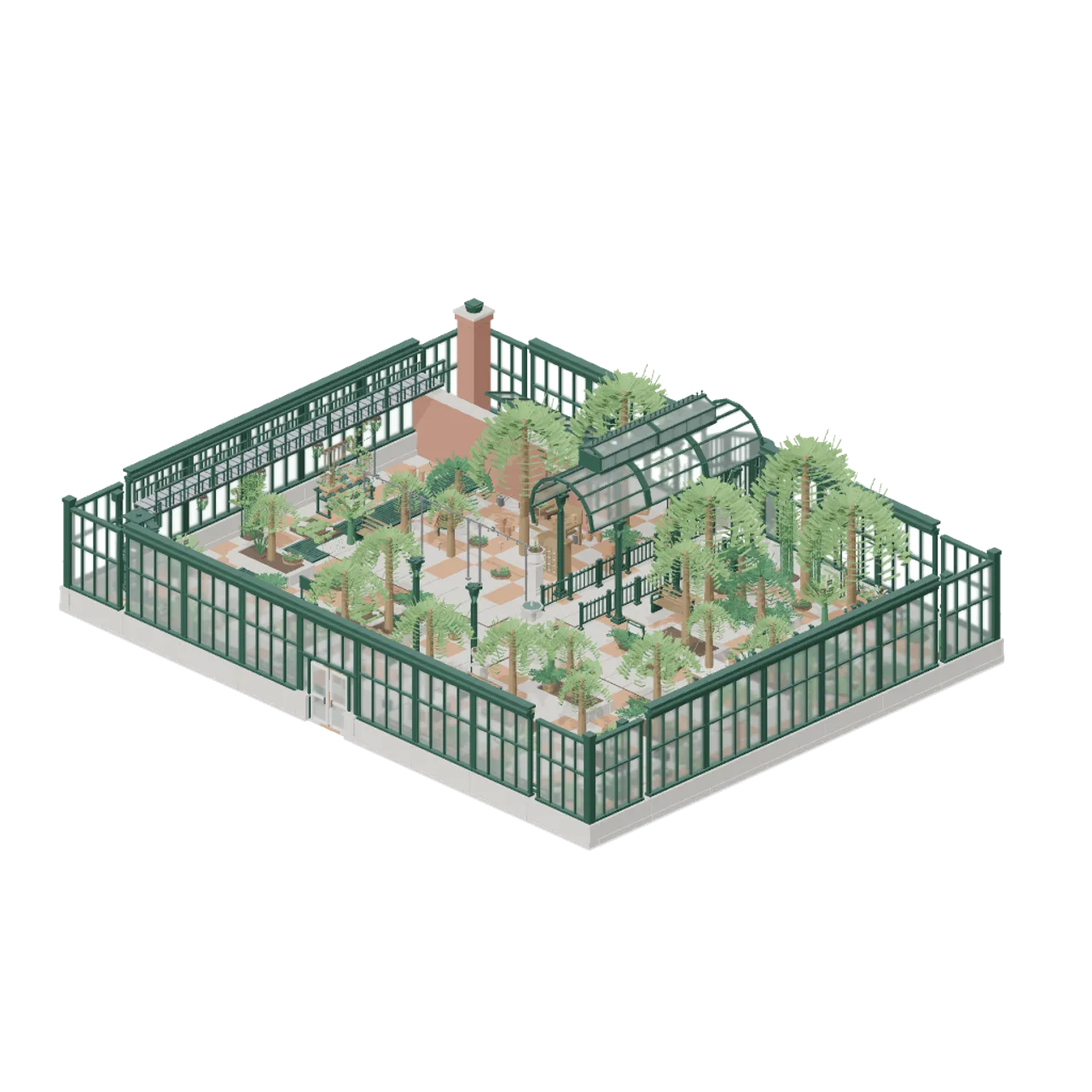
A complete Victorian palm house a developer can assemble rather than dress. The shell is modular on a 3 m bay: stepped stone plinth, glazed cast iron bay frames, corner bays, a faceted apse end, glazed entrance doors, a curved eaves and gutter run, a half round barrel vault, a lantern ridge with opening ventilators, pitched roof glazing for a lean to, tiled floor modules, flagged path, cast iron grating, fluted columns with foliate capitals, a gallery walkway and a spiral stair. The services are here too: cast iron heating pipe runs with a valve set, an overhead misting line, ventilator shafting and its crank gear, a riveted water tank, rainwater downpipes, a brick boiler house wall with a door that opens, a flue chimney and a coal chute. The working end is a potting bench with a drawer, a twenty drawer seed cabinet, pot stacks, a tool rack, a watering can, a barrow and tiered display staging. The ground is raised beds with stone kerbs, a sunken fern pit, rockery outcrops, a lily pond coping that closes a pond on four sides, lily pads, a fountain basin, railings, benches, urns, planter tubs and a collecting box. The collection is palms in three heights, a tree fern, a banana, a cycad, bird of paradise, bromeliads, an orchid on a mount, a hanging basket, a trained climber, cacti, succulents, ferns, moss and bamboo. Animation is rigid node transforms only: the ridge ventilators swing open on the lantern, the entrance doors and the boiler house door open, seed and bench drawers run out, the crank wheel and the ventilator shafting turn, valve handwheels spin and the barrow wheel rolls. Glazing, water, mist, foliage and the hanging baskets are modelled solid and stay still, because glass is a surface a shader treats and water, mist and flexible leaves need a shader or a joint per element, none of which is reachable with one rigid node transform. Plants are static geometry with no growth animation and no skinning, and there are no people anywhere in the pack. No botanic garden, palm house, horticultural society, nursery or seed company is named or depicted, no real building is reproduced, and every plant label, specimen board, sign and plate face is blank: they carry no botanical names, because a label is exactly where a real name would go.
Files load directly from the CDN. Choose the pieces you need. Colliders, navigation and gameplay scripts are supplied by your game.
Use with an AI agent
Copy this prompt into your AI chat, then describe what you want to build with the pack.
Use the “Botanical Glasshouse and Palm House” pack in my project.

Manifest (JSON, every model with its CDN URL): https://3dassets.dev/api/v1/packs/botanical-glasshouse-and-palm-house
Starter scene (one GLB with every piece placed): https://cdn.3dassets.dev/assets/38591/v1/model.glb
Pack page: https://3dassets.dev/packs/botanical-glasshouse-and-palm-house
Description: A Victorian botanical glasshouse in one realistic family: modular cast iron bays, corner bays, an apse, barrel vault and lantern ridge on a 3 m grid, plinth, eaves, gallery and spiral stair, heating and misting, the potting end, and a planted palm house collection.

- 63 GLB models, 5.8 MB in total
- Units: metres, +Y up, shared scale and palette across the pack
- Licence: CC0 1.0 Universal (no attribution required)
- Loading: three.js GLTFLoader; no additional decoders required. Load models individually from the manifest, or the starter scene as one file.
Also available as a JSON manifest or via the MCP server.
Common questions
How do I use Botanical Glasshouse and Palm House with my AI development tools?
How do I get started?
Which game engines and tools can I use Botanical Glasshouse and Palm House with?
How do I import this pack into Unity, Godot, Unreal or Blender?
Can I use Botanical Glasshouse and Palm House in a commercial game, and do I need to credit anyone?
Can I load it from the CDN instead of downloading it?
Do I have to download the whole pack?
Do the models in Botanical Glasshouse and Palm House fit together?
Game kit
Botanical Glasshouse and Palm House
A Victorian botanical glasshouse in one realistic family: modular cast iron bays, corner bays, an apse, barrel vault and lantern ridge on a 3 m grid, plinth, eaves, gallery and spiral stair, heating and misting, the potting end, and a planted palm house collection.
One GLB with every piece placed in a starter scene. Each model is also below on its own.
View demoEverything in this pack
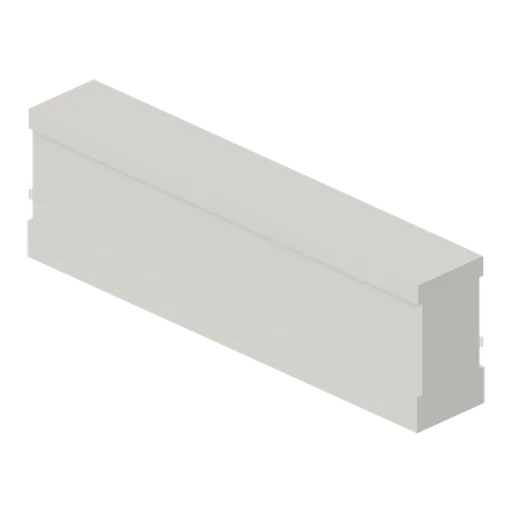
Stepped stone plinth wall, 3 m (Botanical Glasshouse and Palm House)
Three metre stepped limestone plinth 0.9 m high, an oversailing base course, a set back die and a weathered cap, ported on both ends so a run of any length carries the glasshouse bay frames.
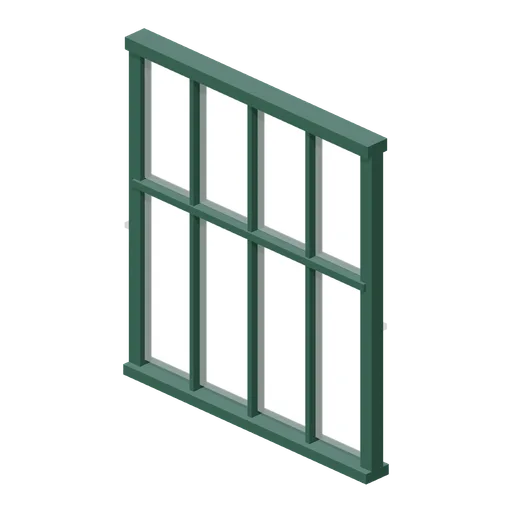
Glasshouse bay module, 3 m (Botanical Glasshouse and Palm House)
Three metre cast iron glasshouse bay 3.3 m tall: stiles, sill, wall plate, a transom and three glazing bars carrying eight panes, ported both ends. Stands on the stepped plinth wall at y=0.9.
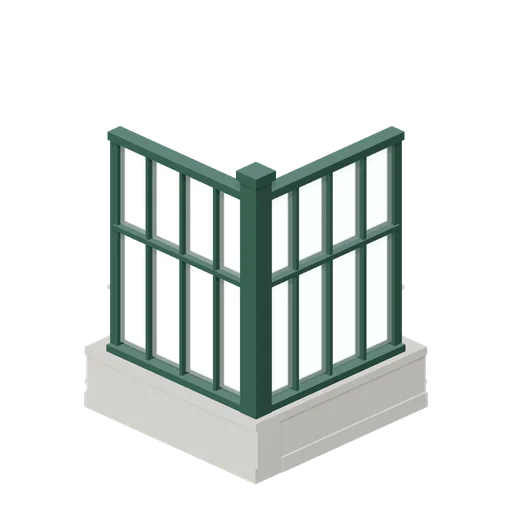
Glasshouse corner bay, 3 m arms (Botanical Glasshouse and Palm House)
Right angle corner for the glasshouse shell: an L of stepped plinth, a heavy corner column and two 3 m glazed arms, ported at plinth and frame height on both arm ends so the runs land straight on it.
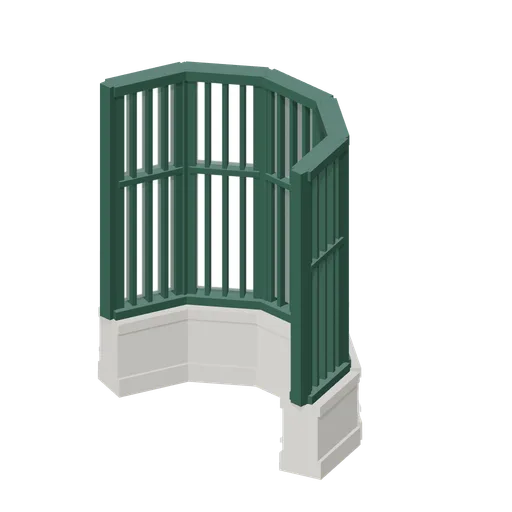
Glasshouse apse end, 3 m chord (Botanical Glasshouse and Palm House)
Semicircular apse closing the end of a glasshouse run: five faceted glazed bays on a stepped stone plinth of the same curve, 1.5 m deep on a 3 m chord, ported at plinth and frame height on both sides.
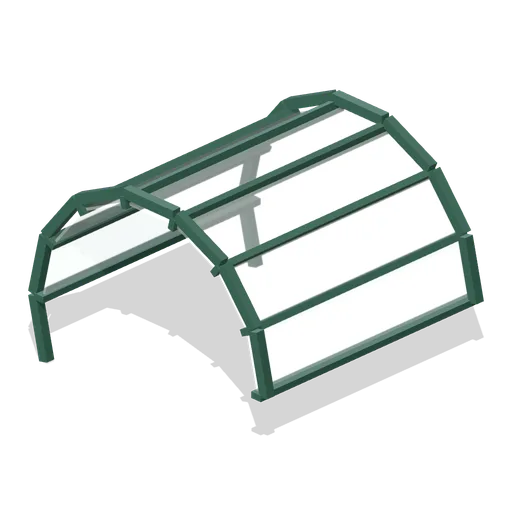
Barrel vault roof section, 3 m span (Botanical Glasshouse and Palm House)
Half round glazed barrel vault section, 3 m span and 3 m long, seven glazed facets between eight glazing bars with a moulded arch rib at each end. Ports on both ends so the vault repeats down a run.
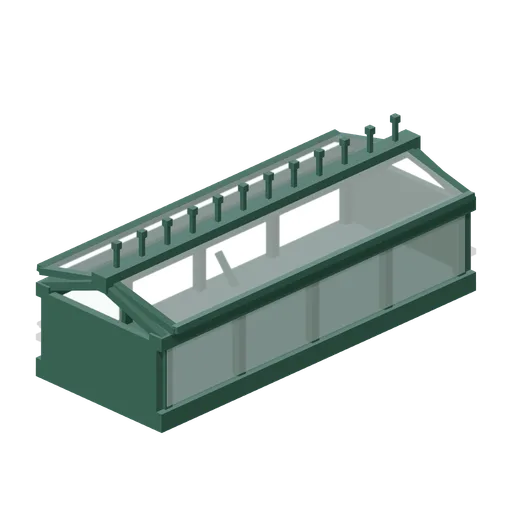 Animated
Lantern ridge with opening vents, 3 m (Botanical Glasshouse and Palm House)
Three metre glazed lantern for the crown of the vault: a curb, upstand glazing, cast iron cresting and a pair of side hung ridge ventilators that swing open on their arms.
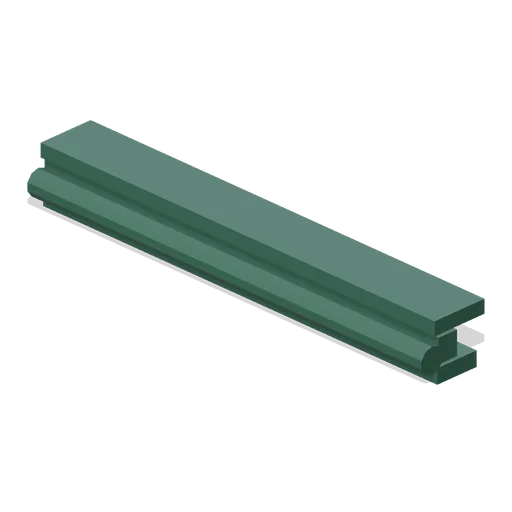
Curved eaves and gutter run, 3 m (Botanical Glasshouse and Palm House)
Three metre eaves run for the top of a bay: a coved cast iron cornice on scroll brackets with a half round gutter under it, ported both ends so the eaves follows the wall round the house.
 Animated
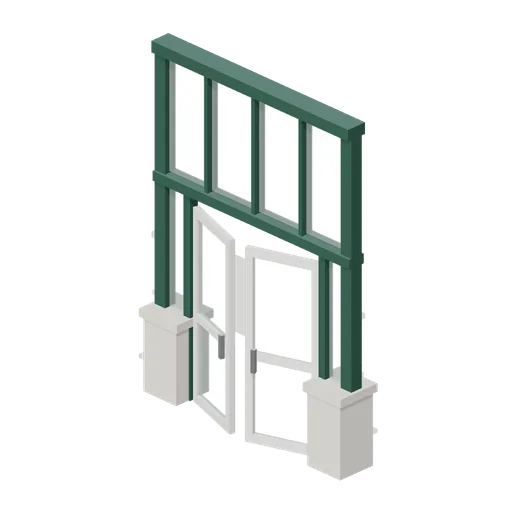
Glazed entrance door pair, 3 m bay (Botanical Glasshouse and Palm House)
Full height entrance bay: stone piers, a cast iron frame, a glazed overlight and a pair of white glazed doors 2.35 m tall that swing open on their hinges. Ports at plinth and frame height on both sides.
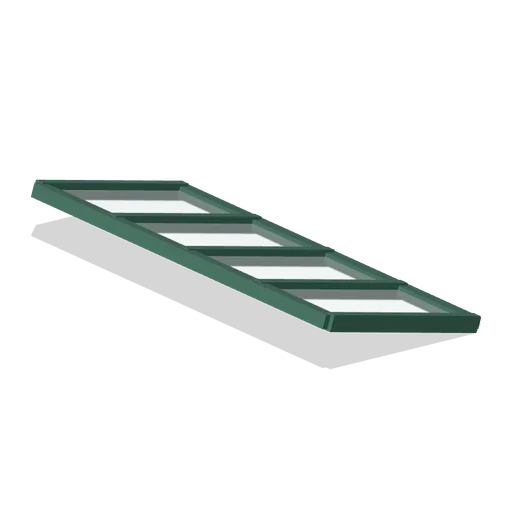
Pitched roof glazing panel, 3 m (Botanical Glasshouse and Palm House)
Three metre lean to roof panel already laid at its 20 degree pitch: a glazing bar frame with six panes, a ridge bar at the top edge and a drip bar at the foot, ported both ends so panels repeat along an eaves.
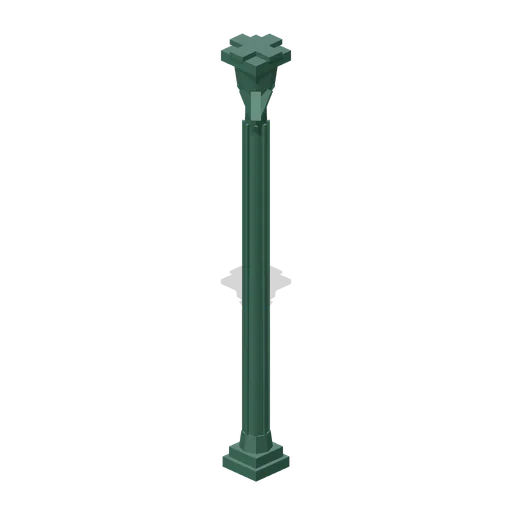
Cast iron column with foliate capital, 4.2 m (Botanical Glasshouse and Palm House)
Slender cast iron column 4.2 m tall: a moulded base, a fluted octagonal shaft, a foliate capital with eight leaves and a cruciform head bracket for the wall plates it carries.
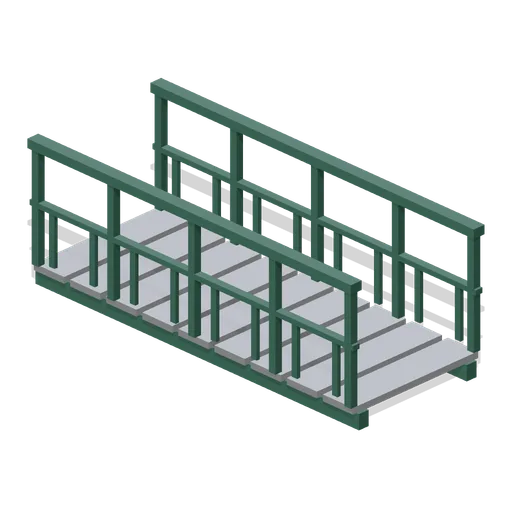
Gallery walkway section, 3 m (Botanical Glasshouse and Palm House)
Three metre iron gallery deck 1.2 m wide with a balustrade of scrolled panels and a moulded handrail both sides, on bearers, ported both ends so a gallery runs right round a glasshouse.
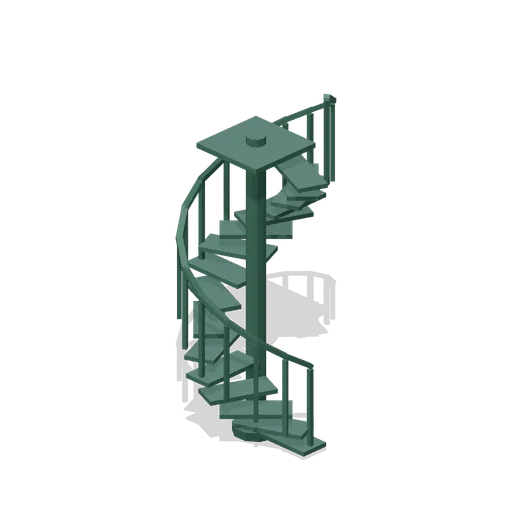
Cast iron spiral stair, 3.4 m rise (Botanical Glasshouse and Palm House)
Cast iron spiral stair on a central newel, sixteen pierced treads turning through 360 degrees to a 3.4 m landing, with a baluster and handrail following the outer edge.
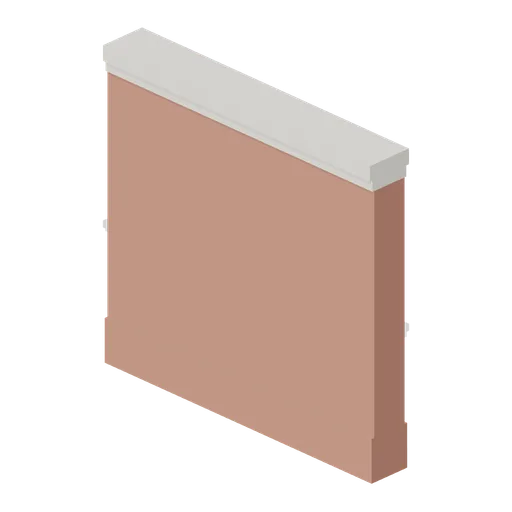
Brick boiler house wall, 3 m (Botanical Glasshouse and Palm House)
Three metre red brick wall 2.84 m tall with a plinth course, a stone band and a weathered coping, ported both ends so the boiler house and the yard walls run off one module.
 Animated
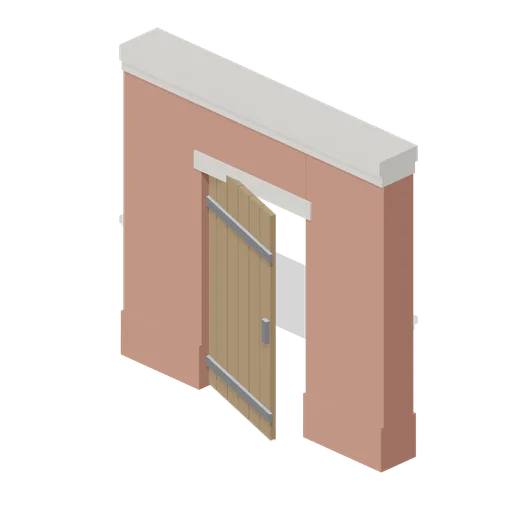
Boiler house door module, 3 m (Botanical Glasshouse and Palm House)
Three metre brick module with a segmental arched opening and a boarded iron strapped door 2.1 m tall that swings open, ported both ends to sit in a brick wall run.

Brick boiler flue chimney, 5.6 m (Botanical Glasshouse and Palm House)
Square brick flue chimney 5.6 m tall on a splayed base, tapering to an oversailing brick cap with a cast iron cowl, for the boiler house that heats a Victorian glasshouse.
 Animated
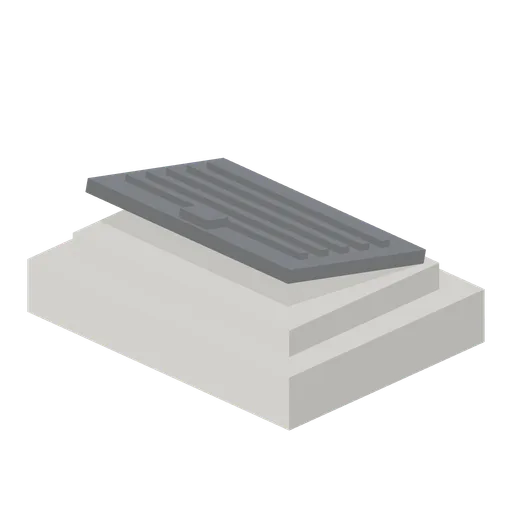
Coal chute with iron lid (Botanical Glasshouse and Palm House)
Stone kerbed coal chute into a boiler house cellar, 1.4 m by 1 m, with a sloping delivery throat and a ribbed cast iron lid that lifts open on its back hinge.
 Animated
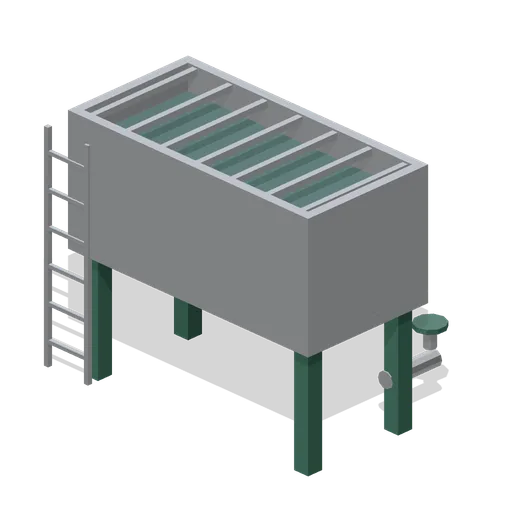
Riveted iron water tank on stands (Botanical Glasshouse and Palm House)
Riveted wrought iron rainwater tank 2.4 m by 1.2 m on four cast iron stands, with a float cover, an access ladder and an outlet valve whose handwheel turns, for watering under glass.
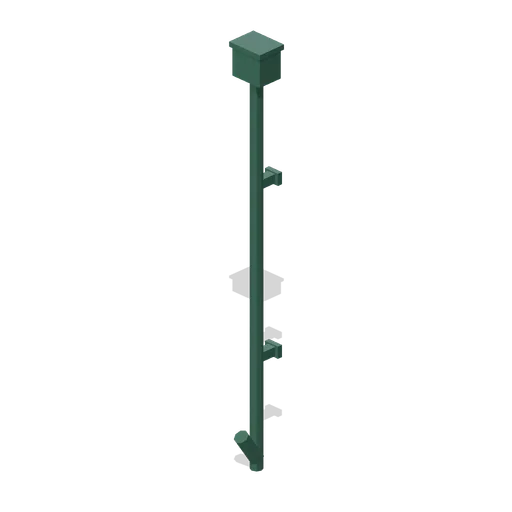
Rainwater downpipe with hopper head, 4.2 m (Botanical Glasshouse and Palm House)
Cast iron rainwater downpipe 4.2 m tall with a moulded hopper head, two wall brackets and a shoe at the foot, for taking an eaves gutter down the face of a glasshouse or a boiler house wall.
 Animated
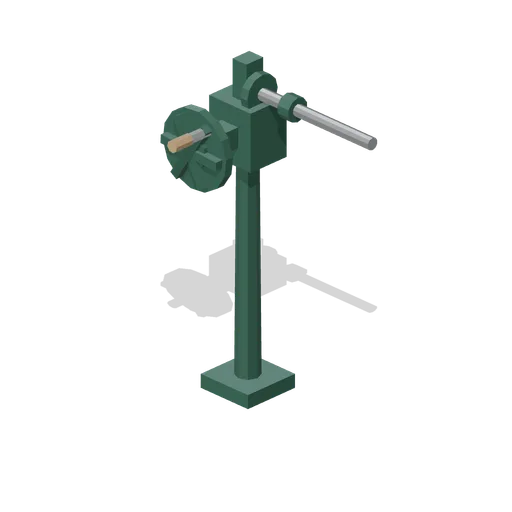
Ventilation crank gear and standard (Botanical Glasshouse and Palm House)
Cast iron ventilation gear on its standard: a worm box, a spoked crank wheel that turns, and a shaft stub that turns with it, the mechanism a glasshouse opens its ridge ventilators with.
 Animated
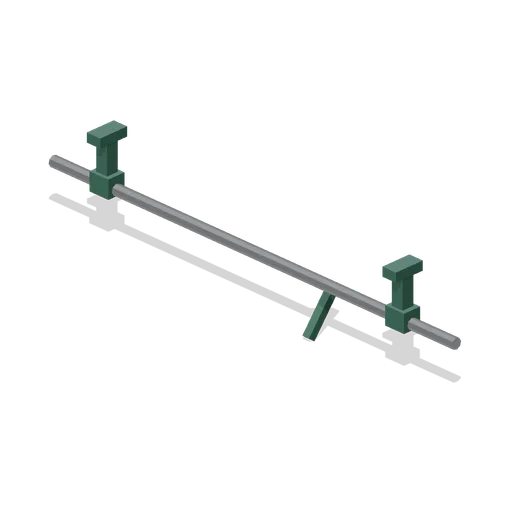
Ventilator shaft run, 3 m (Botanical Glasshouse and Palm House)
Three metre length of ventilator line shaft on two cast iron hanger brackets, with a crank arm and a connecting link to the ridge lights, and a shaft that turns. Ports both ends so the line runs the length of a house.
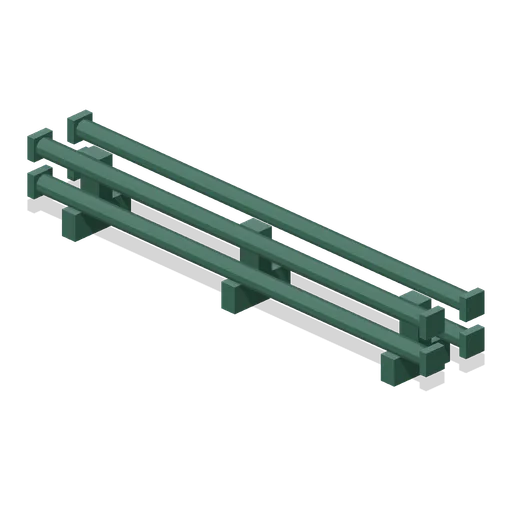
Cast iron heating pipe run, 3 m (Botanical Glasshouse and Palm House)
Three metre run of four inch cast iron heating pipe in two tiers on their chairs, the flow and return that keep a palm house warm, ported both ends so a circuit runs the length of a bed.
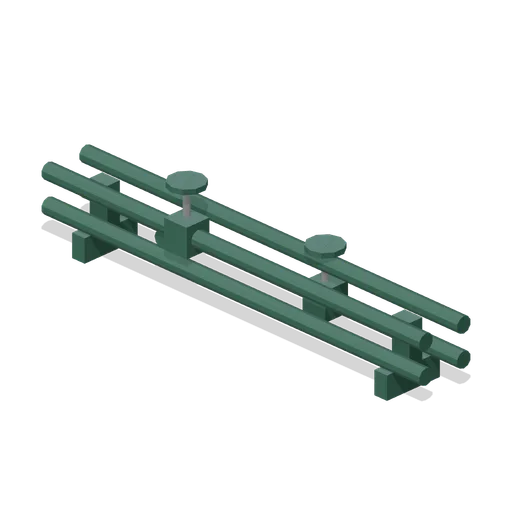 Animated
Heating pipe valve set, 3 m (Botanical Glasshouse and Palm House)
Three metre heating pipe section with the control valves in it: a pair of cast iron gate valves with handwheels that turn, an air cock and a return bend, ported both ends to drop into a pipe run.
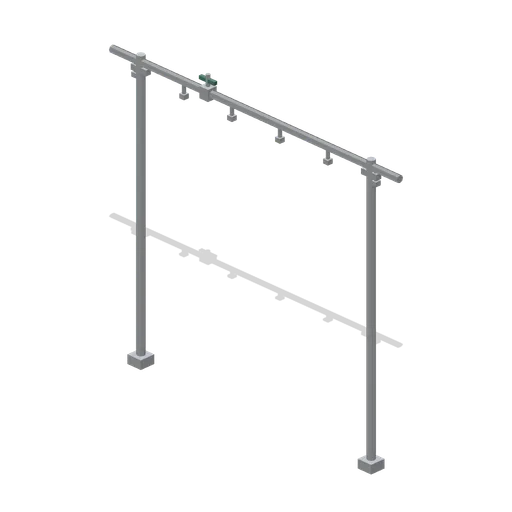
Overhead misting pipe line, 3 m (Botanical Glasshouse and Palm House)
Three metre galvanised misting line at 2.5 m on two standards, with six brass nozzles and a stop cock, the damping down line a tropical house runs over its beds. Ports both ends so the line carries on.

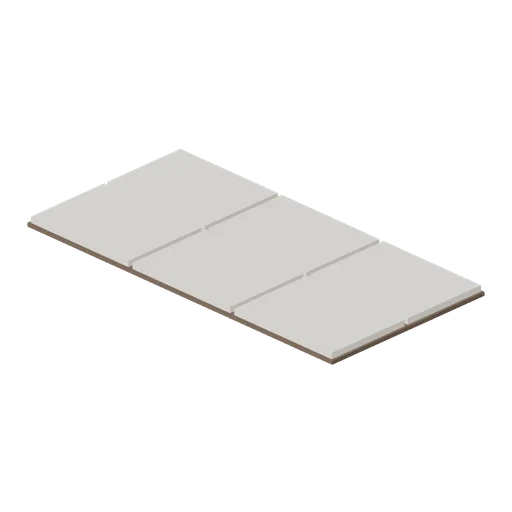
Tiled glasshouse floor module, 3 m (Botanical Glasshouse and Palm House)
Three metre square of Victorian glasshouse floor: nine 1 m encaustic tiles laid in a chequer of buff stone and terracotta, ported on all four edges so a whole floor lays out with no joint showing.
Stone flag path module, 3 m (Botanical Glasshouse and Palm House)
Three metre length of flagged path 1.5 m wide, six worn limestone flags with open joints on a bedding course, ported both ends so a path runs the length of a glasshouse.
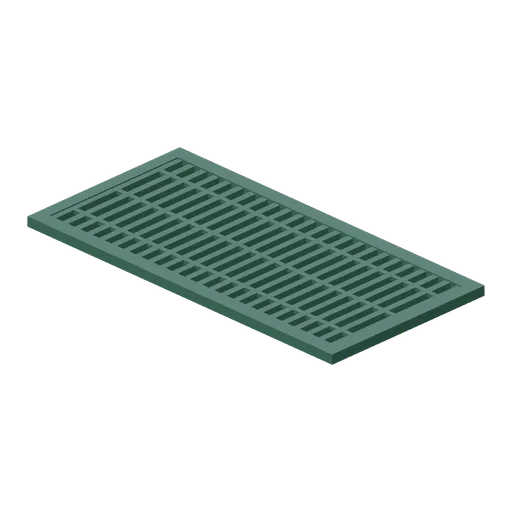
Cast iron grated floor section, 3 m (Botanical Glasshouse and Palm House)
Three metre section of cast iron floor grating 1.5 m wide in a rebated frame, the grille a palm house lays over its heating pipe trenches, ported both ends so the trench run continues.
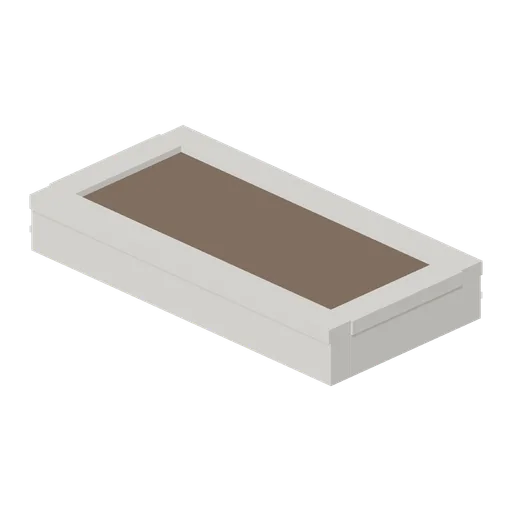
Raised planting bed with stone kerb, 3 m (Botanical Glasshouse and Palm House)
Three metre by 1.5 m raised bed for a glasshouse floor: a dressed limestone kerb 0.45 m high with a chamfered top course, filled to 0.4 m with dark leaf mould ready to be planted.
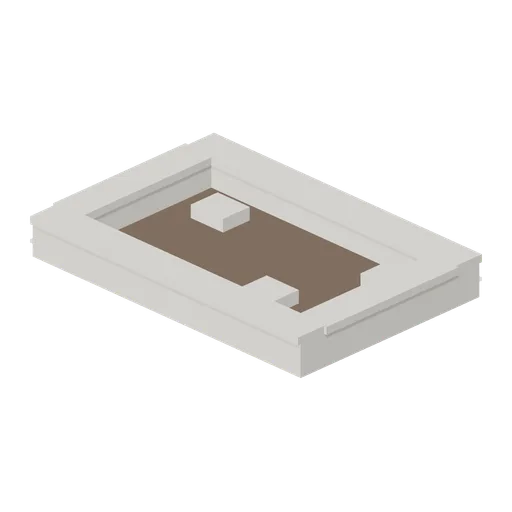
Sunken fern pit with stone edge (Botanical Glasshouse and Palm House)
Sunken fern pit 3 m by 2 m: a dressed stone edge standing 0.35 m proud on all four sides with the peat bed inside it held low, the cool shaded corner a Victorian glasshouse grows its ferns in.
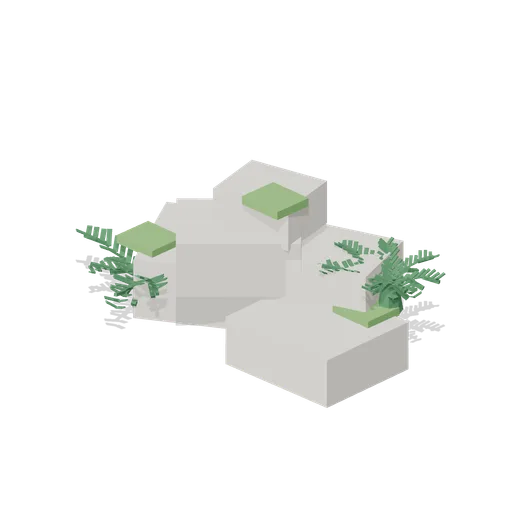
Rockery outcrop with ferns (Botanical Glasshouse and Palm House)
Stacked limestone rockery outcrop 2.2 m by 1.6 m and 1.1 m tall, weathered blocks set at angles with planting pockets, moss on the shaded faces and small ferns rooted in the joints.
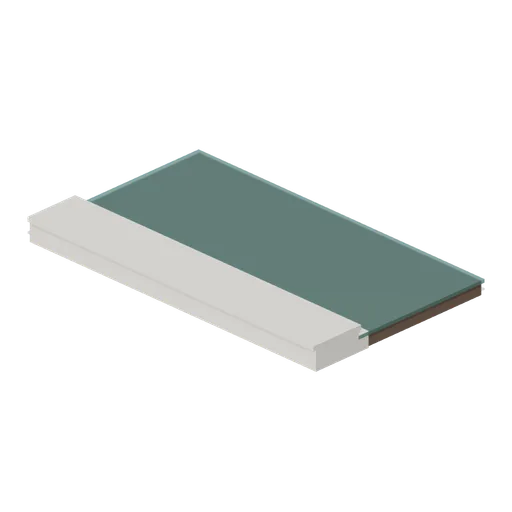
Lily pond coping run, 3 m (Botanical Glasshouse and Palm House)
Three metre run of moulded limestone pond coping with the water surface carried 1.3 m inboard of it, ported both ends so four runs close a 3 m square lily pond with no gap at the corners.

Water lily pad cluster (Botanical Glasshouse and Palm House)
Cluster of nine floating water lily pads to 1.4 m across, notched discs at three sizes with two open blooms standing just clear of the water, for dressing a glasshouse lily pond.
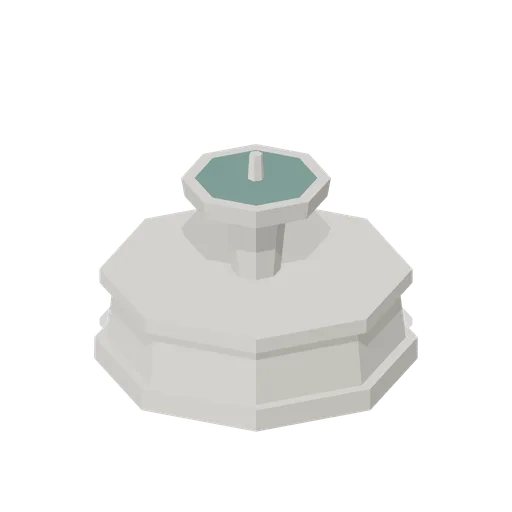
Stone fountain basin, 1.9 m (Botanical Glasshouse and Palm House)
Octagonal limestone fountain basin 1.9 m across with a moulded rim, a baluster pedestal and a shallow upper dish, filled with still water, the centrepiece a palm house sets in its main walk.
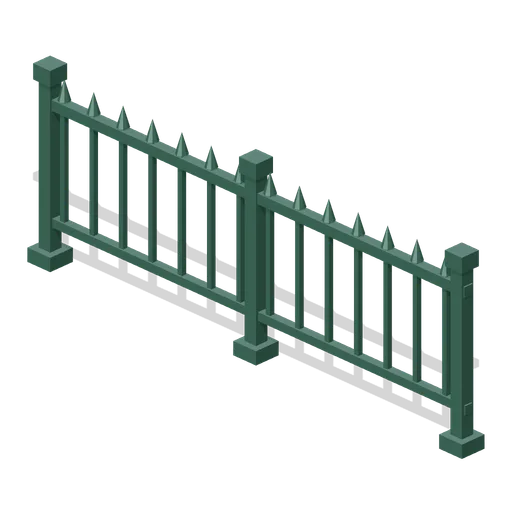
Cast iron railing run, 3 m (Botanical Glasshouse and Palm House)
Three metre run of cast iron visitor railing 0.95 m tall: moulded standards, a top rail, a lower rail and spear headed balusters, ported both ends so a railing follows a bed or a pond.
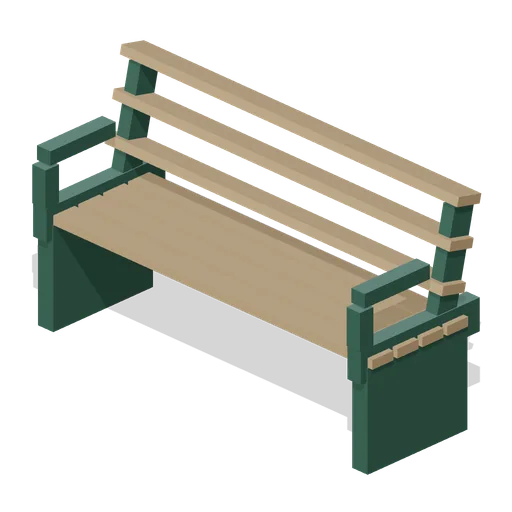
Cast iron and timber visitor bench, 1.8 m (Botanical Glasshouse and Palm House)
Victorian public bench 1.8 m long: two cast iron ends with a scrolled arm and a foliate back stay, five timber seat slats and three back slats, the seat a glasshouse lines its walks with.
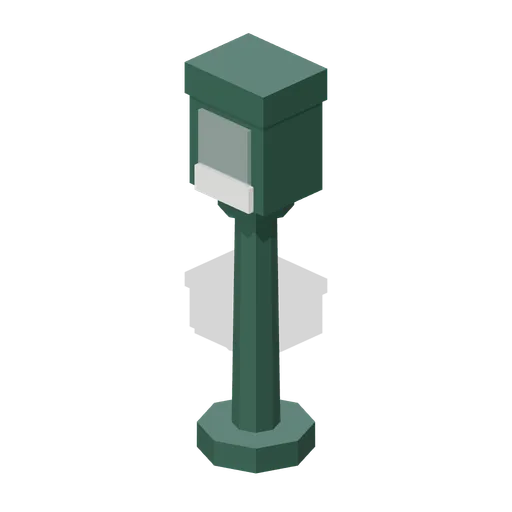
Iron donation box on a standard (Botanical Glasshouse and Palm House)
Cast iron donation box on a moulded standard, 1.1 m tall, with a glazed panel, a coin slot, a hasp and a blank plate: every face is left blank so no charity, garden or society is named.

Specimen sign board, blank (Botanical Glasshouse and Palm House)
Cast iron framed specimen board 0.95 m tall on two legs with a blank white panel and a blank header plate, ready for a developer's own text: nothing is written or depicted on it.
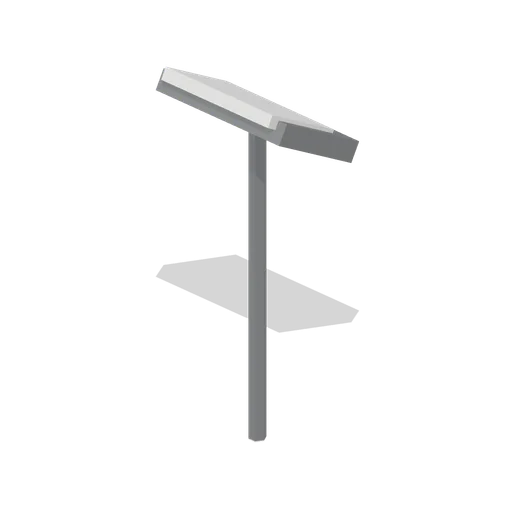
Plant label stake, blank (Botanical Glasshouse and Palm House)
Galvanised plant label stake 0.36 m tall with a blank angled white face, the marker a collection puts beside a specimen: the face carries no name, so a developer writes their own.
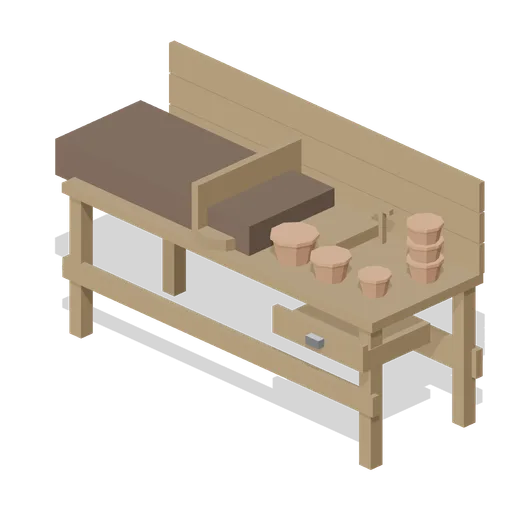 Animated
Potting bench with trays and pots, 2.4 m (Botanical Glasshouse and Palm House)
Timber potting bench 2.4 m long with a boarded back, a compost bay heaped at one end, seed trays, a riddle, a dibber and eight clay pots in three sizes, plus a drawer on runners that slides out.
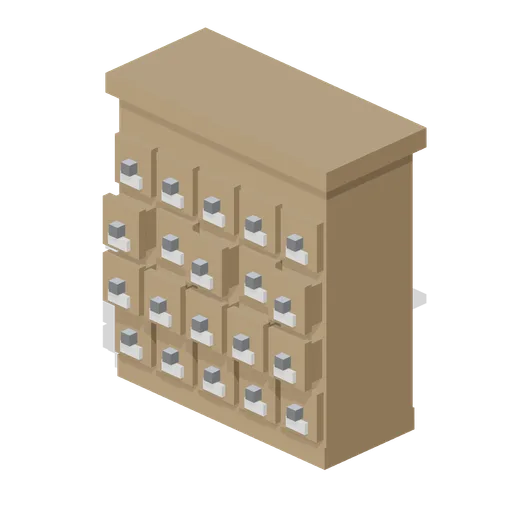 Animated
Seed drawer cabinet, 1.2 m (Botanical Glasshouse and Palm House)
Mahogany seed cabinet 1.2 m wide and 1.35 m tall with twenty small drawers behind brass knobs and blank label holders; four of the drawers run out on their runners. No text anywhere on it.
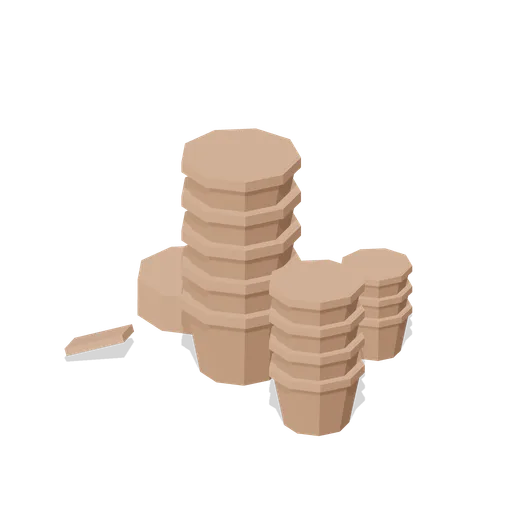
Clay pot stack (Botanical Glasshouse and Palm House)
Three nested stacks of terracotta pots to 0.9 m, twelve pots in three sizes with a saucer pile and a broken crock beside them, the heap that stands at the end of every glasshouse bench.
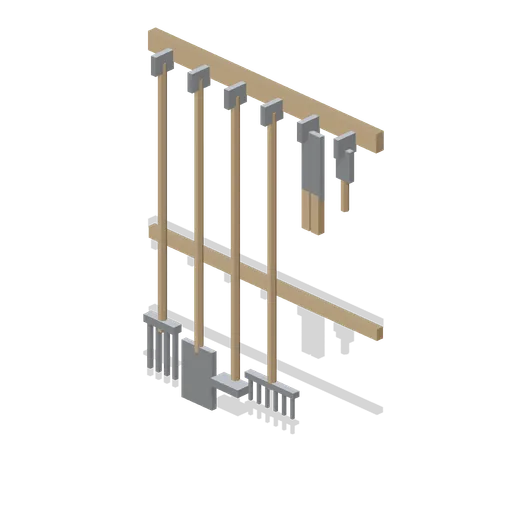
Hand tool rack with garden tools (Botanical Glasshouse and Palm House)
Wall rack 1.5 m wide holding a border fork, a spade, a dutch hoe, a rake, shears and a hand trowel on their hooks, the tool wall of a glasshouse potting end.
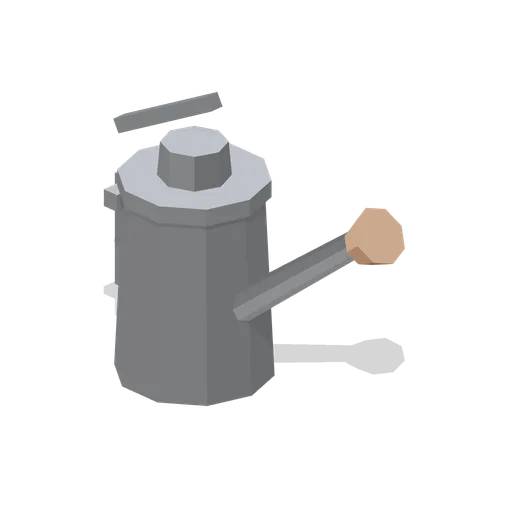
Galvanised watering can (Botanical Glasshouse and Palm House)
Two gallon galvanised watering can 0.42 m tall with a long spout, a brass rose, a fixed carrying handle over the top and a pouring handle at the back, the can of a working glasshouse.
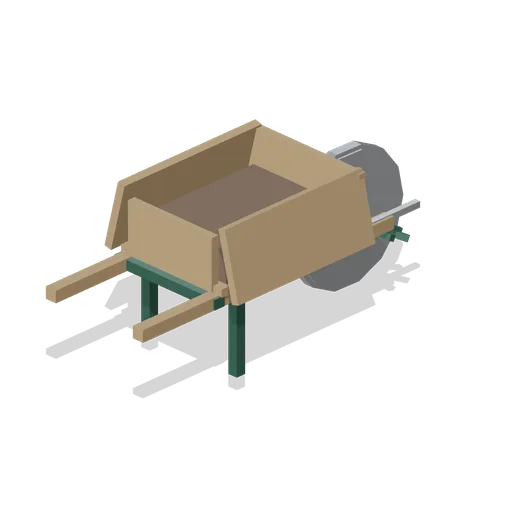 Animated
Timber wheelbarrow with a rolling wheel (Botanical Glasshouse and Palm House)
Timber and iron garden barrow 1.5 m long with a boarded body, iron strapping, two legs, shaped handles and a spoked wheel that rolls, loaded with leaf mould.
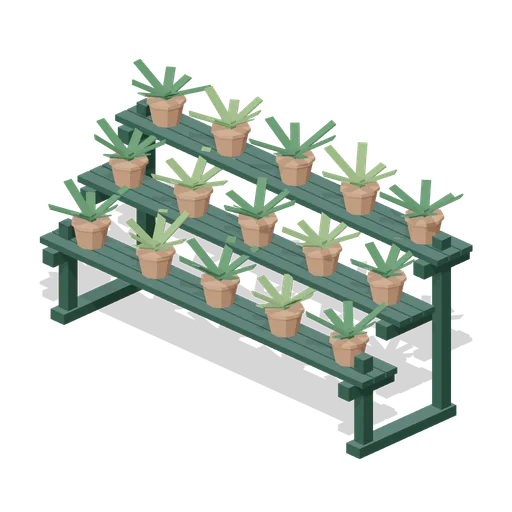
Tiered display staging with pots, 2.4 m (Botanical Glasshouse and Palm House)
Cast iron display staging 2.4 m long in three tiers, slatted shelves on scrolled brackets carrying fifteen potted plants, the stand a glasshouse shows its smaller specimens on.
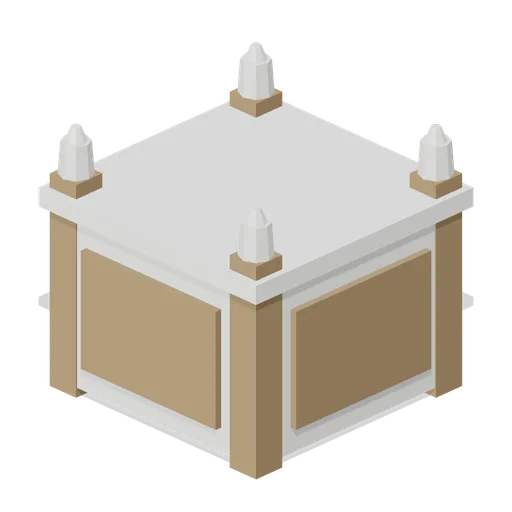
Square timber palm planter tub, 1.1 m (Botanical Glasshouse and Palm House)
Painted timber orangery planter 1.1 m square: panelled sides with iron corner straps, four ball finials and a compost fill, the tub a palm house stands its moveable specimens in.
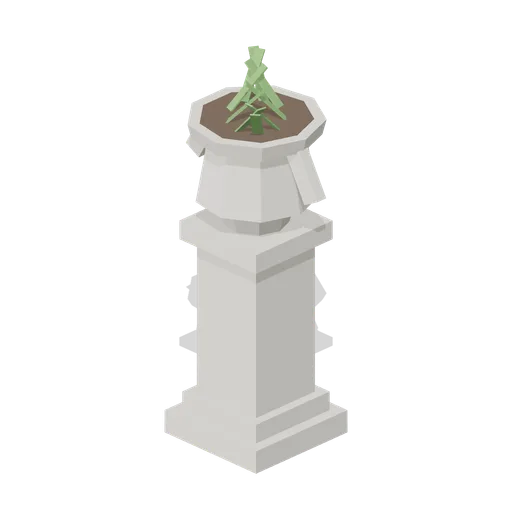
Stone urn on pedestal, 1.7 m (Botanical Glasshouse and Palm House)
Carved limestone urn on a moulded pedestal, 1.7 m overall, with a gadrooned bowl, two scroll handles and a trailing planting in the top, the ornament that ends a glasshouse walk.
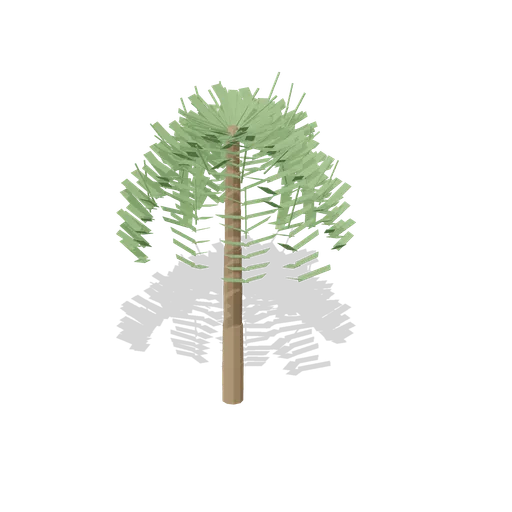
Fan palm, tall specimen, 5.4 m (Botanical Glasshouse and Palm House)
Glasshouse palm 5.4 m tall: a ringed tapering trunk carrying a crown of 13 arching pinnate fronds, each with leaflets down both sides. The hero specimen of a palm house, tall enough to want a barrel vault over it.
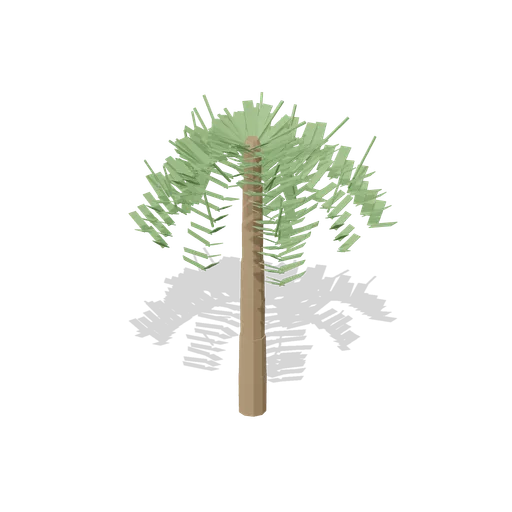
Fan palm, half grown, 3.6 m (Botanical Glasshouse and Palm House)
Glasshouse palm 3.6 m tall: a ringed tapering trunk carrying a crown of 11 arching pinnate fronds, each with leaflets down both sides. The same palm half grown, for the middle of a group.

Fan palm, young specimen, 2.3 m (Botanical Glasshouse and Palm House)
Glasshouse palm 2.3 m tall: a ringed tapering trunk carrying a crown of 9 arching pinnate fronds, each with leaflets down both sides. A young palm for a tub or the front of a bed.
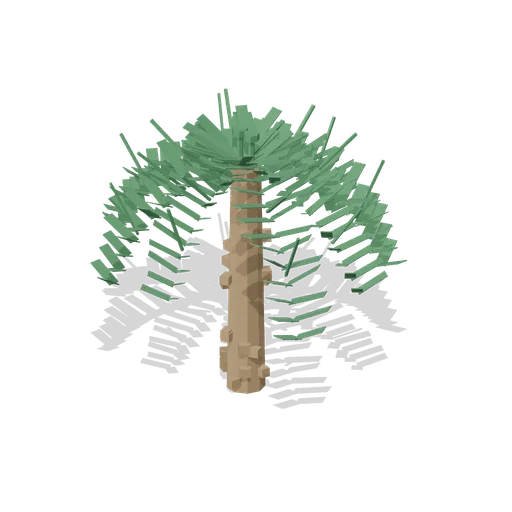
Tree fern, 2.8 m (Botanical Glasshouse and Palm House)
Tree fern 2.8 m tall: a fibrous trunk of old frond bases carrying a shuttlecock crown of eight arching fronds, with two croziers still uncurling at the centre.
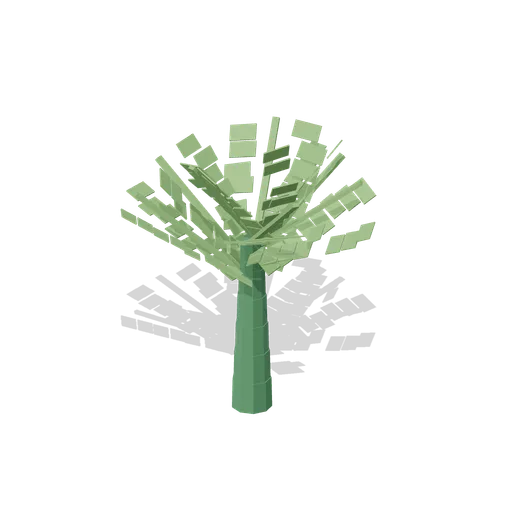
Banana plant, 2.6 m (Botanical Glasshouse and Palm House)
Banana plant 2.6 m tall: a sheathed pseudostem carrying seven broad paddle leaves, each split into strips along the midrib the way a glasshouse specimen always is.
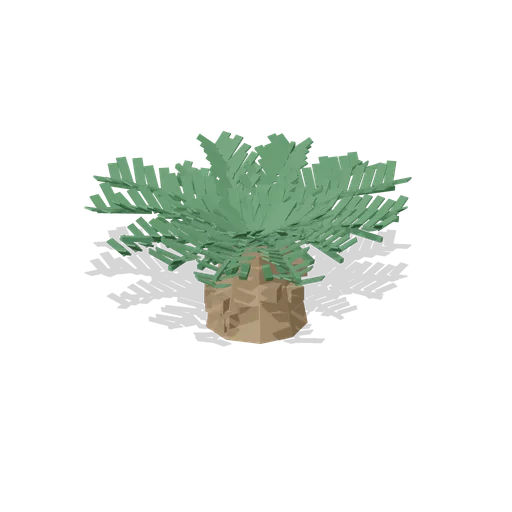
Cycad, 1.3 m (Botanical Glasshouse and Palm House)
Cycad 1.3 m across: a squat barrel trunk of woody scales with a stiff crown of fourteen short pinnate fronds held almost level, the oldest plant shape a glasshouse grows.

Bird of paradise clump, 1.7 m (Botanical Glasshouse and Palm House)
Clump of bird of paradise 1.7 m tall: nine long stalked oval leaves rising from the crown with three flower spathes above them, the orange note a tropical house needs among the green.

Bromeliad set on bark (Botanical Glasshouse and Palm House)
Three bromeliads on a bark pan 0.8 m across: stiff banded rosettes with a red bract rising from the centre of the largest, the epiphyte planting a glasshouse sets at the front of a bed.
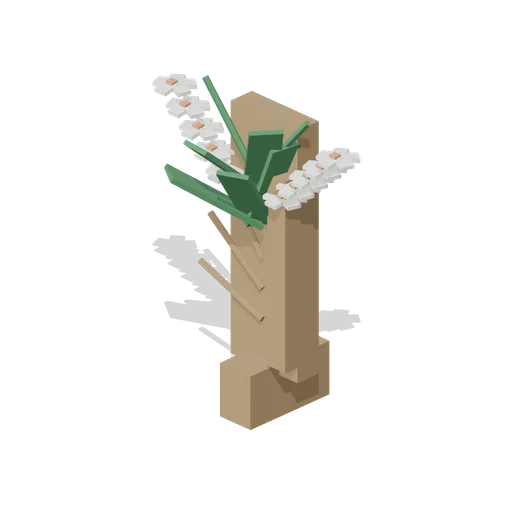
Orchid on a bark mount (Botanical Glasshouse and Palm House)
Epiphytic orchid wired to a bark slab 0.75 m tall: strap leaves, exposed roots over the bark and two arching sprays of five white flowers, the way a glasshouse displays an orchid.

Wire hanging basket with trailing plants (Botanical Glasshouse and Palm House)
Wire hanging basket 0.42 m across on three chains: a moss lined pan with a trailing fern and a creeper falling 0.6 m below it, the basket a palm house hangs from its roof girders.
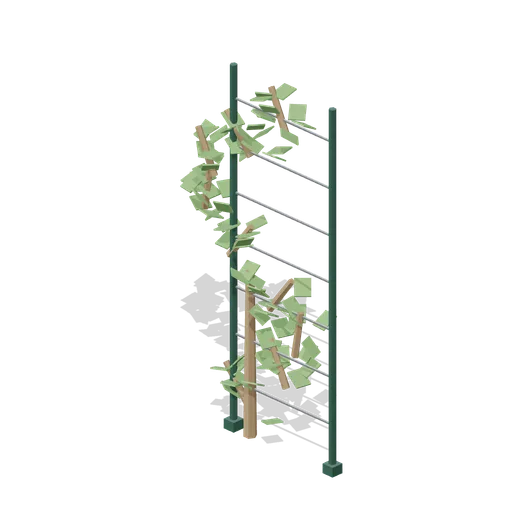
Climbing vine on a wire frame, 2.6 m (Botanical Glasshouse and Palm House)
Iron and wire training frame 2.6 m tall with a climber trained over it: a woody stem, tendrils along the wires and eighty leaves, the way a glasshouse grows a creeper up a pier.

Cactus group on a gravel mound (Botanical Glasshouse and Palm House)
Arid bed group 1.1 m across: three ribbed columnar cacti to 1.2 m, a barrel cactus and a prickly pad plant on a gravel mound, the dry corner a glasshouse keeps opposite the ferns.

Succulent tray, 0.7 m (Botanical Glasshouse and Palm House)
Shallow terracotta tray 0.7 m across planted with eleven succulent rosettes in gritty compost, the small display a glasshouse keeps on its staging beside the arid bed.
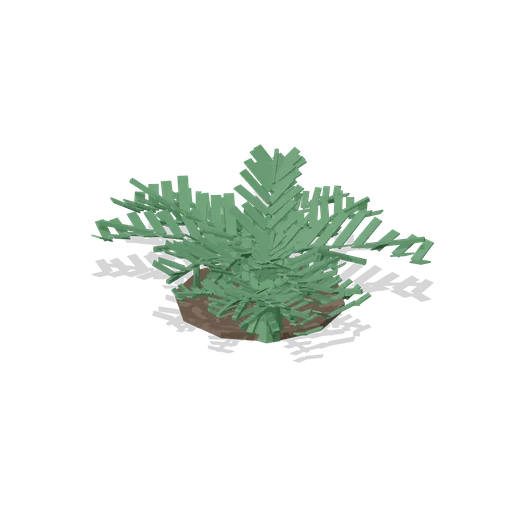
Fern bed clump, 1.2 m (Botanical Glasshouse and Palm House)
Clump of seven shuttlecock ferns 1.2 m across with two croziers and a leaf litter base, the ground cover a shaded glasshouse bed or a fern pit is filled with.
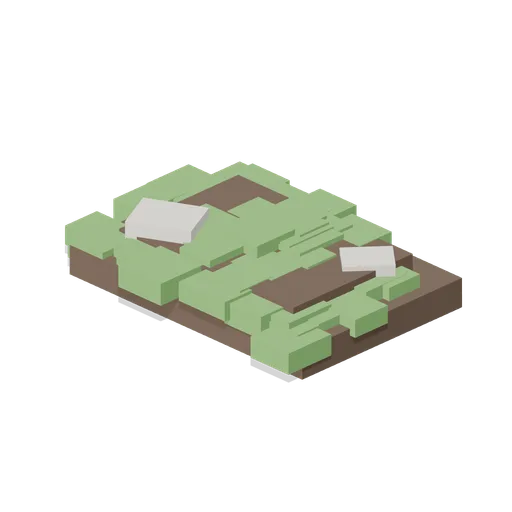
Moss bank, 1.6 m (Botanical Glasshouse and Palm House)
Low moss bank 1.6 m by 1.1 m: a mounded soil form under a cushioned moss surface with two stones half buried in it, the damp ground a fern house keeps under its staging.

Bamboo clump, 3.4 m (Botanical Glasshouse and Palm House)
Clump of eleven bamboo culms to 3.4 m: jointed stems with sheaths at the nodes and sprays of narrow leaves in the upper third, the screen a glasshouse plants against a gable wall.
Palm house under glass (Botanical Glasshouse and Palm House)
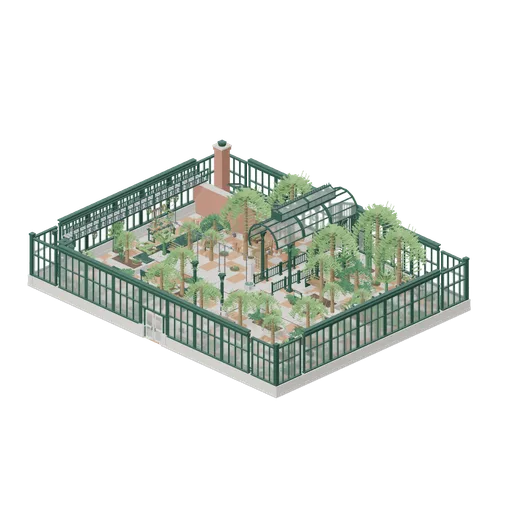
A Victorian palm house 27 m by 21 m inside its plinth, laid out on the pack's own 3 m bay. The shell is complete at eye level: a stepped stone plinth right round, cast iron bay frames on top of it, corner bays closing all four angles, a glazed apse on the north wall, the...
Similar packs
 54 models
Car Repair Garage and MOT Workshop
Vehicle lifts, testing gear, tyre bay machines, tools, a modular workshop shell and a reception corner in one realistic garage family, built for car repair and vehicle testing scenes.
AI used in 54 of 54 files · Claude Opus 5
 117 models
Haunted House and Ghost Hunting Kit
Modular modern house, furnishings, investigation equipment and a mobile base.
AI used in 117 of 117 files · Claude Fable 5.1
 53 models
Tattoo and Piercing Studio
A realistic tattoo studio: two artists booths of chair, work light, tray, machine and drawers behind ported flash art and divider panels, a sterile area and piercing bay, and a reception and waiting front, on modular floor, wall and door bays.
AI used in 53 of 53 files · Claude Opus 5
 53 models
Indoor Market Hall and Traders
A Victorian covered market hall: cast iron columns, glazed roof bays, brick walls and paving on one 4 m grid, lock up units with roller shutters, open stalls with striped canopies, and the mixed goods, dressing and barrows of a hall of traders.
AI used in 53 of 53 files · Claude Opus 5
 182 models
Modular Survival Base Builder
A 180-piece modular base builder: foundations, floors, walls with doors and windows, roofs, stairs and ramps in timber, log, wattle, corrugated and rubble finishes, all snapping to one grid.
AI used in 182 of 182 files · Claude Fable 5.1
 80 models
Modular Spaceships and Space Fleet
Original socketed hulls with modular equipment, station structures, utility craft and debris.
AI used in 80 of 80 files · Claude Fable 5.1
 70 models
Tropical Island and Palm Trees
Sculpted island palms, coastal trees, beach ecology and volcanic shores.
AI used in 70 of 70 files · GPT-6 via Codex
 60 models
Space Station and Docking Bays
A near-future modular orbital station: pressurised modules on a hatch grid, truss and power structure, docking hardware, robotics, visiting free-flyers and interior fittings.
AI used in 60 of 60 files · Claude Fable 5.1
 43 models
Self Storage Facility and Loading Bay
Storage units with lifting roller shutters, a ported corridor and mezzanine kit, a loading dock, a box van, trolleys and pallet gear, plus the site office, barrier, fencing and floodlights: everything a modern self storage facility and its loading bay needs.
AI used in 43 of 43 files · Claude Opus 5
 55 models
Live Music Venue and Festival Stage
Realistic live music models: modular stage decking, box truss and ground support, LED wall panels, line arrays, subs and wedges, a front of house desk, moving lights, the backline a band loads in, crowd barrier, and the stalls, flags and site kit around a festival field.
AI used in 55 of 55 files · Claude Opus 5