
Loading model
About
Original CC0 blacksmith's forge and armoury library: a stone hearth with a hood and flue over a bed of glowing coals, great double bellows on an oak frame, a coal store, scuttles and charcoal heaps, a stone quench trough, a slack tub and a water butt, a 150 kg anvil on a banded stump, a stake anvil, a swage block, a leg vice, a bench vice, a smith's work bench and a riveting bench. Tooling covers hammer and tong racks, chisels and punches, swages and fullers, hardy tools, files and rasps, a wall tool board, a treadle grindstone, a polishing wheel bench, a draw bench with its draw plate, a wire die rack and a nail header block. Stock and output add iron bar racks, billet stacks, barrels of blanks, a finished goods rack, a blade blank rack, horseshoe racks and a farrier's shoeing box, and the armoury side adds a dishing stump, a planishing stake, a helm and a breastplate on their forms and a mail ring tumbling drum. The shop is completed by a selling counter, a ledger desk, a hanging balance scale, a lantern, a candle sconce, a leather apron on its hook, a sand and flux bin, a hand cart of ironwork and a modular shell of flagged and cobbled floor slabs, timber framed walls, dwarf walls, open bays, a shutter counter shop front, a stable door and a lean-to roof panel on a 4 m grid. Named pivoted nodes carry rigid node-transform clips only: the bellows pump, the grindstone and the polishing wheel spin on their treadles, the vice jaws open and close, the shutter drops to become a counter, the stable door leaves swing, the box, desk and bin lids lift, the bench drawers pull out, the mail drum turns and the cart wheels roll. The fire, the smoke, the glow, the water, the leather apron and every chain and hanging strap are modelled solid and never move, because flame, fluid and flexible material need a shader, a simulation or a joint per element and none of that is reachable with one rigid node transform. Blades are unsharpened forged blanks and bar stock as a forge holds them, not finished weapons. The glow is an emissive looking material and the pack embeds no lights, so a consumer lights the scene itself. There are no people or animals and no skinned meshes anywhere. No maker's names, marks or readable writing: every stamp, tally and ledger mark is an abstract shape.
Files load directly from the CDN. Choose the pieces you need. Colliders, navigation and gameplay scripts are supplied by your game.
Use with an AI agent
Copy this prompt into your AI chat, then describe what you want to build with the pack.
Use the “Blacksmith Forge and Armoury” pack in my project.

Manifest (JSON, every model with its CDN URL): https://3dassets.dev/api/v1/packs/blacksmith-forge-and-armoury
Starter scene (one GLB with every piece placed): https://cdn.3dassets.dev/assets/37609/v1/model.glb
Pack page: https://3dassets.dev/packs/blacksmith-forge-and-armoury
Description: Stone forge hearth, double bellows, great anvil, vices, tongs, hammers, treadle grindstone, armourer's stakes, stock racks and a modular timber framed shop in one medieval smithy family.

- 60 GLB models, 5.0 MB in total
- Units: metres, +Y up, shared scale and palette across the pack
- Licence: CC0 1.0 Universal (no attribution required)
- Loading: three.js GLTFLoader; no additional decoders required. Load models individually from the manifest, or the starter scene as one file.
Also available as a JSON manifest or via the MCP server.
Common questions
How do I use Blacksmith Forge and Armoury with my AI development tools?
How do I get started?
Which game engines and tools can I use Blacksmith Forge and Armoury with?
How do I import this pack into Unity, Godot, Unreal or Blender?
Can I use Blacksmith Forge and Armoury in a commercial game, and do I need to credit anyone?
Can I load it from the CDN instead of downloading it?
Do I have to download the whole pack?
Do the models in Blacksmith Forge and Armoury fit together?
Game kit
Blacksmith Forge and Armoury
Stone forge hearth, double bellows, great anvil, vices, tongs, hammers, treadle grindstone, armourer's stakes, stock racks and a modular timber framed shop in one medieval smithy family.
One GLB with every piece placed in a starter scene. Each model is also below on its own.
View demoEverything in this pack

Forge floor slab, 4 m (Blacksmith Forge and Armoury)
Flagged stone floor module 4 m square and 130 mm thick, sixteen riven flags standing proud of a bedding slab with open joints between them, laid on a 4 m grid with edge ports on all four sides.

Forge yard cobbles, 4 m (Blacksmith Forge and Armoury)
The same 4 m floor module laid as a cobbled yard instead of flags: a bedding slab under a field of small setts on the same edge ports, for the ground outside the shop front.

Forge floor slab, sooted, 4 m (Blacksmith Forge and Armoury)
The flagged 4 m floor module with the scale, clinker and soot of the hearth side trodden into it: raised patches of charcoal dust and a scatter of scale across the flags, on the same edge ports.

Timber framed wall module, 4 m (Blacksmith Forge and Armoury)
Oak framed wall 4 m wide and 3.2 m tall: a sill beam, corner and middle posts with curved braces, limewashed wattle and daub infill set back between them and a top plate, with side ports on the centre line at 1.6 m.

Timber framed dwarf wall, 4 m (Blacksmith Forge and Armoury)
Waist high oak framed wall 4 m wide and 1.1 m tall with a capping rail, for closing the open side of a workshop without shutting the light or the view out: side ports on the centre line at 0.55 m.

Open timber frame bay, 4 m (Blacksmith Forge and Armoury)
Open post and beam bay 4 m wide and 3.2 m tall: two oak posts on stone pads carrying a tie beam with curved braces and nothing between them, so a workshop can stand open to the yard on the same wall ports as a solid panel.
 Animated
Shutter counter shop front, 4 m (Blacksmith Forge and Armoury)
Timber framed shop front 4 m wide with a 2.4 m opening over a stone counter sill: the boarded shutter is hinged along the sill and drops forward onto two iron stays to become the selling counter, which is how a medieval shop front works.
 Animated
Stable door module, 4 m (Blacksmith Forge and Armoury)
Timber framed wall module with a 1.2 m by 2.1 m boarded stable door in it: two leaves hung on the same jamb with strap hinges and a ring latch, so the top can stand open over a closed bottom the way a workshop door is used.

Lean-to roof panel, 4 m (Blacksmith Forge and Armoury)
Boarded and slated lean-to roof panel 4 m wide and 2.6 m along the slope, pitched about 18 degrees on three oak rafters, for covering a coal store or a stock bay against the back wall of a yard.

Stone chimney stack, 4.6 m (Blacksmith Forge and Armoury)
Rubble stone chimney stack 4.6 m tall on a 1.15 m square base, battered in twice to a corbelled cap with an open flue mouth, for standing behind a forge hearth or against a workshop gable.

Stone forge hearth with hood and flue, 3.8 m (Blacksmith Forge and Armoury)
The hearth the shop is built round: a rubble stone bench 2.4 m wide with a raised firepot of coke and glowing coals, a tuyere entering from the back, a stone back wall, and a tapered hood on two iron posts carrying the flue up to 3.8 m, with the fire irons leaning at the side.
 Animated
Great double bellows on a frame, 2.2 m (Blacksmith Forge and Armoury)
Twin leather bellows on an oak frame 2.2 m long: a fixed lower board, a pleated leather body with iron nail rows, a weighted top board on its hinge nose and the blast pipe running out to the tuyere, worked by the chain hanging at the back.

Coal store bay, 2.4 m (Blacksmith Forge and Armoury)
Boarded fuel bay 2.4 m wide with oak corner posts, a low front board and a heaped load of coal and coke behind it, the way fuel is kept dry against the back wall of a smithy.

Coal scuttle with shovel, 0.66 m (Blacksmith Forge and Armoury)
Riveted iron scuttle with a swing handle and a rolled rim, filled with coal and with the small fuel shovel standing in it, for carrying fuel from the store to the firepot.

Charcoal heap on boards, 1.4 m (Blacksmith Forge and Armoury)
Loose heap of charcoal on a boarded pallet 1.4 m across, with lumps spilled round the edge and a rake mark through the top, for the fuel corner of a smithy or a charcoal burner's yard.

Stone quench trough, 1.6 m (Blacksmith Forge and Armoury)
Hollowed stone quench trough 1.6 m long on two block bearers, filled with still water and with a pair of tongs laid across the rim, for taking the heat out of a forging beside the anvil.

Slack tub, 0.8 m (Blacksmith Forge and Armoury)
Coopered oak half barrel bound with three iron hoops and filled with water, the smith's slack tub for cooling tongs and hardening small work, with a dipper hooked over the rim.

Water butt under a spout, 1.25 m (Blacksmith Forge and Armoury)
Full height coopered water butt 1.25 m tall on a stone plinth with a lead spout over it and a wooden pail beside it, the shop's water supply for the quench trough and the slack tub.

Fire irons in a stand, 1.3 m (Blacksmith Forge and Armoury)
Forged rake, poker, slice and fire shovel standing in an iron ring stand on a weighted base, the tools that work the firepot and clear the clinker out of it.

Great anvil on an oak stump, 0.98 m (Blacksmith Forge and Armoury)
A 150 kg London pattern anvil on a banded oak stump: cast body with a ground steel face, a round horn, a hardy hole and a pritchel hole in the heel, staples over the feet and the smith's hammer lying on the face.

Stake anvil in a block, 0.66 m (Blacksmith Forge and Armoury)
Small bickern stake with a round horn one side and a square bick the other, driven into an oak block and used for the light work a great anvil is too coarse for.

Swage block on a stand, 0.92 m (Blacksmith Forge and Armoury)
Cast swage block 0.6 m square pierced with round, square and hexagonal holes and notched all round its edges with half round and vee swages, standing on end in an oak cradle so either face can be worked.
 Animated
Leg vice on a bench post, 1.25 m (Blacksmith Forge and Armoury)
Forged leg vice: a fixed jaw strapped to an oak post with its leg carried down onto a stone pad, a moving jaw on the box screw, a hand lever through the screw head and the spring that opens it, sized for hot work.
 Animated
Bench vice on a stand, 1.0 m (Blacksmith Forge and Armoury)
Heavy parallel bench vice bolted to an oak stand: a cast body with serrated steel jaw plates, a square thread screw with a sliding tommy bar and a small anvil pad cast behind the jaws.
 Animated
Smith's work bench, 2.0 m (Blacksmith Forge and Armoury)
Oak work bench 2 m long on braced trestle legs with a scorched top, a tool well along the back, a single deep drawer under the front and a rack of punches standing in holes bored along the edge.
 Animated
Riveting bench, 1.5 m (Blacksmith Forge and Armoury)
Armourer's riveting bench 1.5 m long with a steel topped stake plate, two shallow drawers of rivets and washers, a bickern set into the top and the light hammers laid ready on it.

Smith's stool, 0.56 m (Blacksmith Forge and Armoury)
Three legged oak stool with a dished seat and a wedged tenon at each leg, the seat worn pale where it is used, for the bench and the ledger desk.

Hammer rack, 1.1 m (Blacksmith Forge and Armoury)
Free standing oak rack 1.1 m wide carrying the striking tools in order of weight: two cross pein hammers, a ball pein, a straight pein and a sledge, each head resting on the rail with its haft hanging through.

Tong rack, 1.2 m (Blacksmith Forge and Armoury)
Iron tong rack 1.2 m wide on two legs holding seven pairs of tongs jaw down: flat bit, bolt, hollow bit, box and pick up jaws, the set a smith reaches for without looking.

Chisel and punch tray, 0.7 m (Blacksmith Forge and Armoury)
Oak tray 0.7 m long of hot and cold chisels, round and square punches and a slitting chisel, each one a forged bar with an upset head and a drift mark, laid in the tray the way they come off the bench.

Swage and fuller set on a board, 0.8 m (Blacksmith Forge and Armoury)
Board of bottom and top tooling 0.8 m wide: three matched swage pairs, a top and bottom fuller, a flatter and a set hammer, each with a square shank that drops into the anvil's hardy hole.

Hardy tools in a block, 0.5 m (Blacksmith Forge and Armoury)
Oak block 0.5 m wide standing the anvil's bottom tools upright: a hardy cutting tool, a bending fork, a bottom swage and a cone mandrel, all on square shanks with their edges dressed.

File and rasp rack, 0.9 m (Blacksmith Forge and Armoury)
Wall rack 0.9 m wide of eight files and rasps hanging by their tangs: flat, half round, round and square cuts with turned wooden handles, the tools that take the hammer marks off finished work.

Wall tool board, 1.6 m (Blacksmith Forge and Armoury)
Boarded tool wall 1.6 m wide hung with the tools that are not on the bench: tongs, a set hammer, a hot cut, calipers, a square, a pair of dividers and a coil of binding wire, all on forged hooks.

Leather apron on a hook, 1.0 m (Blacksmith Forge and Armoury)
Scarred smith's apron hanging on a forged hook with its neck strap over the peg, the hide scorched and cut where sparks and scale have landed on it.
 Animated
Treadle grindstone, 1.2 m (Blacksmith Forge and Armoury)
Sandstone grinding wheel 0.7 m across turning in its water trough on an oak frame, driven by a foot treadle and a crank, with a seat board across the back for the smith who is grinding.
 Animated
Polishing wheel bench, 1.1 m (Blacksmith Forge and Armoury)
Leather faced polishing wheel on an oak bench, turned by its own treadle and flywheel, with a shelf of abrasive blocks and tallow under it and a finished plate held ready against the face.

Drawing block and draw bench, 1.6 m (Blacksmith Forge and Armoury)
Oak draw bench 1.6 m long for drawing rod down to size: a cast draw plate in an iron frame at one end, a windlass with a ratchet at the other, the drawn rod lying through it and a coil of finished rod on the floor.

Wire die rack, 0.85 m (Blacksmith Forge and Armoury)
Oak rack of hardened draw plates in falling sizes with a coil of drawn wire on each hook, the plates pierced with graded rows of holes and stamped with an abstract size mark.

Nail header block, 0.62 m (Blacksmith Forge and Armoury)
Nail maker's stump: a bolster plate and two headers set in an oak block with a tray of finished nails in four sizes beside it, the simplest piecework a smithy ever ran on.
 Animated
Farrier's shoeing box, 0.62 m (Blacksmith Forge and Armoury)
Oak shoeing box with a carrying handle and a hinged lid over the nails, the shoe pritchel, the clenching tongs and the rasp, with finished shoes stacked on the lid.

Horseshoe rack, 0.9 m (Blacksmith Forge and Armoury)
Wall rack of finished horseshoes strung on three iron rods by size, front and hind patterns with the nail holes punched and the clips drawn, the standing stock of any village smithy.

Iron bar stock rack, 2.4 m (Blacksmith Forge and Armoury)
Upright oak rack 2.4 m tall with five iron arms holding merchant bar on end: round, square and flat sections in mixed lengths leaning in their bays, the raw material a smithy buys in.

Billet stack on bearers, 1.2 m (Blacksmith Forge and Armoury)
Stack of square iron billets and short bloom ends crossed on two oak bearers, chalked with an abstract heat mark, the way stock is kept off a damp floor.

Barrel of blanks, 0.96 m (Blacksmith Forge and Armoury)
Open coopered barrel standing full of forged blanks: hinge straps, hooks, staples and bar ends stood on end, the bulk work a shop turns out between commissions.

Finished goods rack, 1.6 m (Blacksmith Forge and Armoury)
Shelved oak rack of finished ironwork ready to go out: hinges and hasps on the top shelf, door furniture and brackets below, hooks and pot cranes hanging off the rail and a box of nails on the floor of it.

Blade blank rack, 1.4 m (Blacksmith Forge and Armoury)
Oak rack of forged blade blanks waiting on the grinder: knife, seax and sword blanks with their tangs drawn and their edges still thick and unsharpened, plus two scythe blades and a billhook, which is the shape the work leaves a forge in.

Armourer's dishing stump, 0.78 m (Blacksmith Forge and Armoury)
Elm stump hollowed with three dishing bowls of different depths, a half finished plate lying in the largest and the raising and dishing mallets standing in the ring beside it.

Planishing stake in a block, 0.84 m (Blacksmith Forge and Armoury)
Polished steel planishing stake on a T head set in an oak block, with a bench mandrel beside it and a curved plate laid over the head, the tool that takes the hammer marks out of raised armour.

Helm on a shaping form, 1.05 m (Blacksmith Forge and Armoury)
Raised helm skull on a turned oak head form: a two piece bowl with a raised comb, a riveted brow band and the face opening cut, standing on a post so the armourer can work round it.

Breastplate on a torso form, 1.45 m (Blacksmith Forge and Armoury)
Raised breastplate with a shallow medial ridge and a turned edge, hung on a boarded torso form on a tripod post, with the fauld lames riveted along the bottom and the buckle straps hanging free.
 Animated
Mail ring drum, 1.1 m (Blacksmith Forge and Armoury)
Oak tumbling drum on an iron frame turned by a crank handle, used to clean and burnish drawn mail rings in sand, with a tray of finished rings and a riveting punch on the shelf under it.

Shop counter with stock, 1.8 m (Blacksmith Forge and Armoury)
Oak selling counter 1.8 m long on a boarded front with a worn top, a shelf of finished ironwork under it and a tray of small goods, hooks and nails set out on top for a customer to pick over.
 Animated
Ledger desk, 1.16 m (Blacksmith Forge and Armoury)
Sloped oak clerk's desk with a lifting lid over the ledger, an ink horn and a tally stick in the pen groove, its book ruled with abstract marks rather than readable writing.
 Animated
Hanging balance scale, 1.0 m (Blacksmith Forge and Armoury)
Iron beam balance hung from a hook with two brass pans on chains and a set of weights on the near pan, for selling ironwork by weight at the counter. The origin is the hanging hook at the top.

Forge lantern, 0.42 m (Blacksmith Forge and Armoury)
Iron framed lantern with horn panes, a pierced smoke cap and a candle inside, standing on its base with the carrying ring folded over, for the dark end of a workshop.

Wall candle sconce, 0.3 m (Blacksmith Forge and Armoury)
Forged wall sconce with a scrolled arm, a drip pan and a tallow candle burning in it, fixed to a boarded plate so it mounts flat on a wall or a post.
 Animated
Sand and flux bin, 0.8 m (Blacksmith Forge and Armoury)
Boarded oak bin with a lifting lid, divided inside for silver sand, borax flux and charcoal dust, with a scoop hanging on the end of it.
 Animated
Hand cart of ironwork, 2.4 m (Blacksmith Forge and Armoury)
Two wheeled oak hand cart with iron shod spoked wheels and long drawing shafts, loaded with finished bar, cart hoops and a crate of hardware for delivery round the parish, the wheels turning on their axle.
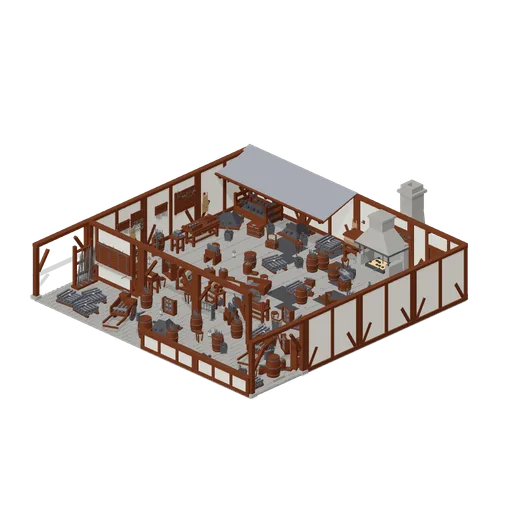
Village smithy, open fronted, with forge, anvil and armoury bench (Blacksmith Forge and Armoury)
A working blacksmith's shop 16 m by 12 m, open fronted on purpose so the whole floor can be seen and walked: timber framed walls on three sides, a shop front of a shutter counter and two open bays with the cart entrance left clear beside them, and no roof over the working...
Similar packs
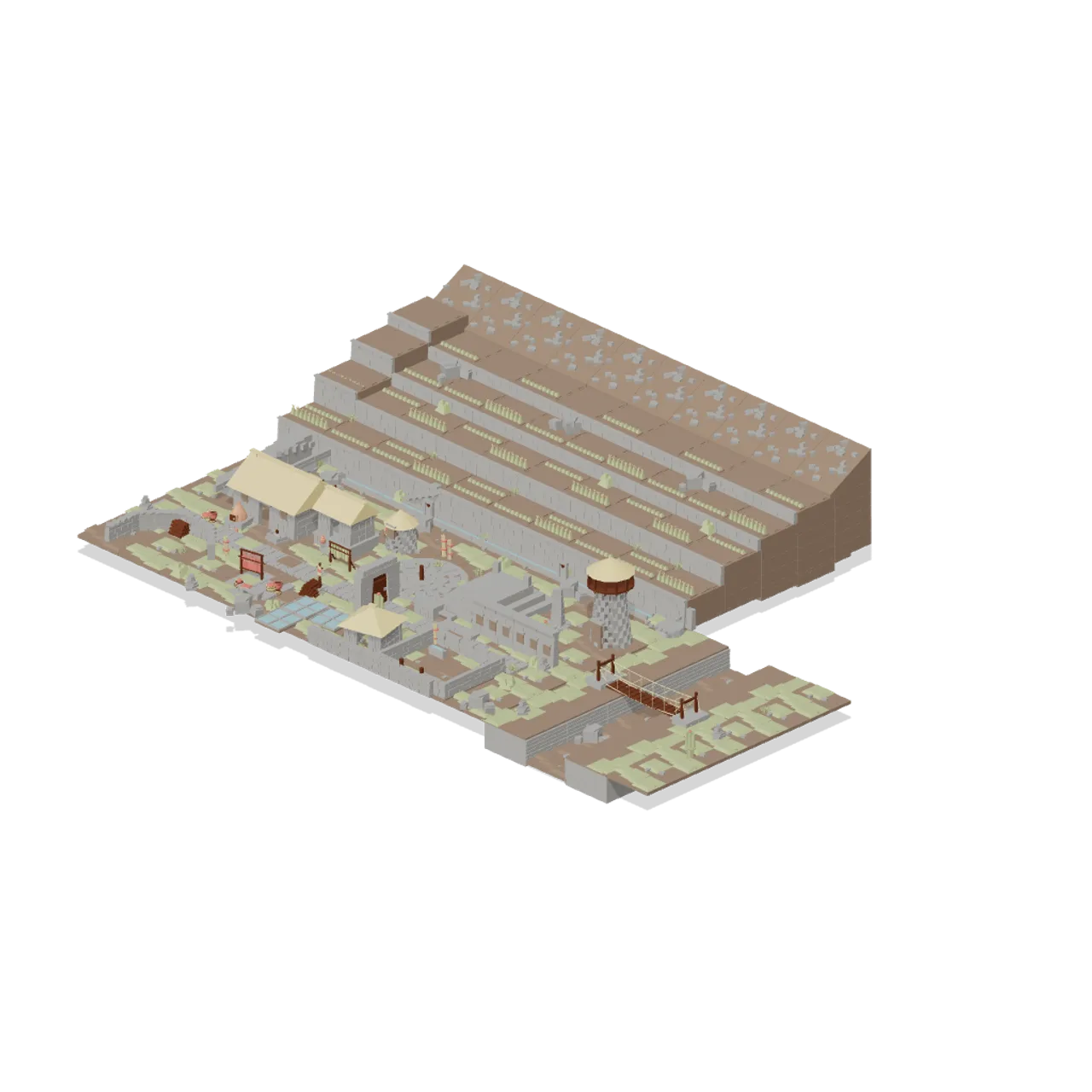 60 models
Andean Terraces and Stone Village
Highland terrace farming and a stone village: retaining wall modules in three heights with their beds and crops, irrigation channels, a rope gorge bridge, stone huts, storehouses, a granary, a lookout tower, gateways, hearths, looms, jars and baskets, in one assembled valley.
AI used in 60 of 60 files · Claude Opus 5
 62 models
Jungle Temple and Stone City
A lost stone city in the rainforest: a stepped pyramid and its shrine, a ball court, plazas, colonnades and a modular masonry kit, carved stelae, masks and beasts, the jungle taking it back, and the survey camp and rope bridge that found it.
AI used in 62 of 62 files · Claude Opus 5
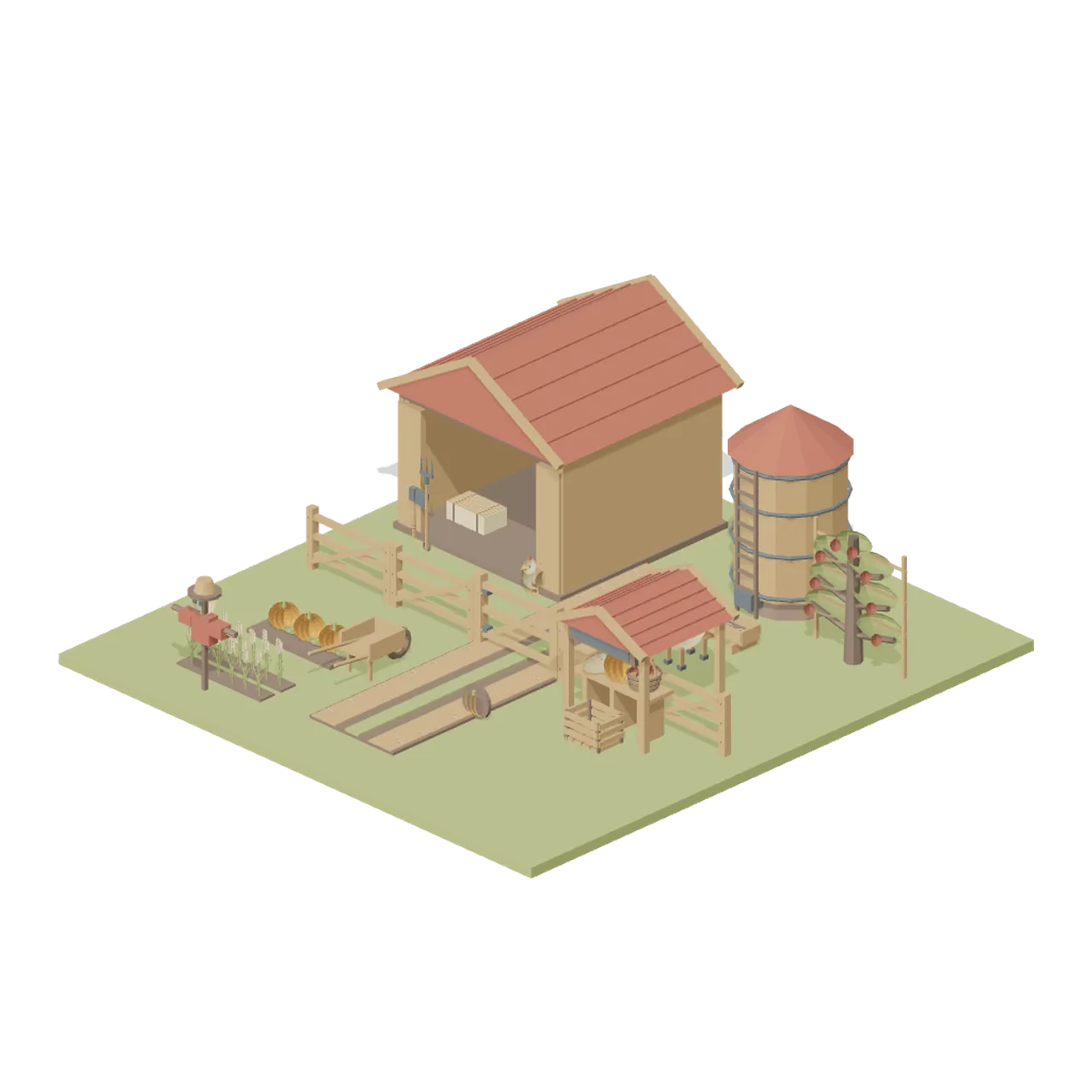 25 models
Harvest Hearth: Autumn Harvest Farm
A late harvest homestead kit with open farm structures, orchard pieces, crops, tools and static farm animals.
AI used in 25 of 25 files · GPT-6 via Codex
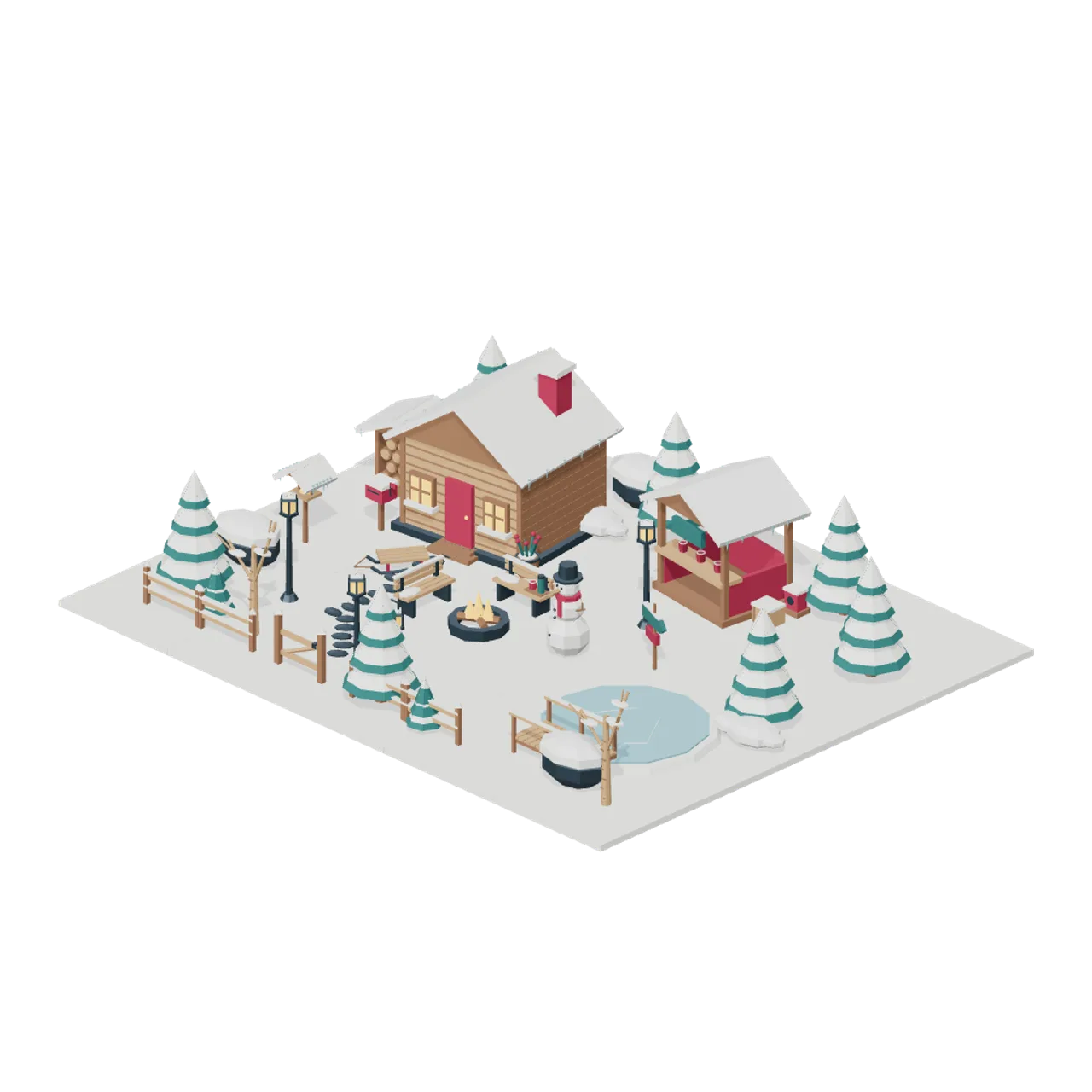 29 models
Winter Hearth Village
A cozy low-poly winter village: cedar cabin, cocoa market, snowy woodland, frozen pond and warm gathering-place props.
AI used in 29 of 29 files · Claude Fable 5.1
 63 models
Imperial China Palace and Garden
A stylised imperial Chinese palace court: a double eaved hall on a stone terrace, a gate tower with bell and drum, moon gates, walkways, a pavilion over a lotus pond, an arched bridge, lanterns, bronzes and the furniture of a hall and a garden.
AI used in 63 of 63 files · Claude Opus 5
 62 models
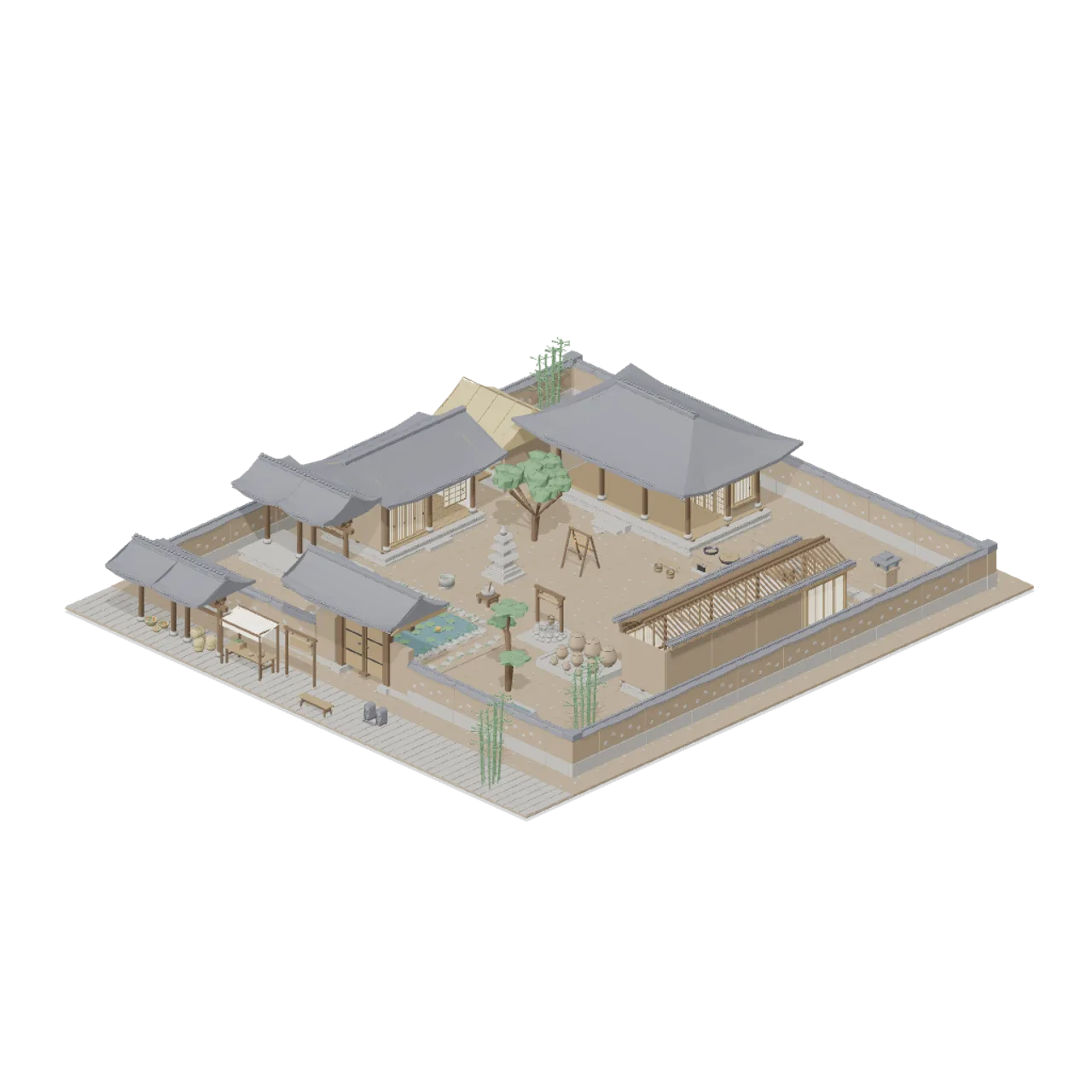
Korean Hanok Village and Street
A Korean hanok village: timber framed houses on stone plinths with raised maru floors and tiled upturned eaves, papered sliding doors, a gate house, clay walls, an ondol firebox and kitchen hearth, a jangdokdae of fermentation jars, a well and a market street.
AI used in 62 of 62 files · Claude Opus 5
 25 models
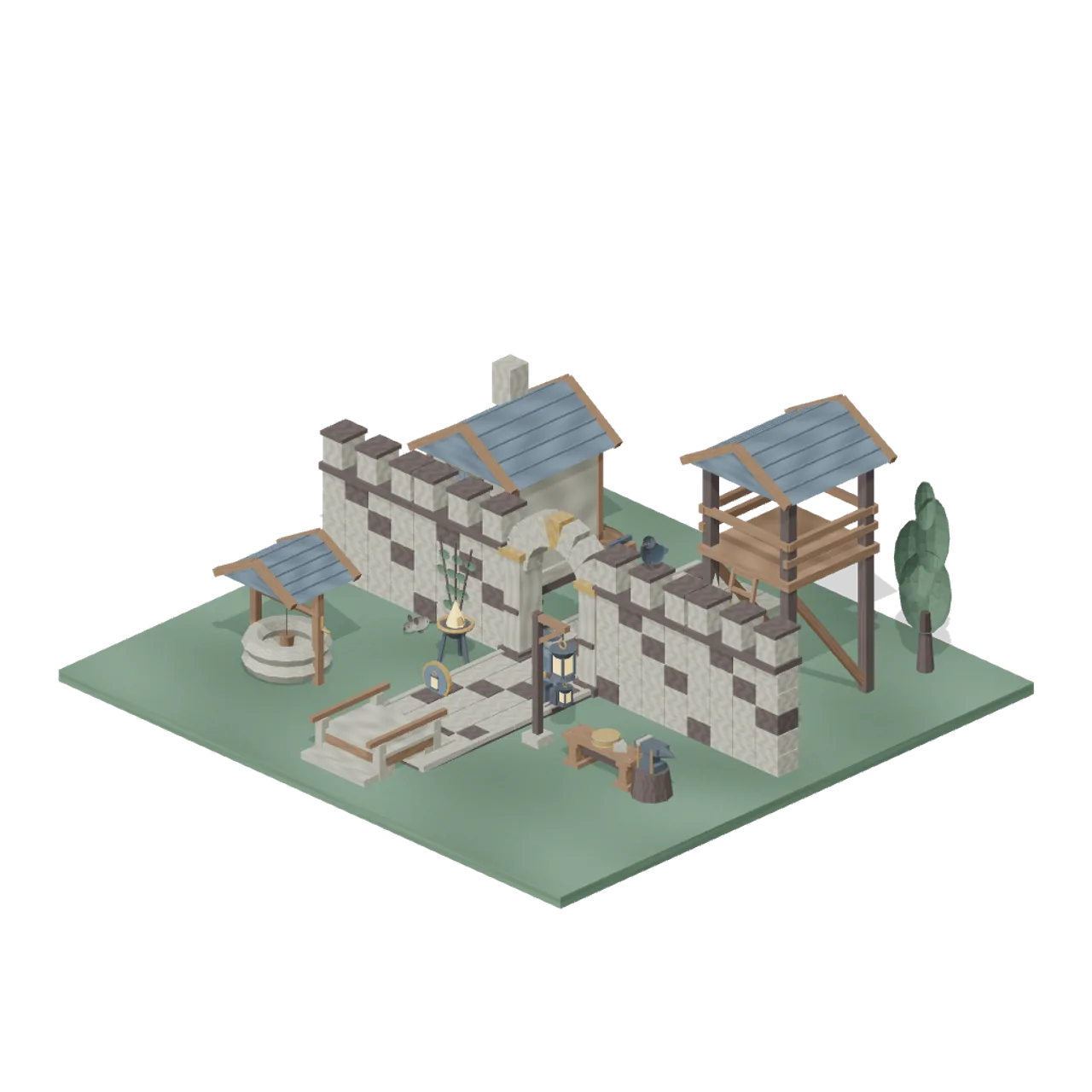
Lantern Watch: Medieval Guard Post
A medieval watch post kit with open stone defenses, warm lanterns, guard equipment and static courtyard life.
AI used in 25 of 25 files · GPT-6 via Codex
 25 models
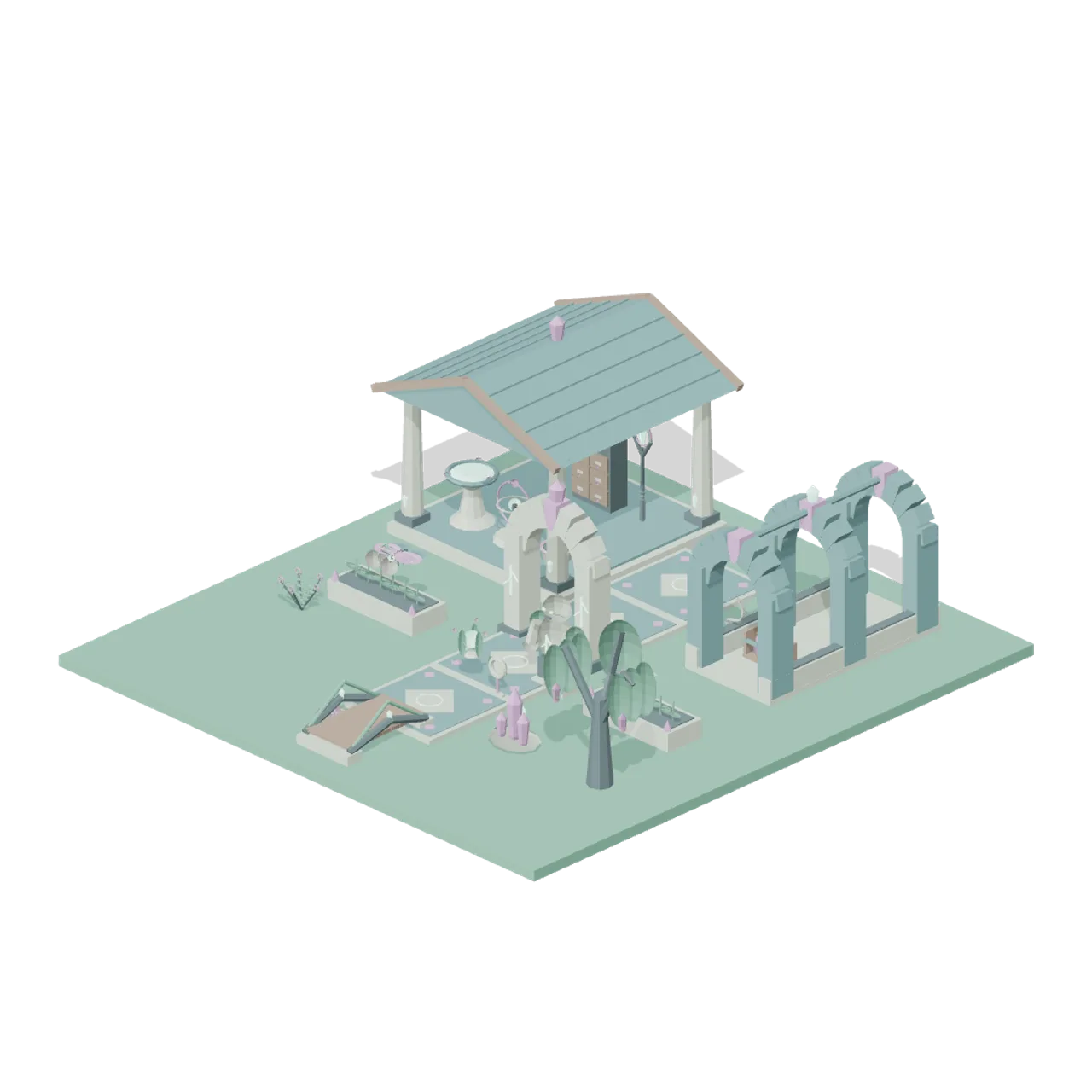
Runestone Conservatory: Magic Garden Workshop
A magical botanical workshop kit with open pavilions, rune stones, unusual plants and alchemy equipment.
AI used in 25 of 25 files · GPT-6 via Codex
 62 models
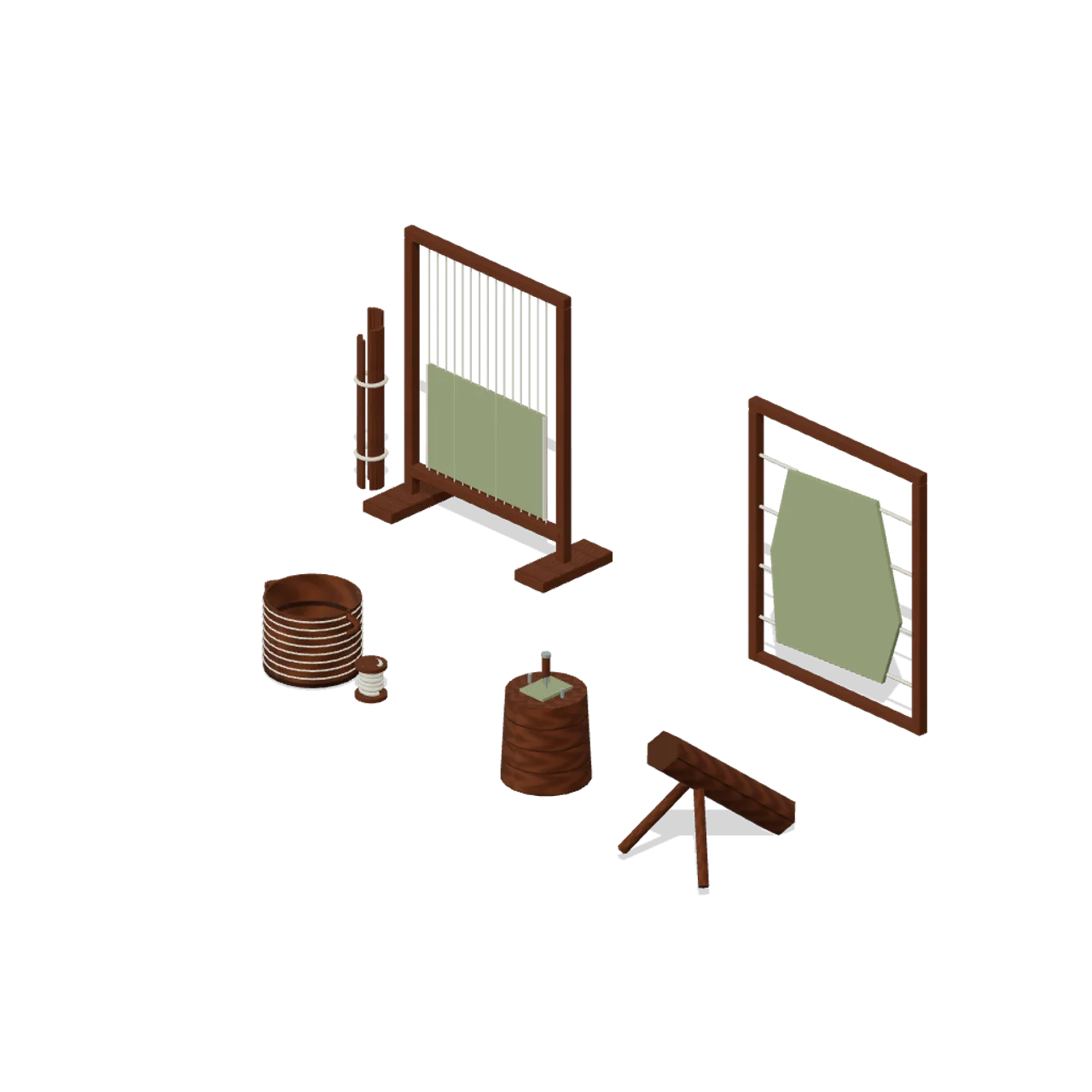
Primitive Crafting Workshop
Stone-age crafting tools and stations: flint axes, arrowheads and scrapers, bone needles and hooks, spindles and looms, rope and netting jigs, hide frames and leatherworking gear.
AI used in 62 of 62 files · Claude Fable 5.1
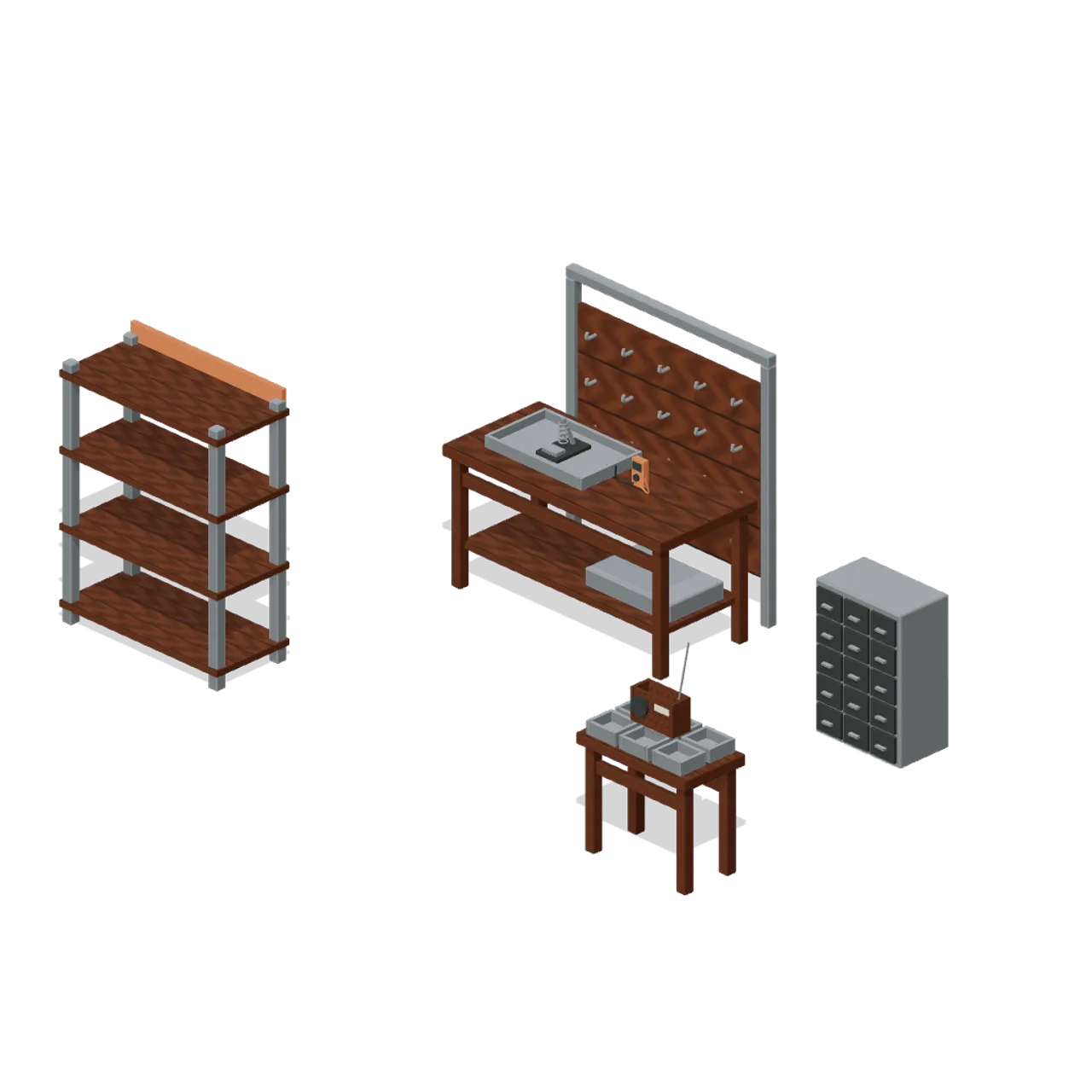 72 models
Salvage and Repair Workshop
A salvage workshop: workbenches, vices and presses, hand tools, soldering and diagnostic gear, calipers and gauges, plus stripped fans, radios, drums and compressors to break down for parts.
AI used in 72 of 72 files · Claude Fable 5.1