
Loading model
About
Everything a developer needs to build a palace courtyard and the garden inside it, for a wuxia, xianxia or historical fantasy setting. The architecture is modular on a 4 m grid: courtyard paving, a raised terrace platform and its spirit ramp flight, garden wall runs with corners, an end pier and a moon gate bay whose round headed leaf swings, covered walkway bays and a corner, a hipped roof cassette, a ridge run, a carved balustrade run, a lacquered column with its bracket set, and a free standing bay of lattice screen doors. The set pieces are a double eaved ceremonial hall on a moulded stone terrace with a screen wall whose two centre leaves slide, a gate tower with a barrel vaulted passage and a gallery carrying a swinging bell and a tilting drum, an open pavilion on stone piles for standing in water, an arched stone bridge, and a horned beast roof finial. The garden is a rockery, a scholar rock, pond edge runs and water modules, lotus clusters, bamboo, a plum tree in blossom, peonies, a bonsai, a stone bench, stepping stones, a courtyard well with a turning windlass, standing, hanging and floating lanterns, an incense burner and a bronze tripod cauldron with lifting lids. Indoors are the seat of state and its footstool, a low tea table and tea set, a zither on its stand, a writing desk, a brush stand, an inkstone, a scroll rack, a folding screen with hinged outer leaves, hanging scrolls, floor cushions, an altar table, a brazier stand, a lacquer chest with a lifting lid, banners, pennants, a parasol, a pair of guardian lions, a polearm rack, a ceremonial drum, a bronze bell and a rocking training dummy. Movement is rigid node transforms only: the sliding screens, the moon gate leaf, the screen panels, the lifting lids, the swinging bell, the tilting drum, the bobbing lanterns, the turning windlass and the rocking dummy. What does not move is deliberate and is said in each description: the water is a flat pane, and a rigid node transform cannot ripple a surface; blossom, foliage, lotus flowers and the parasol fringe are modelled in one pose, because opening a flower is per vertex work; hanging silk, banners, ropes and the well rope are cloth and cable, which need skinning this library does not have, so they ship rigid in the shape they hang in; smoke, flame and burning incense are effects rather than geometry; and the zither strings are rods, because a vibrating string is not one rigid node either. Nothing here depicts a real palace, temple, landmark, dynasty or franchise: every carved, painted and cast motif is invented, and no surface in the pack carries characters of any script. All original CC0 geometry, no brands and no logos.
Files load directly from the CDN. Choose the pieces you need. Colliders, navigation and gameplay scripts are supplied by your game.
Use with an AI agent
Copy this prompt into your AI chat, then describe what you want to build with the pack.
Use the “Imperial China Palace and Garden” pack in my project.

Manifest (JSON, every model with its CDN URL): https://3dassets.dev/api/v1/packs/imperial-china-palace-and-garden
Starter scene (one GLB with every piece placed): https://cdn.3dassets.dev/assets/36222/v1/model.glb
Pack page: https://3dassets.dev/packs/imperial-china-palace-and-garden
Description: A stylised imperial Chinese palace court: a double eaved hall on a stone terrace, a gate tower with bell and drum, moon gates, walkways, a pavilion over a lotus pond, an arched bridge, lanterns, bronzes and the furniture of a hall and a garden.

- 63 GLB models, 6.2 MB in total
- Units: metres, +Y up, shared scale and palette across the pack
- Licence: CC0 1.0 Universal (no attribution required)
- Loading: three.js GLTFLoader; no additional decoders required. Load models individually from the manifest, or the starter scene as one file.
Also available as a JSON manifest or via the MCP server.
Common questions
How do I use Imperial China Palace and Garden with my AI development tools?
How do I get started?
Which game engines and tools can I use Imperial China Palace and Garden with?
How do I import this pack into Unity, Godot, Unreal or Blender?
Can I use Imperial China Palace and Garden in a commercial game, and do I need to credit anyone?
Can I load it from the CDN instead of downloading it?
Do I have to download the whole pack?
Do the models in Imperial China Palace and Garden fit together?
Game kit
Imperial China Palace and Garden
A stylised imperial Chinese palace court: a double eaved hall on a stone terrace, a gate tower with bell and drum, moon gates, walkways, a pavilion over a lotus pond, an arched bridge, lanterns, bronzes and the furniture of a hall and a garden.
One GLB with every piece placed in a starter scene. Each model is also below on its own.
View demoEverything in this pack
 Animated
Ceremonial Hall (Imperial China Palace and Garden)
A double eaved ceremonial hall on a moulded stone terrace, with lacquered columns, bracket sets under both eaves and a screen wall whose two centre leaves slide open.
 Animated
Gate Tower (Imperial China Palace and Garden)
A gate tower: a stone base pierced by a barrel vaulted passage, with a timber gallery above it carrying a hanging bronze bell and a standing drum under a hipped tile roof.

Palace Wall Straight (Imperial China Palace and Garden)
A 4 m run of garden wall: a stone plinth, a lime plastered panel and a glazed tile capping course with a raised ridge tile.

Palace Wall Corner (Imperial China Palace and Garden)
A right angle corner for the garden wall, with a raised pier in the angle and the tile capping carried round both arms.
 Animated
Palace Wall Moon Gate (Imperial China Palace and Garden)
A wall bay with a circular moon gate cut through it, its stone rim laid as a ring of voussoirs and a round headed timber leaf swinging in the opening.

Palace Wall End Pier (Imperial China Palace and Garden)
A finished end for a wall run: a taller square pier with its own small hipped tile cap and a short stub of wall.

Covered Walkway Bay (Imperial China Palace and Garden)
A 4 m bay of covered garden walkway: lacquered columns both sides, a seat rail against the balustrade and a tiled gable canopy with lifted eaves.

Covered Walkway Corner (Imperial China Palace and Garden)
A right angle turn in the covered walkway, with a square corner bay under a small hipped roof and a bracket set on each column.

Water Pavilion (Imperial China Palace and Garden)
An open pavilion standing over water on stone piles, with a balustrade seat on three sides, bracket sets and a hipped tile roof under a bronze finial.

Arched Stone Bridge (Imperial China Palace and Garden)
A single span humpbacked stone bridge with a voussoir arch, a stepped deck over it and a pierced balustrade down both parapets.

Courtyard Paving Module (Imperial China Palace and Garden)
A 4 m square of courtyard paving: large dressed slabs with recessed joints and a worn stone finish, laid to a four way grid.

Terrace Platform Module (Imperial China Palace and Garden)
A 4 m square of raised stone terrace with a moulded plinth edge, for building a hall podium of any size.

Terrace Step Flight (Imperial China Palace and Garden)
A five tread stone flight rising 1.15 m to terrace level, with a carved spirit ramp of abstract cloud scrolls between two runs of treads.

Stone Balustrade Run (Imperial China Palace and Garden)
A 4 m run of carved stone balustrade with turned newel posts, capped handrail and pierced panels, for edging a terrace or a pond.

Lacquered Column And Bracket (Imperial China Palace and Garden)
A single red lacquered column on its stone drum base, carrying a three course bracket set and a length of frieze beam.

Bracket Set Cluster (Imperial China Palace and Garden)
A bracket set on its own, as a detail piece: stepped arms and blocks on a short bearing beam, for close work under an eave.

Roof Cassette Hip (Imperial China Palace and Garden)
A 4 m square hipped roof cassette in glazed tile with lifted eave corners and a timber soffit, for roofing a modular bay.

Roof Ridge Run (Imperial China Palace and Garden)
A 4 m ridge run in glazed tile with raised end blocks, for closing the top of a roof or joining two cassettes.

Dragon Roof Finial (Imperial China Palace and Garden)
A horned beast head finial for a ridge end, in glazed tile with bronze horns, teeth and eyes. An invented creature, not a depiction of any existing carving.
 Animated
Latticed Screen Door Set (Imperial China Palace and Garden)
A free standing bay of lattice screen doors in a timber frame: two fixed side lights and two centre leaves that slide apart on their track.

Rockery Outcrop (Imperial China Palace and Garden)
A garden rockery: weathered limestone blocks stacked into a pierced outcrop on a low earth mound, about 2.6 m tall.

Lotus Pond Edge Straight (Imperial China Palace and Garden)
A 4 m run of pond edge: a rounded stone coping over a rubble face, with the water surface set below it and a fringe of reeds at one end.

Lotus Pond Edge Corner (Imperial China Palace and Garden)
A right angle corner for the pond edge, carrying the stone coping round the turn with the water surface held at the same level on both arms.

Pond Water Module (Imperial China Palace and Garden)
A 4 m square of still pond water with a shallow silt bed under it, for filling the middle of a pond laid out from edge runs.

Lotus Cluster (Imperial China Palace and Garden)
A cluster of lotus: seven floating pads and three open flowers on their stems, sized to sit on a pond water module.

Scholars Stone (Imperial China Palace and Garden)
A scholar rock: a broad pierced limestone on a carved timber base, eroded into two short legs bridged by an overhanging cap, about 2.1 m overall.

Standing Garden Lantern (Imperial China Palace and Garden)
A standing garden lantern: a stone shaft on a lotus foot carrying a glowing paper light chamber under a small hipped tile cap.
 Animated
Hanging Silk Lantern (Imperial China Palace and Garden)
A red silk lantern hanging from a bracket arm on its own post, with lacquer end caps, ribs and a tassel. The lantern swings on its hook.
 Animated
Floating Water Lantern (Imperial China Palace and Garden)
A small floating lantern on a lotus shaped timber float, for setting adrift on a pond. The lantern bobs on the water.
 Animated
Stone Incense Burner (Imperial China Palace and Garden)
A squat stone incense burner on three feet with a pierced bronze lid that lifts off its rebate, and three incense sticks standing in the ash.
 Animated
Bronze Tripod Cauldron (Imperial China Palace and Garden)
A large bronze ritual cauldron on three tapered legs, with cast handles, a band of invented key pattern and a domed lid that lifts.
 Animated
Courtyard Well (Imperial China Palace and Garden)
A courtyard well: an octagonal stone kerb with a bucket on a rope over a timber windlass, under a small tiled canopy on two posts. The windlass turns.

Bonsai In Glazed Pot (Imperial China Palace and Garden)
A trained miniature pine in a shallow glazed pot on a carved timber stand, with a swept trunk and three cloud pruned pads.

Bamboo Clump (Imperial China Palace and Garden)
A clump of nine bamboo culms with jointed stems and leaf sprays at the top, reaching about 4 m, for screening a wall or a corner.

Plum Tree In Blossom (Imperial China Palace and Garden)
A plum tree in full blossom: a gnarled dark trunk on a mossed root plate, five swept limbs and five drifts of pink flower, about 3.6 m tall.

Garden Stone Bench (Imperial China Palace and Garden)
A garden seat: a single dressed stone slab on two carved block supports, 1.8 m long, weathered and mossed along one edge.

Stepping Stone Path (Imperial China Palace and Garden)
A run of seven irregular stepping stones set into gravel, 4 m long, for crossing a planted bed or the shallow edge of a pond.

Peony Planter (Imperial China Palace and Garden)
A glazed ceramic planter of peonies on a low stone base: a full mound of foliage carrying five open pink flowers.

Imperial Throne Chair (Imperial China Palace and Garden)
A wide lacquered seat of state with carved arm scrolls, a five panel screen back and a footrail, standing on a low dais.

Throne Footstool (Imperial China Palace and Garden)
A low lacquered footstool with a carved apron and bronze corner caps, sized to the seat of state.

Low Tea Table (Imperial China Palace and Garden)
A low hardwood tea table 1.1 m long with an apron on all four sides and hoof shaped feet, for a hall or a pavilion.

Tea Set On Tray (Imperial China Palace and Garden)
A tea set on a lacquer tray: a lidded pot, four cups on saucers and a covered water jar, all in celadon glaze.

Guqin On Stand (Imperial China Palace and Garden)
A long seven string zither resting on a pair of carved trestles, with bronze studs down one edge and a lacquered soundboard.

Calligraphy Brush Stand (Imperial China Palace and Garden)
A brush rack: five brushes of different sizes hanging from a carved timber gantry, with a water pot and a brush rest beside it.

Inkstone And Water Dropper (Imperial China Palace and Garden)
A carved stone inkstone with a well and a grinding face, an ink cake beside it and a small bronze water dropper on a lacquer tray.

Scroll Rack (Imperial China Palace and Garden)
An open hardwood rack of three shelves holding eleven rolled scrolls in their cases, with a lattice back and carved spandrels.
 Animated
Folding Screen (Imperial China Palace and Garden)
A four panel folding screen in a lacquered frame with abstract painted fields, standing 1.9 m tall. The two outer leaves swing on their hinges.

Hanging Scroll Pair (Imperial China Palace and Garden)
A pair of hanging scrolls on a wall rail: silk mounts with timber rollers and abstract brushed fields, hung side by side.

Ceremonial Banner Pole (Imperial China Palace and Garden)
A tall banner on a weighted timber pole: a long lacquered pennant with a scalloped tail and abstract bronze bands, 4.2 m overall.

Pennant Pair On Poles (Imperial China Palace and Garden)
Two short parade pennants in a shared timber stand, their triangular flags carried on cross arms with bronze finials.

Guardian Lion Pair (Imperial China Palace and Garden)
A pair of carved stone guardian lions on moulded plinths, one with a carved ball at its paws and one with a cub. An invented beast, not a copy of any existing carving.

Polearm Weapon Rack (Imperial China Palace and Garden)
A hardwood rack of eight polearms: spears, halberds and a pair of broad bladed staves standing in a slotted base under a pierced top rail.
 Animated
Training Dummy (Imperial China Palace and Garden)
A padded training post on a weighted timber cross base, with three striking arms and a bound straw torso. The post rocks on its spring foot.
 Animated
Ceremonial Drum On Stand (Imperial China Palace and Garden)
A large barrel drum in a carved timber cradle with bronze hoop studs and two beaters on a hook. The drum tilts in its cradle.
 Animated
Bronze Bell On Frame (Imperial China Palace and Garden)
A cast bronze bell hung from a carved timber frame with a swinging beam beside it, and an invented band of raised bosses round the waist. The bell swings.
 Animated
Lacquer Storage Chest (Imperial China Palace and Garden)
A red lacquer chest on a stand with bronze corner plates, a hasp and carrying handles, and a lid that lifts on its back edge.

Scholars Writing Desk (Imperial China Palace and Garden)
A hardwood writing desk with a recessed top, a shallow drawer rail and cloud shaped spandrels, 1.4 m long at standing height for kneeling work.

Floor Cushion Set (Imperial China Palace and Garden)
Three square floor cushions with corded edges and tassels, in silk red, celadon and cream, laid out for a low table.

Ancestral Altar Table (Imperial China Palace and Garden)
A long altar table with upswept scroll ends, carrying a bronze censer, two candle stands and an offering plate of fruit.

Bronze Brazier Stand (Imperial China Palace and Garden)
A shallow bronze brazier on a three legged stand with a pierced rim, holding a bed of charcoal and a pair of tongs.

Ceremonial Parasol (Imperial China Palace and Garden)
A tall processional parasol in a floor socket: a fringed lacquer canopy on a long pole with a bronze finial, 3.2 m overall.

Walled palace courtyard and lotus garden (Imperial China Palace and Garden)
A complete walled palace court laid from 4 m paving on a 32 m square plot. The double eaved ceremonial hall stands on its stone terrace at the head of the court with a bronze cauldron on each side of the steps, the gate tower closes the south wall on the axis with a pair of...

Lotus pond pavilion (Imperial China Palace and Garden)
One corner of the pond on its own at working scale: four water modules inside their coping runs, the open pavilion on its stone piles with the tea table, the cushions and the zither on the deck, the arched stone bridge crossing to it, lotus clusters and floating lanterns on...
Similar packs
 60 models
Andean Terraces and Stone Village
Highland terrace farming and a stone village: retaining wall modules in three heights with their beds and crops, irrigation channels, a rope gorge bridge, stone huts, storehouses, a granary, a lookout tower, gateways, hearths, looms, jars and baskets, in one assembled valley.
AI used in 60 of 60 files · Claude Opus 5
 51 models
Royal Court and Throne Palace
Fifty ivory, maroon and brass designs for court audiences, royal dispatch and palace courtyard banquets.
AI used in 51 of 51 files · GPT-6
 96 models
Almanac Gardens: Country Garden Seasons
A crafted countryside garden through all four seasons: detailed architecture, botanical models and seasonal activities.
AI used in 96 of 96 files · Claude Fable 5.1
 68 models
Machine Shop and Factory Hall
Detailed machine tools, a modular steel factory hall, racking, handling gear and shop floor props in one stylised industrial family, built for machine shop and factory scenes.
AI used in 68 of 68 files · Claude Fable 5.1
 46 models
Tennis Club and Courts
A complete tennis club in a kit: court surface tiles in hard court blue and clay, the painted line set, a net that sags on its posts, fencing with a gate and windbreaks, rackets, balls, a ball machine, an umpire chair and a clubhouse of 4 m bays under a pitched roof.
AI used in 46 of 46 files · Claude Opus 5
 53 models
Indoor Market Hall and Traders
A Victorian covered market hall: cast iron columns, glazed roof bays, brick walls and paving on one 4 m grid, lock up units with roller shutters, open stalls with striped canopies, and the mixed goods, dressing and barrows of a hall of traders.
AI used in 53 of 53 files · Claude Opus 5
 49 models
Community Sports Hall and Changing Rooms
Realistic kit for a municipal multi use sports hall: a marked sprung floor, retractable basketball units, court posts and nets, wall bars and padding, mats and vaulting kit, changing rooms, showers, lockers, reception and the equipment store.
AI used in 49 of 49 files · Claude Opus 5
 62 models
Jungle Temple and Stone City
A lost stone city in the rainforest: a stepped pyramid and its shrine, a ball court, plazas, colonnades and a modular masonry kit, carved stelae, masks and beasts, the jungle taking it back, and the survey camp and rope bridge that found it.
AI used in 62 of 62 files · Claude Opus 5
 25 models
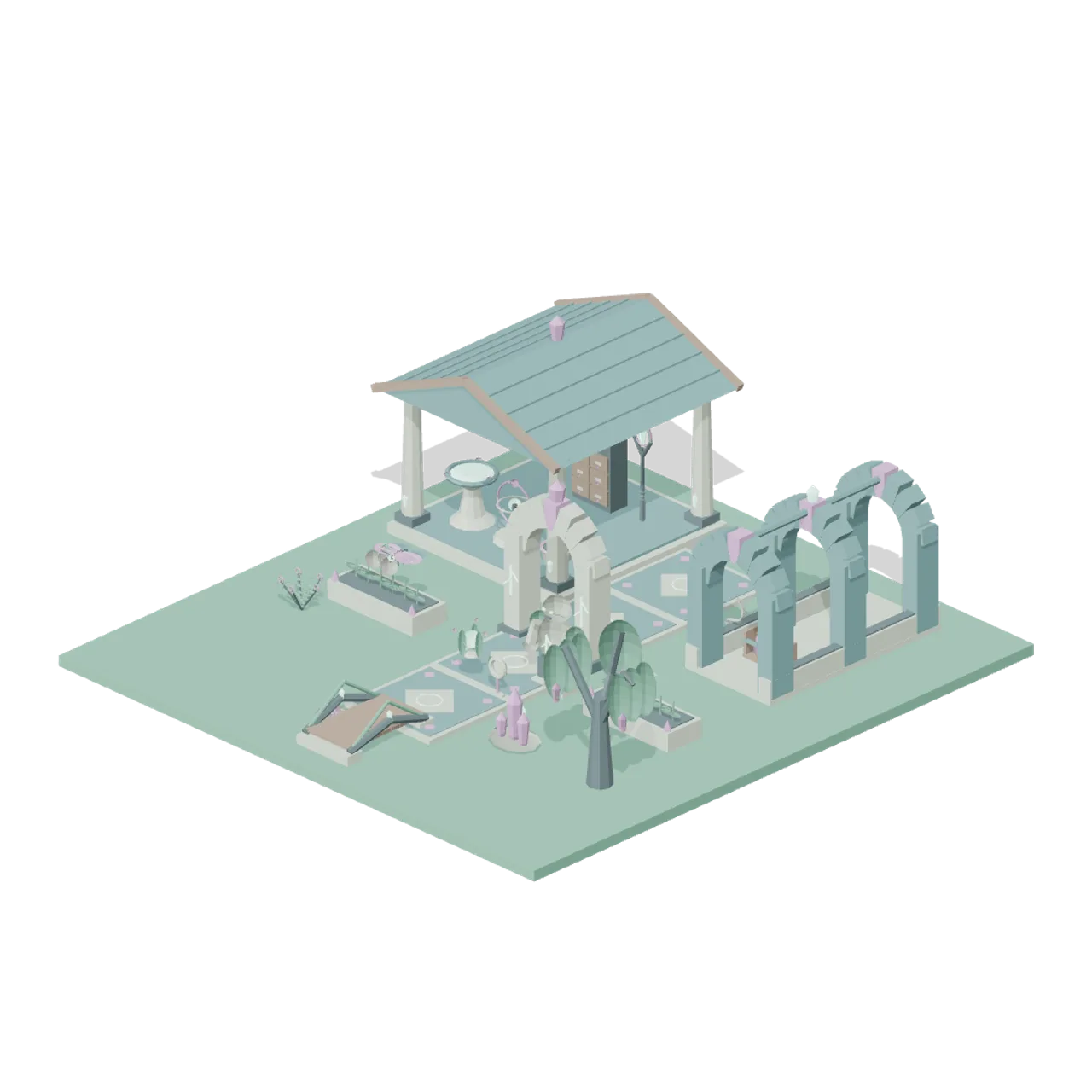
Runestone Conservatory: Magic Garden Workshop
A magical botanical workshop kit with open pavilions, rune stones, unusual plants and alchemy equipment.
AI used in 25 of 25 files · GPT-6 via Codex
 36 models
Turning Seasons: Four Season Garden
Four seasons of a storybook garden: blossom, sunshine, harvest and snow.
AI used in 36 of 36 files · GPT-6 via Codex