Loading model
About
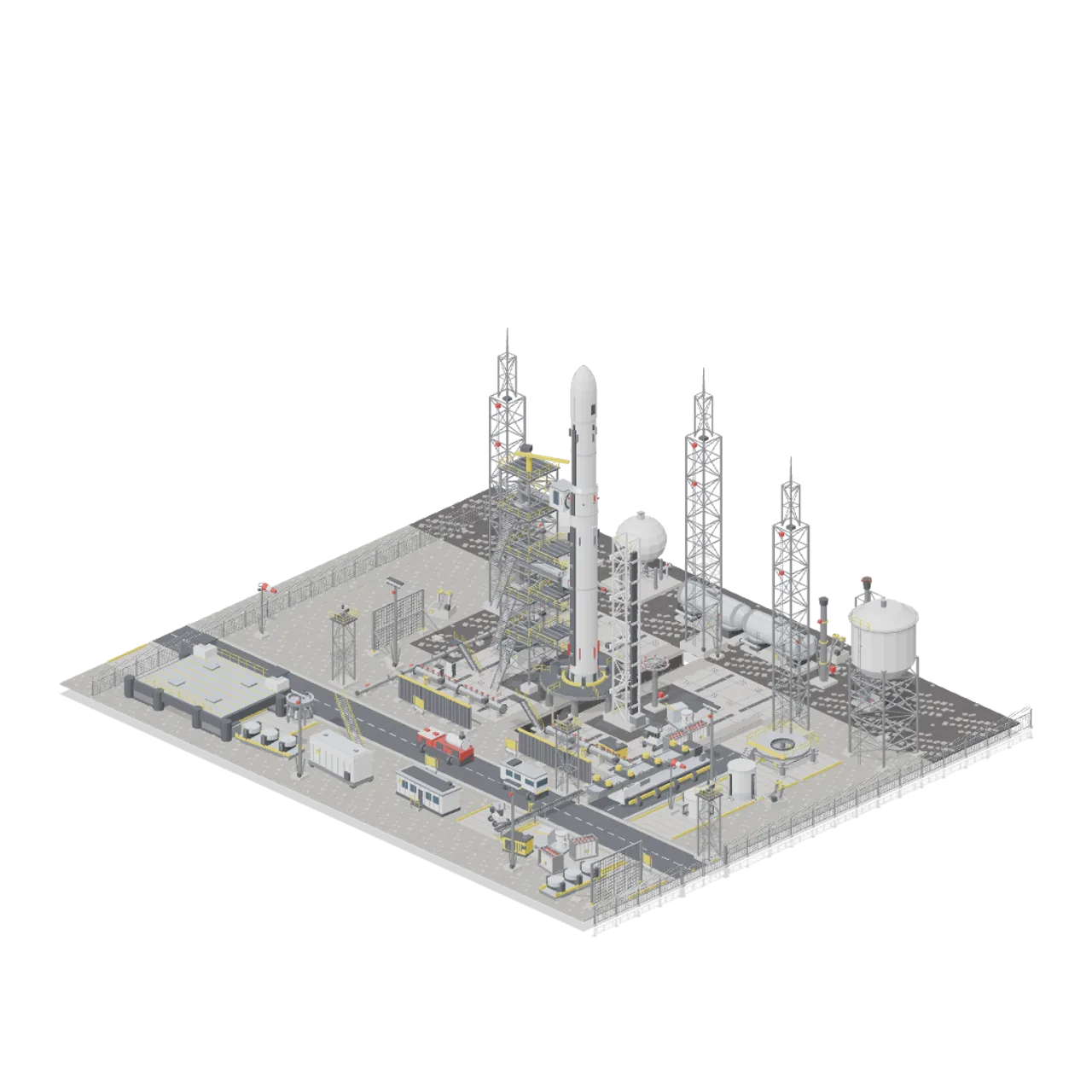
Assemble a working launch pad. The ground is 8 m modules on one grid: clean and flame washed apron, hardstand, gravel, burnt scrub and access road, all ported on four edges, with a flame trench section, a cable trench, an elevated cable tray and two sizes of water main ported end to end so services run across the site. At the centre stand the launch mount, a railed ring deck on six columns with four hold down clamps that swing clear, the flame deflector under it, a smaller launch table for a light vehicle, the deluge head, the sound suppression main and the water tower that feeds them. Beside the pad the service gantry stacks on a 6 m pitch: a base section with a plant room, plain and crane topped tower sections, a swing platform that closes round the vehicle, a stair flight, a service lift, the crew access arm with its white room, the fuelling arm whose quick disconnect retracts before the arm swings, a strongback, a lightning mast and its catenary anchors. The vehicle is modular: a 24 m first stage, an interstage, a second stage, a two piece fairing that hinges open, a seven engine cluster, a grid fin section whose four fins deploy, a landing leg section whose four legs deploy, plus the transporter erector that raises it, a crawler transporter deck, a stage cradle and a payload container. The ground support is a propellant sphere and a horizontal tank, a vent stack, a flare stack, a chilldown skid, a helium bottle rack, a nitrogen purge cart, a ground power unit, arrestors, camera and floodlight towers, a windsock, fencing with a two leaf gate, blast fence, a debris catch net, a safety shower, blank warning boards, a firing room console and an electronics rack, a site office, a crew transfer van and a fire truck. Rigid node transform clips only, no skinning and no people. Cabling, hoses, umbilical lines, hoist ropes, catenary wires, the fence mesh, the catch net, the crawler track shoes and the windsock are modelled solid and never move, because flexible material needs a deformable mesh or a joint per element; the hydraulic rams and engine gimbals are static because a ram is a linkage, not one rigid node; and vapour, flame and deluge water are absent entirely, since fire and fluid are a shader, never geometry. Original AI assisted CC0 geometry: no launch provider, agency, contractor, vehicle, site or mission appears anywhere, no real vehicle silhouette or livery is reproduced, and every sign, plate, screen and hull marking is blank or an invented abstract block.
Files load directly from the CDN. Choose the pieces you need. Colliders, navigation and gameplay scripts are supplied by your game.
Use with an AI agent
Copy this prompt into your AI chat, then describe what you want to build with the pack.
Use the “Rocket Launch Pad and Gantry” pack in my project.

Manifest (JSON, every model with its CDN URL): https://3dassets.dev/api/v1/packs/rocket-launch-pad-and-gantry
Starter scene (one GLB with every piece placed): https://cdn.3dassets.dev/assets/38216/v1/model.glb
Pack page: https://3dassets.dev/packs/rocket-launch-pad-and-gantry
Description: A modern launch complex in a kit: apron, flame trench and launch mount with clamps that open, a stackable service gantry with swinging platforms and arms, a vehicle in separable stages with fins, legs and a hinged fairing, and the propellant farm around them.

- 64 GLB models, 4.0 MB in total
- Units: metres, +Y up, shared scale and palette across the pack
- Licence: CC0 1.0 Universal (no attribution required)
- Loading: three.js GLTFLoader; no additional decoders required. Load models individually from the manifest, or the starter scene as one file.
Also available as a JSON manifest or via the MCP server.
Common questions
How do I use Rocket Launch Pad and Gantry with my AI development tools?
How do I get started?
Which game engines and tools can I use Rocket Launch Pad and Gantry with?
How do I import this pack into Unity, Godot, Unreal or Blender?
Can I use Rocket Launch Pad and Gantry in a commercial game, and do I need to credit anyone?
Can I load it from the CDN instead of downloading it?
Do I have to download the whole pack?
Do the models in Rocket Launch Pad and Gantry fit together?
Game kit
Rocket Launch Pad and Gantry
A modern launch complex in a kit: apron, flame trench and launch mount with clamps that open, a stackable service gantry with swinging platforms and arms, a vehicle in separable stages with fins, legs and a hinged fairing, and the propellant farm around them.
One GLB with every piece placed in a starter scene. Each model is also below on its own.
View demoEverything in this pack
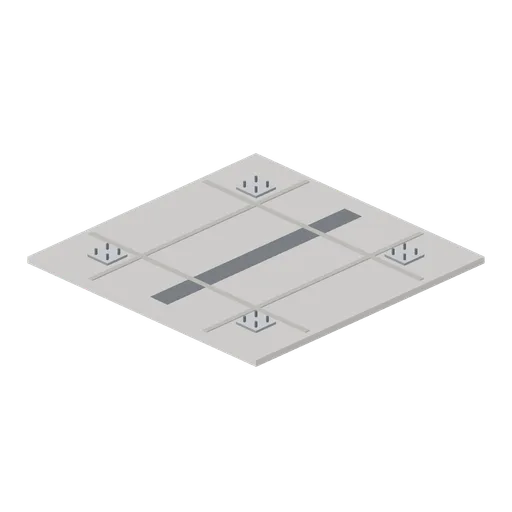
Pad Apron Module (Rocket Launch Pad and Gantry)
An 8 m square reinforced concrete pad apron module, 180 mm thick, with cast joint strips, a central drain channel and four bolt groups. Edge ported north, south, east and west so an apron of any size tiles out of repeats.
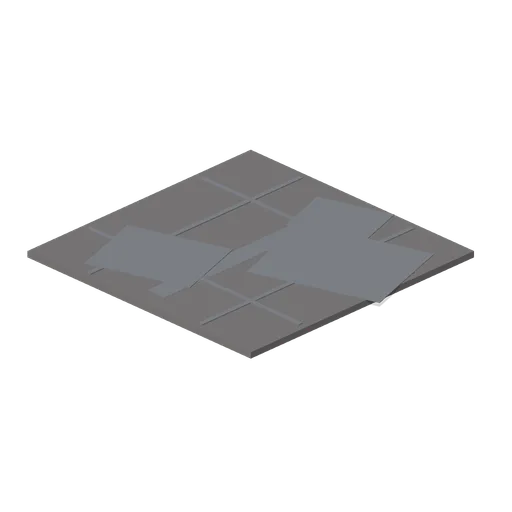
Scorched Apron Module (Rocket Launch Pad and Gantry)
The pad apron module in flame washed dark concrete, with soot patches where the exhaust plume has swept the slab. Same 8 m module and the same four edge ports, so it drops straight into an apron built from the clean tiles.
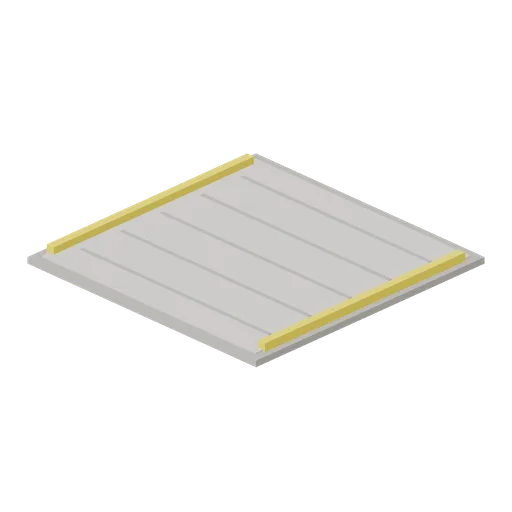
Hardstand Module (Rocket Launch Pad and Gantry)
An 8 m hardstand module for parking transporters, carts and skids beside the pad: a gravel bed, a laid concrete deck with joint lines and a yellow kerb down each side. Ported on all four edges to the same grid as the apron.
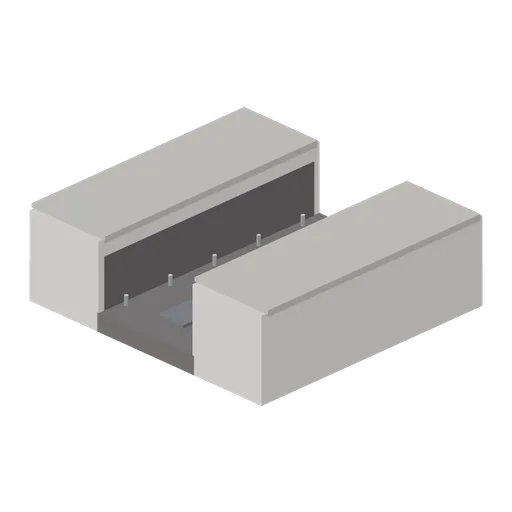
Flame Trench Section (Rocket Launch Pad and Gantry)
An 8 m section of flame trench: two 2.6 m concrete walls with a coping lip and a scorched lining, a sloped channel floor 3.4 m across, a drain sump and deluge nozzles along both kerbs. Ported at both ends so the trench runs as far as the pad needs.
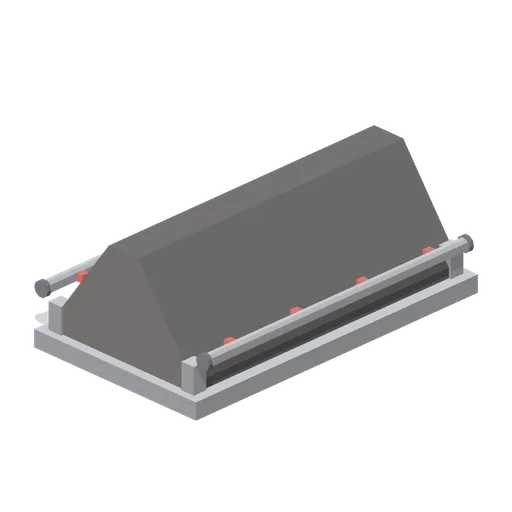
Flame Deflector (Rocket Launch Pad and Gantry)
A steel framed double wedge deflector, 3.4 m wide and 2.8 m tall, that splits the exhaust plume down both arms of the trench. Ablative dark face, a bolted cradle underneath and a cooling water manifold along each flank.
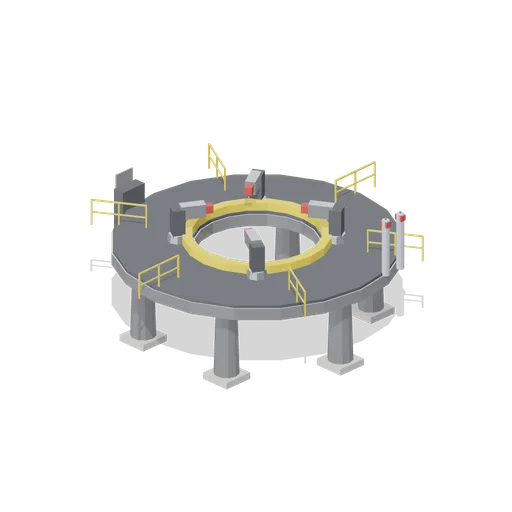 Animated
Launch Mount with Clamps (Rocket Launch Pad and Gantry)
The launch mount: a ring deck 11.5 m across on six columns over the trench mouth, railed all round, with a yellow kick ring for the vehicle skirt and four hold down clamps on hinge posts that swing clear at release. Umbilical plate and cryogenic risers on one flank.
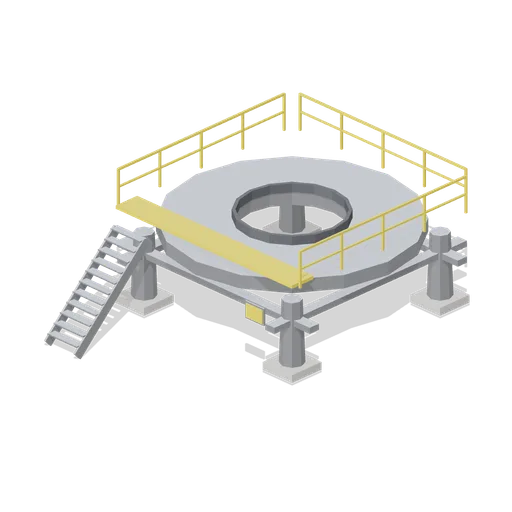
Launch Table (Rocket Launch Pad and Gantry)
A 7.2 m steel launch table for a small vehicle: four jack posts on pads, a bolted deck frame with an open flame hole, a railed working deck, an access stair and a blank hazard plate on the front girder.
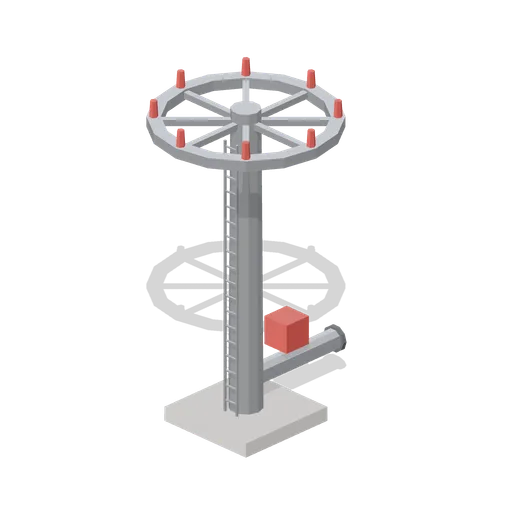
Water Deluge Head (Rocket Launch Pad and Gantry)
A 6.7 m deluge head: a mast on a concrete footing carrying a spray ring of eight nozzle arms, with the feed pipe coming in at ground level through a valve block and a ladder up the mast. Sprays are not modelled.
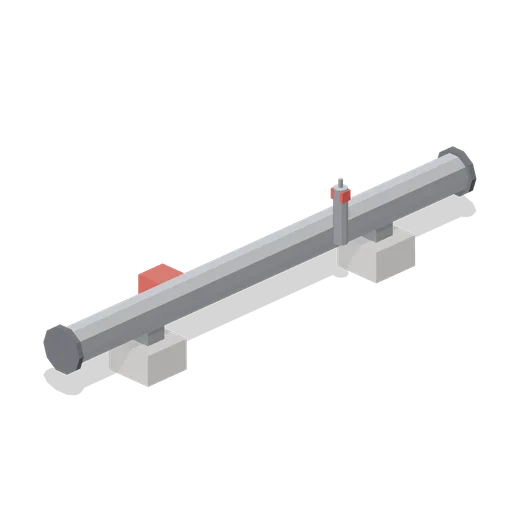
Deluge Pipe Run (Rocket Launch Pad and Gantry)
An 8 m run of 600 mm deluge main on concrete saddles, with flanged ends, a standpipe tapping and an isolation valve body. Ported at both ends on the pipe centreline so a water main runs the length of the pad.
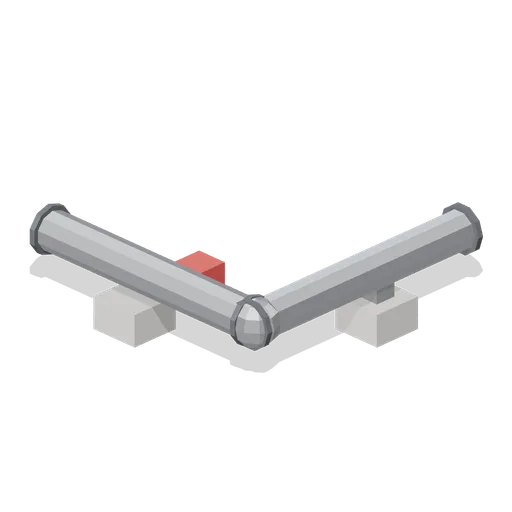
Deluge Pipe Elbow (Rocket Launch Pad and Gantry)
The deluge main turning a right angle on the same 8 m module: a north port and a west port meeting at a swept bend on its saddles, so the water main can follow the pad boundary.
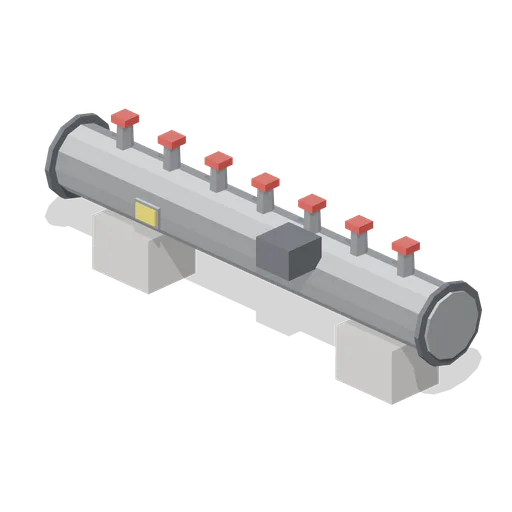
Sound Suppression Pipe Run (Rocket Launch Pad and Gantry)
An 8 m length of 1.1 m sound suppression water main on concrete saddles, with seven standpipes and outlet heads along the top and a control box on the flank. Ported at both ends, so a suppression ring is built from repeats.
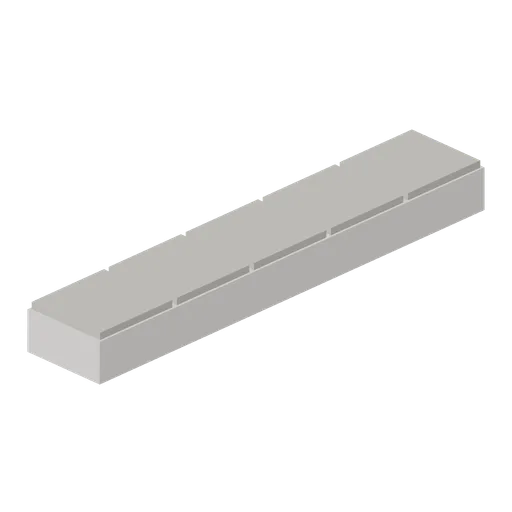
Cable Trench Section (Rocket Launch Pad and Gantry)
An 8 m cast cable trench with five removable lid slabs, a cable bed inside and a yellow duct run along one wall. Ported at both ends so power and signal routes run from the firing room to the pad.
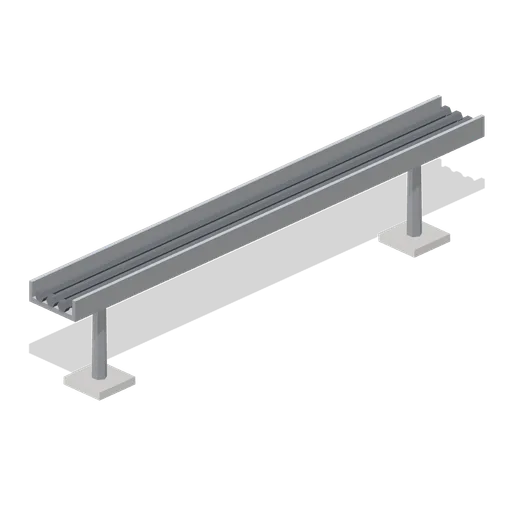
Cable Tray Run (Rocket Launch Pad and Gantry)
An 8 m elevated cable tray on two stanchions, 1.5 m to the deck, carrying three bundles in a ladder tray with side rails. Ported at both ends at tray height so a tray route crosses a pad without blocking it.
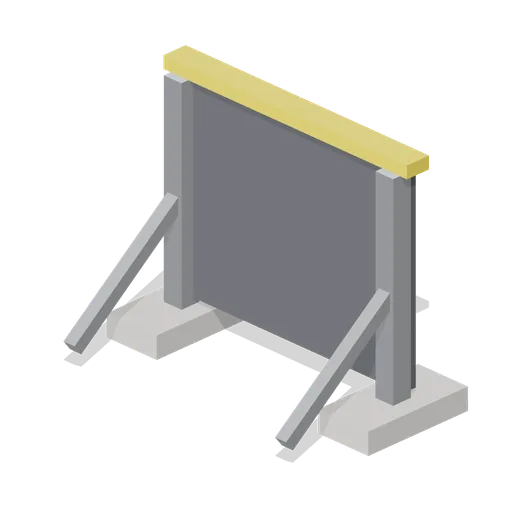
Blast Fence Panel (Rocket Launch Pad and Gantry)
A 4.4 m blast fence panel, 3.7 m tall: a braced steel frame on two ballast pads carrying a deflection plate with vertical stiffeners and a yellow cap rail. Ported left and right so a blast wall runs as far as the pad needs.
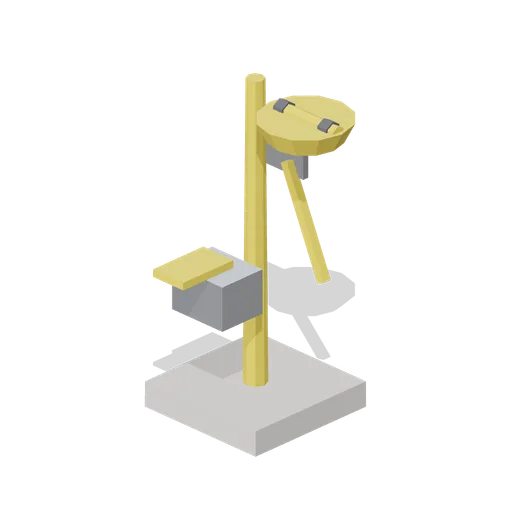
Safety Shower and Eyewash (Rocket Launch Pad and Gantry)
An emergency safety shower and eyewash station on a concrete plinth: a 2.6 m yellow standpipe with an overhead rose and pull rod, a bowl and paddle on the stem and a blank instruction plate on the back.
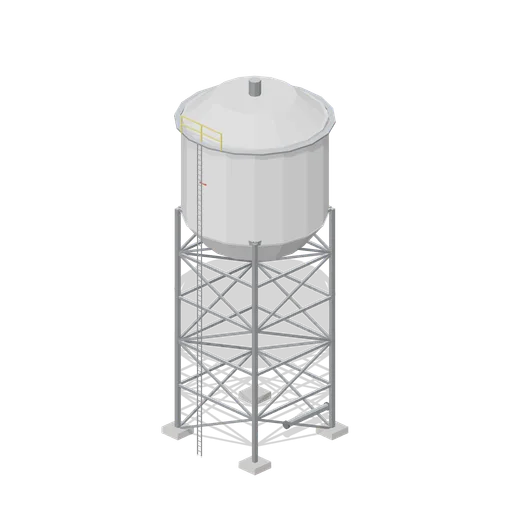
Pad Water Tower (Rocket Launch Pad and Gantry)
A 22 m water tower feeding the deluge system: a lattice frame on four pads carrying an 8.4 m tank with a domed base and top, a railed catwalk, a ladder the full height and a downpipe out to the mains.
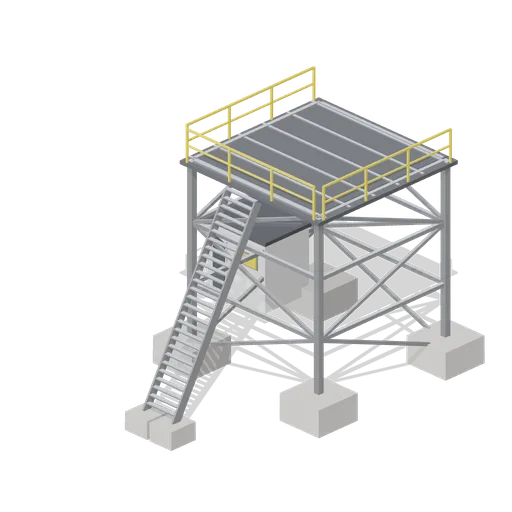 Animated
Gantry Base Section (Rocket Launch Pad and Gantry)
The bottom 6 m of the service gantry: a 5.2 m lattice bay on four concrete footings, a grated deck and handrails at the top, an access stair off the back and a plant room at the foot with a door that opens.
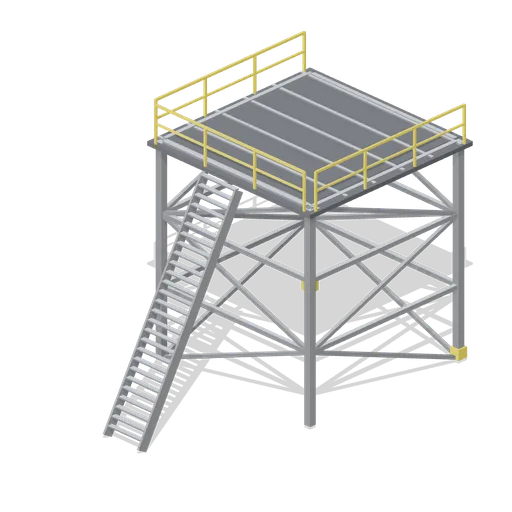
Gantry Tower Section (Rocket Launch Pad and Gantry)
One stackable 6 m section of service gantry: a 5.2 m square lattice bay with a grated deck, handrails on three sides and a stair flight up the back. Base and top ports on the tower axis, so a structure of any height is repeats of this piece.
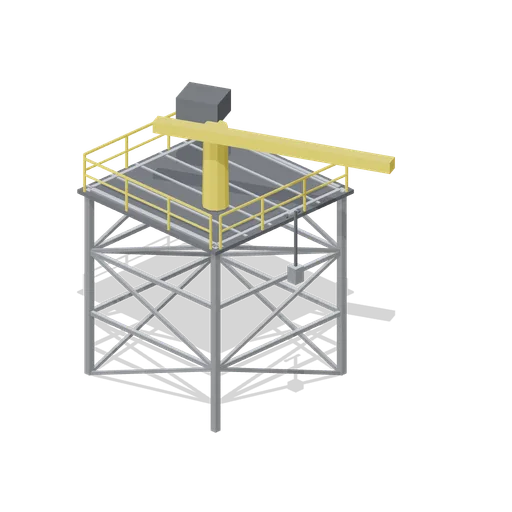
Gantry Crane Section (Rocket Launch Pad and Gantry)
The gantry tower section topped with a slewing jib crane: a yellow mast on the deck, an 7.4 m boom over the pad and a hook block on a static fall. Same 6 m module and the same base and top ports as the plain section.
 Animated
Gantry Swing Platform (Rocket Launch Pad and Gantry)
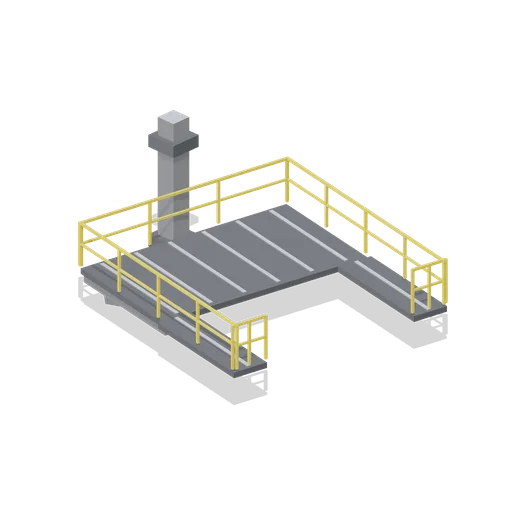
A gantry access platform on a hinge column: a 6.6 m grated deck whose two arms close round a 4 m vehicle, handrails on every free edge and raking struts back to the column. The deck is one node and swings clear about the column.
Gantry Stair Flight (Rocket Launch Pad and Gantry)
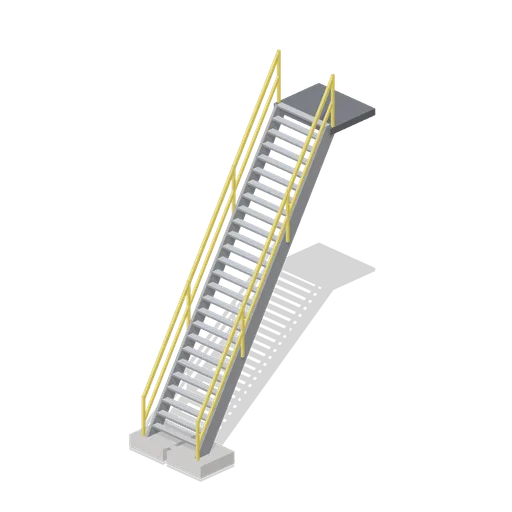
A standalone 6 m stair flight with stringers, footing pads, raked handrails and a grated landing at the top, for climbing between gantry decks or up onto the launch mount.
 Animated
Crew Access Arm (Rocket Launch Pad and Gantry)
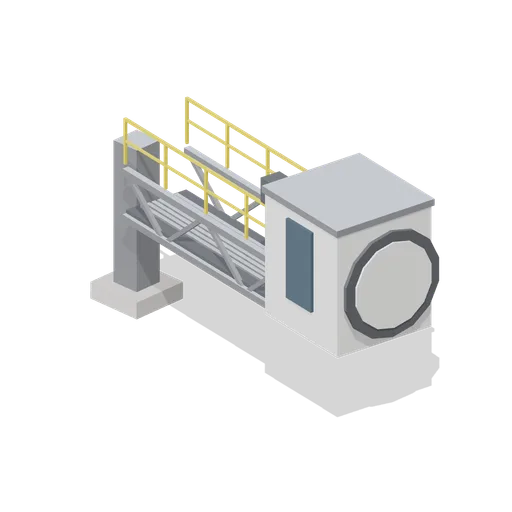
A 9.6 m crew access arm on a pivot column: a trussed walkway with handrails leading to a white room with a sealing collar, a window and a plant box. The whole arm is one node and swings back away from the vehicle.
 Animated
Fuelling Arm (Rocket Launch Pad and Gantry)
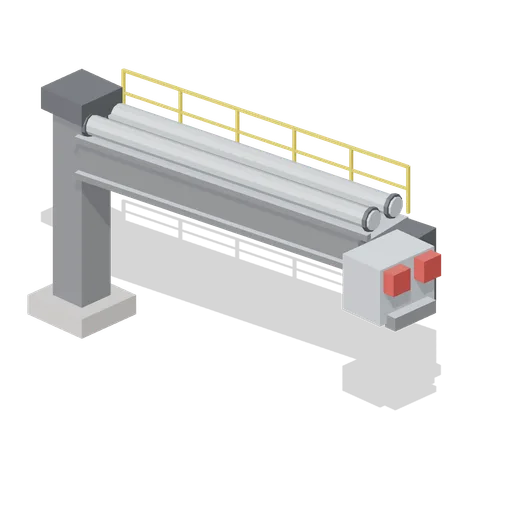
A cryogenic fuelling arm on a pivot column: a box girder carrying two insulated transfer lines out to a quick disconnect head, with a counterweight box and a handrail. The head retracts along the arm and the arm then swings away.
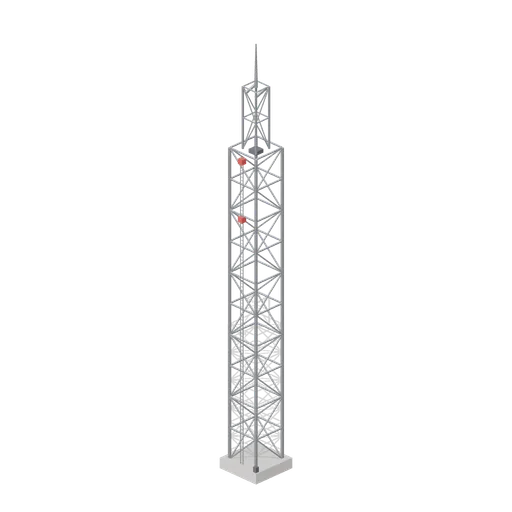
Lightning Mast (Rocket Launch Pad and Gantry)
A 41 m lightning protection mast: a lattice tower on a concrete block, a narrower head section carrying the air terminal spike and the catenary arms, obstruction markers, a ladder the full height and an earth downlead box at the foot.
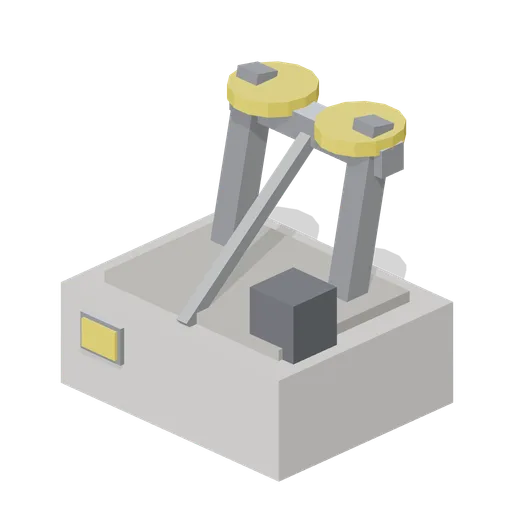
Catenary Wire Anchor (Rocket Launch Pad and Gantry)
A ground anchor for the lightning catenary: a ballast block with a steel frame, two sheaves, a tensioner strut and an earthing box, with a blank warning plate on the face. The wire it holds is deliberately not modelled.
 Animated
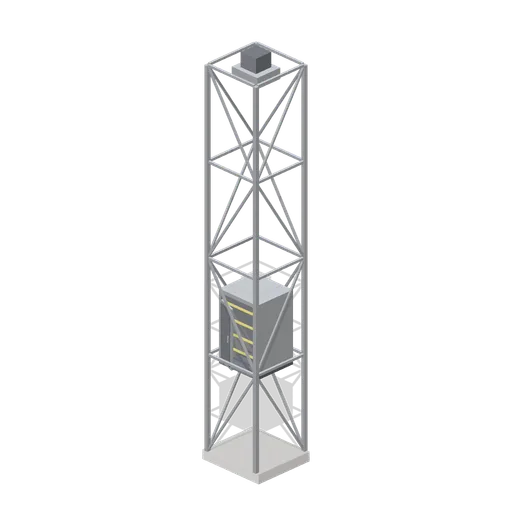
Service Lift Cage (Rocket Launch Pad and Gantry)
A 12 m service lift: a lattice hoistway on a concrete pad with a caged car parked at the bottom landing, a gate that opens and the winch housing at the head. The car is modelled at rest and does not travel.
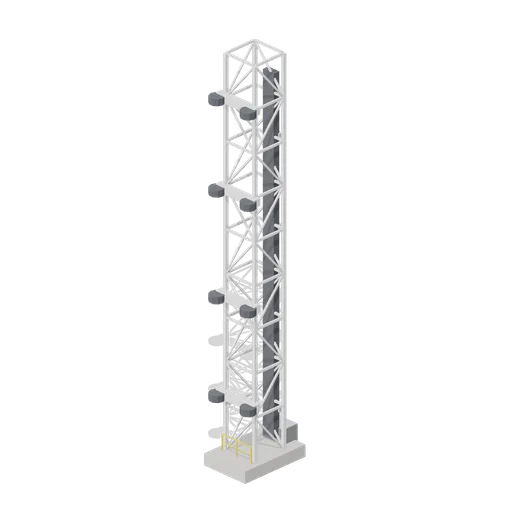
Strongback (Rocket Launch Pad and Gantry)
A 27 m strongback: a white lattice mast on a ballast foot with four vehicle cradles and their clamp pads on the front face, an umbilical raceway with insulated line boxes up the back and a base junction box.
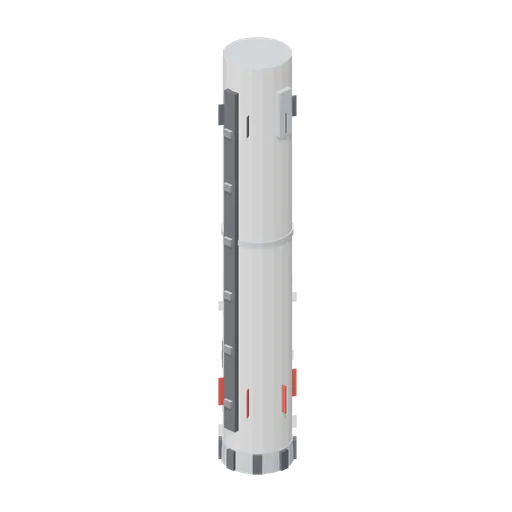
First Stage Core (Rocket Launch Pad and Gantry)
A 24 m first stage core, 3.8 m across: a white tank barrel with a dividing ring, an aft skirt on eight thrust posts, a cable raceway with junction boxes up one flank, an umbilical plate and invented block markings. Ported base and top.

Interstage (Rocket Launch Pad and Gantry)
A 3.6 m interstage barrel joining the two stages: the same 3.8 m hull, a reinforcing ring at each end, eight separation vent ports, a raceway continuation and an invented marking band.
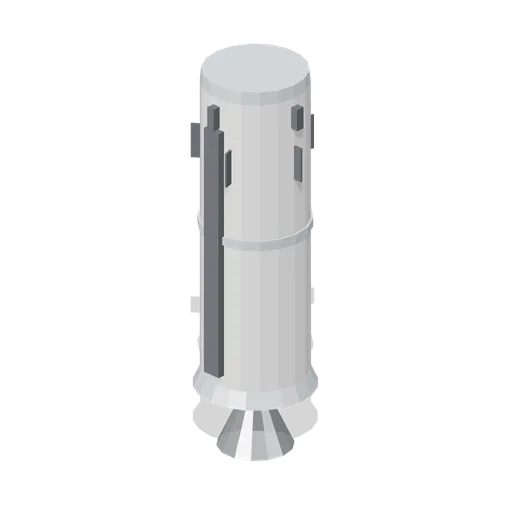
Second Stage (Rocket Launch Pad and Gantry)
A 12.3 m second stage: a 3.3 m tank on a conical adapter down to the core diameter, one vacuum engine bell on its thrust block, a raceway, four attitude thruster pods and a payload interface ring on top.
 Animated
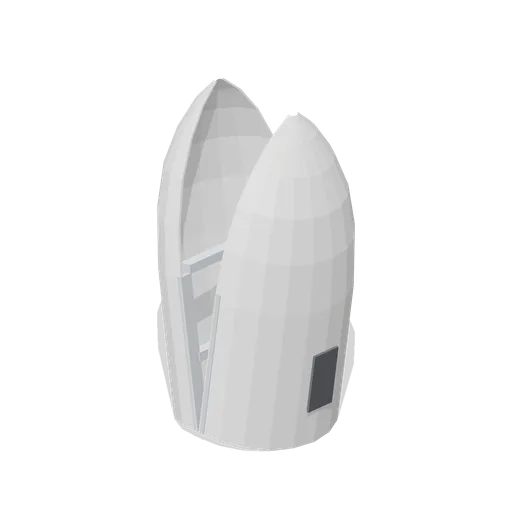
Payload Fairing Halves (Rocket Launch Pad and Gantry)
A two piece payload fairing, 7.4 m tall and 3.5 m across: an ogive shell with a modelled wall thickness, a longeron each side of the split line, internal stiffening hoops and a blank access panel. Each half hinges open outwards on its own node at the base of the split line.
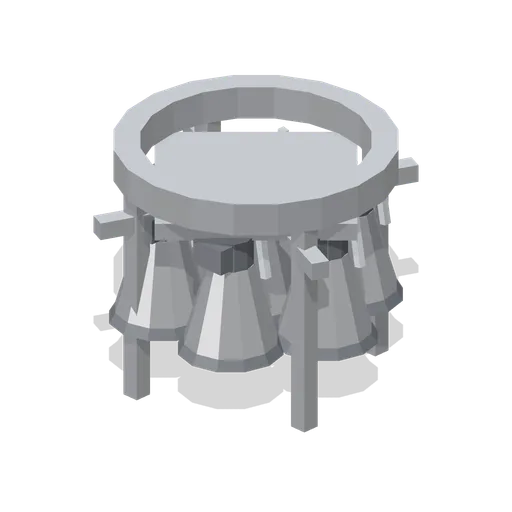
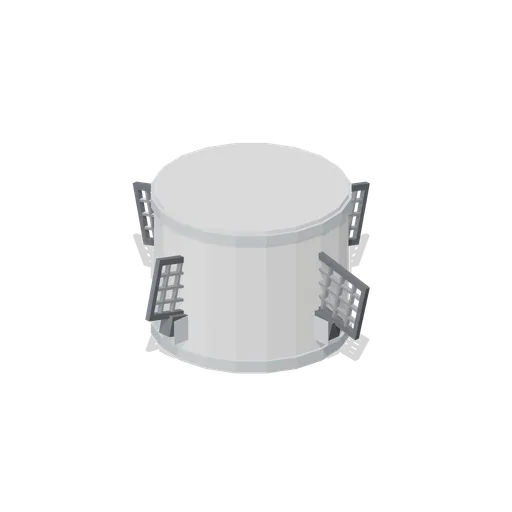
Engine Cluster (Rocket Launch Pad and Gantry)
A seven engine cluster on its thrust structure: a ring beam on four posts with a cross brace, one centre bell and six round it on gimbal blocks, each with a turbopump box and propellant feed stubs. 3.7 m across, 3.4 m tall.
 Animated
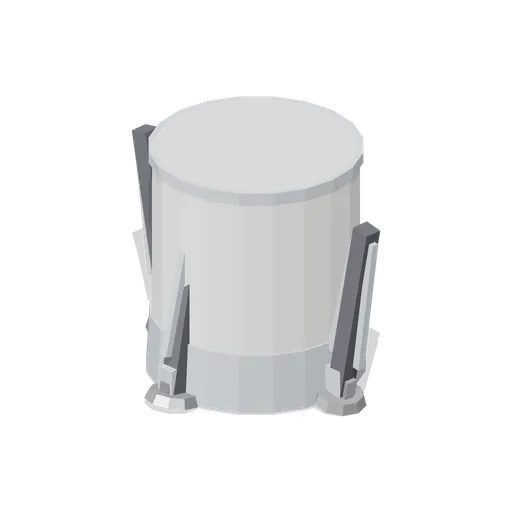
Grid Fin Set (Rocket Launch Pad and Gantry)
A 3 m forward hull section carrying four lattice grid fins stowed flat against it, each a framed grid of vanes on its own hinge fitting. The four fins deploy out to the airstream and fold back, one node each.
 Animated
Landing Leg Set (Rocket Launch Pad and Gantry)
A 4.3 m aft hull section with four landing legs stowed against it: each leg is a main strut with two side stays and a round foot pad, hinged at its own base fitting, and each deploys down and out on its own node.
 Animated
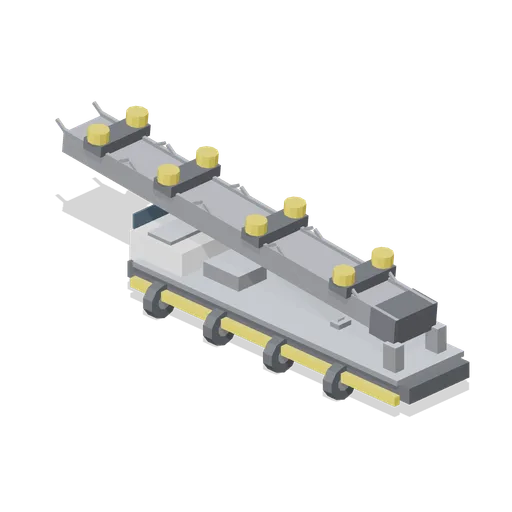
Transporter Erector (Rocket Launch Pad and Gantry)
A 19 m transporter erector: an eight wheel chassis with a blank cab and a hydraulic pack, carrying a trussed erector beam on a rear hinge with four vehicle cradles and their rollers. The beam raises on its own node and the wheels roll.
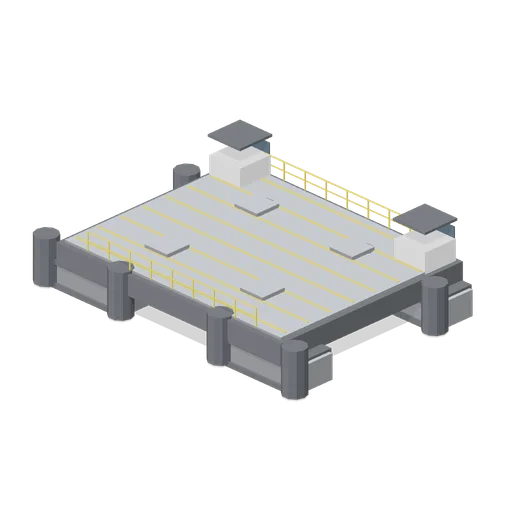
Crawler Transporter Deck (Rocket Launch Pad and Gantry)
A 16 by 13 m crawler transporter: a levelling deck on four track units with jacking cylinders, four hold down points, railed edges, hazard striping and two blank operator cabs. Carries a launch mount or a whole vehicle stack.
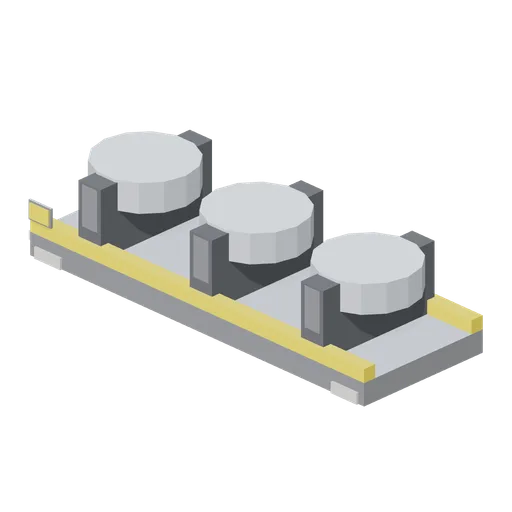
Stage Transport Cradle (Rocket Launch Pad and Gantry)
A 9 m cradle for laying a stage or a fairing down on its side: a steel bed with three padded saddles, retaining posts, kerb rails, load spreading feet and a blank data plate.
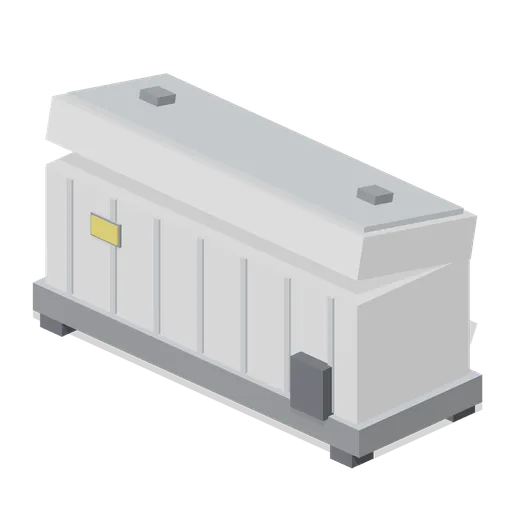 Animated
Payload Transport Container (Rocket Launch Pad and Gantry)
A 9 m air conditioned payload container: a white ribbed box on a steel bed with a conditioning plant box, a blank data plate and a hinged top cover that lifts on its own node.
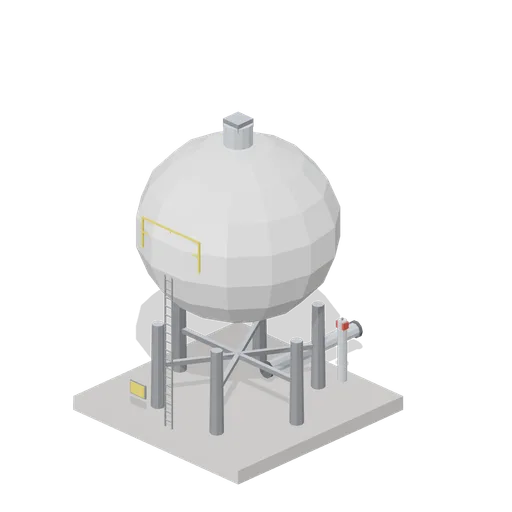
Propellant Sphere Tank (Rocket Launch Pad and Gantry)
A 6.8 m spherical propellant tank on six legs and a concrete ring foundation: a vent head on top, an insulated fill and drain line at ground level, a valve standpipe, a ladder to a small catwalk and a blank data plate.
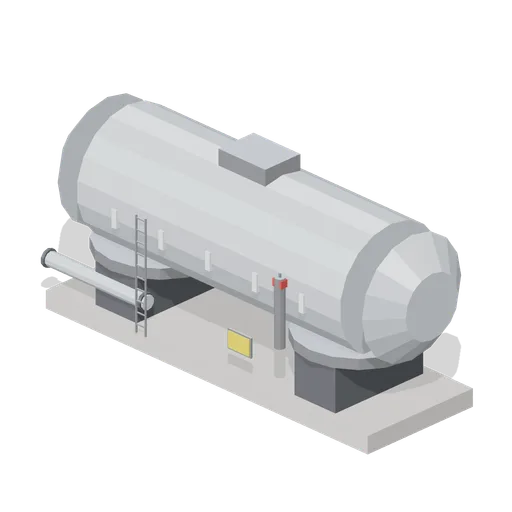
Propellant Cylinder Tank (Rocket Launch Pad and Gantry)
An 11 m insulated horizontal propellant tank on two concrete saddles: a 3.5 m barrel with dished ends and external stiffening rings, a valve manifold on top, a fill line and standpipe, an access ladder and a blank data plate.
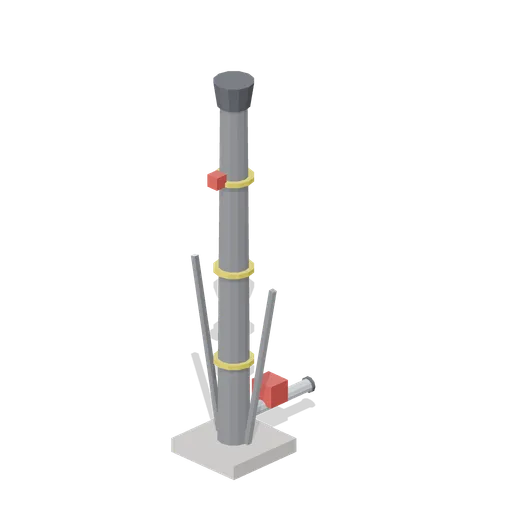
Vent Stack (Rocket Launch Pad and Gantry)
A 12.3 m boil off vent stack: a braced steel column on a concrete base with hazard bands, a flared head, an insulated feed at ground level and a control valve box. The vapour plume is not modelled.
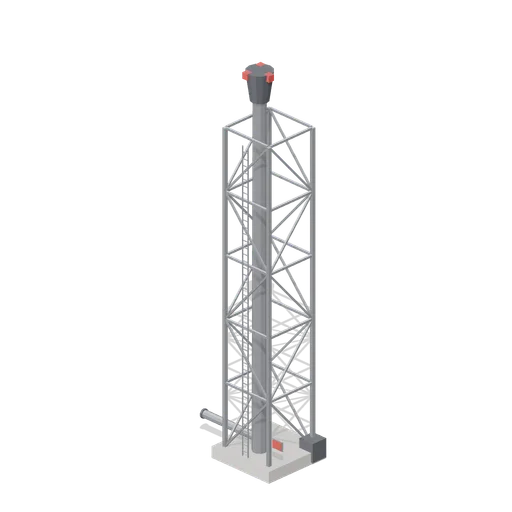
Flare Stack (Rocket Launch Pad and Gantry)
An 18.5 m flare stack for burning off vented propellant: a lattice mast carrying the flare riser and its tip, ignition boxes at the head, a knockout drum and feed line at the foot, a ladder and a blank hazard plate. No flame is modelled.
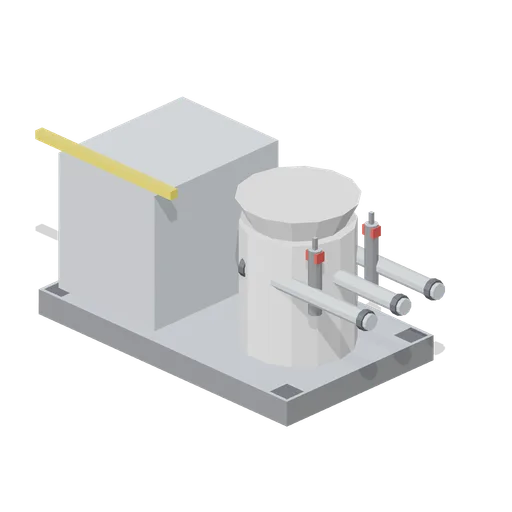
Chilldown Skid (Rocket Launch Pad and Gantry)
A 4.4 m cryogenic chilldown skid on a lifting frame: a heat exchanger cabinet, a vacuum jacketed vessel, three transfer lines with isolation risers, a control box with a blank display and a lifting bar.
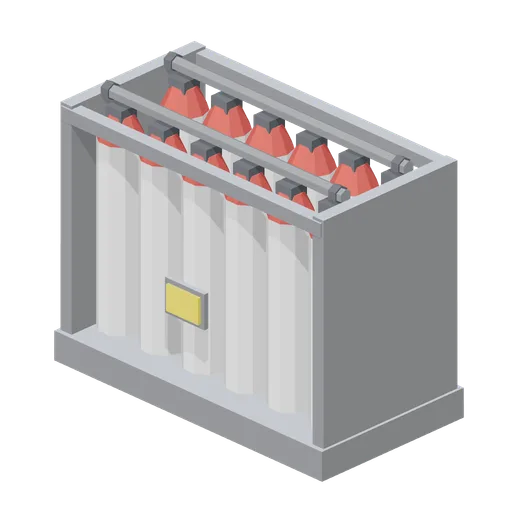
Helium Bottle Rack (Rocket Launch Pad and Gantry)
A twelve bottle high pressure gas rack in a lifting frame, 3.4 m wide: two rows of bottles with valve heads, a collector manifold across the top of each row and a blank hazard plate on the front.
 Animated
Nitrogen Purge Cart (Rocket Launch Pad and Gantry)
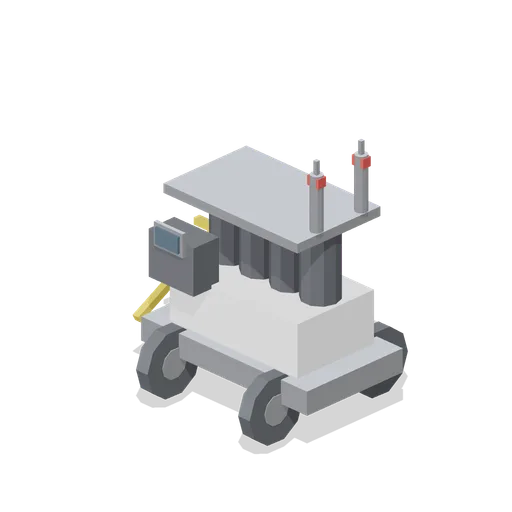
A four wheel gaseous nitrogen purge cart, 2.6 m long: four bottles in a cabinet frame, a regulator panel with a blank gauge face, two outlet risers on the top deck and a tow handle. All four wheels roll.
 Animated
Ground Power Unit (Rocket Launch Pad and Gantry)
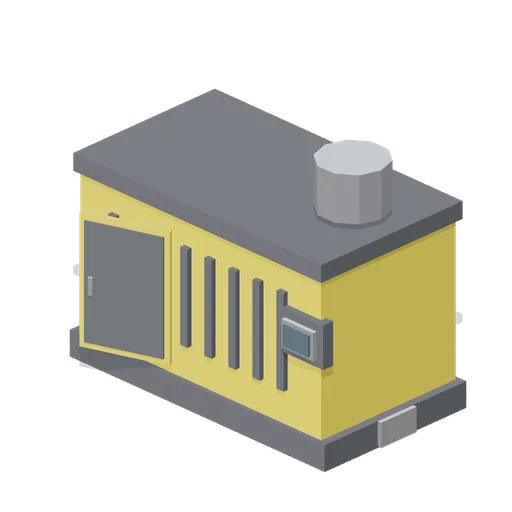
A 3.6 m skid mounted ground power unit in safety yellow: a louvred generator enclosure with an exhaust stack, a lifting frame, a control panel with a blank display and a cabinet door that opens.
Lightning Arrestor (Rocket Launch Pad and Gantry)
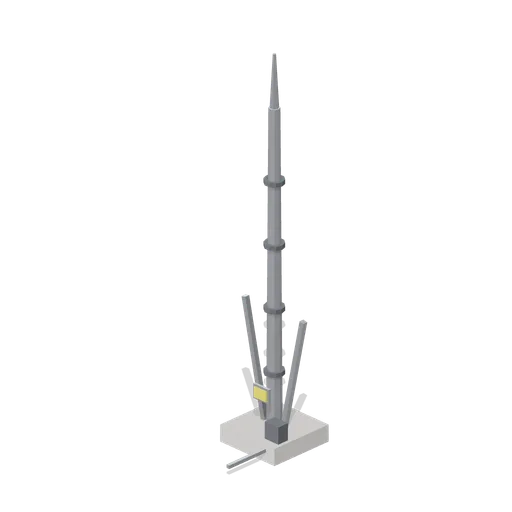
A 7.9 m lightning arrestor for a tank farm or a cart park: a braced steel pole on a concrete footing with insulator rings, an air terminal, an earth box and a downlead to a ground rod, plus a blank warning plate.
 Animated
Pad Camera Tower (Rocket Launch Pad and Gantry)
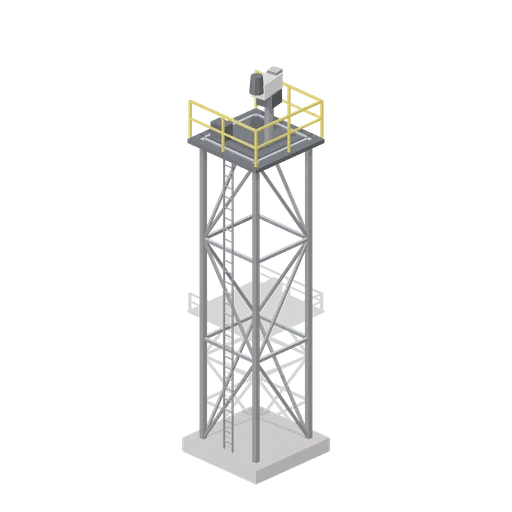
A 11.7 m pad camera tower: a lattice mast on a footing with a railed platform, a ladder, a signal cabinet and a tracking camera on a pan head that sweeps across the pad and back.
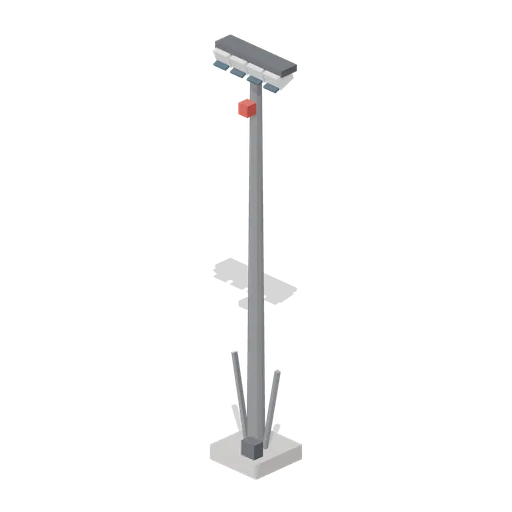
Floodlight Mast (Rocket Launch Pad and Gantry)
A 12.7 m floodlight mast: a braced tapered column on a concrete footing carrying a head frame of four aimed floodlights, with a control box at the foot and a marker light up the column.
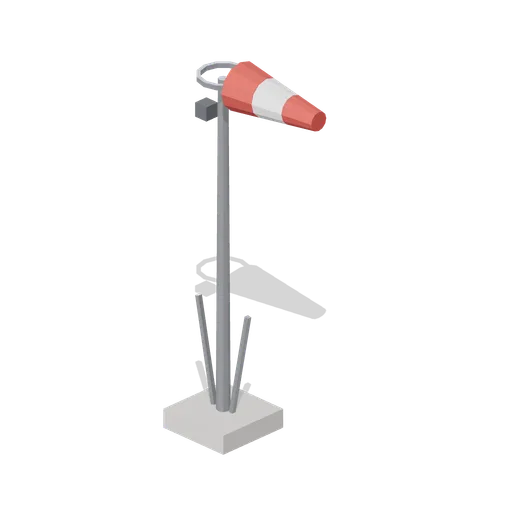
Windsock Mast (Rocket Launch Pad and Gantry)
A 7.5 m windsock mast on a concrete footing: a braced column, a swivel ring and a banded red and white sock streaming to one side, with a small light box below the head.
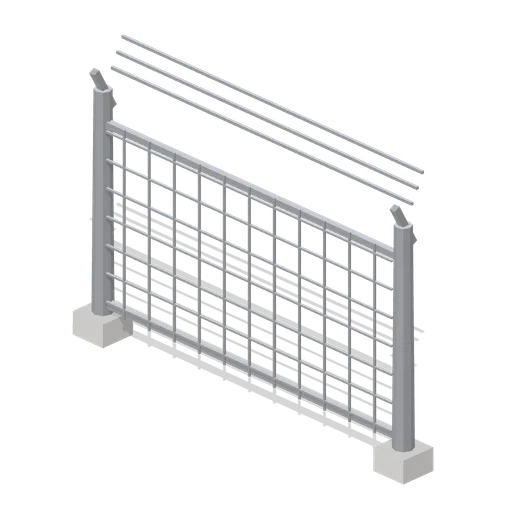
Perimeter Fence Panel (Rocket Launch Pad and Gantry)
A 4 m security fence panel, 3 m to the top strand: mesh on two rails between posts on ballast pads, with raked arms carrying three strands. Ported left and right so a perimeter is built from repeats.
 Animated
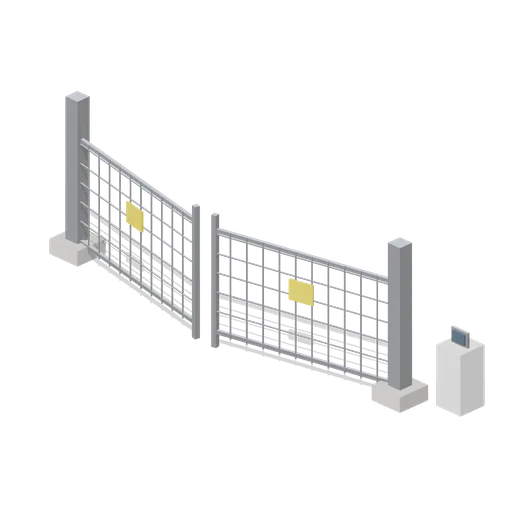
Perimeter Gate (Rocket Launch Pad and Gantry)
An 8 m two leaf vehicle gate between two posts on ballast pads, with a mesh infill, a blank sign plate on each leaf and a card reader pedestal. Both leaves swing open on their own nodes.
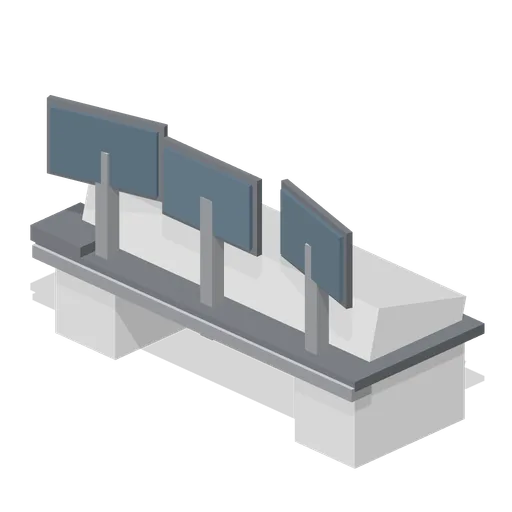
Firing Room Console (Rocket Launch Pad and Gantry)
A 3.2 m firing room console: a desk on two pedestals with a raked control panel, three keypad blocks with indicator caps and three blank screens on a back rail. Every screen and panel face is deliberately blank.
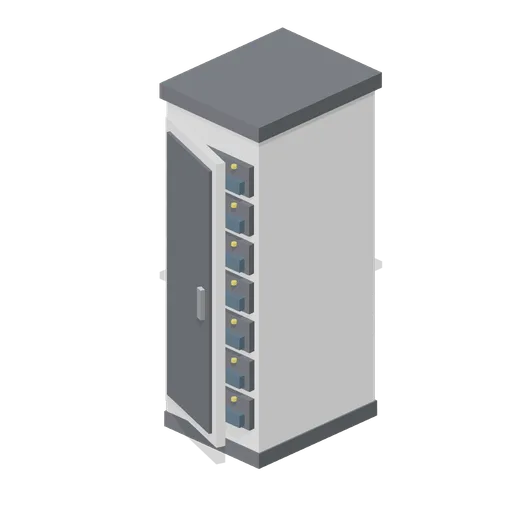 Animated
Ground Support Electronics Rack (Rocket Launch Pad and Gantry)
A 2.3 m ground support electronics rack: a floor standing cabinet with seven instrument panels, indicator caps and blank readout strips, a hinged front door and castors at the base.
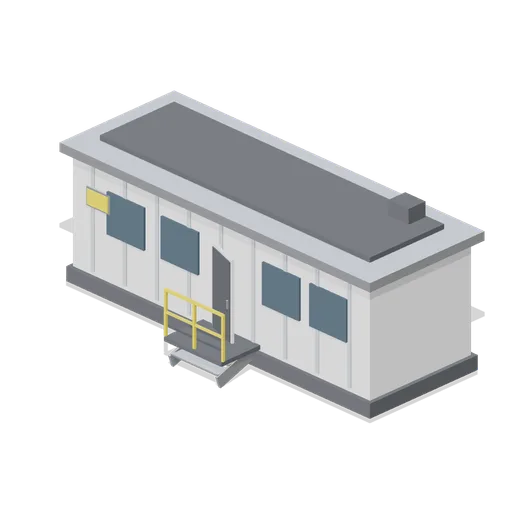 Animated
Site Office Cabin (Rocket Launch Pad and Gantry)
A 9 m portable site office: a ribbed cabin on a skid chassis with a steel roof, six windows, an entrance door on a railed landing, a roof plant box and a blank notice board beside the door.
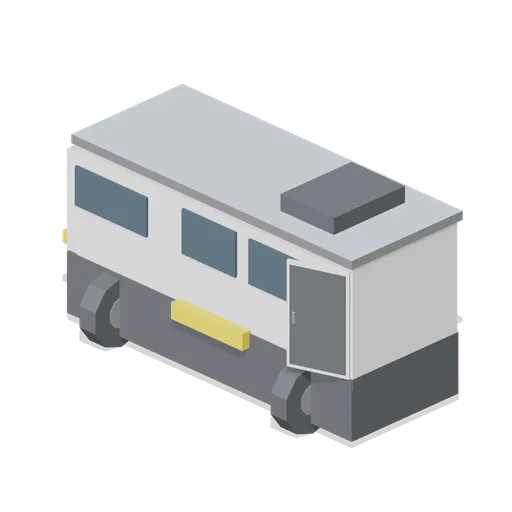 Animated
Crew Transfer Van (Rocket Launch Pad and Gantry)
A 6.4 m crew transfer van body: a raised white cabin on a chassis with a roof rack and plant box, blank glazed windows, side steps, a door that opens and four wheels that roll. No livery, badge or operator mark anywhere.
 Animated
Pad Fire Truck (Rocket Launch Pad and Gantry)
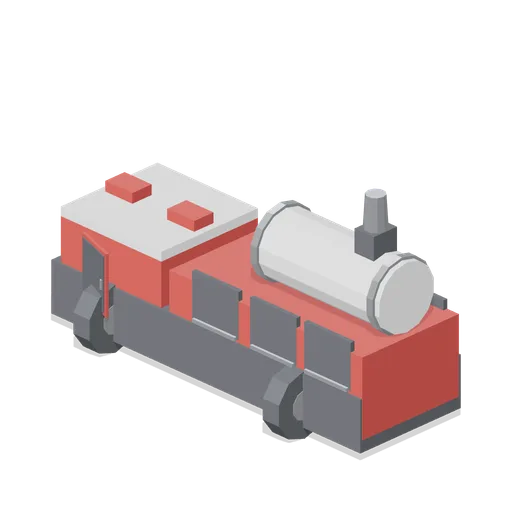
An 8 m pad fire truck body: a red cab and locker body with roll up locker faces, a roof water tank and monitor, warning beacons, a cab door that opens and four wheels that roll. No service, brigade or maker mark anywhere.
Debris Catch Net Frame (Rocket Launch Pad and Gantry)
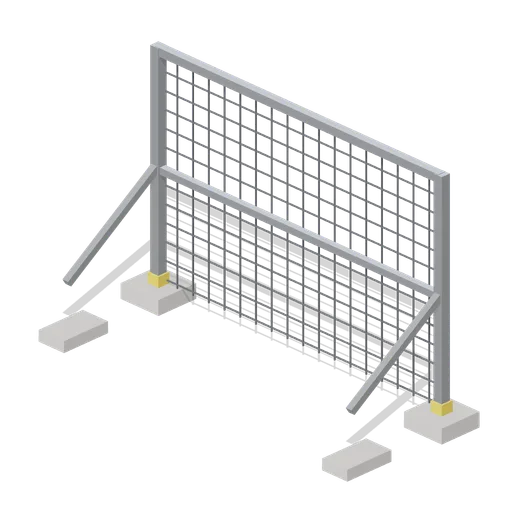
A 9 m debris catch net: two braced posts on ballast pads carrying a top and mid rail with a corded net across them. The net is modelled solid and static, because a net needs a deformable mesh.
Warning Sign Board (Rocket Launch Pad and Gantry)
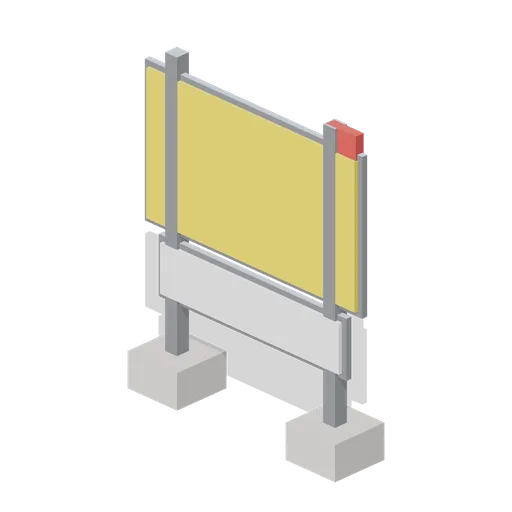
A 2.7 m roadside warning board on two posts and ballast pads: a large blank yellow face and a blank white panel below it, with a red marker block on the frame. Deliberately unlettered so a developer can put their own text on it.
Gravel Ground Tile (Rocket Launch Pad and Gantry)
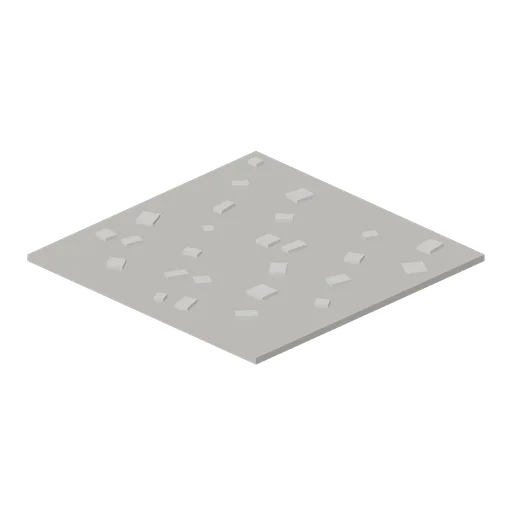
An 8 m gravel ground module for the ground between the pad structures, with scattered stones on the surface. Ported on all four edges to the same grid as the apron and hardstand modules.
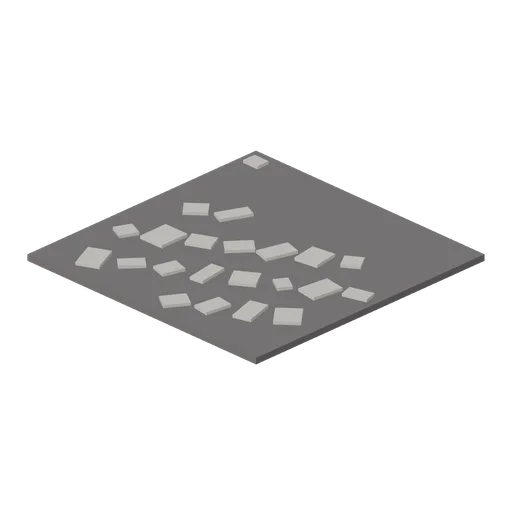
Burnt Scrub Ground Tile (Rocket Launch Pad and Gantry)
The gravel ground module in burnt dark ground with pale scree patches, for the scorched land downrange of the pad. Same 8 m module and the same four edge ports.
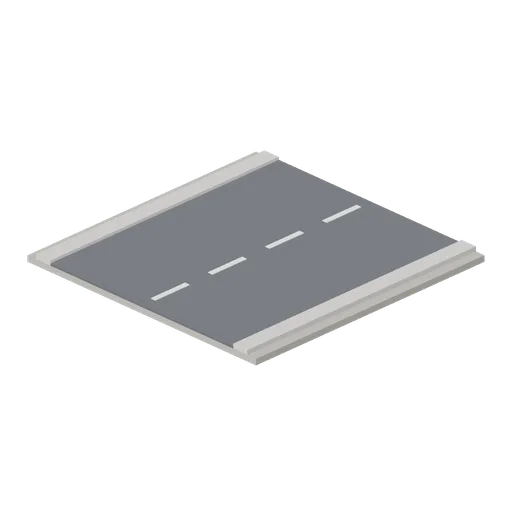
Access Road Module (Rocket Launch Pad and Gantry)
An 8 m access road module: a gravel shoulder each side of a 6.4 m dark carriageway with a dashed centre line and concrete kerbs. Ported on all four edges so a road runs across the site on the same grid.
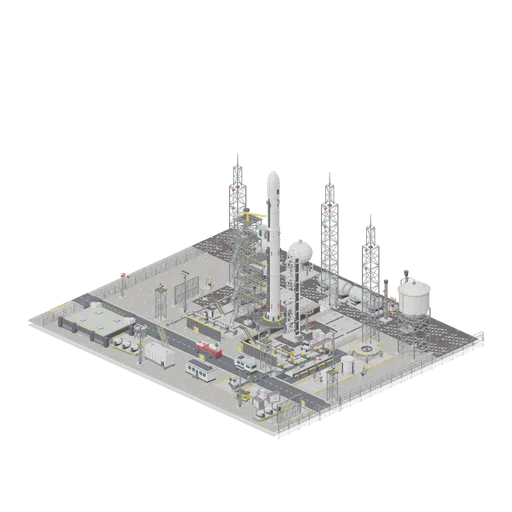
Launch Complex Pad and Yard (Rocket Launch Pad and Gantry)
A working launch complex laid out on its own ground, 96 by 80 m. The apron fills the centre with the flame trench sunk down its centre line and the deflector under the launch mount, a vehicle standing on the mount in four stacked sections with the closed fairing on top, and...
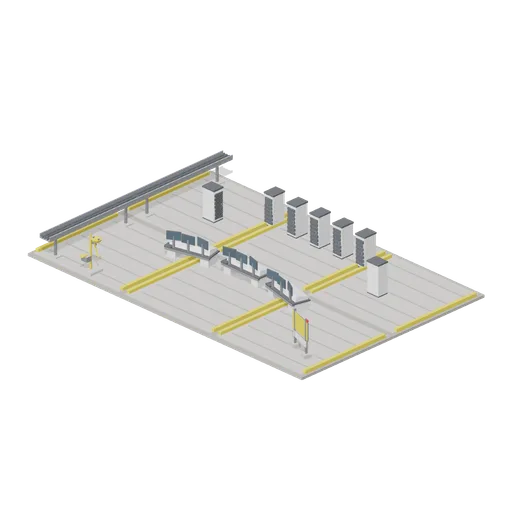
Firing Room Console Bay (Rocket Launch Pad and Gantry)
The two indoor models of the pack laid out as they are installed: three firing room consoles in a shallow arc facing the pad, seven ground support electronics racks lining the back and side walls, a tray run bringing the cabling in, a safety shower and a blank notice board....
Similar packs
 97 models
WW1 Trench Line 1917
Modular period earthworks, dugouts, no man’s land, trench kit and rear-area transport.
AI used in 97 of 97 files · Claude Fable 5.1
 61 models
Modern Rail and Metro Network
High speed, commuter, metro and light rail units, modern freight traction and wagons, electrified 6 m track and a full station kit.
AI used in 61 of 61 files · Claude Fable 5.1
 89 models
Pixel Modern Supermarket
87 original pixel art 3D models of a modern supermarket: a 2 m bay store shell, stocked gondola runs, service counters, chillers, the checkout line, the stock room, vehicles and posed figures.
AI used in 89 of 89 files · Claude Fable 5.1
 127 models
Prison Complex Builder
Detailed institutional cell blocks, perimeter security, facilities and everyday staff and inmate props.
AI used in 127 of 127 files · Claude Fable 5.1
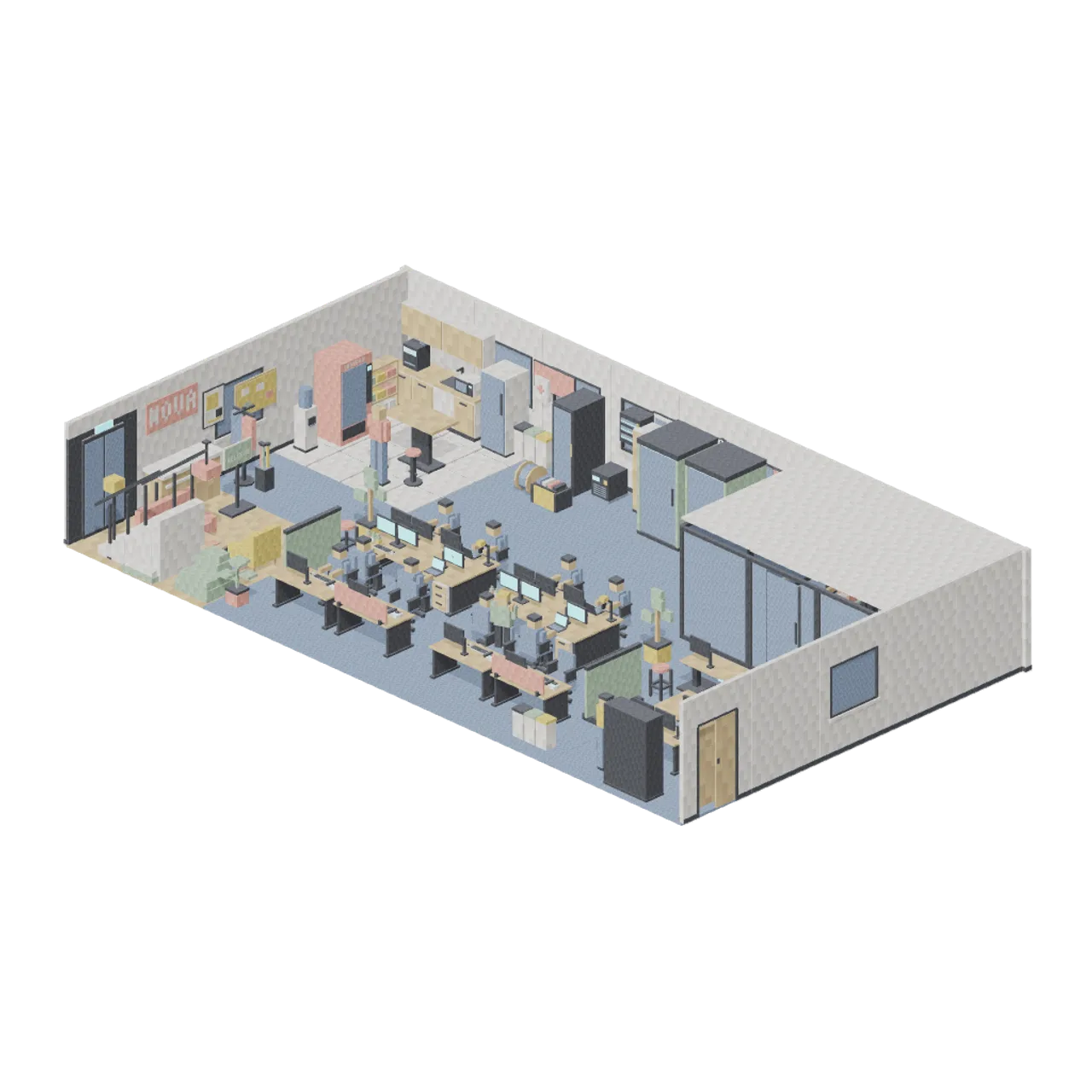 91 models
Pixel Modern Office
Free 3D pixel art office kit: modular walls, desks, chairs, meeting rooms, break room, server rack and posed workers.
AI used in 91 of 91 files · Claude Fable 5.1
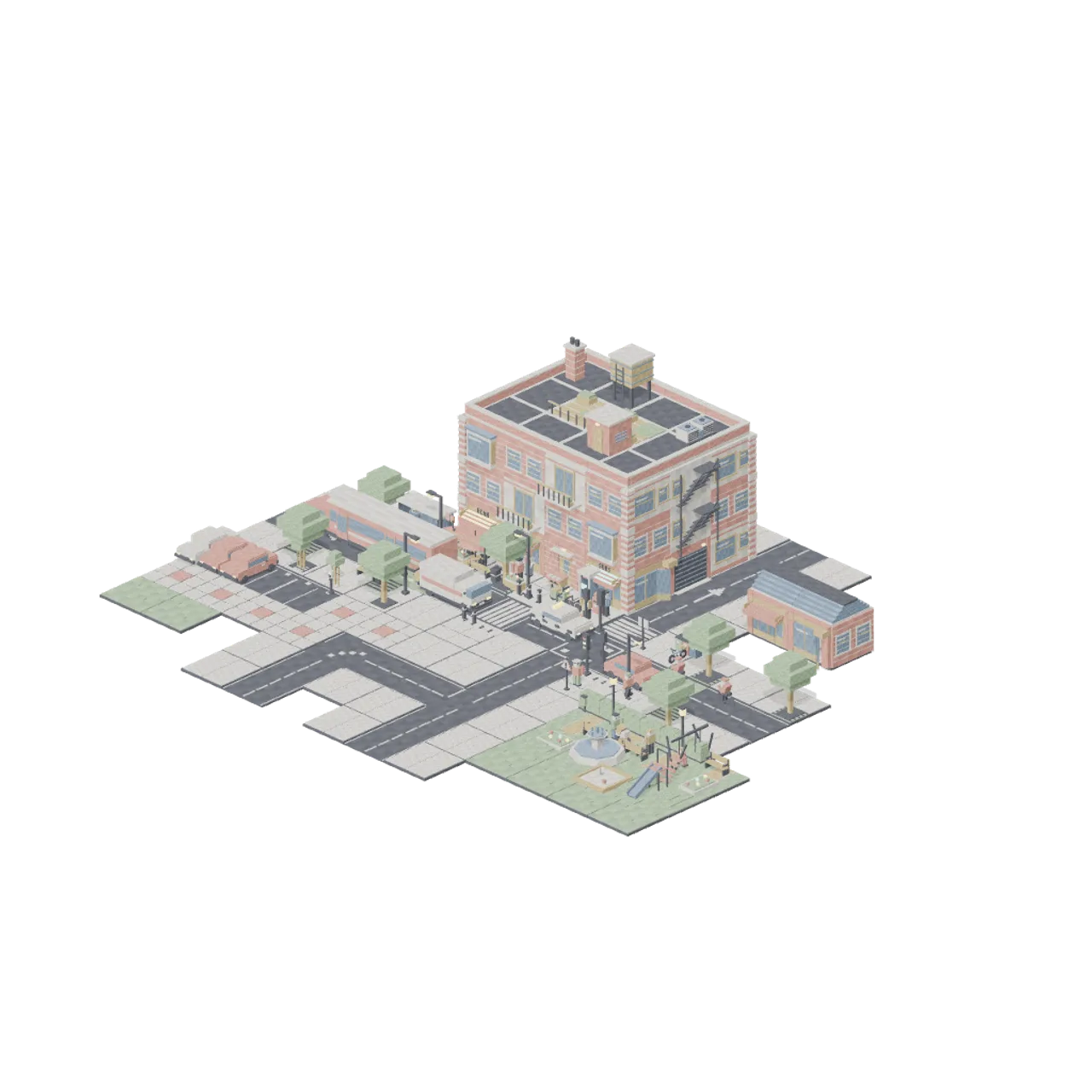 91 models
Pixel Modern City Street
Ninety pixel art city street models: a 4 m road and pavement grid, a 4 m facade kit that closes into real blocks, cars, a bus and bikes with working wheels and doors, twenty pieces of street furniture, a park corner and twelve people.
AI used in 91 of 91 files · Claude Fable 5.1
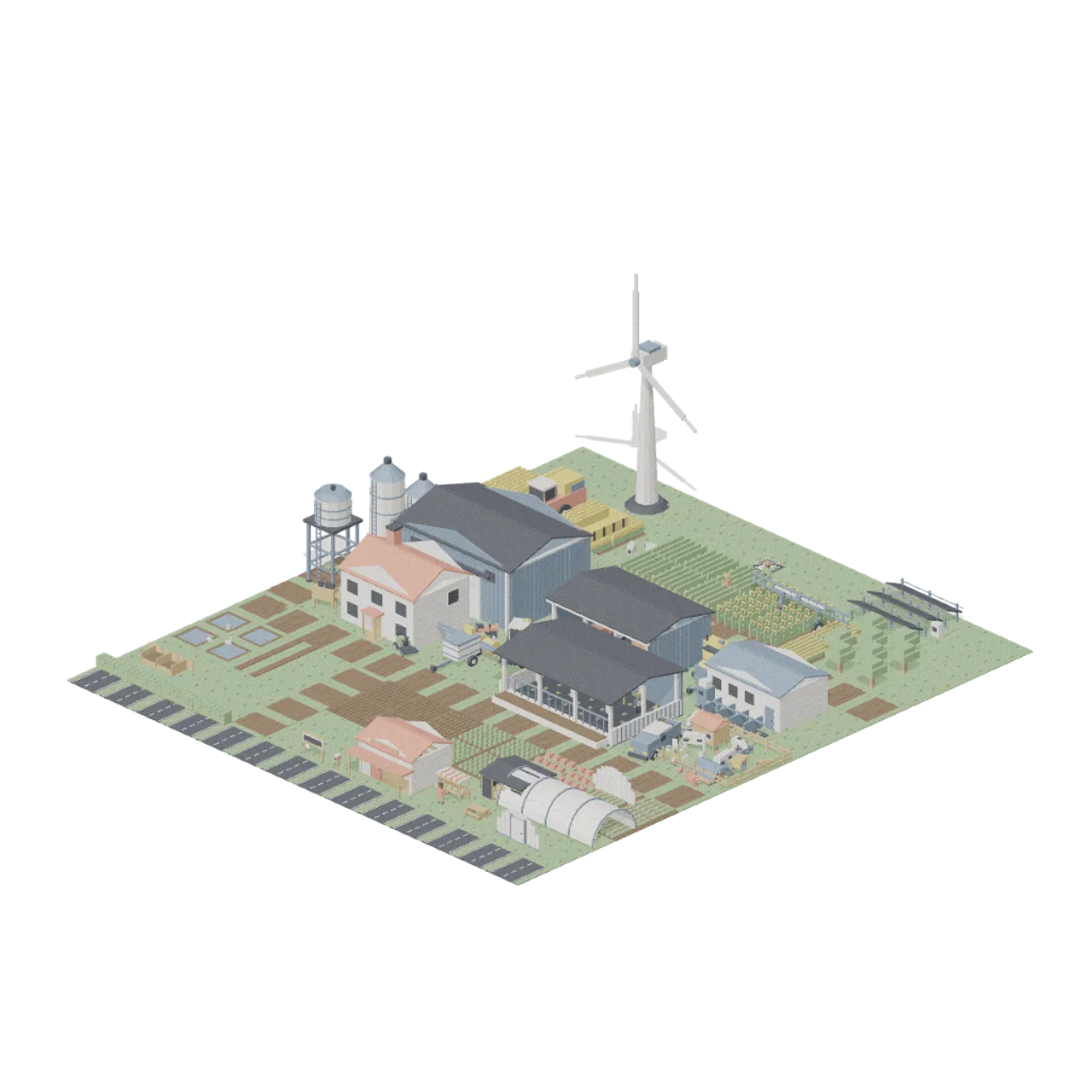 92 models
Pixel Modern Farm
Pixel art farm kit: fields and crop tiles on a four metre grid, farmhouse, steel barn, polytunnel and silos, tractors, a combine, animals, yard props and farm folk.
AI used in 92 of 92 files · Claude Fable 5.1
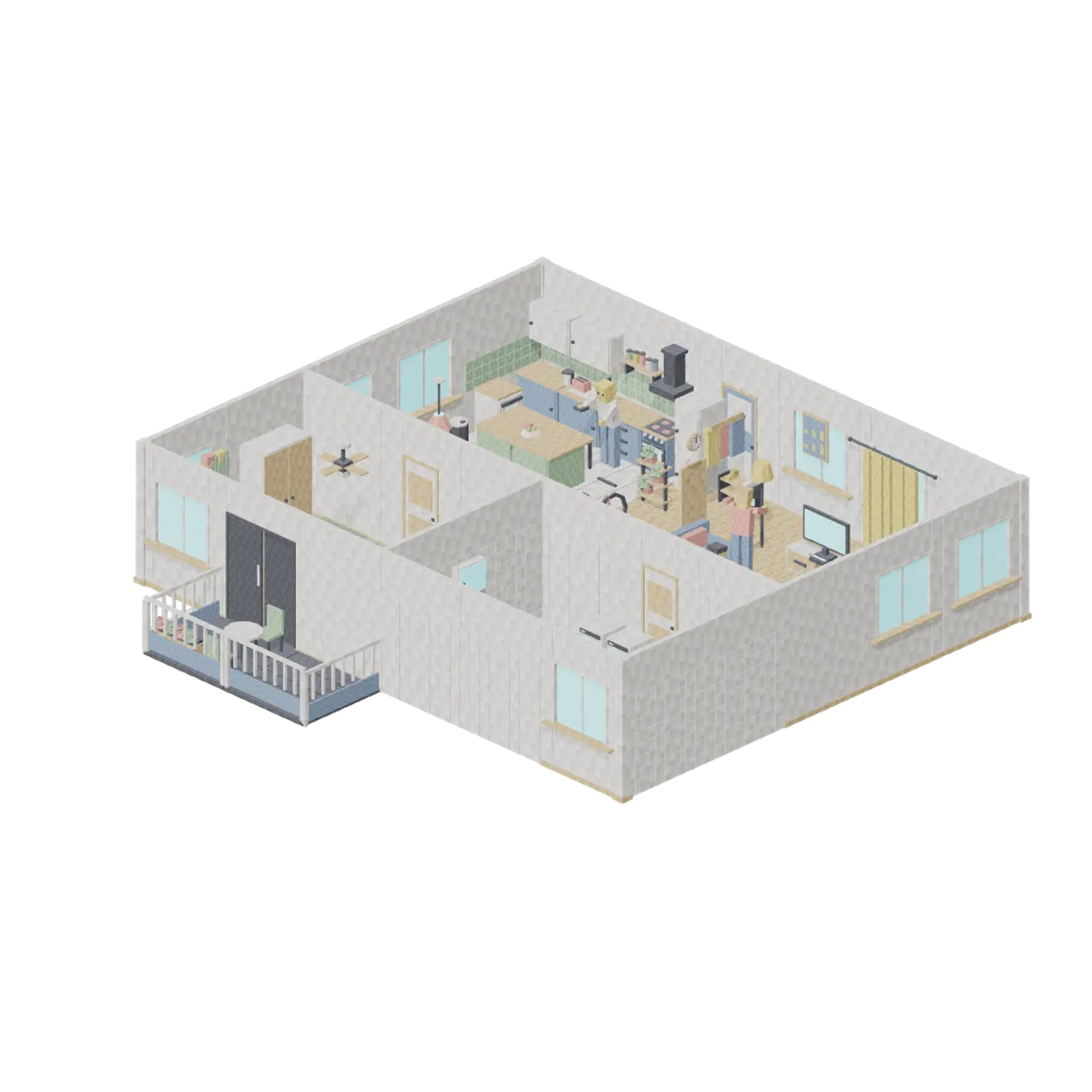 96 models
Pixel Modern Apartments
Pixel art apartment interiors: a 2 m room grid of wall, window, door and slider bays, a fitted kitchen and bathroom, living and bedroom furniture, and the decor that makes a flat look lived in.
AI used in 96 of 96 files · Claude Fable 5.1
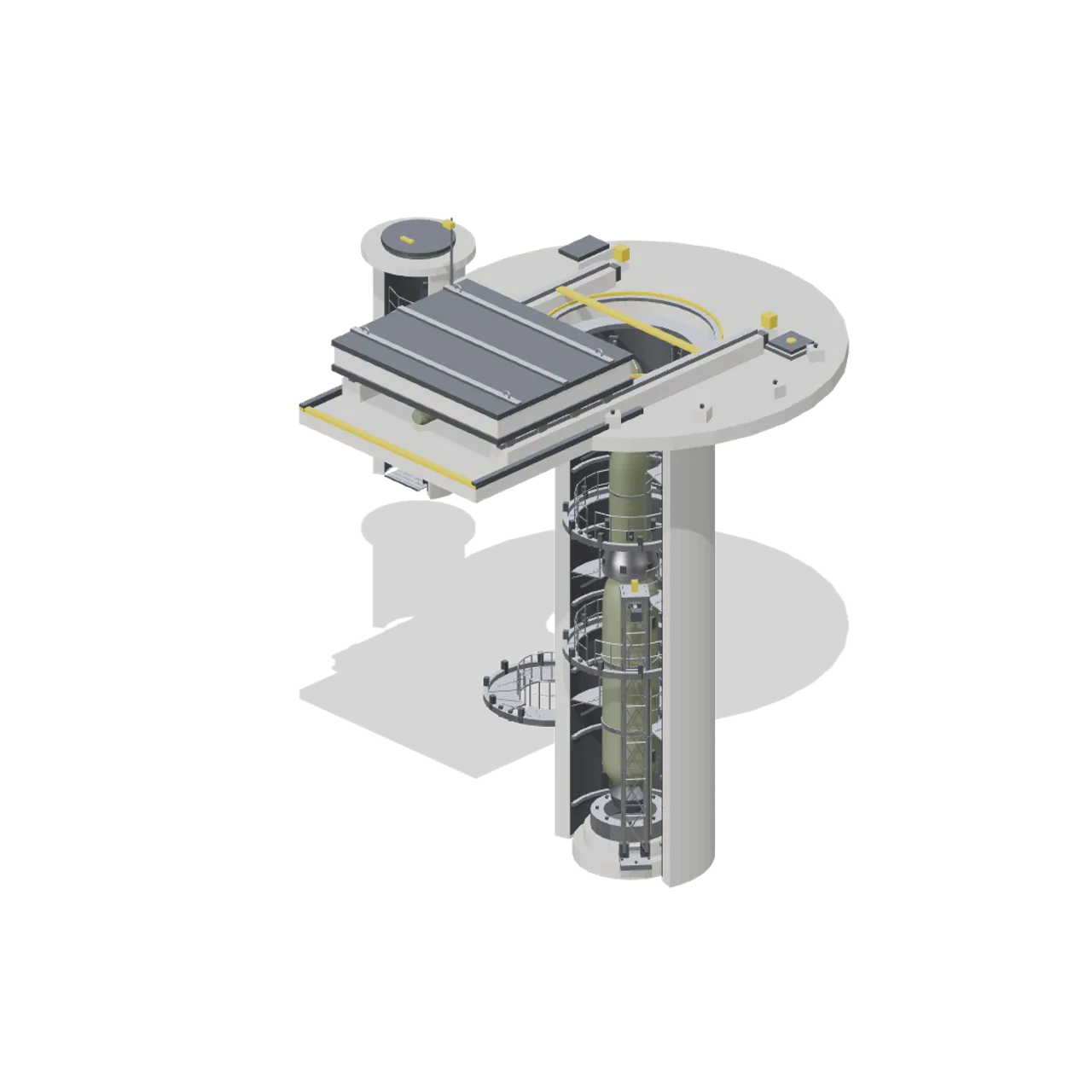 54 models
Cold War Missile Silo and Command Bunker
A generic 1960s to 1980s hardened launch facility: the sectioned silo and its headworks, the buried launch control capsule, the fenced surface site, period support vehicles and crew equipment.
AI used in 54 of 54 files · Claude Fable 5.1
 61 models
Fish Market and Trawler Quay
A working fish quay: a steel stern trawler in sections with a slipway, net drum and gantry, ported quay, water and market floor modules, an open fronted market hall of slabs, ice and benches, a crane, an ice plant, and the boxes, creels and nets a landing runs on.
AI used in 61 of 61 files · Claude Opus 5