Free models · Game-ready GLB
Exterior
Every sci-fi model below is a self-contained .glb under 25 MB that drops into three.js, Blender, Godot, Unity and Unreal, free to use and modify in commercial projects without attribution.
Load one straight from its CDN URL with a plain GLTFLoader, or take a whole themed set from the packs.
471 free GLB models
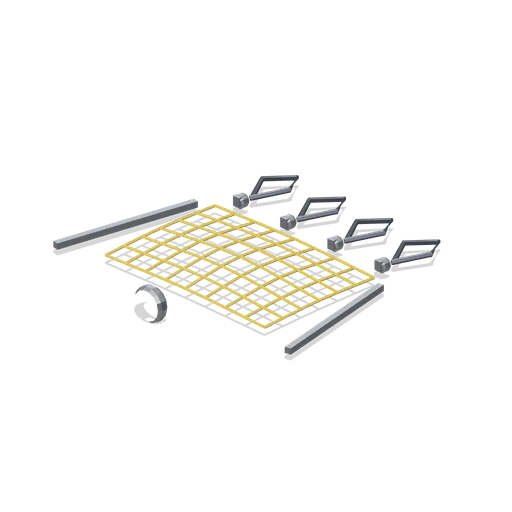
Cargo net and slings (UFO Crash Site and Recovery Facility)
Lifting tackle laid out on the ground: a folded cargo net of nine by seven cords over a low pile, four coiled strops with thimbles and shackles, a master link and two spreader bars.
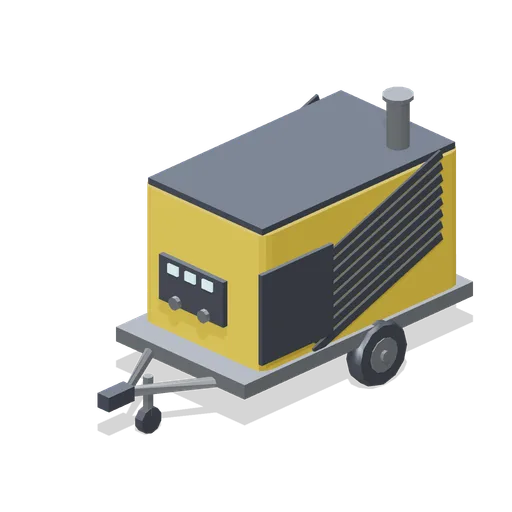
Generator trailer (UFO Crash Site and Recovery Facility)
A towable diesel generator: louvred acoustic canopy with a hinged access door, roof exhaust, control panel with lamps and outlets, A-frame drawbar, jockey wheel and a single axle.
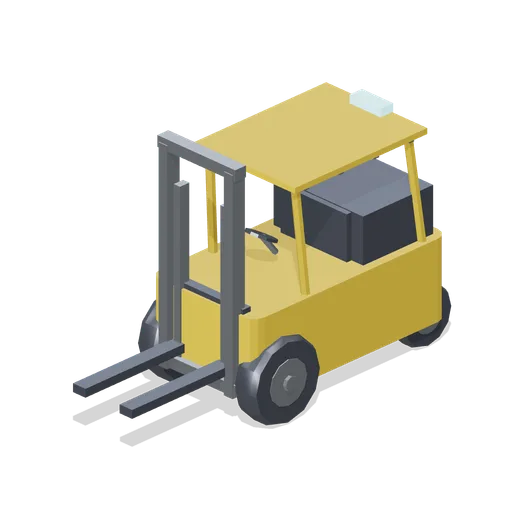
Counterbalance forklift (UFO Crash Site and Recovery Facility)
A 3 m counterbalance forklift: bevelled body with a counterweight tail, overhead guard, seat and steering column, a two-stage mast on a hinged node and a fork carriage with two tines on its own node.
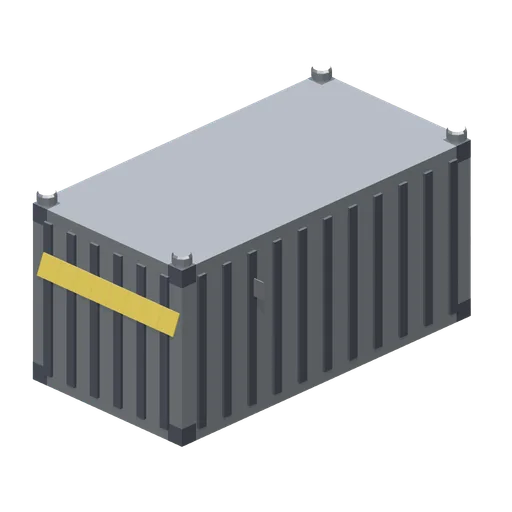
Transport crate (UFO Crash Site and Recovery Facility)
A 6.2 m ribbed steel transport crate for a recovered hull section: corrugated sides, eight corner castings with lifting eyes, latching bars, a hazard chevron band and a blank data plate.
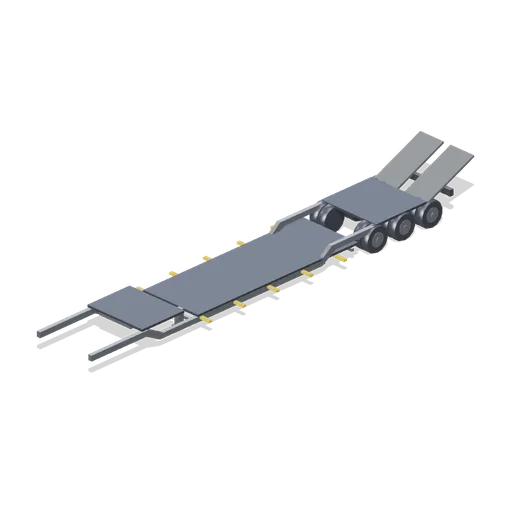
Low loader trailer (UFO Crash Site and Recovery Facility)
A drop-deck low loader 18 m long over its ramps: gooseneck with kingpin and landing legs, a deep well deck on twin side rails with twelve cross members, three rear axles on duals and two hinged loading ramps as separate nodes.
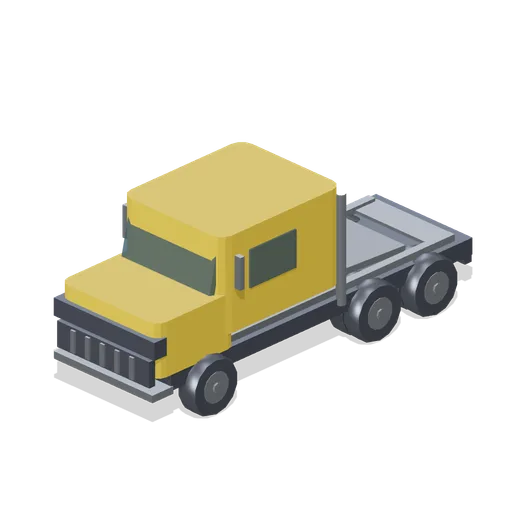
Recovery tractor unit (UFO Crash Site and Recovery Facility)
A three-axle 6x4 tractor unit for moving a low loader: bevelled cab and sleeper with a raked screen, twin exhaust stacks, mirror arms, bull bar with a light row, twin rear duals, side fuel tank, catwalk and a fifth wheel plate.
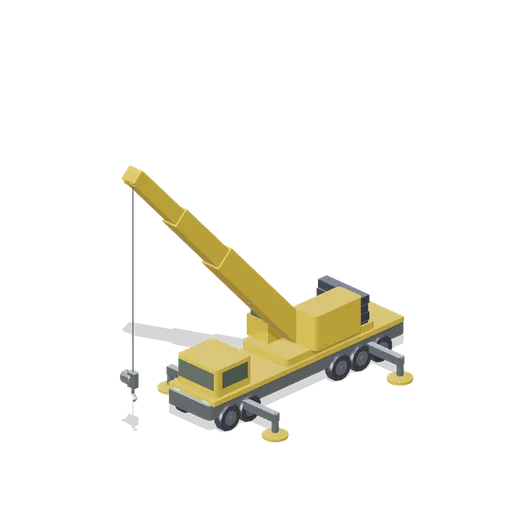
Heavy lift crane (UFO Crash Site and Recovery Facility)
A five-axle all-terrain lifting crane: ten-wheel carrier with a low cab, four extended outriggers on jack pads, a slewing house with a counterweight stack, a three-section telescopic boom raised to 48 degrees on a hinged node, a lift ram and a free-hanging hook block.
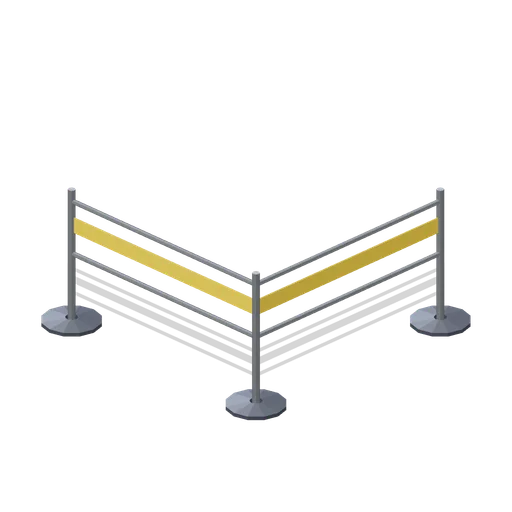
Cordon fence corner (UFO Crash Site and Recovery Facility)
A right-angle cordon corner turning a taped line through 90 degrees, with ports on the west and south arms.
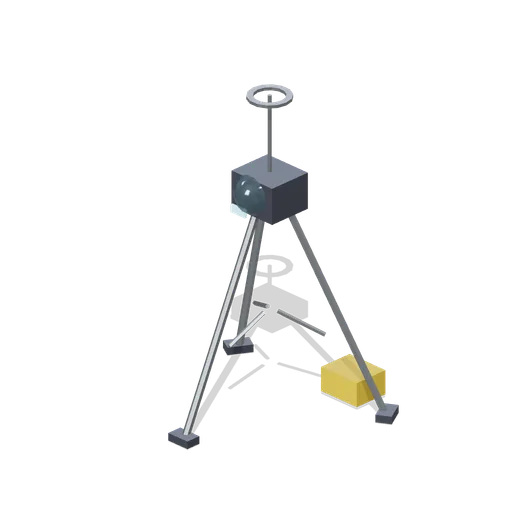
Sensor tripod (UFO Crash Site and Recovery Facility)
A 2 m survey tripod with footed legs, a spreader brace, an instrument head with a lens and a status lamp, a whip antenna and a battery case on the ground.
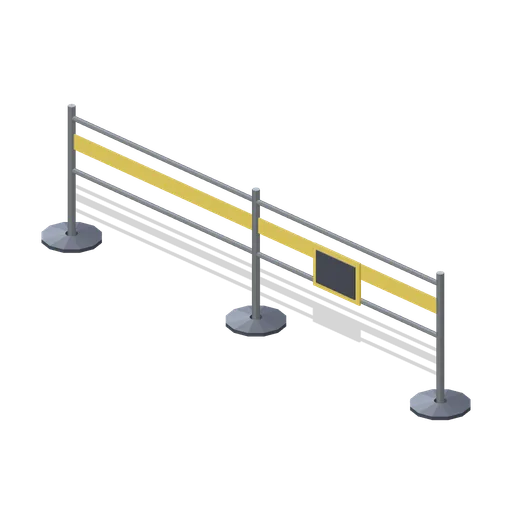
Cordon fence run (UFO Crash Site and Recovery Facility)
A 4 m cordon run: three footed posts, two tubular rails, a taped line and a blank warning plate. Ports at both ends so runs chain.
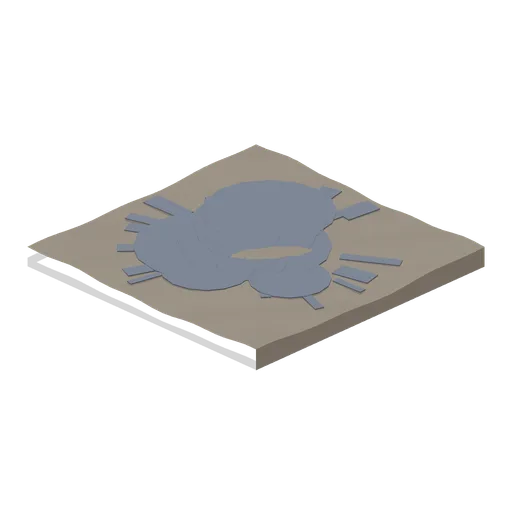
Scorched ground tile (UFO Crash Site and Recovery Facility)
An 8 m square ground tile with a 5 m burn disc and fourteen radiating scorch streaks. Deck surface at 0.5 m with edge ports so tiles chain in any direction.
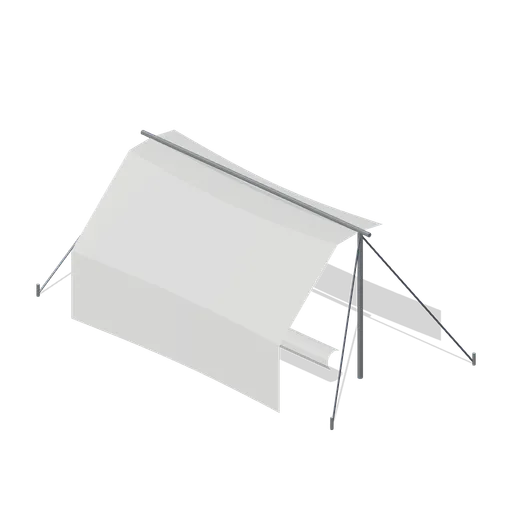
Field tent (UFO Crash Site and Recovery Facility)
A 4.4 m ridge tent: a lofted fabric skin with vertical walls and a bowed ridge, external ridge pole, two uprights, four guys with ground pins and a rolled door flap.
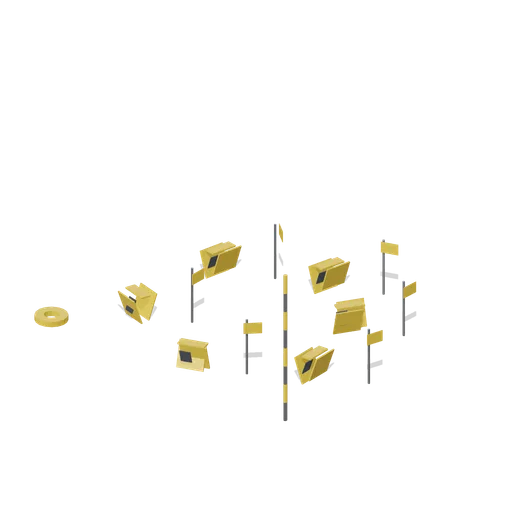
Survey marker set (UFO Crash Site and Recovery Facility)
Six folded evidence markers with blank number plates, six flagged survey stakes, a banded ranging pole and a tape reel, arranged as a working set over a 4 m area.
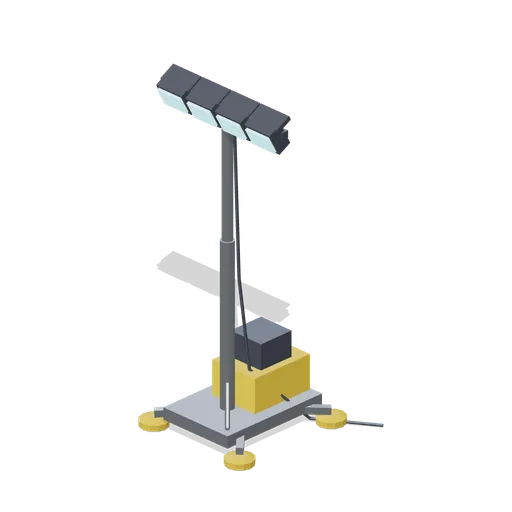
Site floodlight rig (UFO Crash Site and Recovery Facility)
A towable lighting tower: wheeled base with four outrigger feet, a generator housing, a two-stage telescopic mast and a crossbar carrying four lamp heads on a single hinged node.
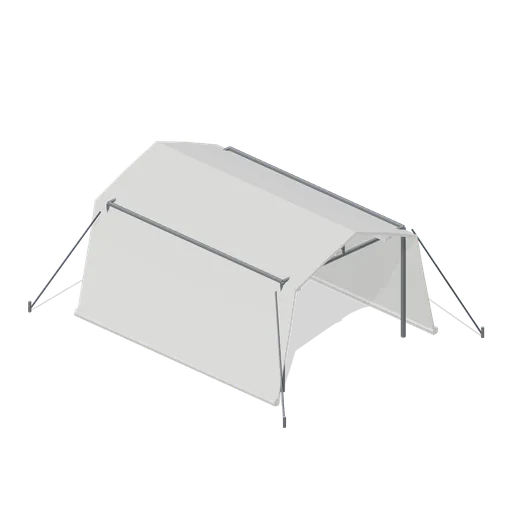
Tarpaulin cover on a frame (UFO Crash Site and Recovery Facility)
A 5.3 m scaffold frame with a ridge bar and a sagging tarpaulin thrown over it, guyed to four ground pins, for covering a wreck piece in the open.
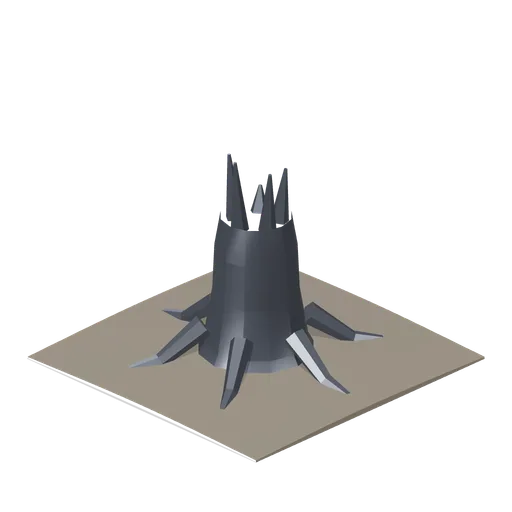
Charred tree stump (UFO Crash Site and Recovery Facility)
A 2 m burned tree stump snapped off above the roots: a tapered charred trunk with five splintered crown spikes, six buttress roots and a scorched soil pad.
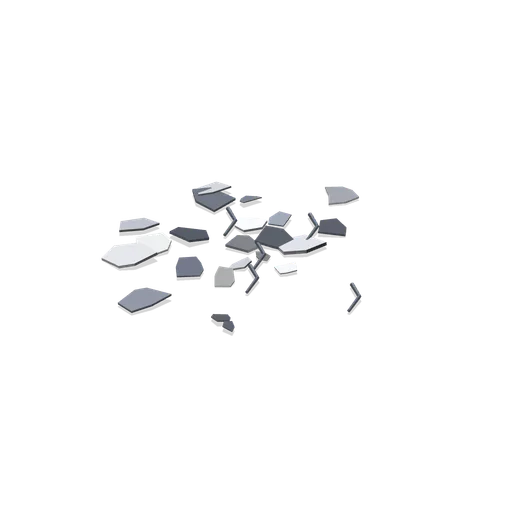
Debris scatter cluster (UFO Crash Site and Recovery Facility)
A 6 m scatter of twenty two hull shards in two alloy finishes plus five twisted spars, laid flat as they fell for dressing a crash site.
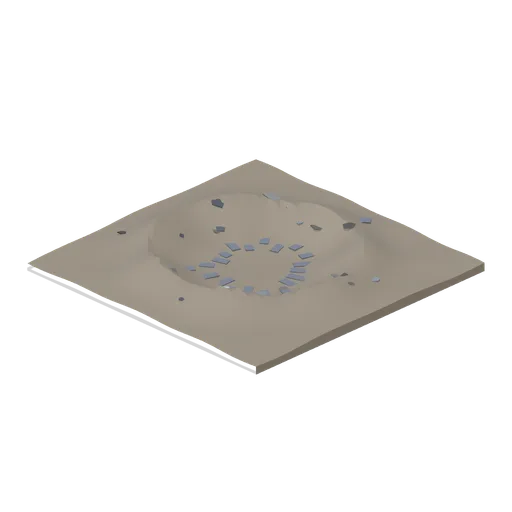
Impact crater (UFO Crash Site and Recovery Facility)
An 18 m impact crater: a 12 m bowl 0.5 m deep inside a raised rim of thrown-up earth, with sixteen hull shards scattered over the rim. Ground surface matches the 0.5 m tile deck height.
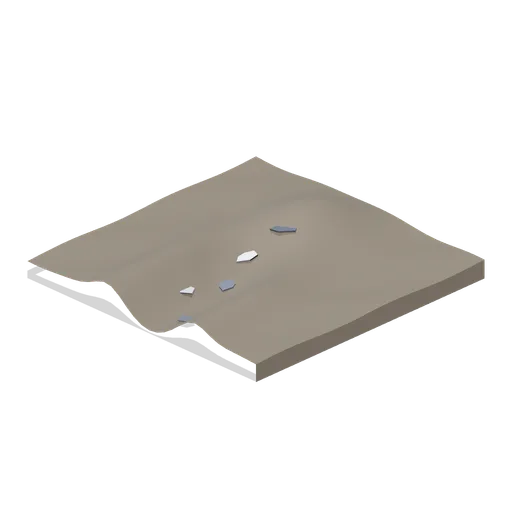
Crash furrow end tile (UFO Crash Site and Recovery Facility)
The furrow tile with the trench fading out into a churned terminal spoil pile, for closing the end of a skid run.
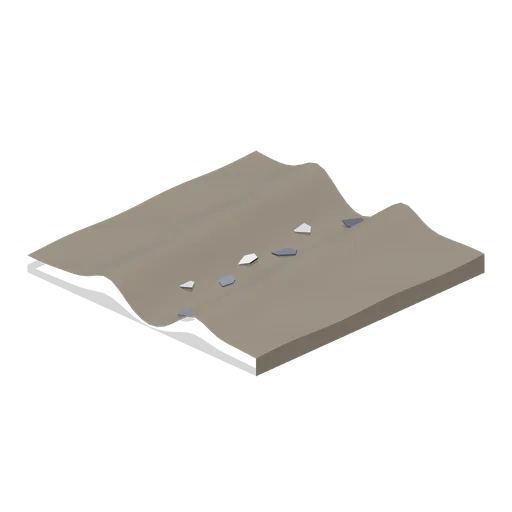
Crash furrow ground tile (UFO Crash Site and Recovery Facility)
An 8 m square ground tile gouged by a craft skidding through it: a curved furrow with raised spoil bermed along both sides and shards left in the trench. Deck surface at 0.5 m with edge ports so tiles chain in any direction.
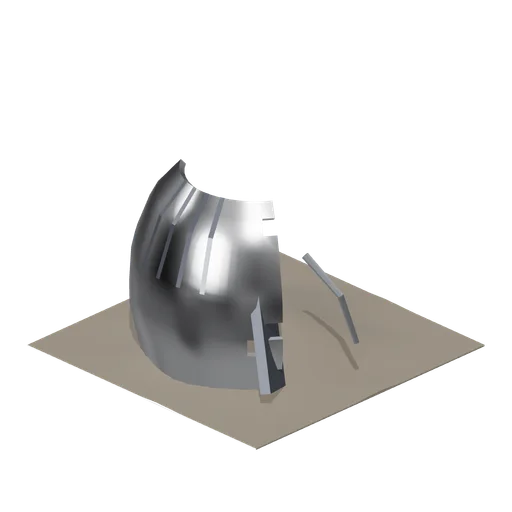
Fragment embedded in soil (UFO Crash Site and Recovery Facility)
A 2.4 m curved hull shard driven upright into a churned mound of earth, with a bent stringer and a torn dark panel still attached.
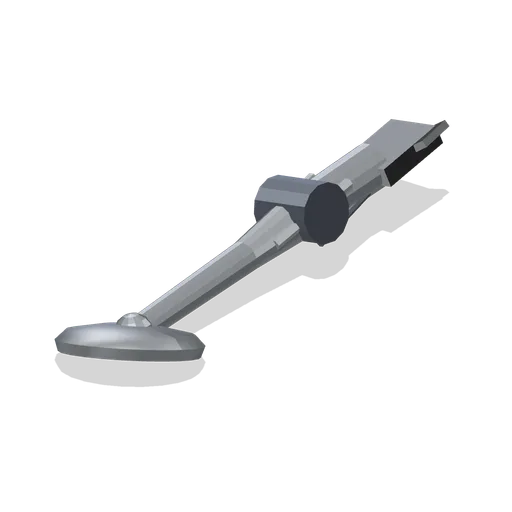
Detached landing leg (UFO Crash Site and Recovery Facility)
A landing leg torn from its bay and lying on the ground: oleo strut, ankle joint, circular foot pad, the ripped mounting yoke that came away with it and two severed hydraulic lines.
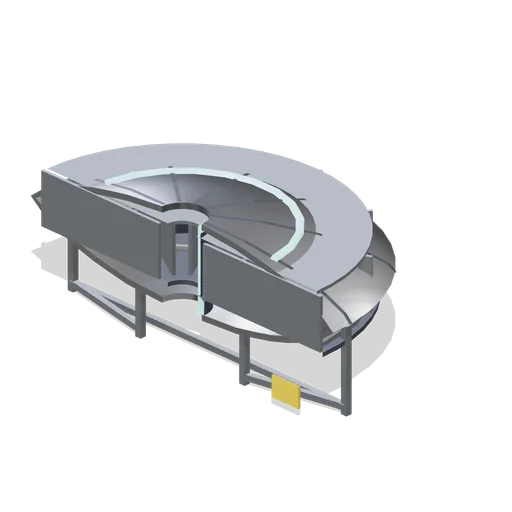
Cutaway hull section (UFO Crash Site and Recovery Facility)
A 100 degree wedge cut from a scout hull and mounted on a steel cradle for study: outer and inner skins with their true wall thickness, three ring frames, six radial ribs, a deck plate and a glowing conduit run.
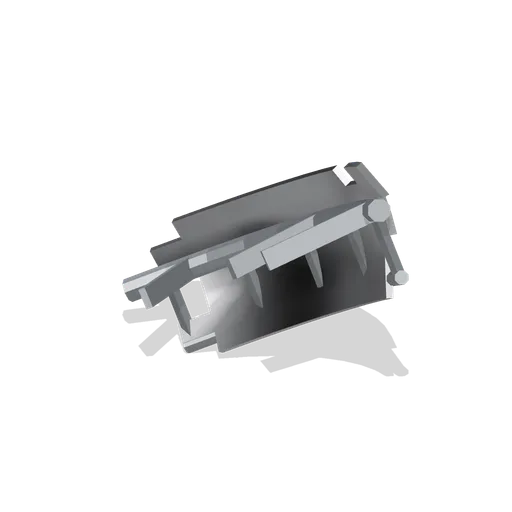
Internal frame piece (UFO Crash Site and Recovery Facility)
A 70 degree arc of internal hull frame: two ring frame tubes joined by five uprights, three snapped radial stringers and a remnant of outer skin still bolted to the outer face.