Free models · Game-ready GLB
Historical
Every realistic historical model below is a self-contained .glb under 25 MB that drops into three.js, Blender, Godot, Unity and Unreal, free to use and modify in commercial projects without attribution.
Load one straight from its CDN URL with a plain GLTFLoader, or take a whole themed set from the packs.
962 free GLB models
 Animated
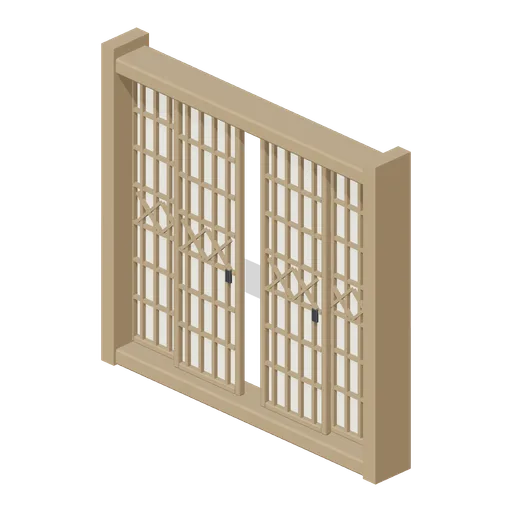
Sliding Lattice Door Set, Diamond Lattice (Korean Hanok Village and Street)
The same four leaf sliding door set with a diagonal lattice over the hanji paper instead of the plain grid, for a room with a finer front.
 Animated
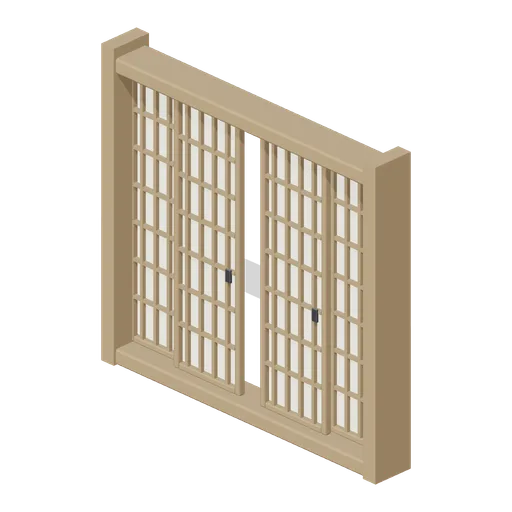
Sliding Lattice Door Set (Korean Hanok Village and Street)
A free standing set of four papered lattice leaves in a timber frame, the inner pair sliding behind the outer pair on a grooved sill.
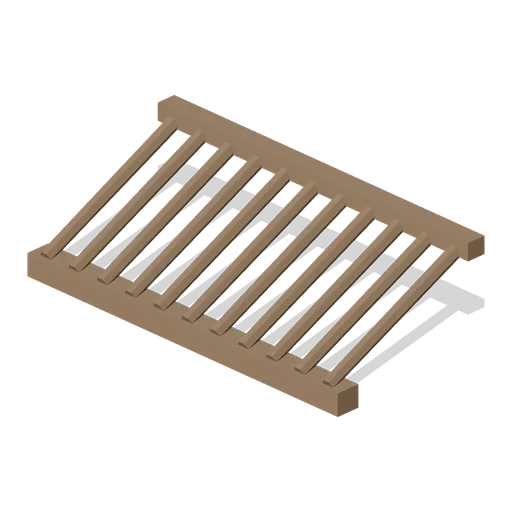
Exposed Rafter Set (Korean Hanok Village and Street)
A 3 m bay of round rafters on their purlin, left exposed the way a hanok soffit is, rising from the eave line toward the ridge.
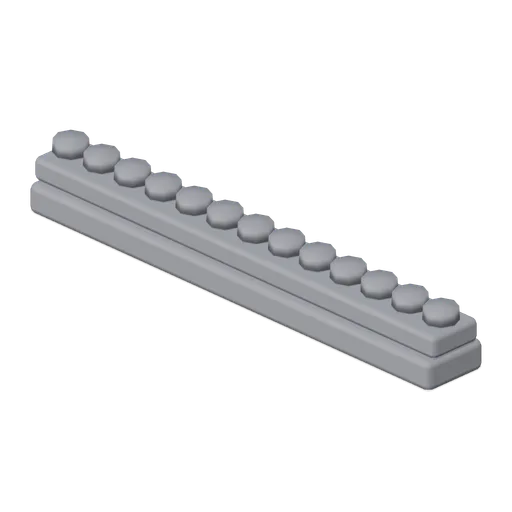
Roof Ridge Tile Run (Korean Hanok Village and Street)
A 3 m run of ridge tiling: a stacked clay course with a capping of round tiles along the top, to close the ridge of a roof run.
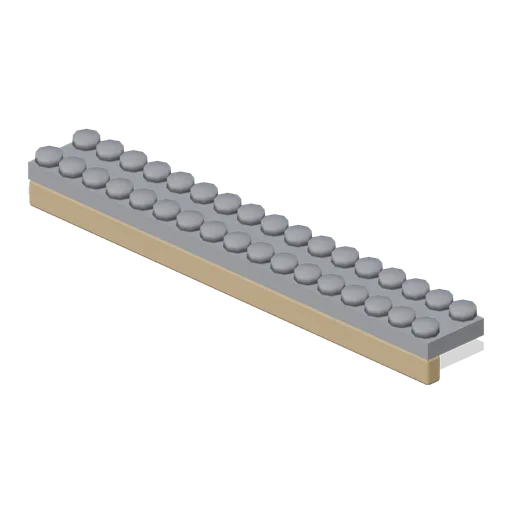
Eave Tile Run (Korean Hanok Village and Street)
A 3 m run of eave: a fascia board, a course of round end tiles and a lifted corner tile, the edge a tiled roof reads by at a distance.
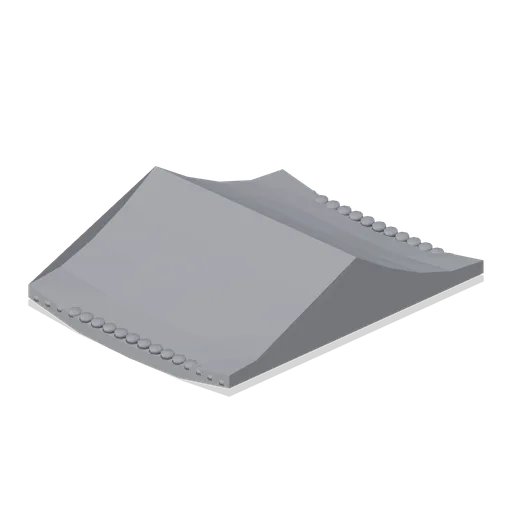
Gabled Tile Roof Module (Korean Hanok Village and Street)
A 3 m bay of gabled tiled roof with a round end tile course along both eaves and a plain ridge, for a run between two gable ends.
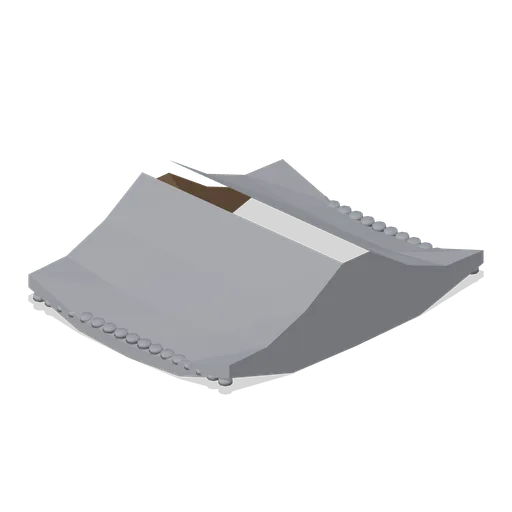
Hipped Tile Roof Module (Korean Hanok Village and Street)
A 3 m bay of hipped tiled roof with lifted eave corners, a round end tile course along both eaves and a ridge run over it.
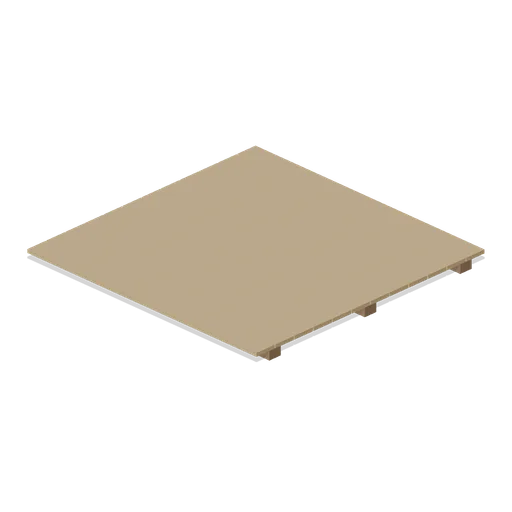
Hanok Maru Floor Module (Korean Hanok Village and Street)
A 3 m square of raised maru floor: three joists carrying twelve hardwood boards with an open gap between each. Sits on the plinth module.
 Animated
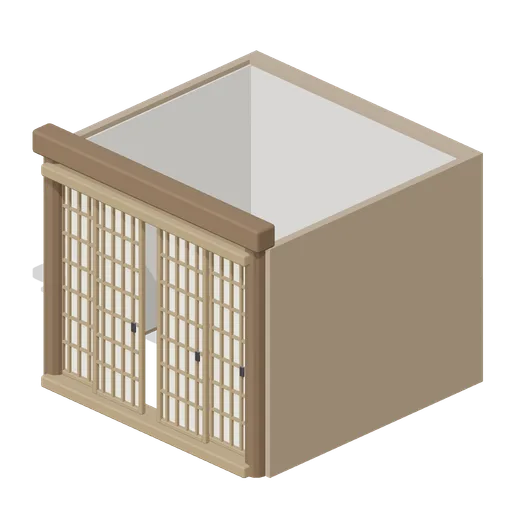
Hanok Room Module (Korean Hanok Village and Street)
One walled bay of a hanok: clay walls rendered white inside, corner posts, a header beam and a four leaf papered front whose two inner leaves slide.
 Animated
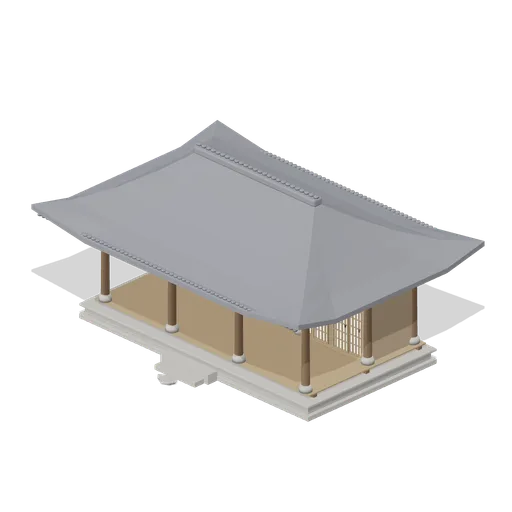
Hanok Main House (Korean Hanok Village and Street)
A three bay timber framed hanok on a stone plinth: an open maru floor in the middle, a papered room each side and a hip and gable tiled roof on exposed rafters.
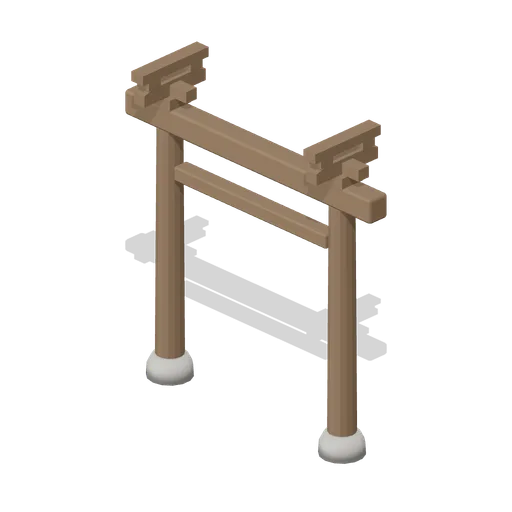
Hanok Post And Beam Frame (Korean Hanok Village and Street)
One bay of hanok frame: two round timber posts on stone footings under a tie beam and a lintel, with a bracket over each post head.
 Animated
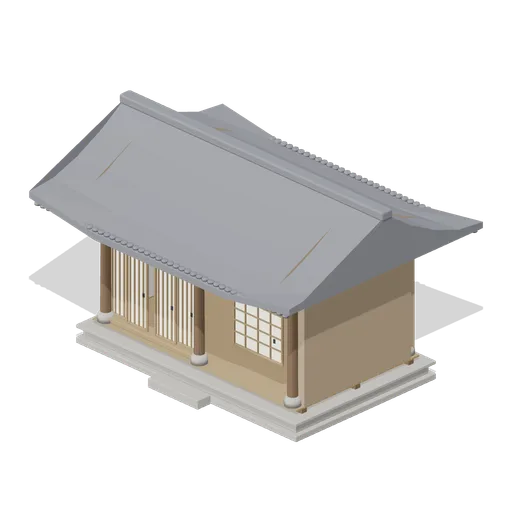
Hanok Side Wing (Korean Hanok Village and Street)
A smaller two bay hanok wing on a low plinth with a papered sliding front, a lattice window and a plain gabled tiled roof, for the side of a courtyard.
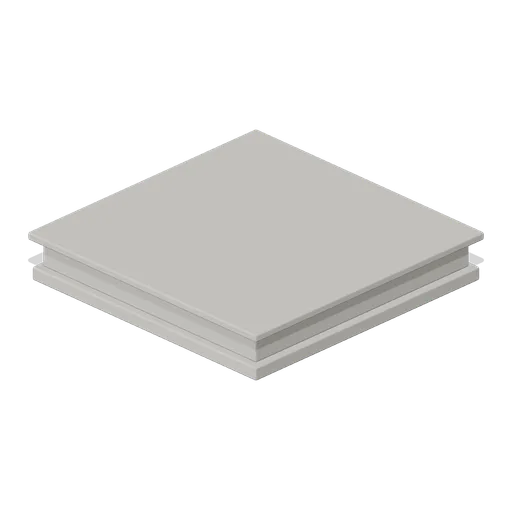
Stone Plinth Base Module (Korean Hanok Village and Street)
A 3 m square dressed stone plinth course in three steps, the raised base a hanok floor is laid on. Tiles on a 3 m grid.
 Animated
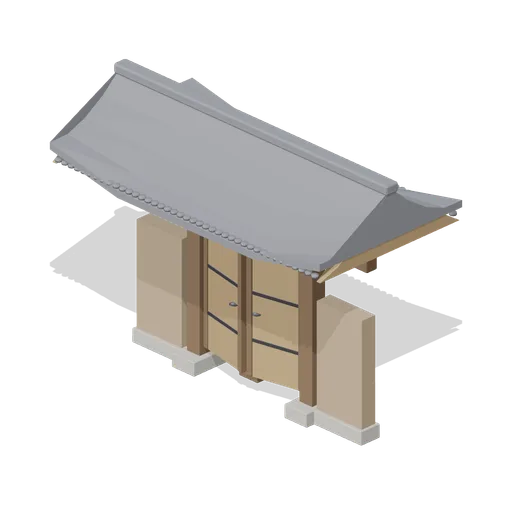
Village Gate House (Korean Hanok Village and Street)
A raised tiled gate house with two heavy timber leaves on iron straps, a stone threshold and clay flanking walls, sized to stand in a village wall run.

Bath House and Palaestra (Roman Bathhouse and Palaestra)
A whole public bathing precinct laid out open topped so every room is in view: a paved bath block of four halls, a service yard with the furnace plant, and an exercise court beside it under its porticoes. The block runs west to east as the bathers did, from the changing...

Ball Basket (Roman Bathhouse and Palaestra)
A 900 mm wicker ball basket holding six leather exercise balls, with a small oil jar set beside it. Court kit for the edge of a palaestra.

Punching Post and Bag (Roman Bathhouse and Palaestra)
A 2.6 m training post with a hanging sand bag: a turned timber post in a tufa footing with a bracket arm, an iron hook and a bound bag under it. The bag is modelled in one pose and stays still: a bag on a cord is a pendulum, and that is a joint, not a rigid node transform.

Discus and Javelin Rack (Roman Bathhouse and Palaestra)
A 1.5 m timber rack for throwing kit, 1.9 m tall: four javelins with bound grips and iron heads standing in two rails, and two bronze discuses resting at the foot. A palaestra prop, complete with its contents.

Stone Weight Set (Roman Bathhouse and Palaestra)
A training weight set on a timber pallet, 1.3 m across: three rough stone balls in graded sizes and two pierced lifting stones with rope sockets. The stones are separate solids on one base, not separate files.

Wrestling Pit Kerb Run (Roman Bathhouse and Palaestra)
A 2 m kerb run for the edge of a wrestling pit: a tufa kerb with a travertine capping, timber pegs behind it and the sand banked up on the court side. Runs butt end to end round a sand pit or between the court and the paving.

Halteres Pair (Roman Bathhouse and Palaestra)
A pair of halteres: stone jumping weights 760 mm long, each two lobes on a shaped hand grip with a leather pad, lying on the ground where an athlete dropped them. Both weights are one model.

Stone Sundial (Roman Bathhouse and Palaestra)
A 1.9 m stone sundial: a turned travertine baluster on a square base carrying a marble dial block with eleven radial hour lines and a bronze gnomon. It is a fixed instrument and has no moving part: the shadow is the consumer's lighting, not an animation.

Palaestra Sand Court Module (Roman Bathhouse and Palaestra)
A 2 m palaestra sand court module 120 mm deep: a raked sand bed with shallow ridges and a scatter of scuffed hollows, with sand ports on all four edges so a whole exercise court tiles off one grid.

Statue Plinth with Draped Figure (Roman Bathhouse and Palaestra)
A moulded travertine plinth 1.1 m square with a red inlaid panel, carrying a 2.2 m draped stone figure: a fluted column of drapery, a shoulder mass, a cloak fold and a plain head block.