Free models · Game-ready GLB
Roads infrastructure
Every realistic roads infrastructure below is a self-contained .glb under 25 MB that drops into three.js, Blender, Godot, Unity and Unreal, free to use and modify in commercial projects without attribution.
Load one straight from its CDN URL with a plain GLTFLoader, or take a whole roads infrastructure set from the packs.
611 free GLB models
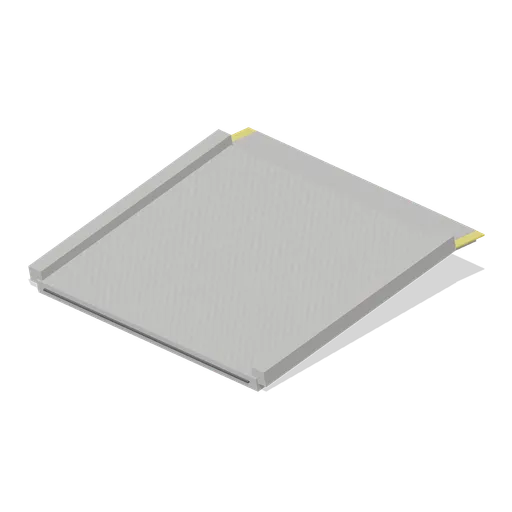
Slipway, 6 m (Marina and Yacht Club)
Concrete launching slipway 6 m wide and 6 m long: a flat head apron level with the quay, a grooved ramp falling 1.1 m into the water and kerbs each side, for launching a dinghy or a trailer boat from a marina yard.
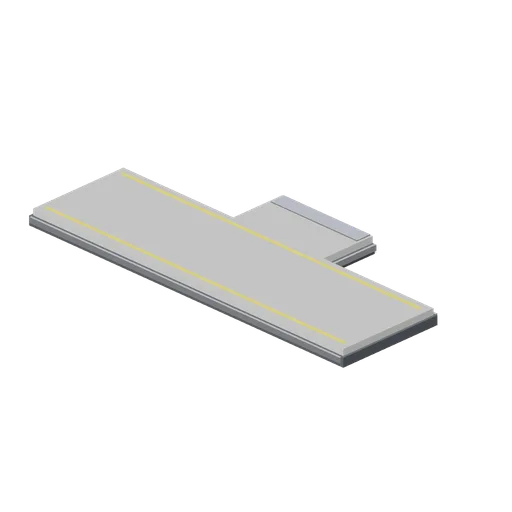
Floating pontoon module, tee with spur (Marina and Yacht Club)
The same 8 m floating walkway with a 1.2 m spur off one side, for the head of a gangway or a branch pontoon. Ports at both ends, at the spur head and at four berth positions.
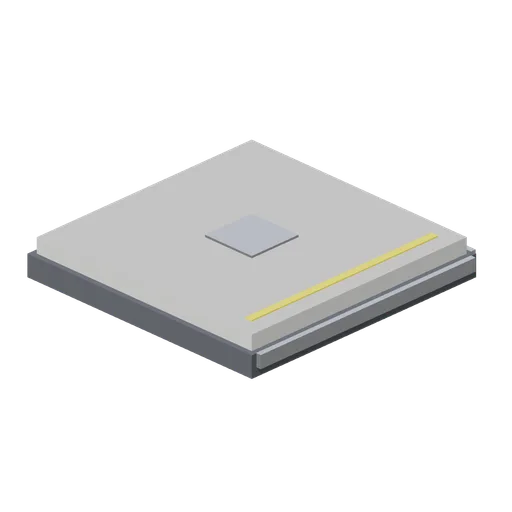
Floating pontoon module, corner (Marina and Yacht Club)
Floating walkway corner 2.4 m square turning a pontoon run through a right angle, with the same float, deck, rubbing strakes and edge strips. Ports on the two open faces.
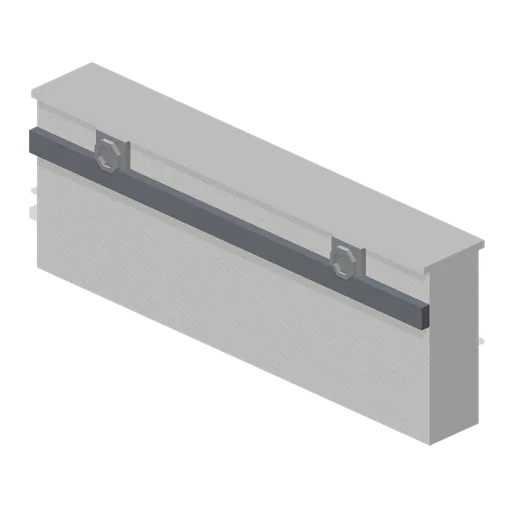
Harbour wall module, 4 m (Marina and Yacht Club)
Quay wall unit 4 m long: a concrete face 1.4 m from the coping down past the waterline, a coping 60 mm proud of the yard, a charcoal rubbing strake at the water and two cast mooring eyes. Ports at both ends so a quay runs to any length.
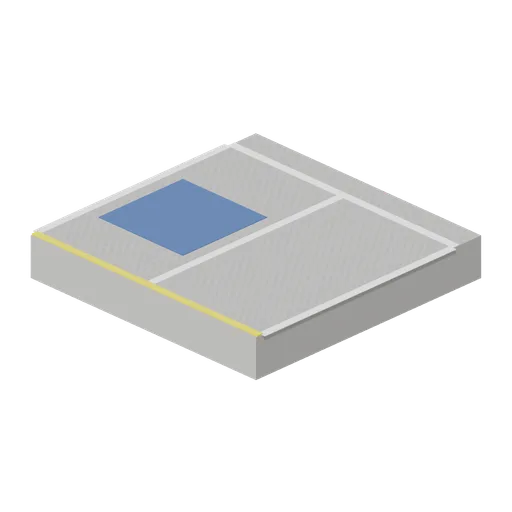
Car park bay module, 4 m (Marina and Yacht Club)
The same 4 m hardstanding slab marked out as two parking bays: white bay lines, a painted kerb strip and a blue accessible square, for the members' car park behind a marina yard.
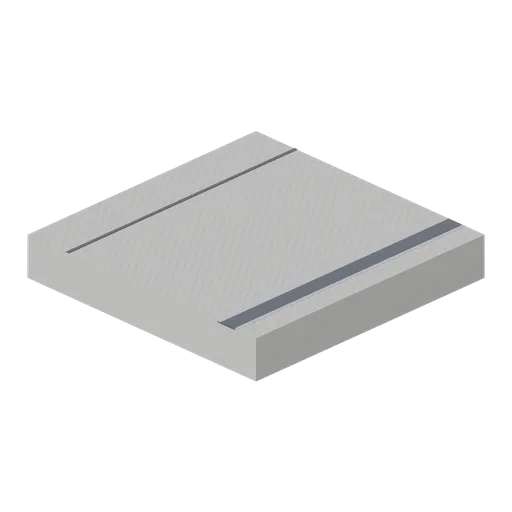
Hardstanding tile, 4 m (Marina and Yacht Club)
Yard hardstanding slab 4 m square and 0.6 m thick with a sawn movement joint and a recessed drainage channel, for the quayside apron and boat park of a marina. Ports on all four edges so the yard tiles to any size.
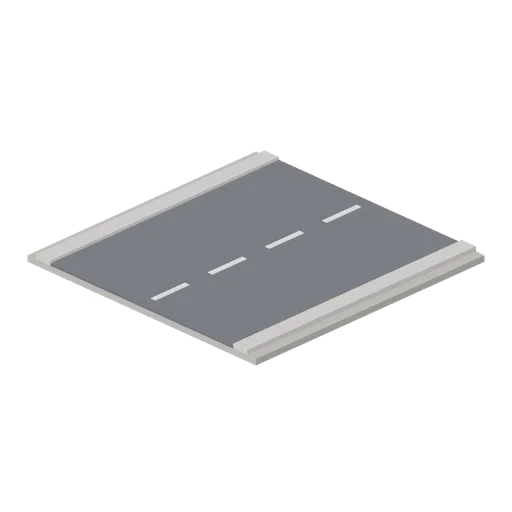
Access Road Module (Rocket Launch Pad and Gantry)
An 8 m access road module: a gravel shoulder each side of a 6.4 m dark carriageway with a dashed centre line and concrete kerbs. Ported on all four edges so a road runs across the site on the same grid.
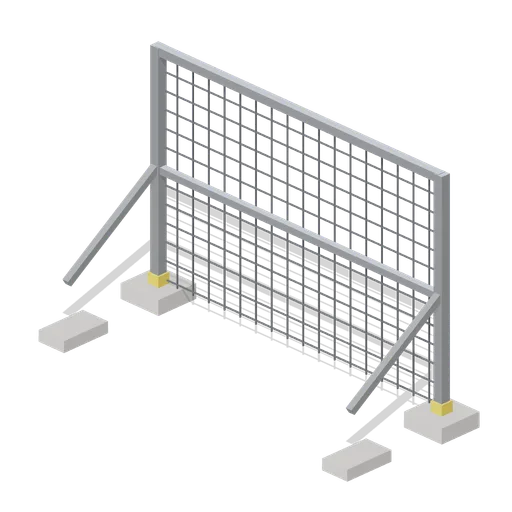
Debris Catch Net Frame (Rocket Launch Pad and Gantry)
A 9 m debris catch net: two braced posts on ballast pads carrying a top and mid rail with a corded net across them. The net is modelled solid and static, because a net needs a deformable mesh.
 Animated
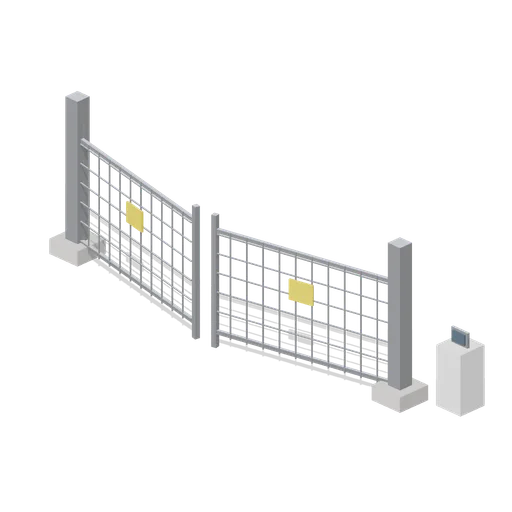
Perimeter Gate (Rocket Launch Pad and Gantry)
An 8 m two leaf vehicle gate between two posts on ballast pads, with a mesh infill, a blank sign plate on each leaf and a card reader pedestal. Both leaves swing open on their own nodes.
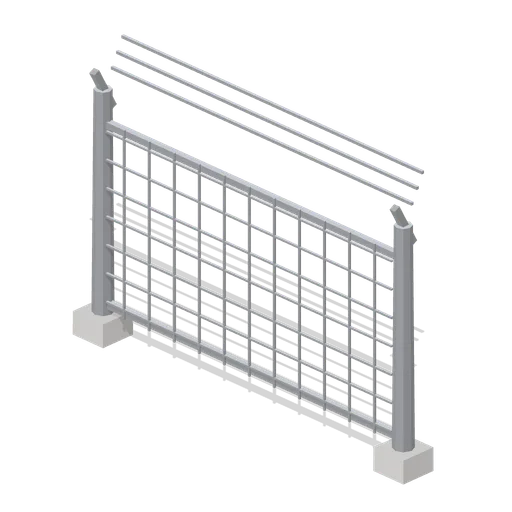
Perimeter Fence Panel (Rocket Launch Pad and Gantry)
A 4 m security fence panel, 3 m to the top strand: mesh on two rails between posts on ballast pads, with raked arms carrying three strands. Ported left and right so a perimeter is built from repeats.
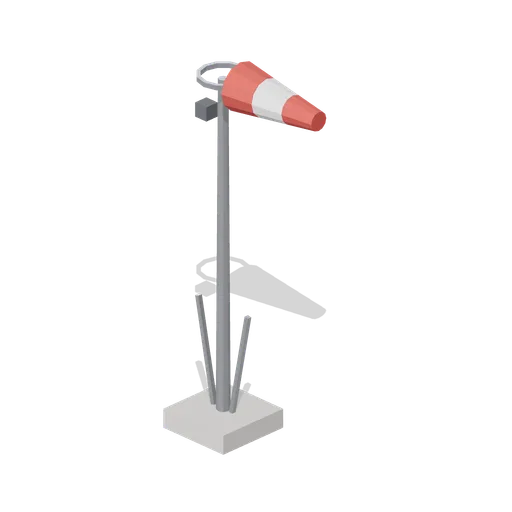
Windsock Mast (Rocket Launch Pad and Gantry)
A 7.5 m windsock mast on a concrete footing: a braced column, a swivel ring and a banded red and white sock streaming to one side, with a small light box below the head.
 Animated
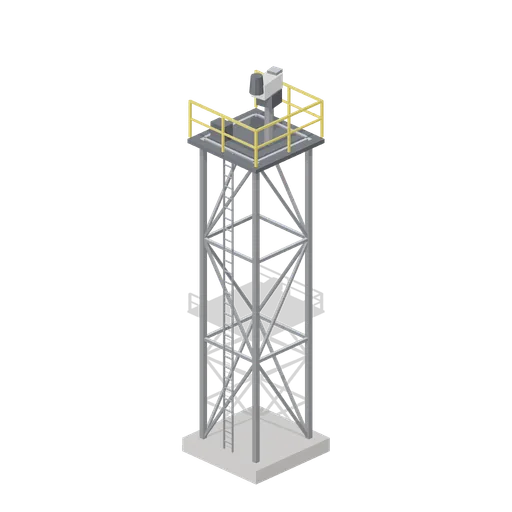
Pad Camera Tower (Rocket Launch Pad and Gantry)
A 11.7 m pad camera tower: a lattice mast on a footing with a railed platform, a ladder, a signal cabinet and a tracking camera on a pan head that sweeps across the pad and back.
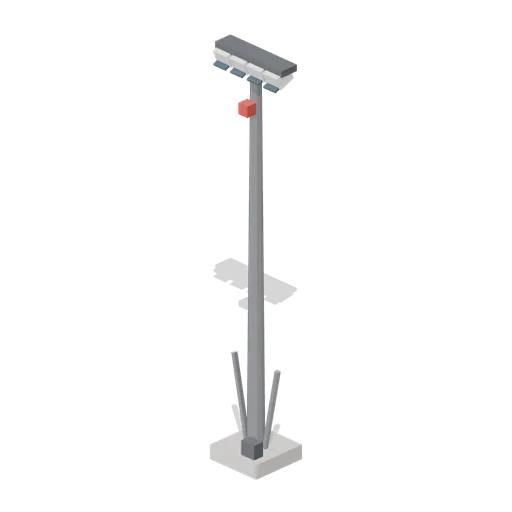
Floodlight Mast (Rocket Launch Pad and Gantry)
A 12.7 m floodlight mast: a braced tapered column on a concrete footing carrying a head frame of four aimed floodlights, with a control box at the foot and a marker light up the column.
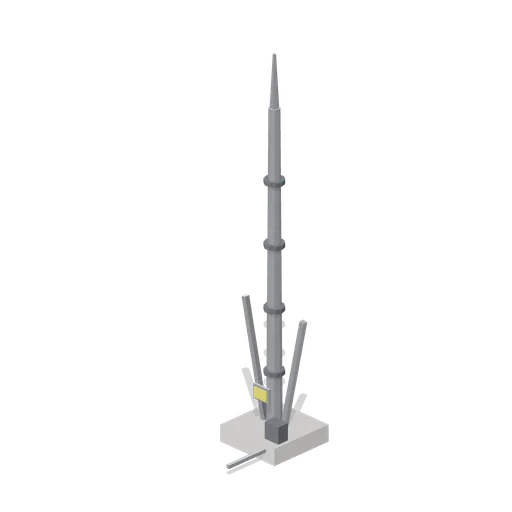
Lightning Arrestor (Rocket Launch Pad and Gantry)
A 7.9 m lightning arrestor for a tank farm or a cart park: a braced steel pole on a concrete footing with insulator rings, an air terminal, an earth box and a downlead to a ground rod, plus a blank warning plate.
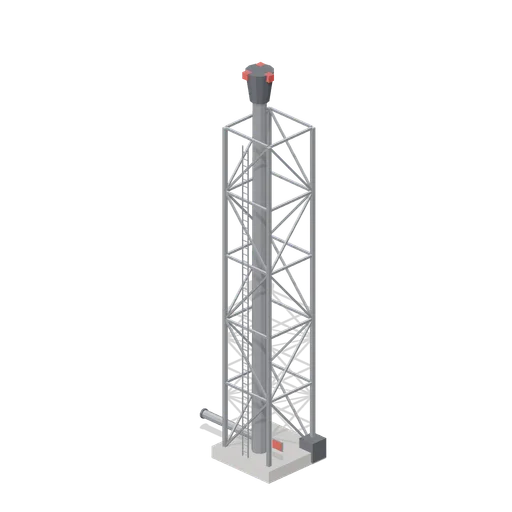
Flare Stack (Rocket Launch Pad and Gantry)
An 18.5 m flare stack for burning off vented propellant: a lattice mast carrying the flare riser and its tip, ignition boxes at the head, a knockout drum and feed line at the foot, a ladder and a blank hazard plate. No flame is modelled.
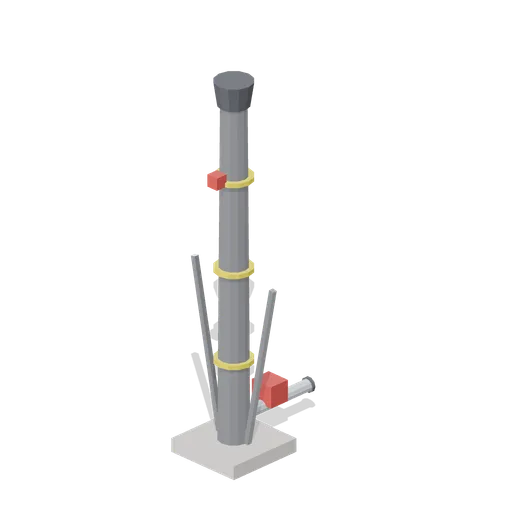
Vent Stack (Rocket Launch Pad and Gantry)
A 12.3 m boil off vent stack: a braced steel column on a concrete base with hazard bands, a flared head, an insulated feed at ground level and a control valve box. The vapour plume is not modelled.
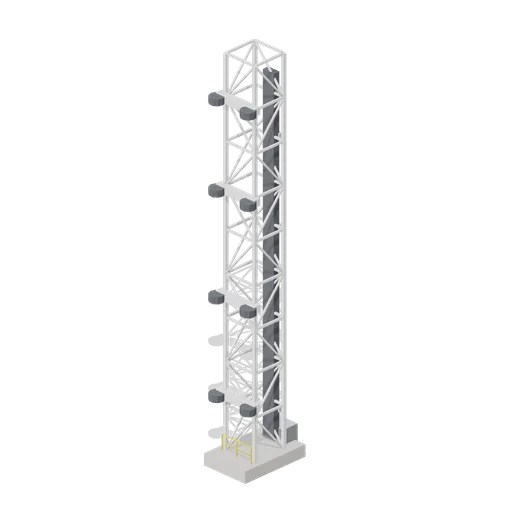
Strongback (Rocket Launch Pad and Gantry)
A 27 m strongback: a white lattice mast on a ballast foot with four vehicle cradles and their clamp pads on the front face, an umbilical raceway with insulated line boxes up the back and a base junction box.
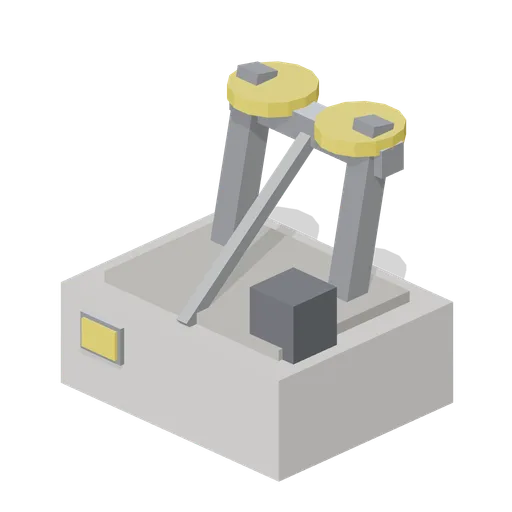
Catenary Wire Anchor (Rocket Launch Pad and Gantry)
A ground anchor for the lightning catenary: a ballast block with a steel frame, two sheaves, a tensioner strut and an earthing box, with a blank warning plate on the face. The wire it holds is deliberately not modelled.
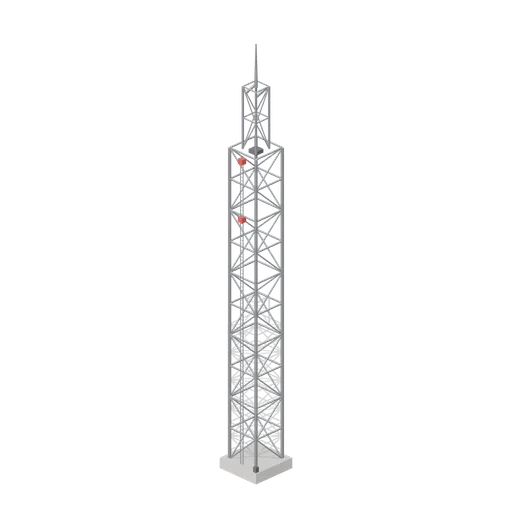
Lightning Mast (Rocket Launch Pad and Gantry)
A 41 m lightning protection mast: a lattice tower on a concrete block, a narrower head section carrying the air terminal spike and the catenary arms, obstruction markers, a ladder the full height and an earth downlead box at the foot.
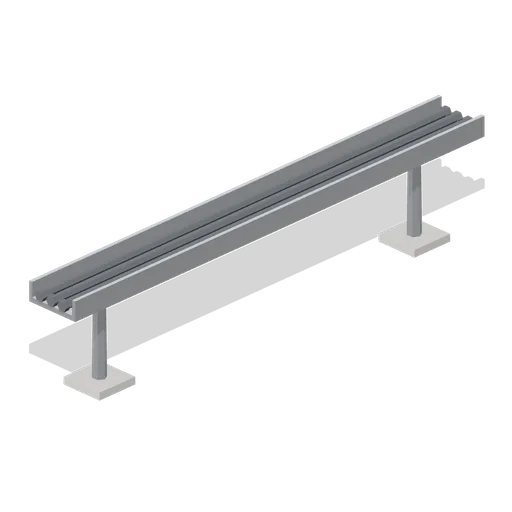
Cable Tray Run (Rocket Launch Pad and Gantry)
An 8 m elevated cable tray on two stanchions, 1.5 m to the deck, carrying three bundles in a ladder tray with side rails. Ported at both ends at tray height so a tray route crosses a pad without blocking it.
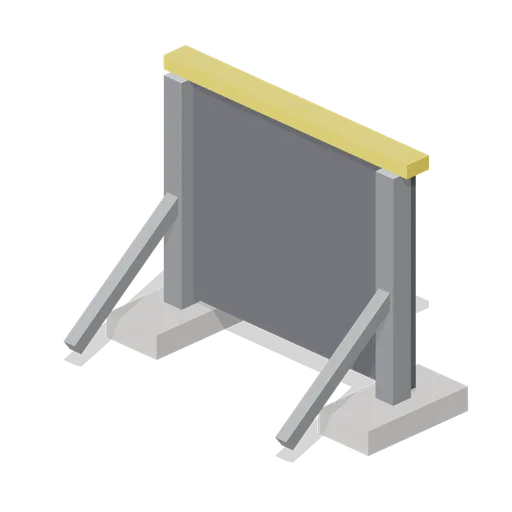
Blast Fence Panel (Rocket Launch Pad and Gantry)
A 4.4 m blast fence panel, 3.7 m tall: a braced steel frame on two ballast pads carrying a deflection plate with vertical stiffeners and a yellow cap rail. Ported left and right so a blast wall runs as far as the pad needs.
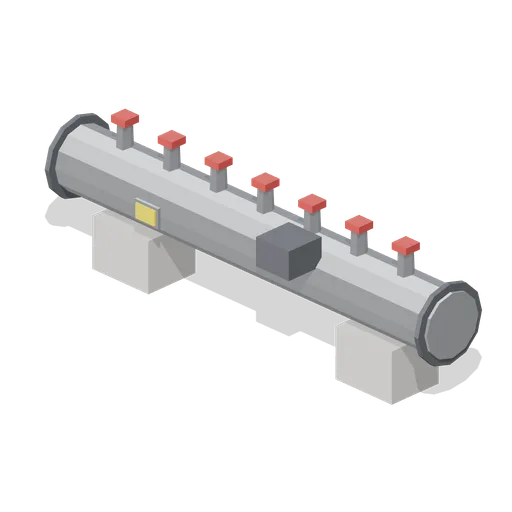
Sound Suppression Pipe Run (Rocket Launch Pad and Gantry)
An 8 m length of 1.1 m sound suppression water main on concrete saddles, with seven standpipes and outlet heads along the top and a control box on the flank. Ported at both ends, so a suppression ring is built from repeats.
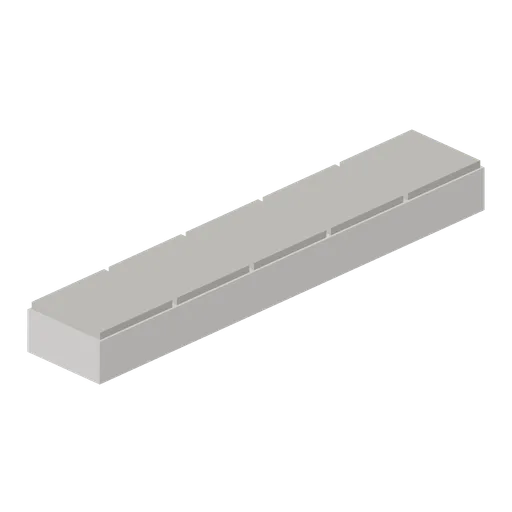
Cable Trench Section (Rocket Launch Pad and Gantry)
An 8 m cast cable trench with five removable lid slabs, a cable bed inside and a yellow duct run along one wall. Ported at both ends so power and signal routes run from the firing room to the pad.
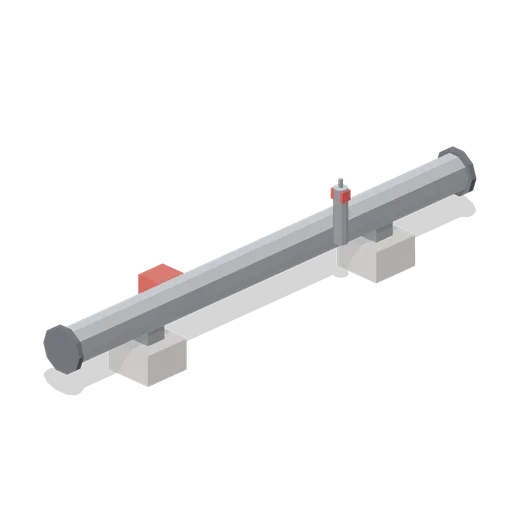
Deluge Pipe Run (Rocket Launch Pad and Gantry)
An 8 m run of 600 mm deluge main on concrete saddles, with flanged ends, a standpipe tapping and an isolation valve body. Ported at both ends on the pipe centreline so a water main runs the length of the pad.