Free models · Game-ready GLB
Exterior
Every modern model below is a self-contained .glb under 25 MB that drops into three.js, Blender, Godot, Unity and Unreal, free to use and modify in commercial projects without attribution.
Load one straight from its CDN URL with a plain GLTFLoader, or take a whole themed set from the packs.
4,915 free GLB models
 Animated
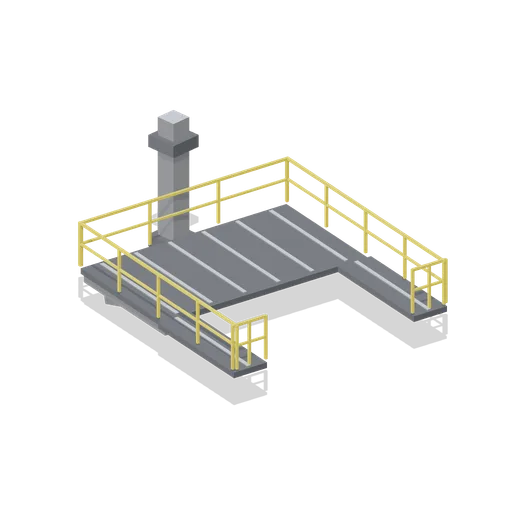
Gantry Swing Platform (Rocket Launch Pad and Gantry)
A gantry access platform on a hinge column: a 6.6 m grated deck whose two arms close round a 4 m vehicle, handrails on every free edge and raking struts back to the column. The deck is one node and swings clear about the column.
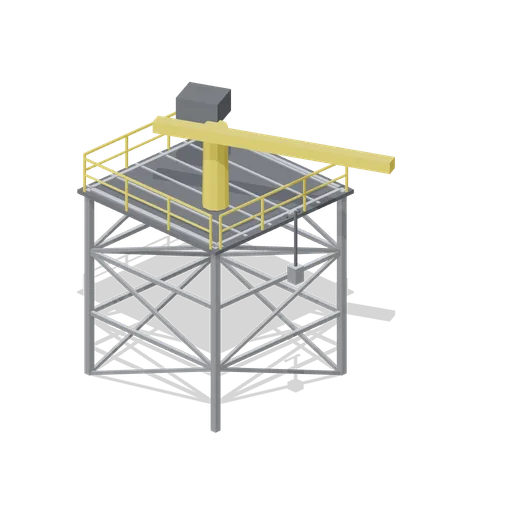
Gantry Crane Section (Rocket Launch Pad and Gantry)
The gantry tower section topped with a slewing jib crane: a yellow mast on the deck, an 7.4 m boom over the pad and a hook block on a static fall. Same 6 m module and the same base and top ports as the plain section.
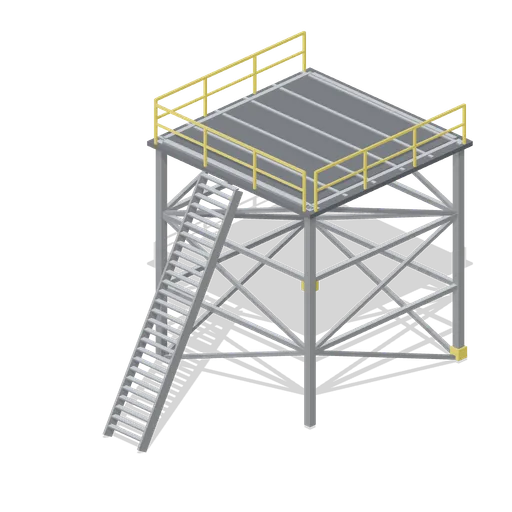
Gantry Tower Section (Rocket Launch Pad and Gantry)
One stackable 6 m section of service gantry: a 5.2 m square lattice bay with a grated deck, handrails on three sides and a stair flight up the back. Base and top ports on the tower axis, so a structure of any height is repeats of this piece.
 Animated
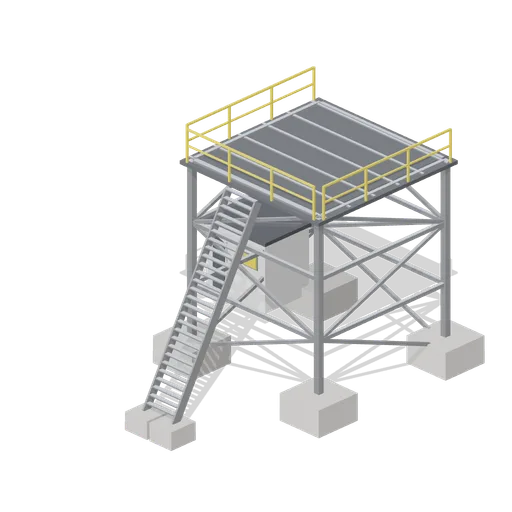
Gantry Base Section (Rocket Launch Pad and Gantry)
The bottom 6 m of the service gantry: a 5.2 m lattice bay on four concrete footings, a grated deck and handrails at the top, an access stair off the back and a plant room at the foot with a door that opens.
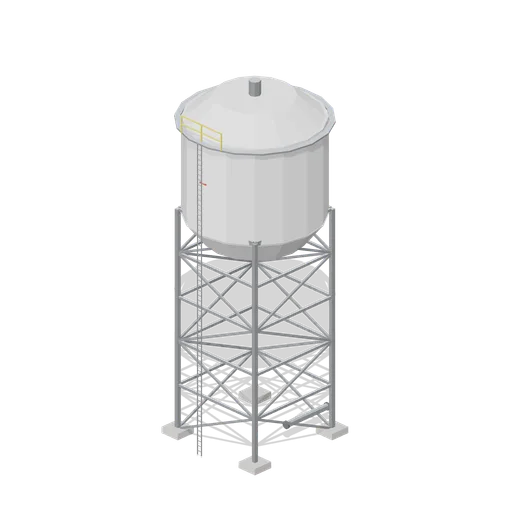
Pad Water Tower (Rocket Launch Pad and Gantry)
A 22 m water tower feeding the deluge system: a lattice frame on four pads carrying an 8.4 m tank with a domed base and top, a railed catwalk, a ladder the full height and a downpipe out to the mains.
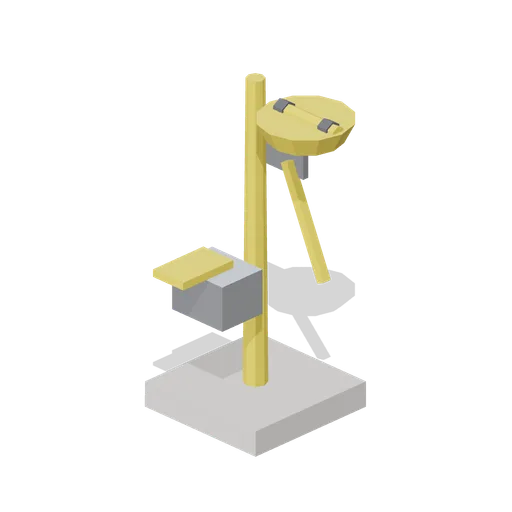
Safety Shower and Eyewash (Rocket Launch Pad and Gantry)
An emergency safety shower and eyewash station on a concrete plinth: a 2.6 m yellow standpipe with an overhead rose and pull rod, a bowl and paddle on the stem and a blank instruction plate on the back.
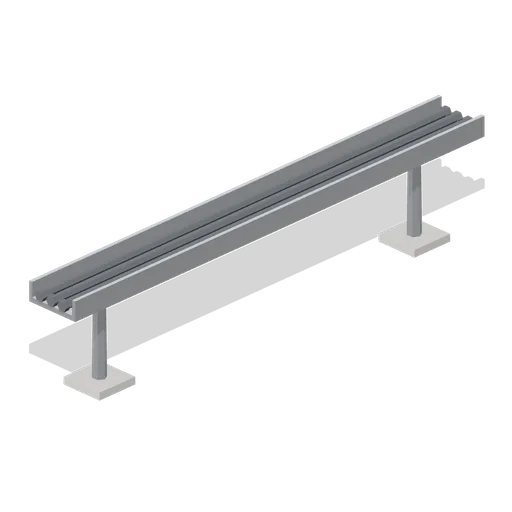
Cable Tray Run (Rocket Launch Pad and Gantry)
An 8 m elevated cable tray on two stanchions, 1.5 m to the deck, carrying three bundles in a ladder tray with side rails. Ported at both ends at tray height so a tray route crosses a pad without blocking it.
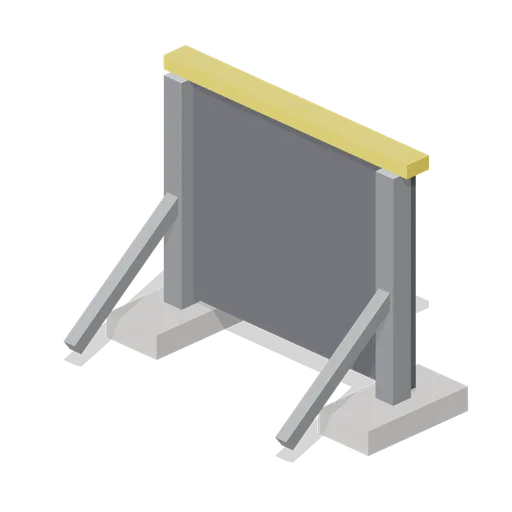
Blast Fence Panel (Rocket Launch Pad and Gantry)
A 4.4 m blast fence panel, 3.7 m tall: a braced steel frame on two ballast pads carrying a deflection plate with vertical stiffeners and a yellow cap rail. Ported left and right so a blast wall runs as far as the pad needs.
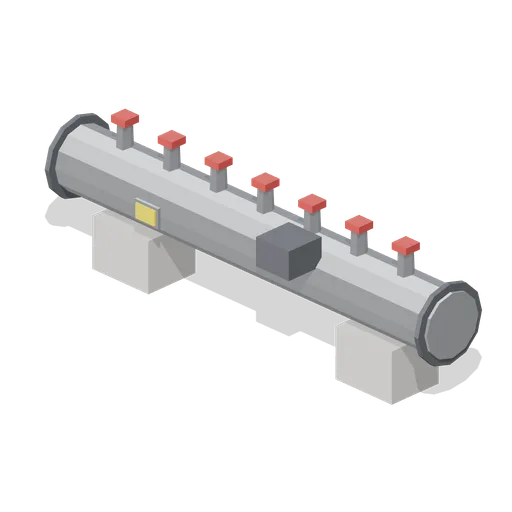
Sound Suppression Pipe Run (Rocket Launch Pad and Gantry)
An 8 m length of 1.1 m sound suppression water main on concrete saddles, with seven standpipes and outlet heads along the top and a control box on the flank. Ported at both ends, so a suppression ring is built from repeats.
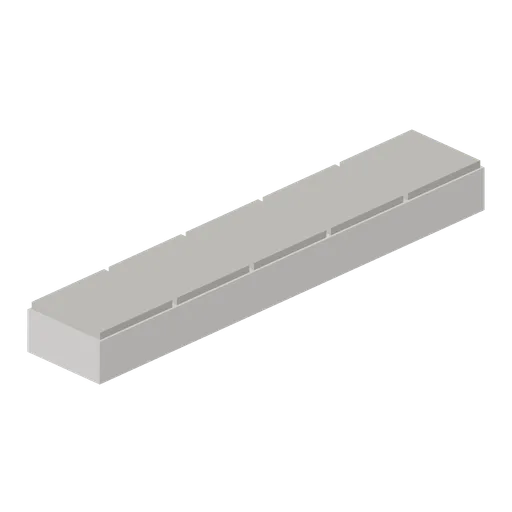
Cable Trench Section (Rocket Launch Pad and Gantry)
An 8 m cast cable trench with five removable lid slabs, a cable bed inside and a yellow duct run along one wall. Ported at both ends so power and signal routes run from the firing room to the pad.
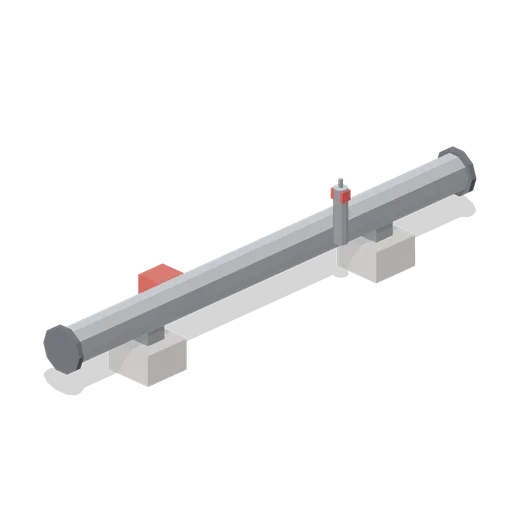
Deluge Pipe Run (Rocket Launch Pad and Gantry)
An 8 m run of 600 mm deluge main on concrete saddles, with flanged ends, a standpipe tapping and an isolation valve body. Ported at both ends on the pipe centreline so a water main runs the length of the pad.
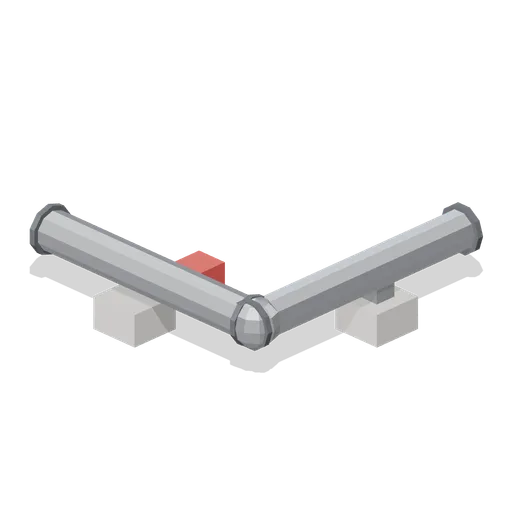
Deluge Pipe Elbow (Rocket Launch Pad and Gantry)
The deluge main turning a right angle on the same 8 m module: a north port and a west port meeting at a swept bend on its saddles, so the water main can follow the pad boundary.
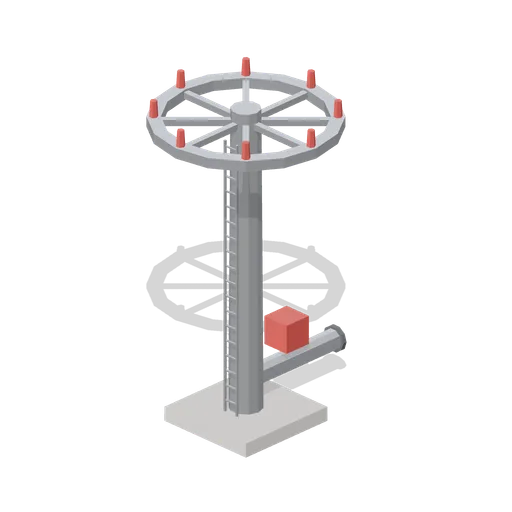
Water Deluge Head (Rocket Launch Pad and Gantry)
A 6.7 m deluge head: a mast on a concrete footing carrying a spray ring of eight nozzle arms, with the feed pipe coming in at ground level through a valve block and a ladder up the mast. Sprays are not modelled.
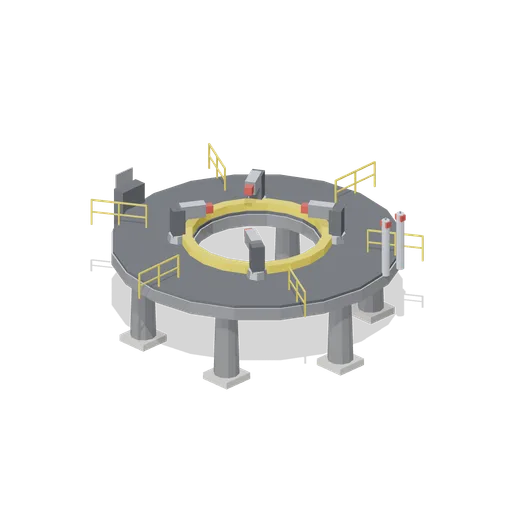 Animated
Launch Mount with Clamps (Rocket Launch Pad and Gantry)
The launch mount: a ring deck 11.5 m across on six columns over the trench mouth, railed all round, with a yellow kick ring for the vehicle skirt and four hold down clamps on hinge posts that swing clear at release. Umbilical plate and cryogenic risers on one flank.
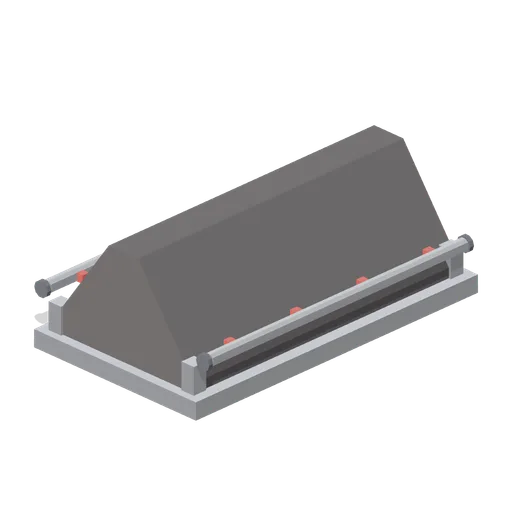
Flame Deflector (Rocket Launch Pad and Gantry)
A steel framed double wedge deflector, 3.4 m wide and 2.8 m tall, that splits the exhaust plume down both arms of the trench. Ablative dark face, a bolted cradle underneath and a cooling water manifold along each flank.
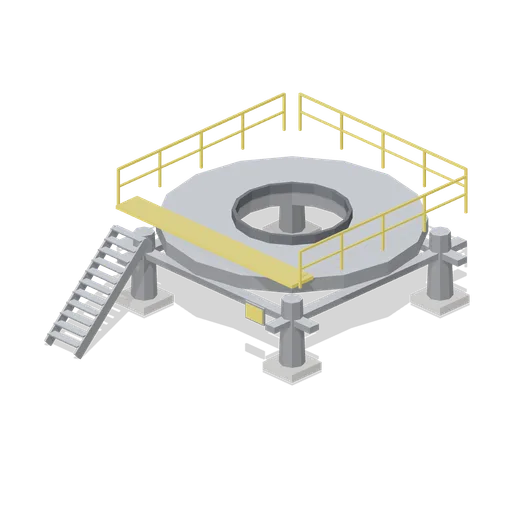
Launch Table (Rocket Launch Pad and Gantry)
A 7.2 m steel launch table for a small vehicle: four jack posts on pads, a bolted deck frame with an open flame hole, a railed working deck, an access stair and a blank hazard plate on the front girder.
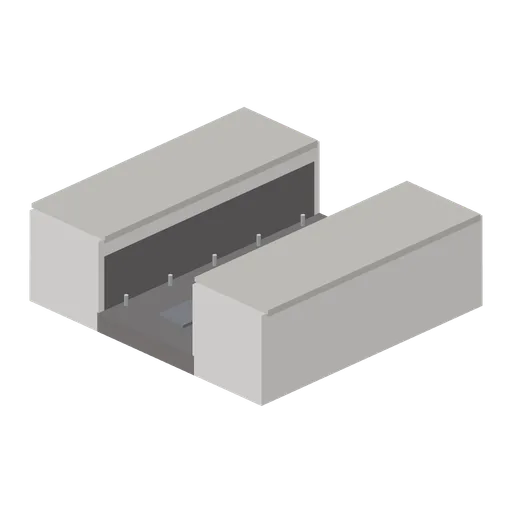
Flame Trench Section (Rocket Launch Pad and Gantry)
An 8 m section of flame trench: two 2.6 m concrete walls with a coping lip and a scorched lining, a sloped channel floor 3.4 m across, a drain sump and deluge nozzles along both kerbs. Ported at both ends so the trench runs as far as the pad needs.
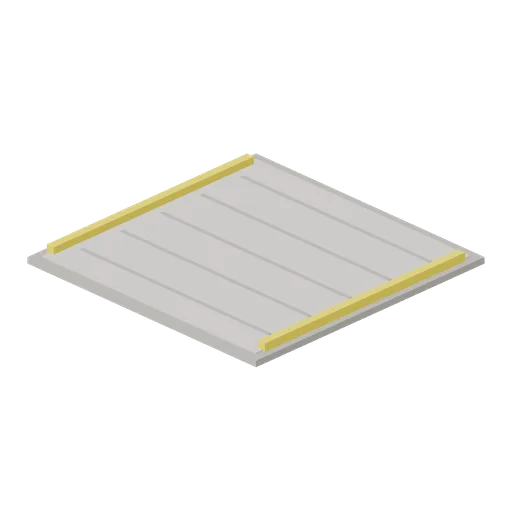
Hardstand Module (Rocket Launch Pad and Gantry)
An 8 m hardstand module for parking transporters, carts and skids beside the pad: a gravel bed, a laid concrete deck with joint lines and a yellow kerb down each side. Ported on all four edges to the same grid as the apron.
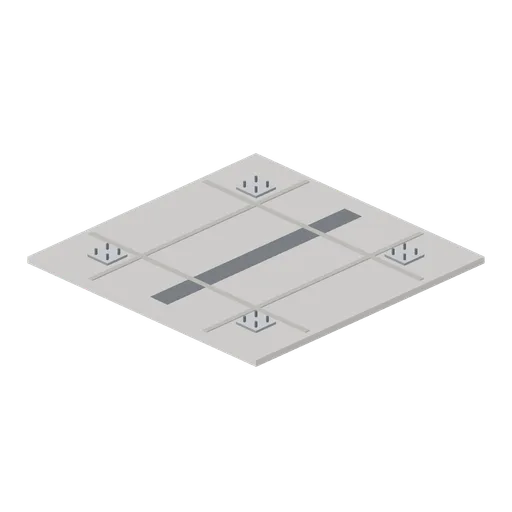
Pad Apron Module (Rocket Launch Pad and Gantry)
An 8 m square reinforced concrete pad apron module, 180 mm thick, with cast joint strips, a central drain channel and four bolt groups. Edge ported north, south, east and west so an apron of any size tiles out of repeats.
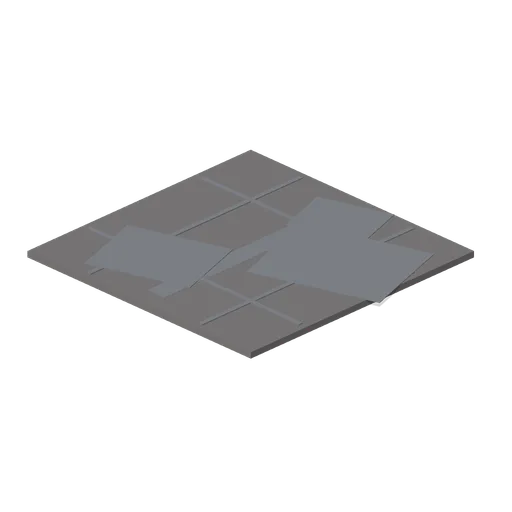
Scorched Apron Module (Rocket Launch Pad and Gantry)
The pad apron module in flame washed dark concrete, with soot patches where the exhaust plume has swept the slab. Same 8 m module and the same four edge ports, so it drops straight into an apron built from the clean tiles.

Finish Line Plate (Velodrome and Track Cycling)
The finish line across the track: a 0.55 m overlay plate of ten black and white blocks running the full 6 m width, cut to the straights 13 degree camber so it lies flush on a straight module in front of the judges tower.

Pursuit Line Plate (Velodrome and Track Cycling)
The white pursuit line across the full 6 m width of the track, on a 0.5 m overlay plate cut to the same 13 degree camber. Two of these sit half a lap apart on opposite straights, which is where a pursuit starts and finishes.

Track Surface Board Panel (Velodrome and Track Cycling)
A spare panel of track decking, 2.4 by 1.2 m of pale pine boards on two steel bearers, for laying flat in the track centre as a repair stack or a working platform. Six raised boards read as the plank courses of the running surface.

Sprinters and Stayers Line Plate (Velodrome and Track Cycling)
An 8 m overlay plate carrying the three lines that run the length of the track: the white measurement line 0.2 m up from the inner edge, the red sprinters line at 1.05 m and the blue stayers line at 2.45 m. Cut to the straights 13 degree camber and laid on a straight module.