Loading model
About
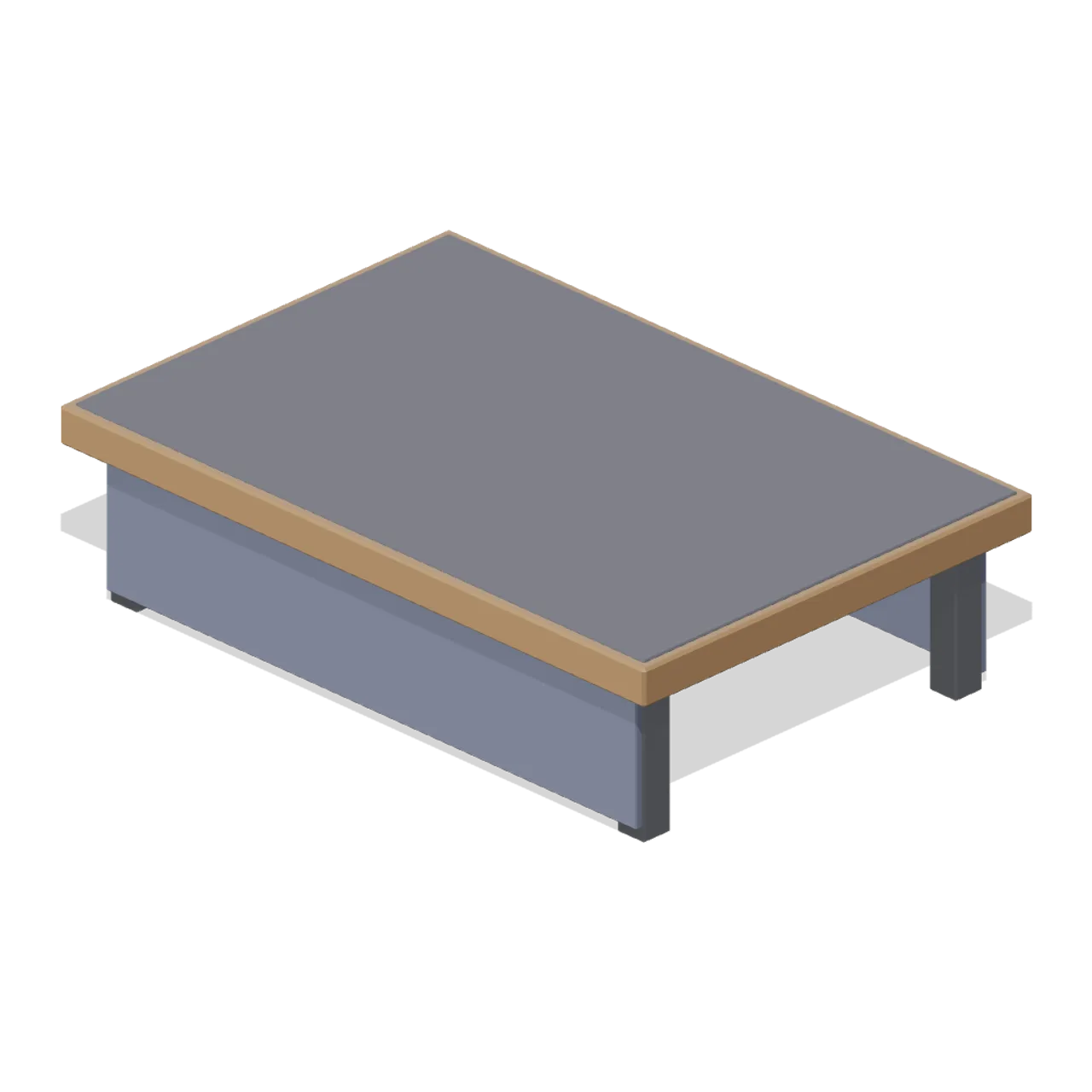
A low stage riser 1.5 m by 1 m standing 400 mm tall: a timber deck with a dark tread, four steel legs and recessed fabric skirting front and back, for the back row of a section. Risers sit on the stage or the floor; they carry no connector ports. Metre units, +Y up, front toward +Z, resting on y=0. Static geometry; no rig, collision or navigation data.
Use with an AI agent
Copy this prompt into your AI chat, then describe what you want to build with the asset.
Use the “Stage Riser (Orchestra and Band Instruments)” asset in my project.

Model: https://cdn.3dassets.dev/assets/39322/v1/model.glb
Asset page: https://3dassets.dev/assets/orchestra-and-band-instruments-stage-riser-c7b4fe3a
Description: A low stage riser 1.5 m by 1 m standing 400 mm tall: a timber deck with a dark tread, four steel legs and recessed fabric skirting front and back, for the back row of a section.

- Dimensions (X × Y × Z): 1.5 × 0.404 × 1 metres
- Triangles: 512
- Animations: none
- Licence: CC0 1.0 Universal (https://creativecommons.org/publicdomain/zero/1.0/)
- Loading: Three.js GLTFLoader; no additional decoders required.
Also available as JSON, Markdown, or via the MCP server.
Import manually
Choose your framework, then copy the code into your project to load the asset.
import { GLTFLoader } from 'three/addons/loaders/GLTFLoader.js'

const loader = new GLTFLoader()
loader.load('https://cdn.3dassets.dev/assets/39322/v1/model.glb', (gltf) => {
  scene.add(gltf.scene)
})
Common questions
How do I use this model with my AI development tools?
How do I get started?
Which game engines and tools can I use this model with?
How do I import this model into Unity, Godot, Unreal or Blender?
Can I use this model in a commercial game, and do I need to credit anyone?
Can I load it from the CDN instead of downloading it?
Do I need Draco, Meshopt or KTX2 to load it?
Stage Riser (Orchestra and Band Instruments)
A low stage riser 1.5 m by 1 m standing 400 mm tall: a timber deck with a dark tread, four steel legs and recessed fabric skirting front and back, for the back row of a section.
More in Buildings & Architecture
 Animated
Warehouse Door Pair (Distillery and Bonded Warehouse)
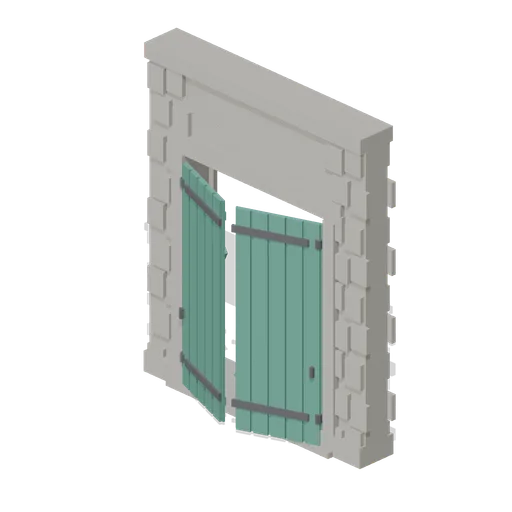
Four metre warehouse doorway with a 2.6 m opening under a 3.4 m lintel: dressed jambs, a threshold and two boarded and strapped leaves, painted, that swing out on their outer stiles. Sits in a wall run and carries a wall port at either end.
 Animated
Pile Dwelling (Bellroot Fen Floodward Marches)
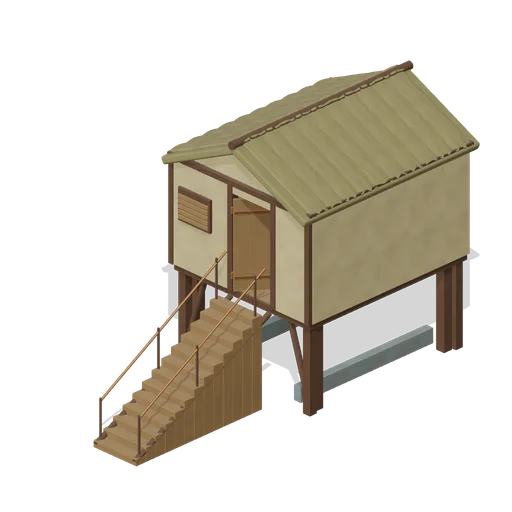
Two-level pile dwelling: enclosed furnished sleeping room over a clear full-length boat slip, braced corner piles, gabled reed roof and a solid supported entrance stair.
Wall Section (Distillery and Bonded Warehouse)
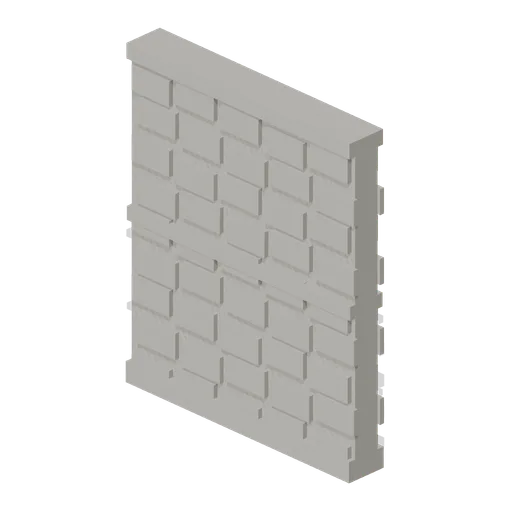
Plain four metre rubble wall bay 4.6 m to the head and 0.4 m thick, faced on both sides, with a plinth course, a string course at 2.3 m and a capping course. The base module of the stillhouse and the warehouse, laid end to end between corner pillars.
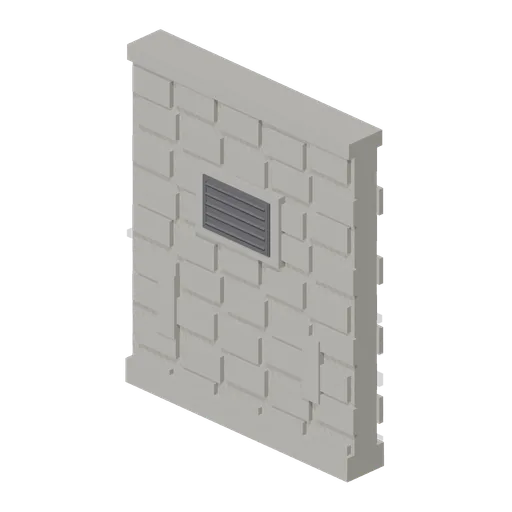
Bonded Warehouse Wall Run (Distillery and Bonded Warehouse)
Four metre rubble wall bay 4.6 m to the head and 0.4 m thick, faced both sides: a battered plinth course, a capping course, a louvred ventilation grille in a dressed surround and two barred slit vents low down. Lays end to end and meets a corner pillar at either end.
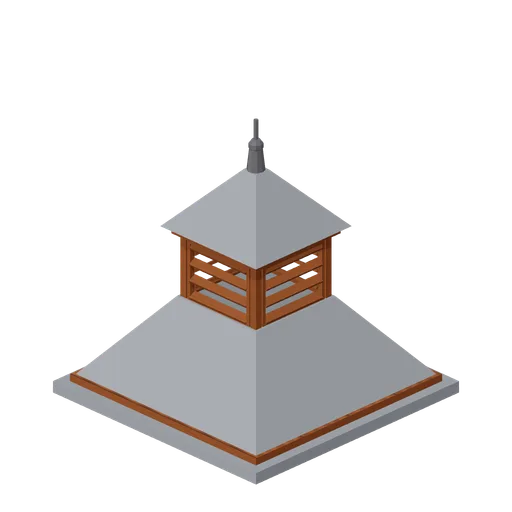
Pagoda Roof Kiln Vent (Distillery and Bonded Warehouse)
Pagoda kiln vent 3.6 m square at the eaves and 3.8 m tall: a slated tapering roof in two stages with a louvred lantern of four faces between them, boarded eaves on all four sides and a plain iron finial. Stands over a kiln, on a wall head or astride a roof ridge.
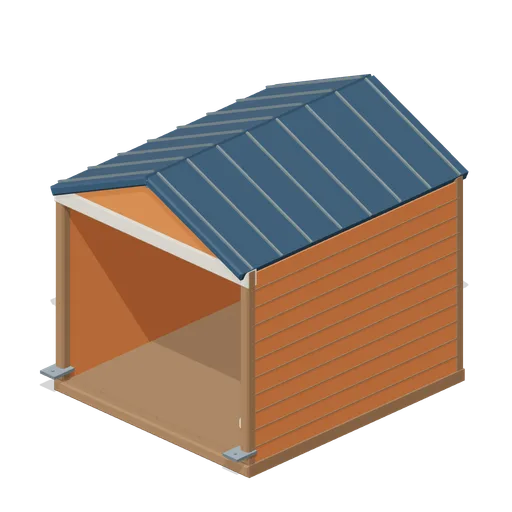
Cedar Boathouse (Fishing Harbour and Boats)
Open-front waterside boathouse with board siding, exposed rafters, corrugated roof and dock floor.
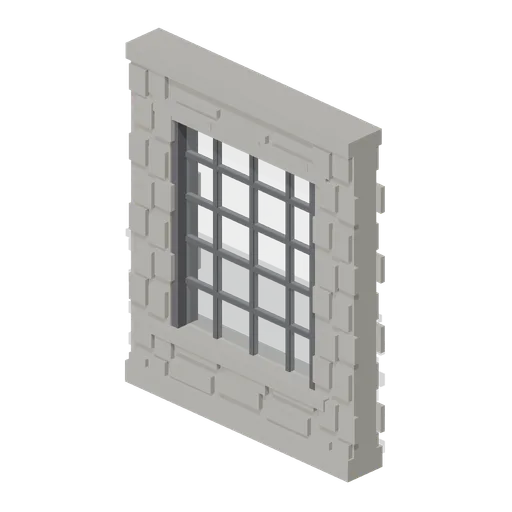
Stillhouse Window Bay (Distillery and Bonded Warehouse)
Four metre wall bay with a 2.6 x 3.0 m industrial window: a dressed sill and lintel, an iron frame of twenty lights with glazing bars, and rubble facing above and below. Lets the stillhouse be seen into, and lays end to end with the plain wall bay.
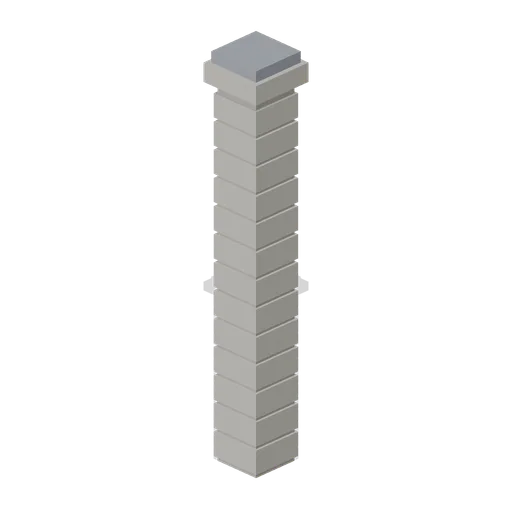
Corner Pillar (Distillery and Bonded Warehouse)
Dressed stone corner pillar 0.6 m square and 4.8 m tall with a capping stone: quoined courses on all four faces and a wall port on each side, so it turns a corner, ends a run or joins two runs in line.
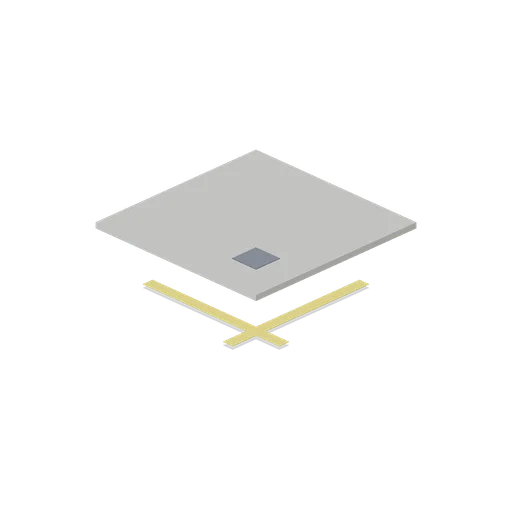
Workshop Floor Tile (Robots and Drones Kit)
2 m floor tile for workshop hall scenes.
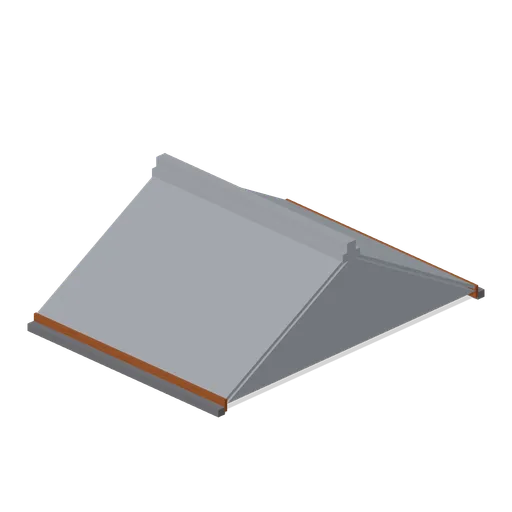
Slate Roof Section (Distillery and Bonded Warehouse)
Four metre pitched slate roof run spanning 5.2 m and rising 1.5 m to the ridge: a slated gable body with seven laid courses on each slope, timber eaves boards, gutters, rafter feet and a ridge course over the joint. Sits on two wall heads and lays end to end with the next run.
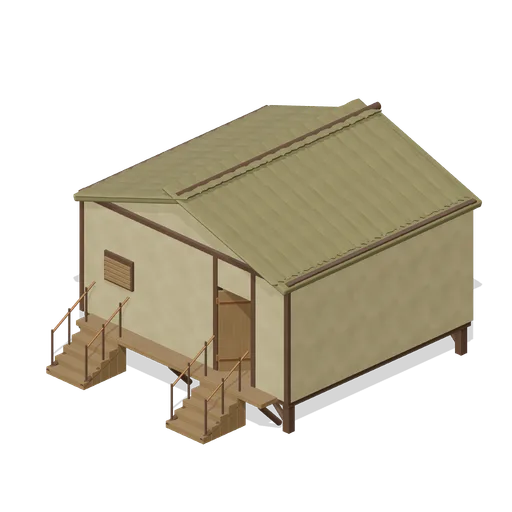 Animated
Flood Refuge Dormitory (Bellroot Fen Floodward Marches)
Broad raised refuge with double supported entrance stairs and shared veranda, full gabled roof, four stacked communal bunk frames, bedding and a fitted dining corner.
 Animated
Silt Survey Office (Bellroot Fen Floodward Marches)
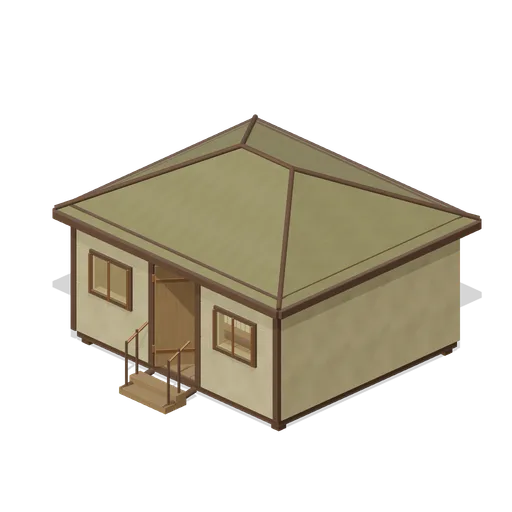
Hipped-roof survey office organised around a stocked central archive core, fitted measuring desk, reading bench and framed front observation lights. Complete roof underside and open entry.
Similar assets

Stage Step Unit (Live Music Venue and Festival Stage)
A four tread stage stair rising 1 m to deck height, 1.2 m wide with a scaffold handrail either side. The top tread stands against the stage edge; the treads are the same non slip ply as the decking.

Stage Deck Module (Live Music Venue and Festival Stage)
A 2 by 1 m stage deck on 1 m legs: a non slip ply top on a welded frame with four sleeved legs and levelling feet. Repeat it on the 2 by 1 m grid to build a stage of any size.

Stage Deck Module (Theatre Stage and Backstage)
A 2 by 1 m stage deck on 900 mm legs: a painted ply top on a welded frame with sleeved legs, levelling feet and steel corner plates. Repeat it on the 2 by 1 m grid to lay a stage of any size.
Deck stage with backdrop (Cruise Ship Deck and Lounge)
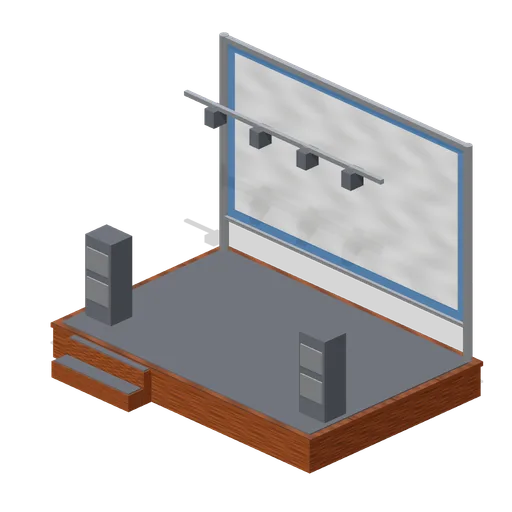
Open air stage 6 m wide: a charcoal decked platform 0.6 m up with teak facings and two entry steps, a blank navy backdrop panel 3.4 m tall in a steel frame, a lighting bar with four fixtures and a speaker stack at each side.
Concert Stage Platform (Orchestra and Band Instruments)
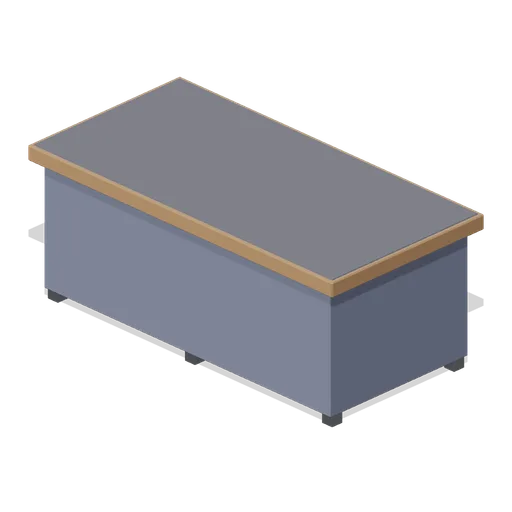
A concert stage platform 2 m by 1 m standing 800 mm tall: a timber deck with a dark tread plate, six steel legs with braces and recessed fabric skirting on all four sides.

Riser Platform Module (Nightclub and DJ Booth)
A 2 by 1 m stage riser at 400 mm: a dark non slip deck in an aluminium edge trim on a folding steel frame with levelling feet, ported on all four edges so risers tile into a booth stage of any size.

Stage Riser Block (Live Music Venue and Festival Stage)
A 1 m square riser 400 mm high: a ply top on a folding frame, for lifting a backline amplifier, a keyboard rig or a side fill off the deck.
Painted steel deck plate, 6 m (Cruise Ship Deck and Lounge)
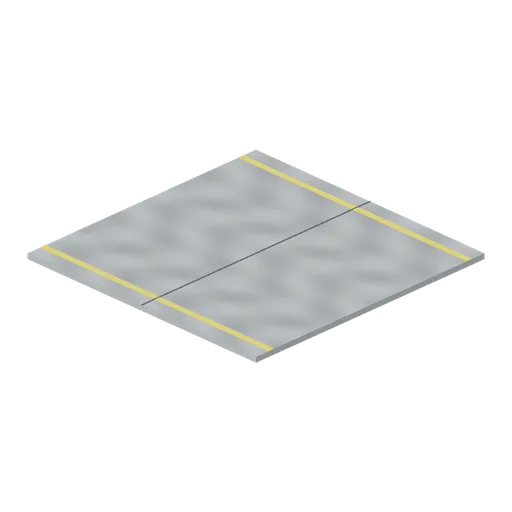
The same 6 m deck module in grey non slip deck paint with a yellow service margin and a welded seam, for the working and service parts of a deck where teak is never laid.
 Animated
Forge bellows on a timber stand (Animated Mechanisms Kit)
Five fold bellows between timber boards on a four leg stand, with a pivoting hand lever and a steel tuyere nozzle. The folds compress as the lever is pulled down.
Staging riser (Hotel and Resort Operations)
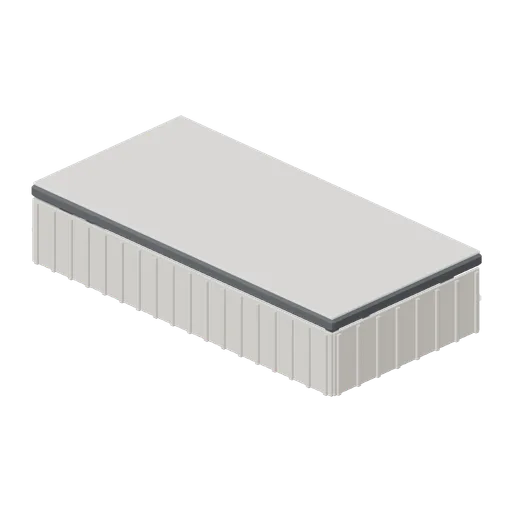
A 2.0 by 1.0 m staging riser at 0.4 m: a framed deck with a non-slip top on four folding legs with glides and cross rails, dressed with a pleated skirt on the front and both returns.

Stage Steps (Theatre Stage and Backstage)
A three tread stage stair rising 600 mm to rostrum height, 1 m wide with gilt nosings and closed black strings. The top tread stands against a rostrum or the end of a deck run.
Four-leg guest chair (Downtown Office Interiors)
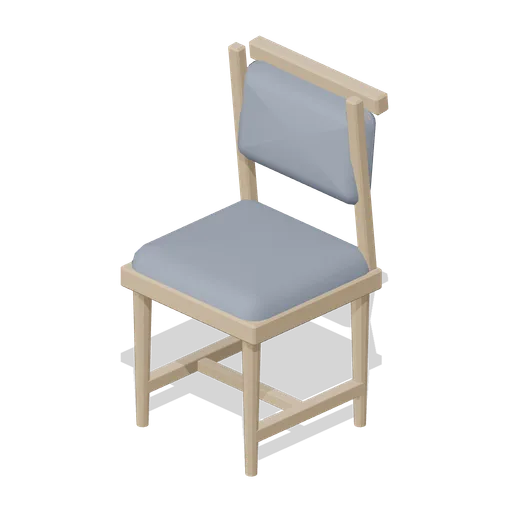
A four-leg timber guest chair: tapered legs with an H stretcher, a piped seat cushion and a welted back pad between two stiles under a capping rail.