Loading model
About
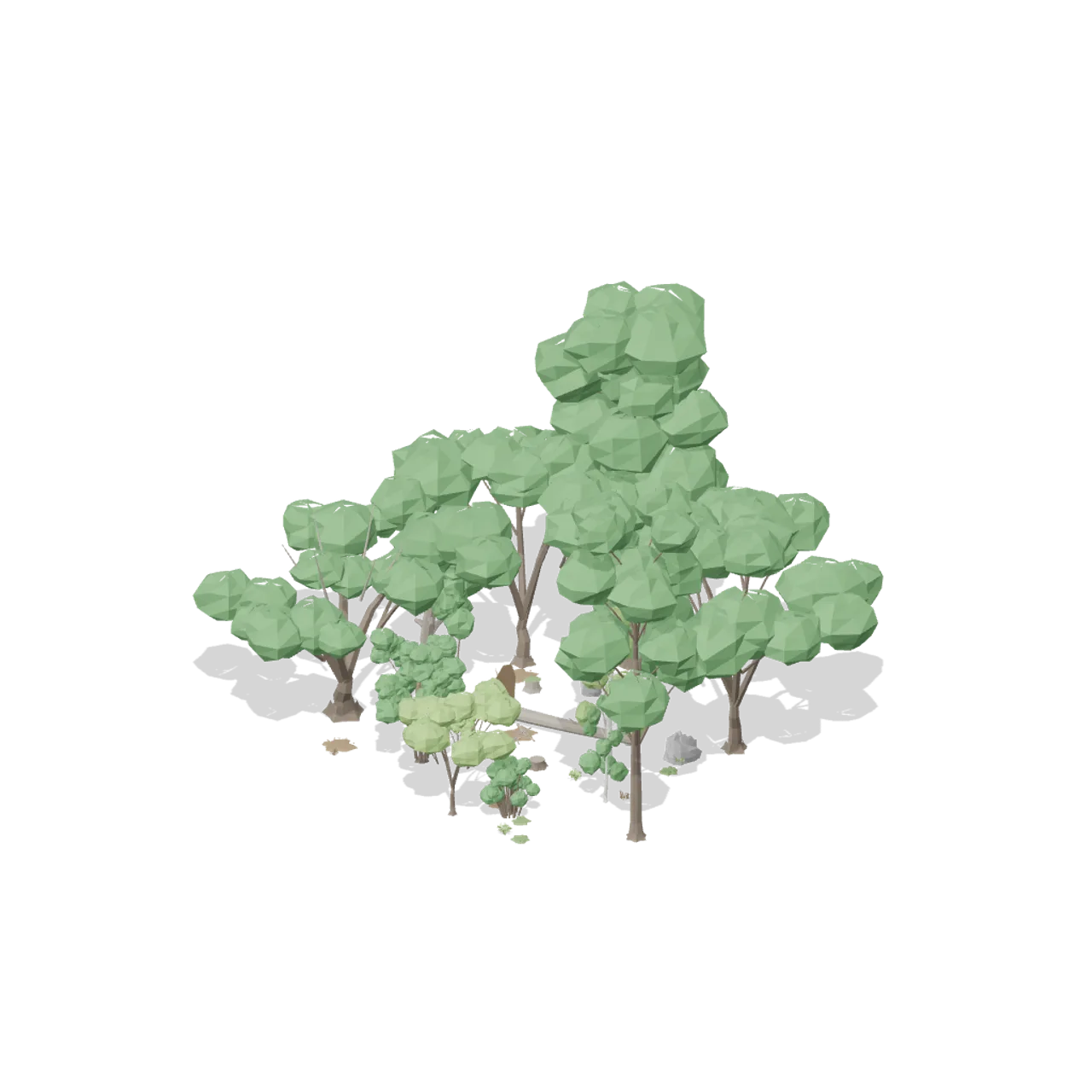
A complete temperate broadleaf and conifer woodland kit built to metre scale with flat-shaded faceted geometry and a single cohesive palette. Species are separated by structure — spreading, columnar, pendulous, whorled conical, umbrella-crowned, multi-stem, pollard and dead forms — not by colour. Every model rests on y=0 and is centred on its footprint.
Files load directly from the CDN. Choose the pieces you need. Colliders, navigation and gameplay scripts are supplied by your game.
Use with an AI agent
Copy this prompt into your AI chat, then describe what you want to build with the pack.
Use the “Forest Trees and Woodland Plants” pack in my project.

Manifest (JSON, every model with its CDN URL): https://3dassets.dev/api/v1/packs/temperate-forest-ecology
Starter scene (one GLB with every piece placed): https://cdn.3dassets.dev/assets/3884/v1/model.glb
Pack page: https://3dassets.dev/packs/temperate-forest-ecology
Description: Original low-poly northern-European woodland: tree species and age forms, deadwood, understorey, fungi, rock and ground detail at true metre scale.

- 112 GLB models, 11.4 MB in total
- Units: metres, +Y up, shared scale and palette across the pack
- Licence: CC0 1.0 Universal (no attribution required)
- Loading: three.js GLTFLoader; no additional decoders required. Load models individually from the manifest, or the starter scene as one file.
Also available as a JSON manifest or via the MCP server.
Common questions
How do I use Forest Trees and Woodland Plants with my AI development tools?
How do I get started?
Which game engines and tools can I use Forest Trees and Woodland Plants with?
How do I import this pack into Unity, Godot, Unreal or Blender?
Can I use Forest Trees and Woodland Plants in a commercial game, and do I need to credit anyone?
Can I load it from the CDN instead of downloading it?
Do I have to download the whole pack?
Do the models in Forest Trees and Woodland Plants fit together?
Game kit
Forest Trees and Woodland Plants
Original low-poly northern-European woodland: tree species and age forms, deadwood, understorey, fungi, rock and ground detail at true metre scale.
One GLB with every piece placed in a starter scene. Each model is also below on its own.
Everything in this pack
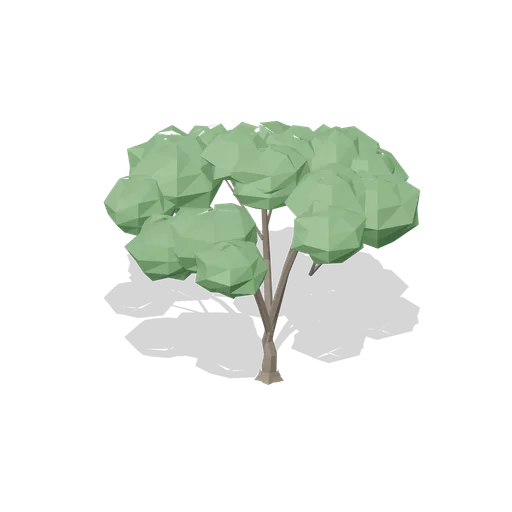
Mature English oak (Forest Trees and Woodland Plants)
Broad open-grown oak: a short heavy bole, five low forks and a wide domed crown of clustered foliage masses. 20.81 x 17.11 x 18.54 m.
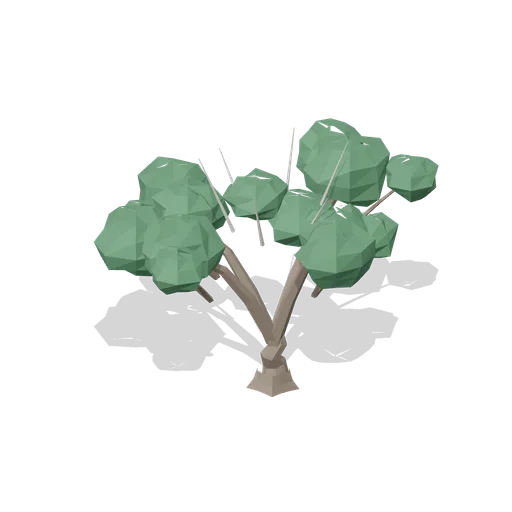
Veteran stag-headed oak (Forest Trees and Woodland Plants)
Ancient oak with a squat 1.6 m bole, a retrenched crown and six bleached dead limbs projecting above the living canopy. 16.62 x 14.19 x 17.70 m.
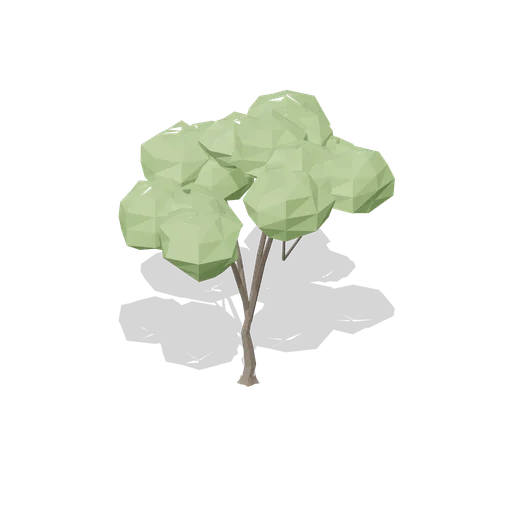
Young English oak (Forest Trees and Woodland Plants)
Thirty-year oak with a slender straight bole and a compact upward crown, before the low spreading limbs develop. 8.05 x 8.75 x 8.55 m.
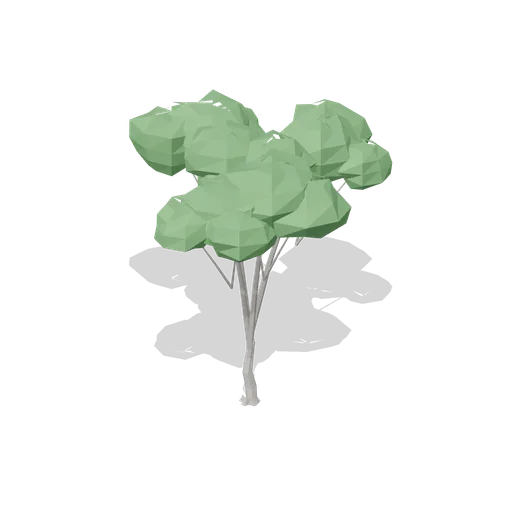
Mature sycamore (Forest Trees and Woodland Plants)
Tall dense-crowned sycamore: a clean bole to first fork, four rising limbs and a heavy rounded canopy. 18.66 x 21.21 x 19.40 m.
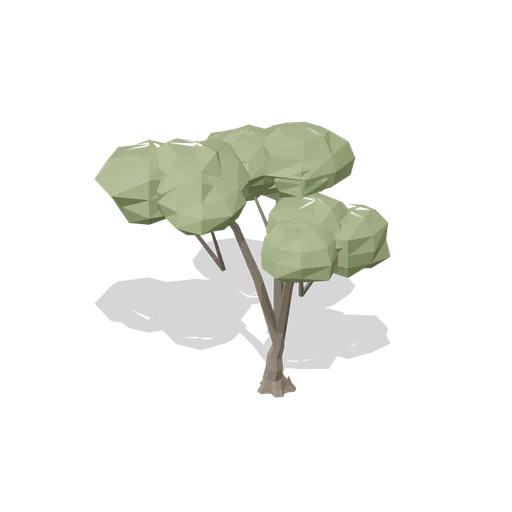
Mature sweet chestnut (Forest Trees and Woodland Plants)
Heavy-boled chestnut with three massive ascending limbs and a slightly leaning, coarse-textured crown. 14.62 x 15.95 x 15.88 m.
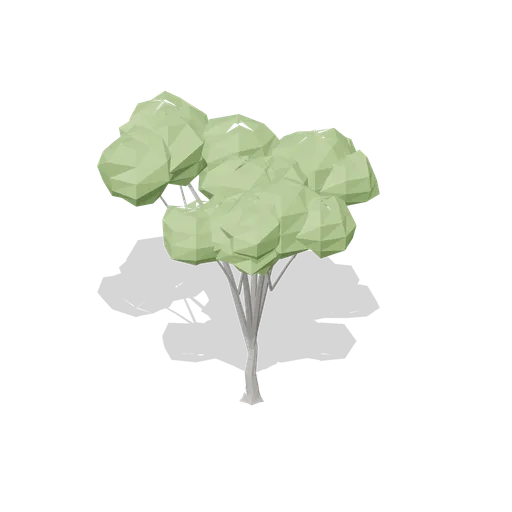
Mature field maple (Forest Trees and Woodland Plants)
Small hedgerow maple with dense twiggy branching and a tight rounded crown carried low over a short bole. 9.89 x 10.29 x 9.13 m.
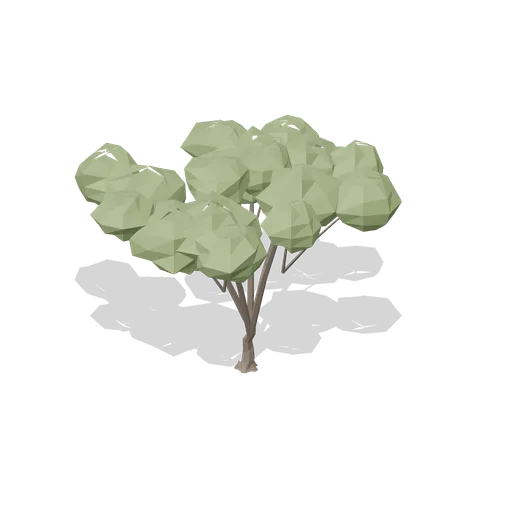
Gnarled crab apple (Forest Trees and Woodland Plants)
Crooked open-grown crab apple: a leaning short bole, five twisting limbs and an irregular broken crown. 8.60 x 7.10 x 8.33 m.
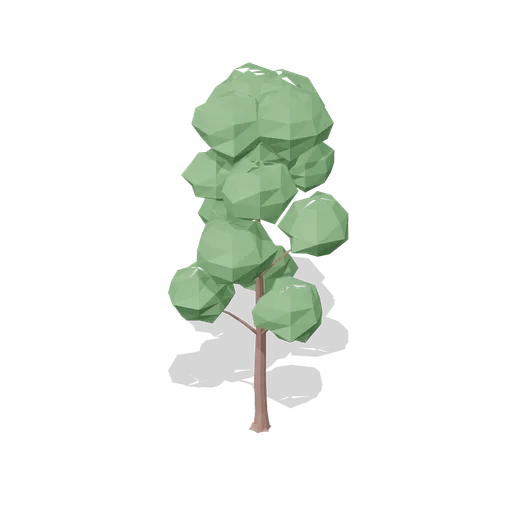
Mature wild cherry (Forest Trees and Woodland Plants)
Straight-stemmed cherry with regular whorled tiers of near-horizontal branches and a narrow oval crown. 6.94 x 15.99 x 6.74 m.
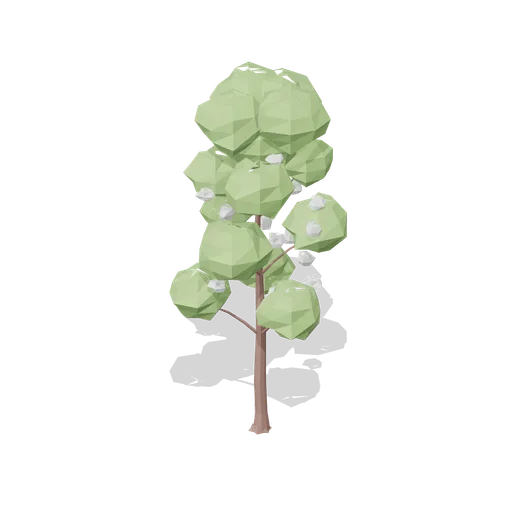
Wild cherry in blossom (Forest Trees and Woodland Plants)
Spring form of the mature wild cherry: the same skeleton with pale-green new leaf and twenty-six added blossom masses. 6.66 x 15.78 x 6.46 m.
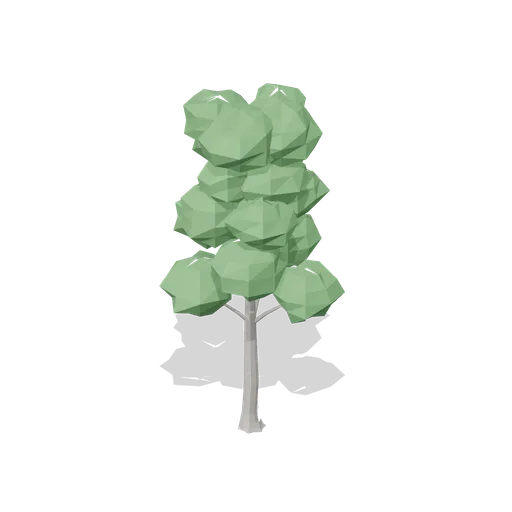
Mature common beech (Forest Trees and Woodland Plants)
Woodland-grown beech with a long smooth grey bole, a high crown of layered branches and a dense canopy. 14.31 x 27.59 x 12.55 m.
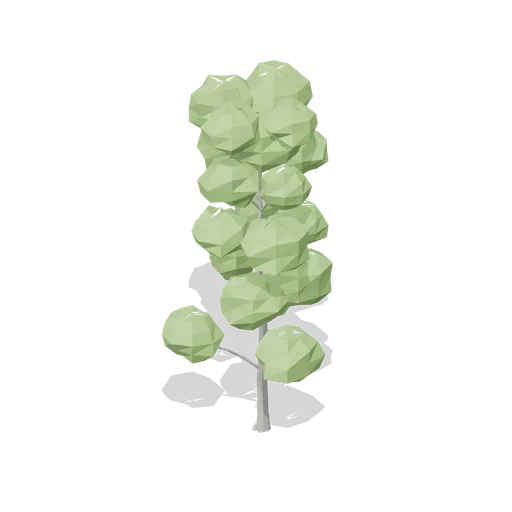
Young beech (Forest Trees and Woodland Plants)
Pole-stage beech retaining low branches: a slender stem with five tiers of thin near-level shoots. 5.36 x 12.17 x 5.47 m.
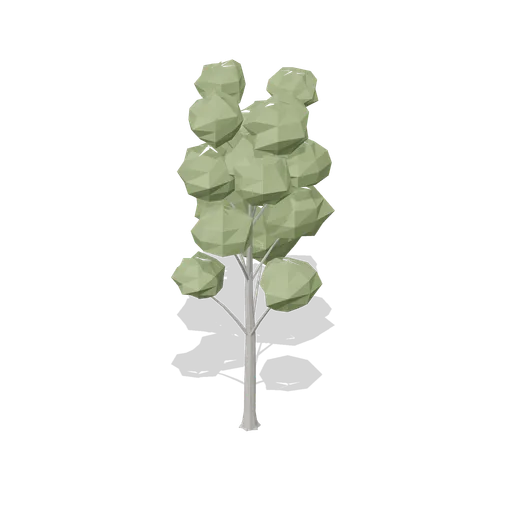
Mature common ash (Forest Trees and Woodland Plants)
Ash with a light open crown: strongly ascending limbs, wide gaps between foliage masses and an upswept outline. 11.03 x 25.47 x 11.46 m.
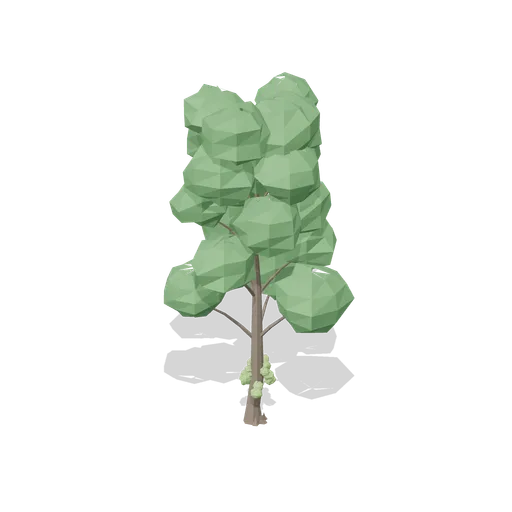
Small-leaved lime with basal shoots (Forest Trees and Woodland Plants)
Lime with a dense skirt of epicormic basal shoots round the butt beneath a tall regularly branched crown. 12.36 x 23.55 x 10.93 m.
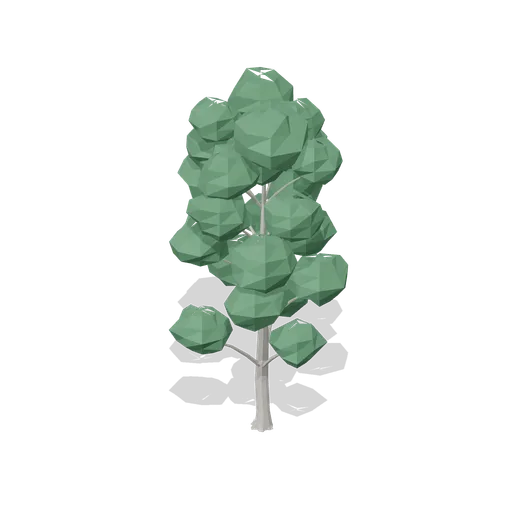
Mature hornbeam (Forest Trees and Woodland Plants)
Fluted-stemmed hornbeam with six close tiers of sinuous branches and a dense, rather narrow crown. 8.97 x 18.19 x 8.67 m.
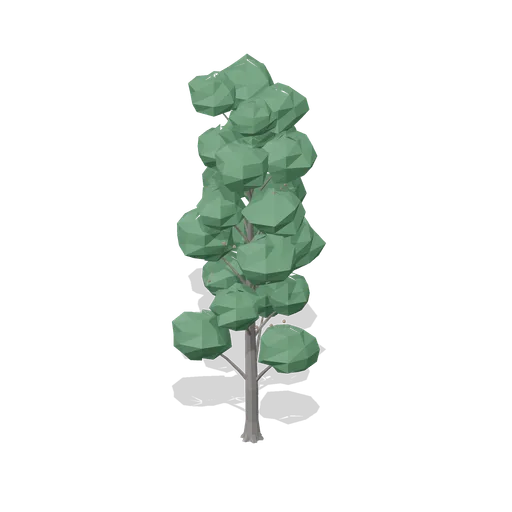
Mature common alder (Forest Trees and Woodland Plants)
Riverside alder: a narrow upright broadleaf outline of dark foliage masses with twenty-two small woody cone clusters. 6.19 x 16.61 x 5.82 m.
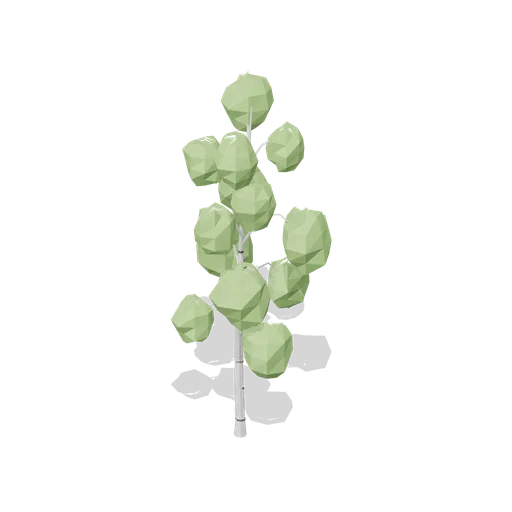
Mature silver birch (Forest Trees and Woodland Plants)
Silver birch with a white banded bole, thirteen arching branches and light drooping foliage masses. 5.52 x 14.71 x 5.78 m.
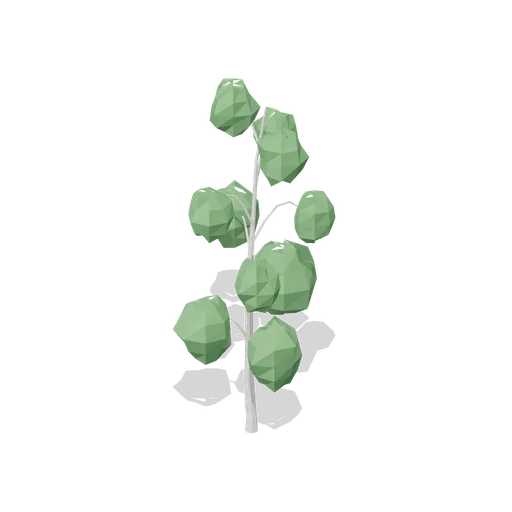
Young downy birch (Forest Trees and Woodland Plants)
Young birch with a leaning stem, upswept branches and a narrow feathered crown; no dark bark banding yet. 3.10 x 8.20 x 3.69 m.
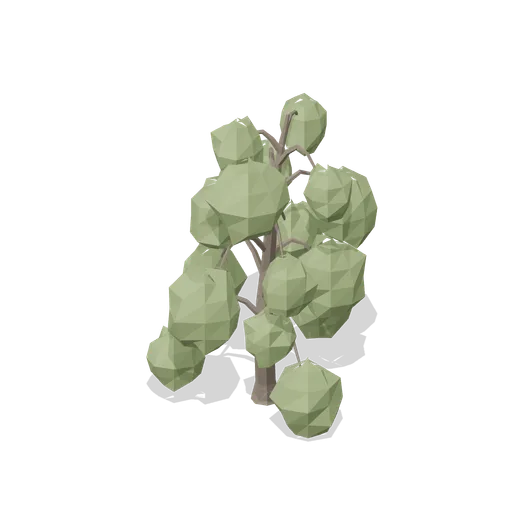
Mature white willow (Forest Trees and Woodland Plants)
Leaning waterside willow with sixteen long weeping branches and pale narrow-leaved foliage curtains. 9.19 x 12.90 x 9.59 m.
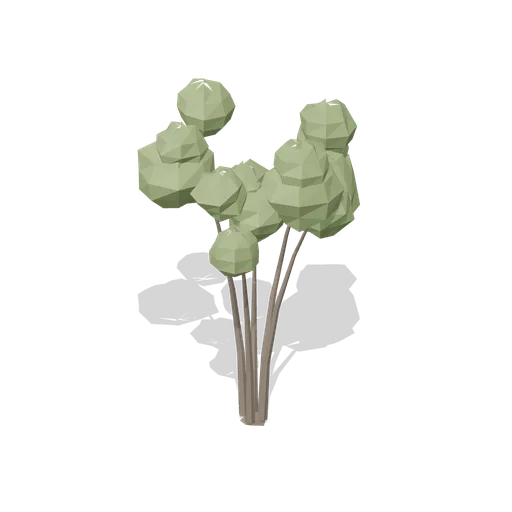
Goat willow shrub tree (Forest Trees and Woodland Plants)
Five-stemmed goat willow rising from a low stool, each stem carrying rounded foliage clumps. 5.38 x 9.09 x 5.23 m.
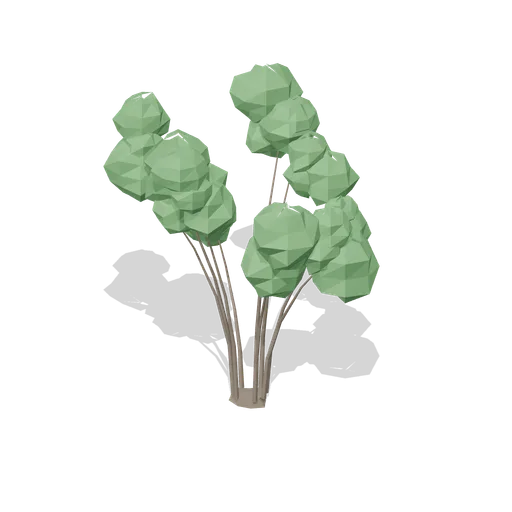
Hazel coppice stool (Forest Trees and Woodland Plants)
Nine-rod hazel stool from a broad cut base, the standard understorey unit of managed broadleaf woodland. 6.90 x 8.28 x 5.74 m.
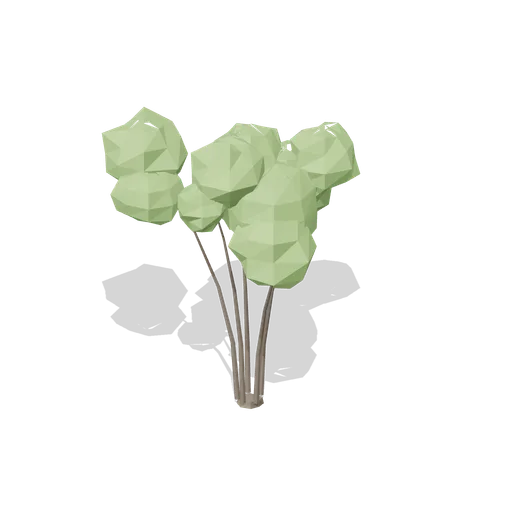
Young hazel shrub (Forest Trees and Woodland Plants)
Small five-stem hazel of regrowth height, useful for filling coppice panels cut in the last few seasons. 2.88 x 3.98 x 2.95 m.
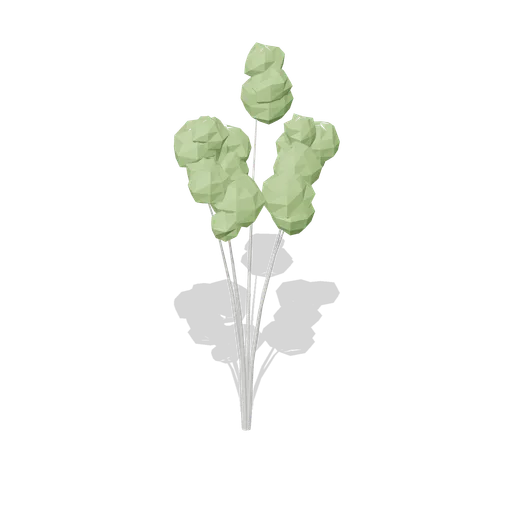
Aspen clone group (Forest Trees and Woodland Plants)
Six suckering aspen stems of staggered height from one root system, pale-barked with small fluttering crowns. 5.25 x 13.52 x 6.26 m.
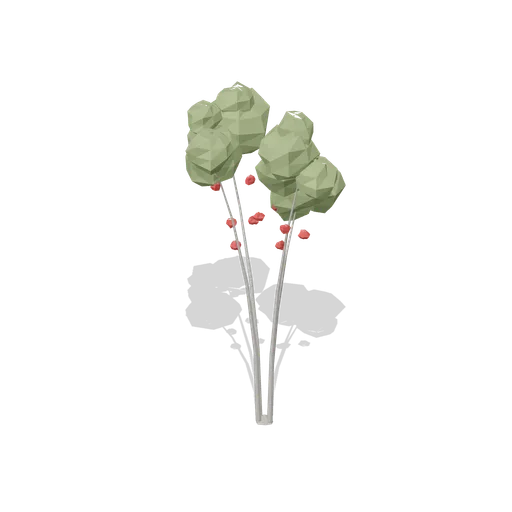
Multi-stem rowan with berries (Forest Trees and Woodland Plants)
Four-stem rowan carrying fourteen red berry clusters through a light pinnate-leaved crown. 5.12 x 9.83 x 4.95 m.
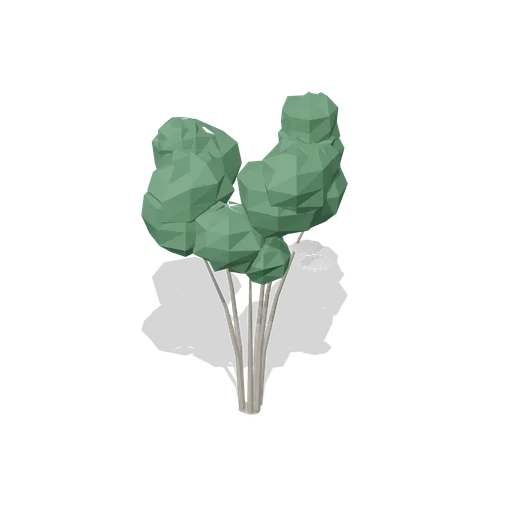
Elder shrub in flower (Forest Trees and Woodland Plants)
Sprawling elder with soft pithy stems and eleven flat creamy flower plates held above the foliage. 4.08 x 5.74 x 3.95 m.
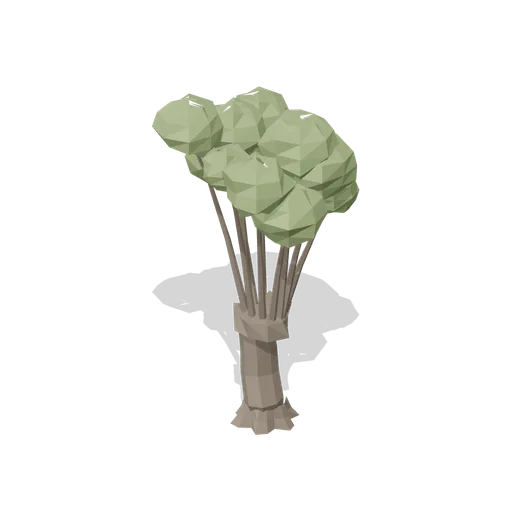
Crack willow pollard (Forest Trees and Woodland Plants)
Repeatedly cut willow: a swollen bolling, a knuckled head and eleven straight regrowth poles with narrow foliage. 4.58 x 8.29 x 4.15 m.
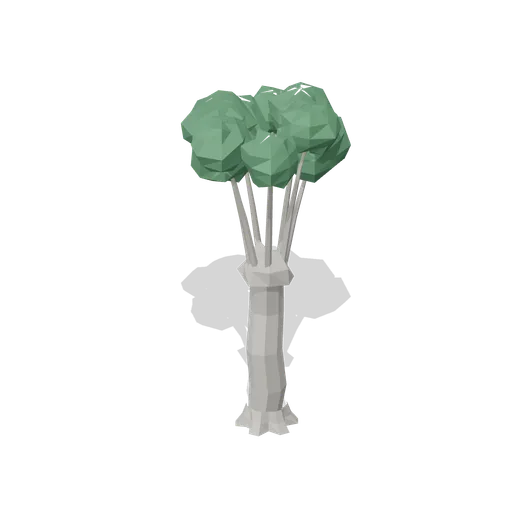
Hornbeam pollard (Forest Trees and Woodland Plants)
Wood-pasture hornbeam pollard cut above browsing height, with a hard knuckle and nine dense shoots. 3.34 x 6.68 x 3.38 m.
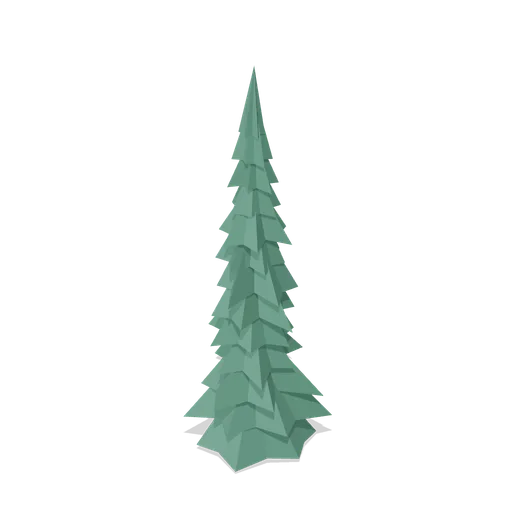
Mature Norway spruce (Forest Trees and Woodland Plants)
Full-skirted spruce with thirteen drooping whorls narrowing to a leading shoot; the classic plantation conifer. 6.59 x 23.13 x 6.80 m.
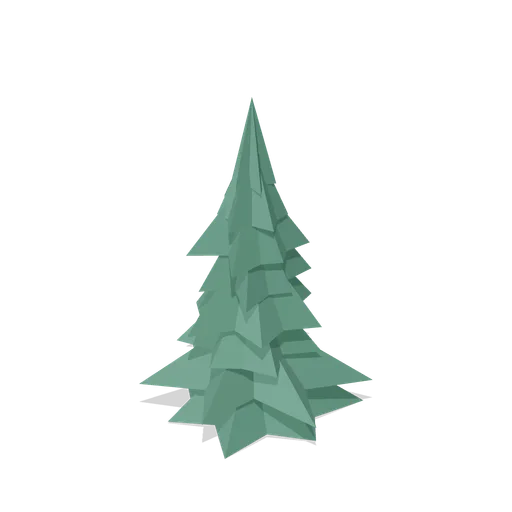
Young Norway spruce (Forest Trees and Woodland Plants)
Thicket-stage spruce, dense to the ground, for planting blocks and regeneration edges. 3.32 x 5.22 x 3.09 m.
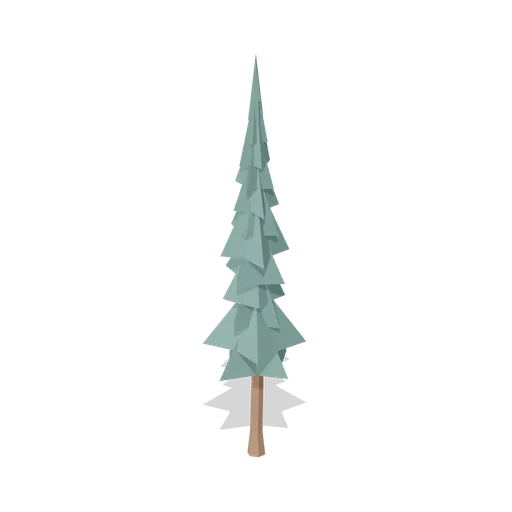
Mature Douglas fir (Forest Trees and Woodland Plants)
Tall narrow Douglas fir with a clear lower stem, twelve level whorls and a blue-green needle mass. 5.85 x 31.48 x 6.66 m.
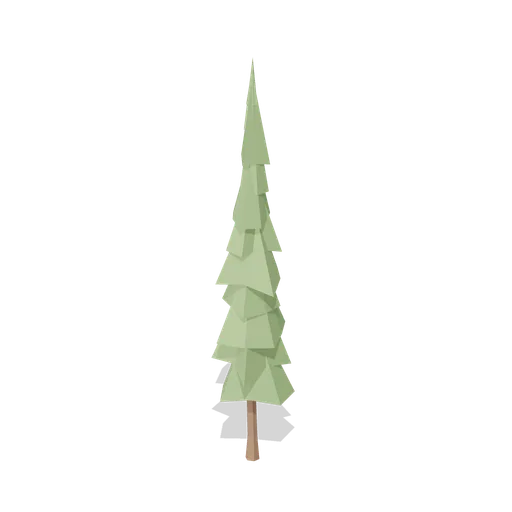
Mature European larch (Forest Trees and Woodland Plants)
Open airy larch: widely spaced drooping whorls of soft bright needles on a straight tapering stem. 4.71 x 25.17 x 5.02 m.
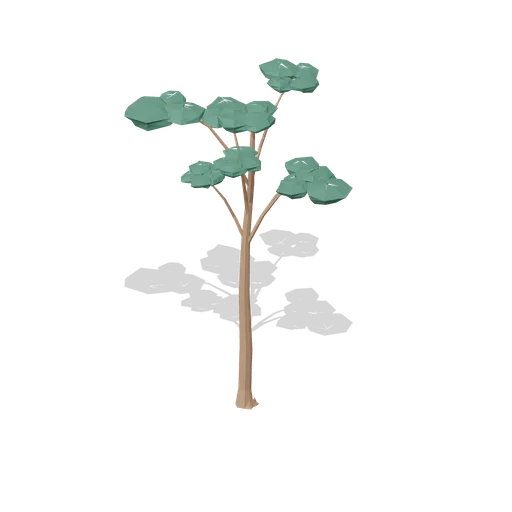
Mature Scots pine (Forest Trees and Woodland Plants)
Scots pine with a long bare orange-brown bole and a flat plated crown of seven needle pads. 11.42 x 19.41 x 11.90 m.
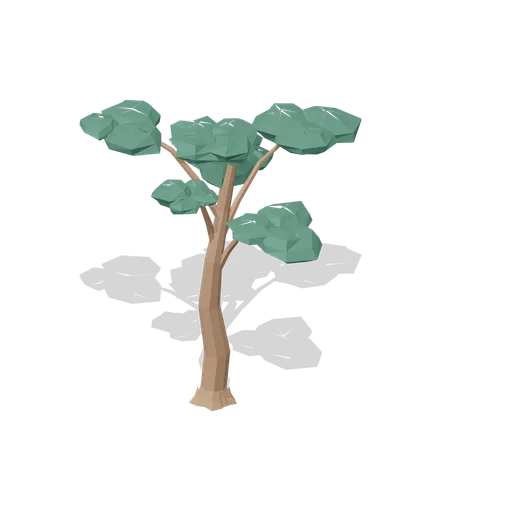
Veteran wind-shaped Scots pine (Forest Trees and Woodland Plants)
Old exposed pine with a strongly leaning fluted bole and an asymmetric five-pad crown pushed to one side. 10.57 x 13.27 x 11.14 m.
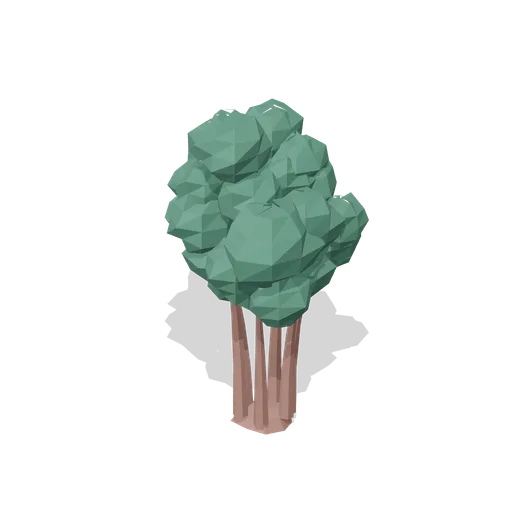
Ancient fluted yew (Forest Trees and Woodland Plants)
Ancient yew: six fused fluted stems from a massive base carrying one heavy dome of very dark evergreen foliage. 7.58 x 12.97 x 6.89 m.
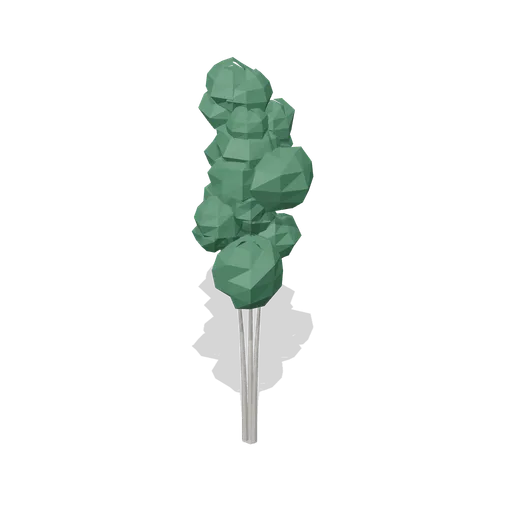
Mature holly (Forest Trees and Woodland Plants)
Dense evergreen holly: three close stems inside a tight column of very dark glossy foliage reaching near ground level. 3.68 x 11.47 x 3.35 m.
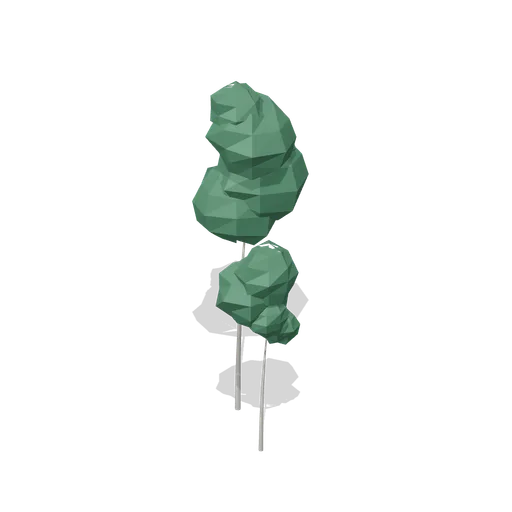
Holly sapling clump (Forest Trees and Woodland Plants)
Two young hollies of different height, the shade-tolerant regeneration layer under beech and oak. 1.26 x 2.58 x 1.23 m.

Low spreading juniper (Forest Trees and Woodland Plants)
Prostrate juniper mat of wiry stems under a low blue-green cushion, for rocky clearings and woodland edge. 2.63 x 0.69 x 2.66 m.
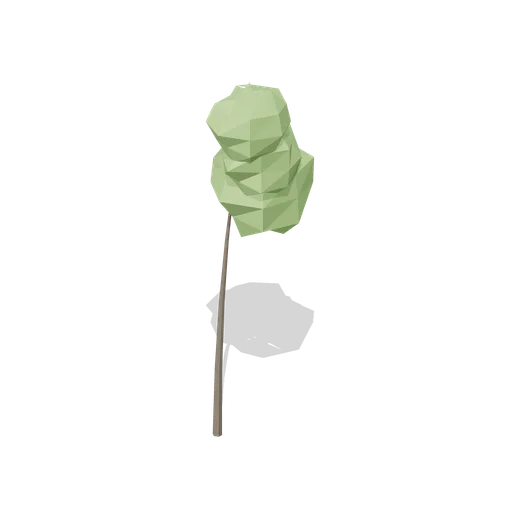
Oak sapling (Forest Trees and Woodland Plants)
Single-whip oak sapling about knee to waist height, with three small leaf clusters. 0.46 x 1.57 x 0.52 m.
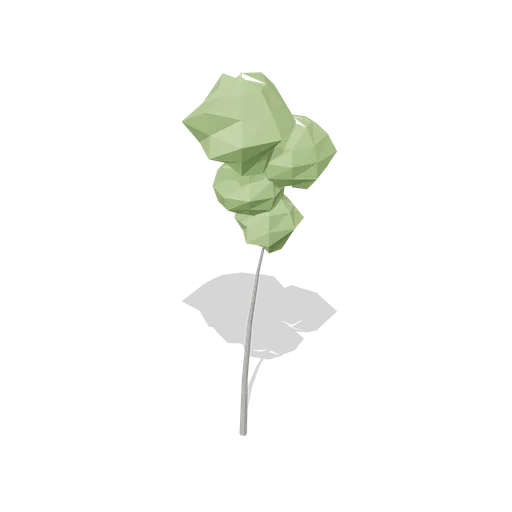
Beech sapling (Forest Trees and Woodland Plants)
Slender beech sapling with four low leaf clusters, typical of dense shade-bearing regeneration. 0.41 x 1.48 x 0.48 m.
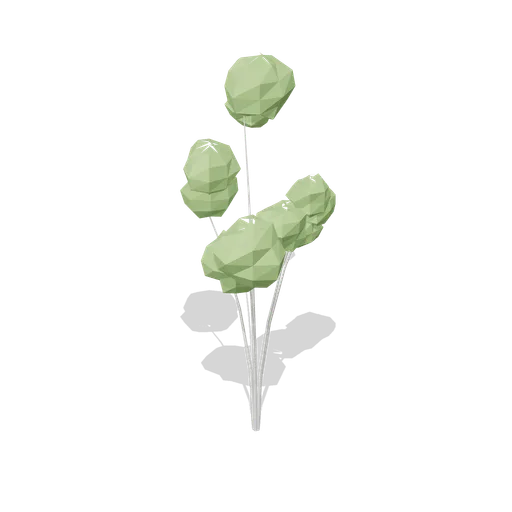
Birch sapling group (Forest Trees and Woodland Plants)
Five birch seedlings of mixed height colonising open ground; place in clearings and on disturbed soil. 1.27 x 2.76 x 1.34 m.

Spruce seedling group (Forest Trees and Woodland Plants)
Three spruce seedlings of ascending age on one footprint, for restocked and naturally seeded ground. 1.22 x 1.02 x 1.03 m.
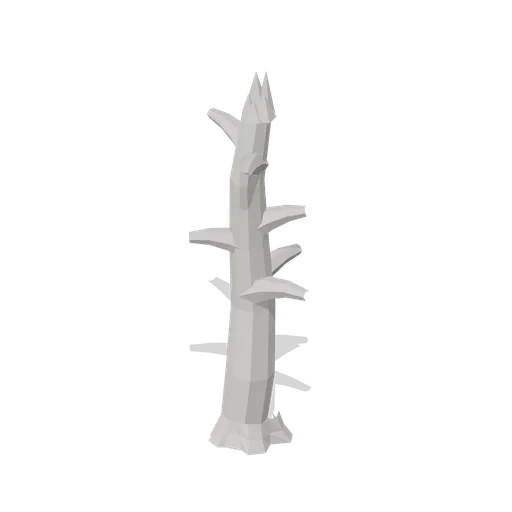
Standing oak snag (Forest Trees and Woodland Plants)
Broken standing oak trunk with six weathered limb stubs and a splintered top, key deadwood habitat. 3.03 x 8.42 x 2.54 m.
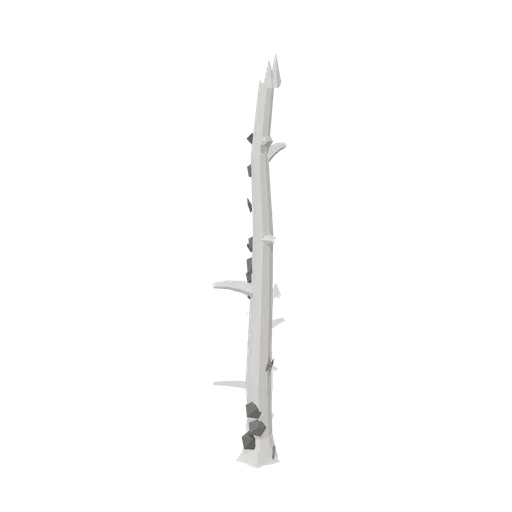
Standing birch snag (Forest Trees and Woodland Plants)
Dead birch still holding papery bark: a leaning stem with four stubs, split top and dark bark scars. 0.81 x 5.78 x 0.77 m.
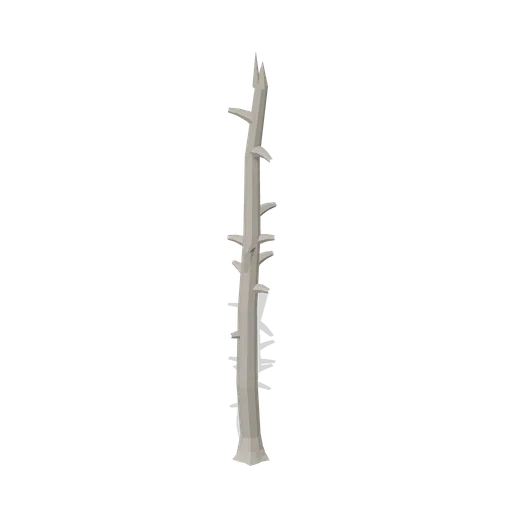
Standing spruce snag (Forest Trees and Woodland Plants)
Bark-stripped spruce spar with eleven short down-swept stubs, from windthrow gaps and beetle-killed blocks. 1.63 x 10.32 x 1.46 m.
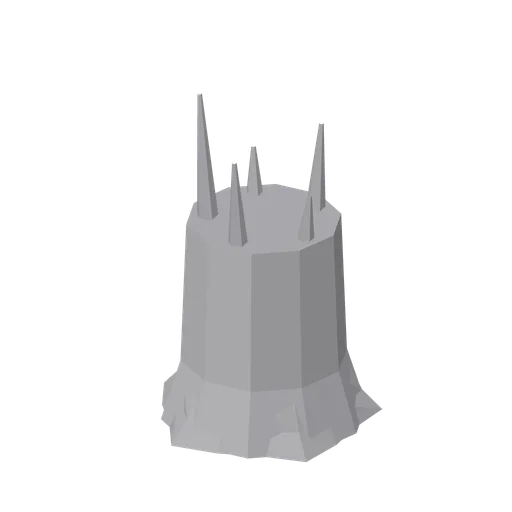
Burnt stump (Forest Trees and Woodland Plants)
Charred stump with five burnt spikes above the break; for fire-damaged clearings and charcoal sites. 1.14 x 1.79 x 1.13 m.
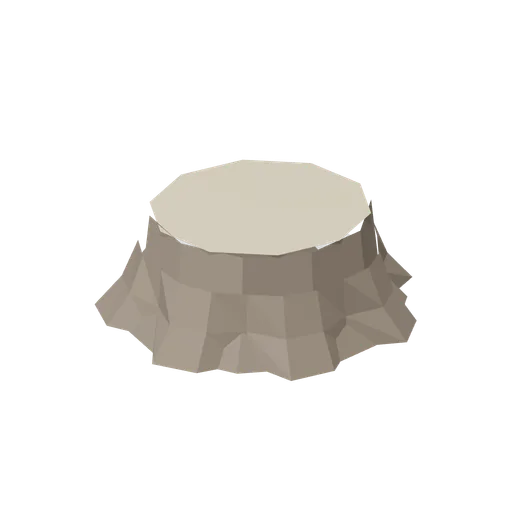
Sawn oak stump (Forest Trees and Woodland Plants)
Freshly sawn oak stump with a pale flat cut face, a slight fall away and seven root buttresses. 1.50 x 0.54 x 1.51 m.
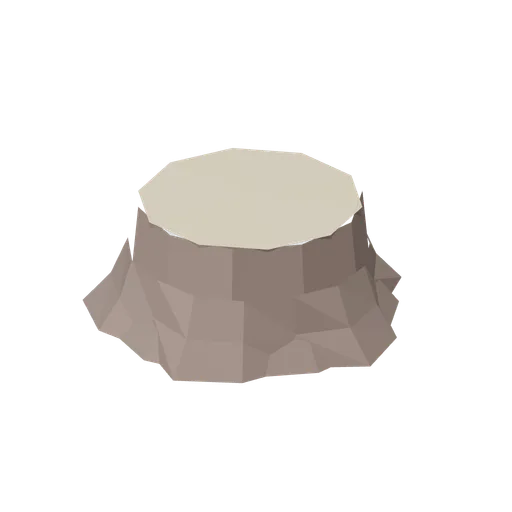
Sawn conifer stump (Forest Trees and Woodland Plants)
Low sawn spruce stump left by thinning work, with a clean pale face and shallow surface roots. 0.87 x 0.35 x 0.86 m.
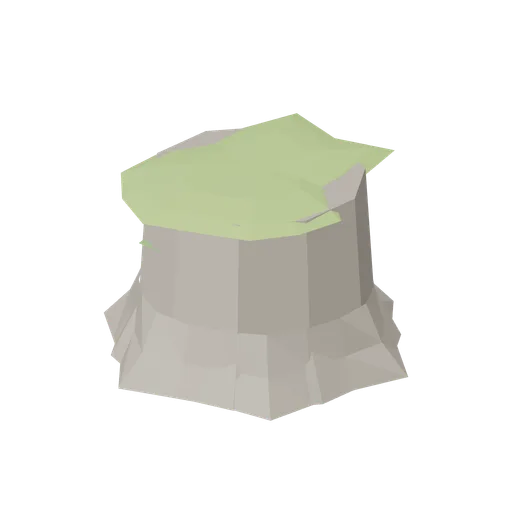
Decayed mossy stump (Forest Trees and Woodland Plants)
Soft rotted stump with a moss cap and moss patches down the flanks; the late stage of stump decay. 1.30 x 0.82 x 1.36 m.
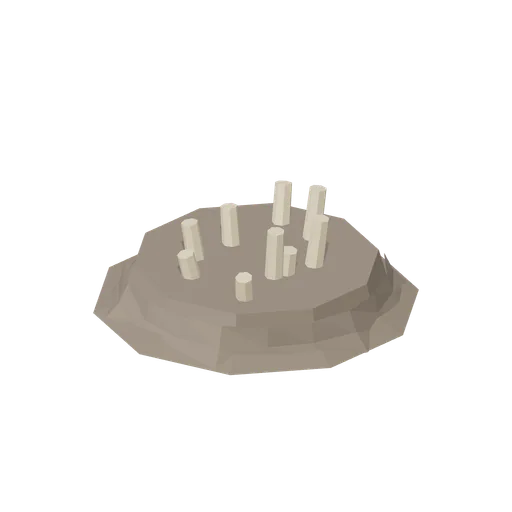
Freshly cut hazel stool (Forest Trees and Woodland Plants)
Hazel stool cut this winter: nine pale angled stubs on a broad low base, the counterpart to the standing stool. 1.45 x 0.47 x 1.51 m.
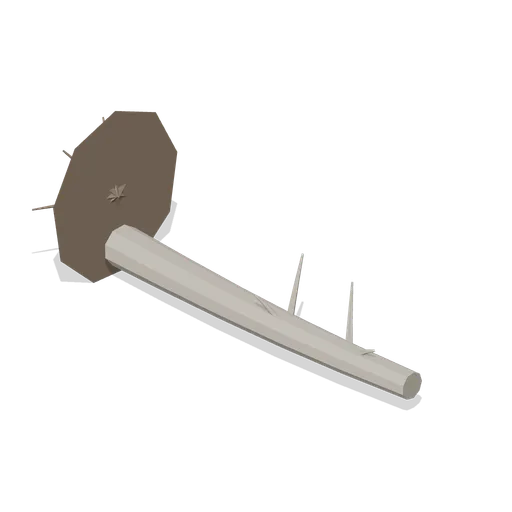
Fallen oak trunk with root plate (Forest Trees and Woodland Plants)
Windthrown oak lying along its length with four broken limb stubs and an upturned root plate at the butt. 10.54 x 4.07 x 3.93 m.
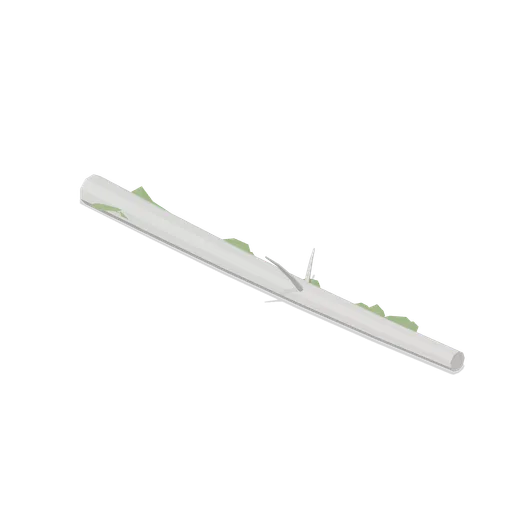
Mossy fallen birch log (Forest Trees and Woodland Plants)
Fallen birch settled into the litter, with moss colonising the upper surface and two short branch stubs. 5.61 x 0.99 x 1.25 m.
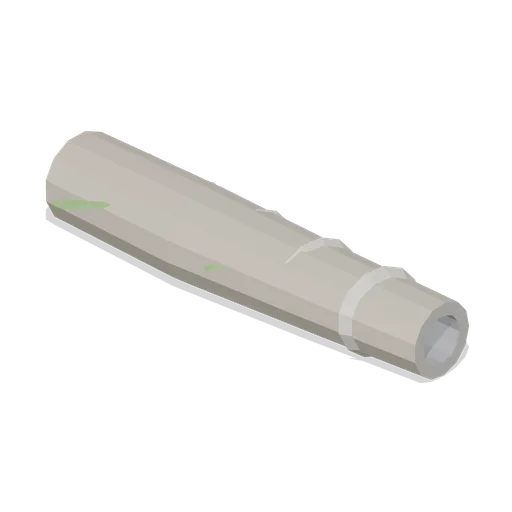
Hollow rotting log (Forest Trees and Woodland Plants)
Decayed log three and a half metres long with dark hollow recesses at both ends, shed bark bands and a moss pad on top. 3.54 x 0.72 x 0.96 m.
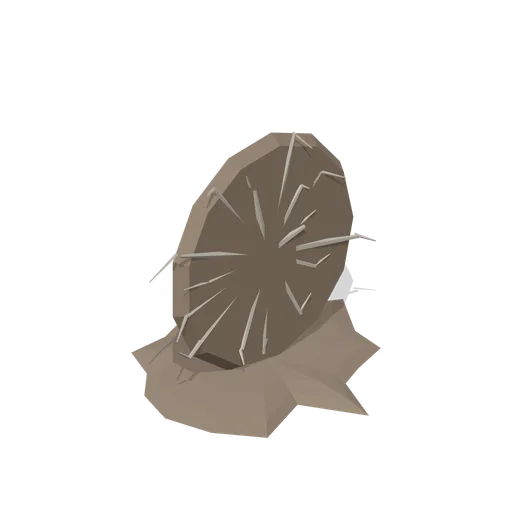
Upturned root plate (Forest Trees and Woodland Plants)
Free-standing root plate torn vertical by windthrow: a soil disc laced with thirteen broken roots above a shallow pit rim. 4.72 x 4.04 x 5.43 m.
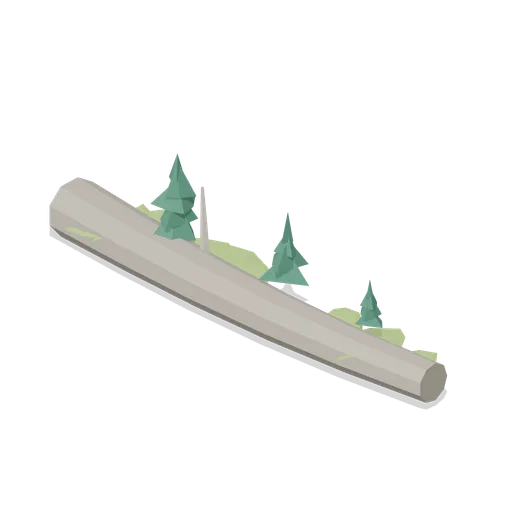
Nurse log with seedlings (Forest Trees and Woodland Plants)
Moss-covered fallen log carrying three spruce seedlings rooted along its crown, regeneration on decaying wood. 4.65 x 1.27 x 0.98 m.
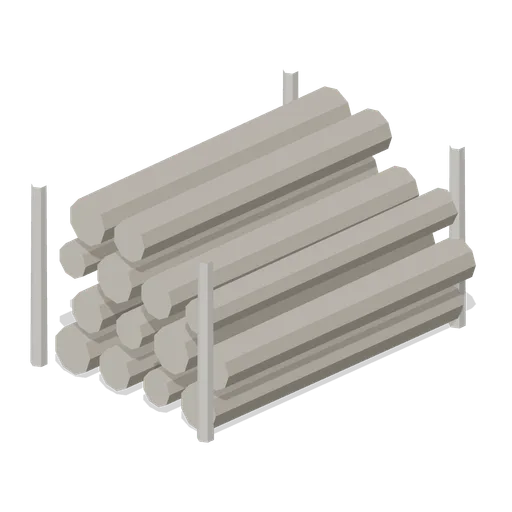
Stacked cordwood pile (Forest Trees and Woodland Plants)
Four-by-four stack of two-metre roundwood held between four driven stakes; a forestry ride-side timber pile. 1.57 x 1.18 x 2.14 m.
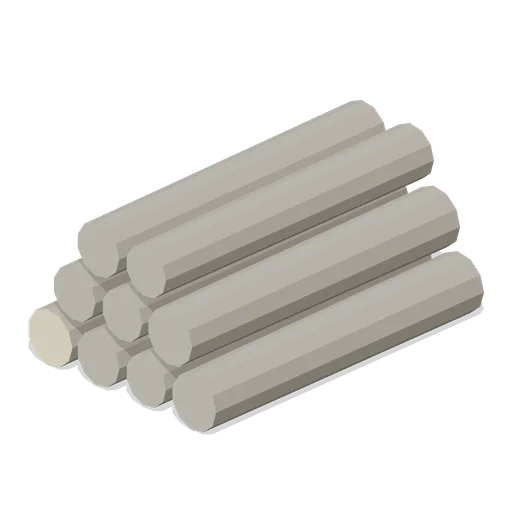
Large sawlog stack (Forest Trees and Woodland Plants)
Nine large sawlogs stacked three-two-three-one against a landing bank, with visible pale end grain. 3.40 x 2.37 x 4.82 m.

Brash pile (Forest Trees and Woodland Plants)
Low heap of thirty lopped branches with side twigs from thinning work, about two and a half metres across and knee high. 2.39 x 0.87 x 2.60 m.
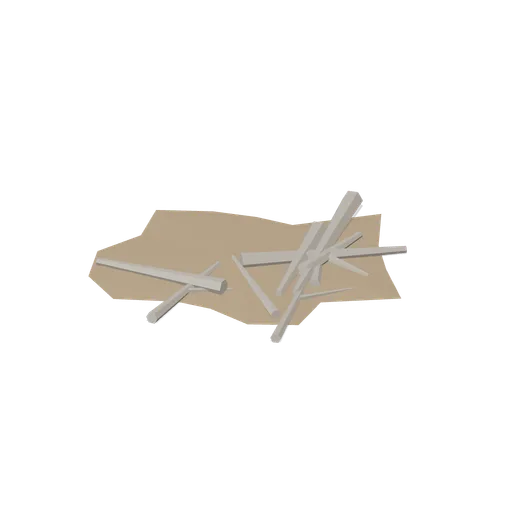
Fallen branch scatter (Forest Trees and Woodland Plants)
Nine loose fallen branches lying on a litter patch, ground clutter for paths, clearings and camp sites. 2.63 x 0.16 x 2.83 m.

Shed bark slabs (Forest Trees and Woodland Plants)
Six curved bark plates shed from a dead conifer, lying overlapped on the ground beneath the stem. 1.05 x 0.21 x 1.37 m.
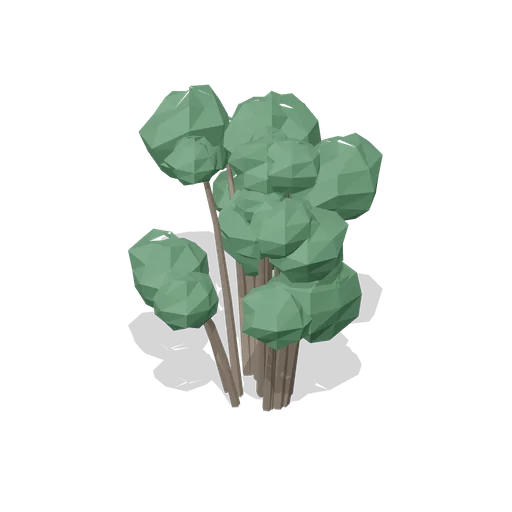
Wind-shaped hawthorn (Forest Trees and Woodland Plants)
Thorny hawthorn with twenty-two twisted stems and a dense flat-topped crown pruned by exposure. 3.98 x 4.24 x 3.92 m.
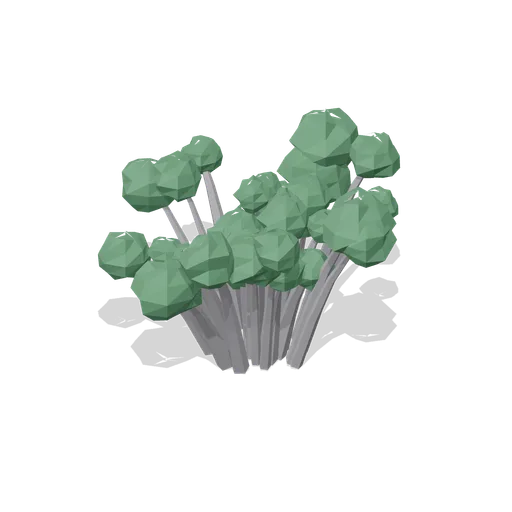
Blackthorn thicket (Forest Trees and Woodland Plants)
Impenetrable suckering blackthorn: thirty near-vertical dark stems with thorn spurs and a low even top. 4.76 x 3.30 x 4.60 m.
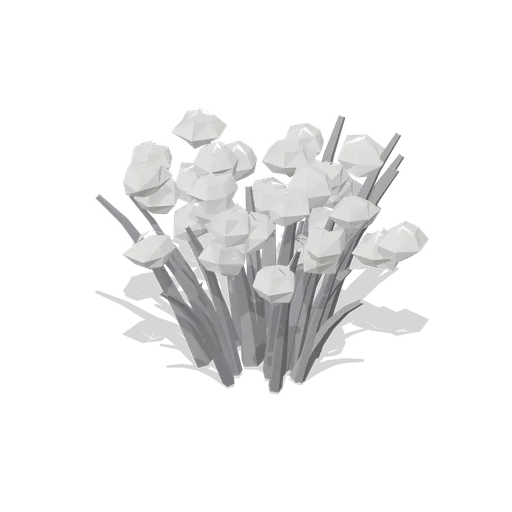
Blackthorn in blossom (Forest Trees and Woodland Plants)
Leafless March form of the blackthorn thicket: bare dark stems carrying thirty white blossom masses. 4.11 x 3.03 x 3.85 m.
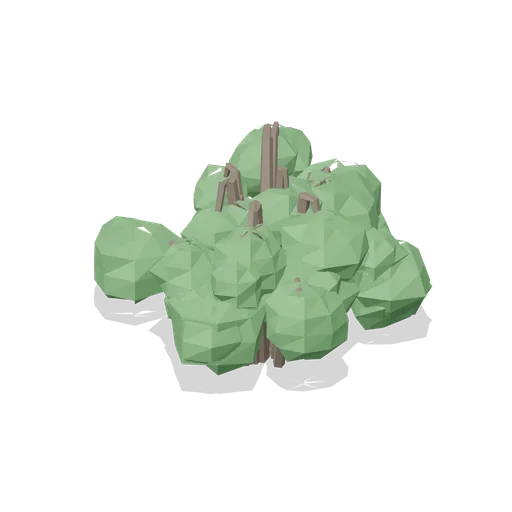
Bramble thicket (Forest Trees and Woodland Plants)
Arching bramble mound of twenty-six rooting canes with a rough leafy surface; blocks access at knee to chest height. 3.44 x 2.14 x 3.30 m.
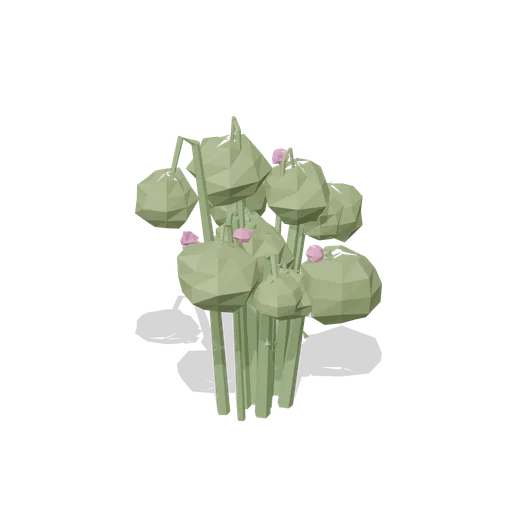
Dog rose shrub (Forest Trees and Woodland Plants)
Scrambling dog rose with thirteen arching prickly canes and nine pale pink flower heads. 2.22 x 3.16 x 2.77 m.
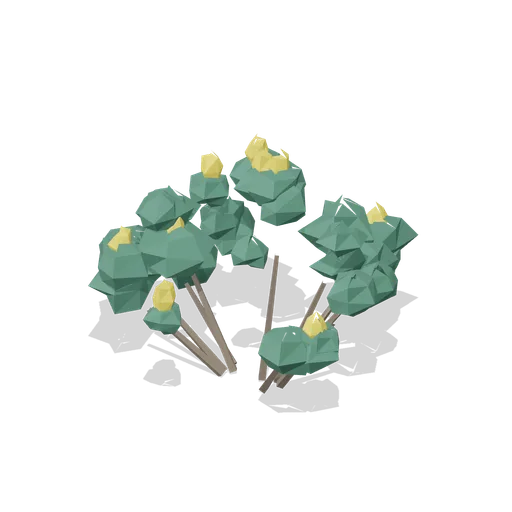
Gorse bush (Forest Trees and Woodland Plants)
Spiny gorse dome of thirty stems with dark green shoots and scattered yellow flower clusters. 2.36 x 1.94 x 2.28 m.
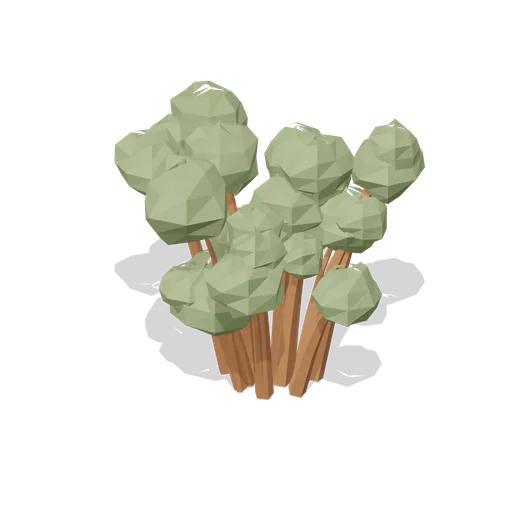
Red-stemmed dogwood thicket (Forest Trees and Woodland Plants)
Winter-red dogwood: twenty-four straight rust-coloured stems in a tight clump with sparse foliage. 2.82 x 2.69 x 2.73 m.
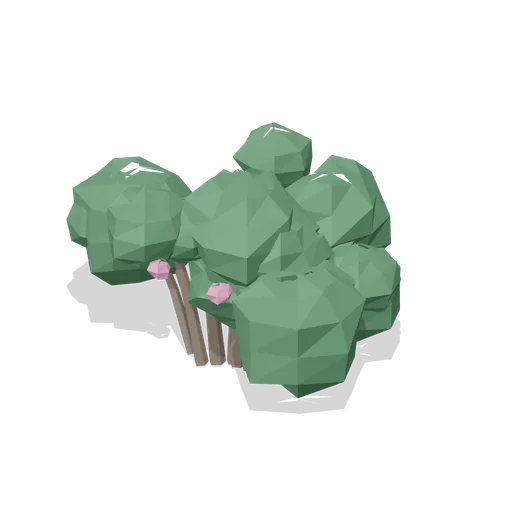
Rhododendron clump (Forest Trees and Woodland Plants)
Dense evergreen rhododendron with sixteen sinuous stems, heavy dark foliage and eight purple-pink flower trusses. 6.42 x 4.09 x 5.03 m.
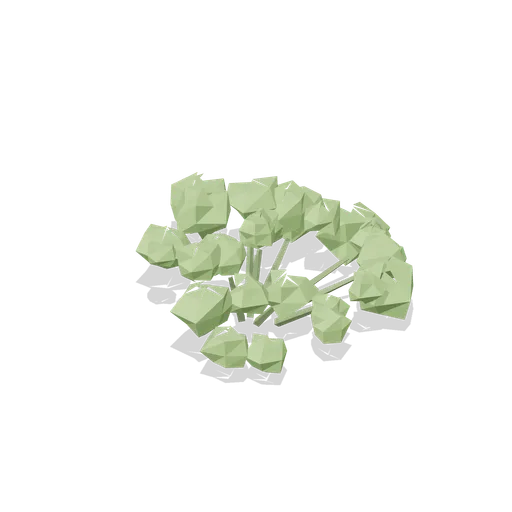
Bilberry mound (Forest Trees and Woodland Plants)
Low bilberry cushion of twenty-six green wiry stems, the characteristic acid-woodland field layer. 1.33 x 0.52 x 1.36 m.
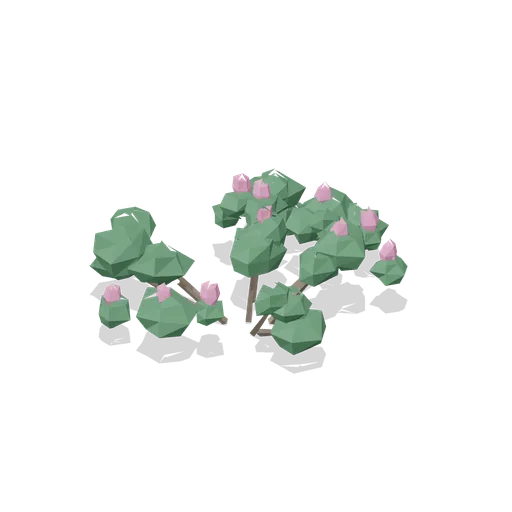
Heather clump (Forest Trees and Woodland Plants)
Woody heather clump with thirty fine upright stems and small purple flower spikes at the tips. 1.05 x 0.51 x 1.20 m.
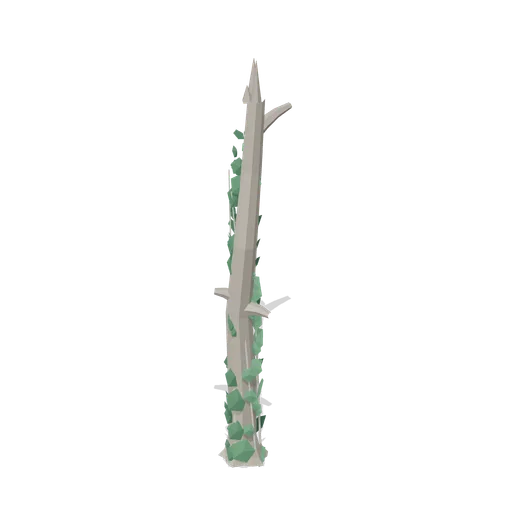
Ivy-clad standing stem (Forest Trees and Woodland Plants)
Dead stem completely sheathed in ivy: ninety overlapping leaf plates and five visible climbing stems. 1.05 x 6.97 x 1.12 m.
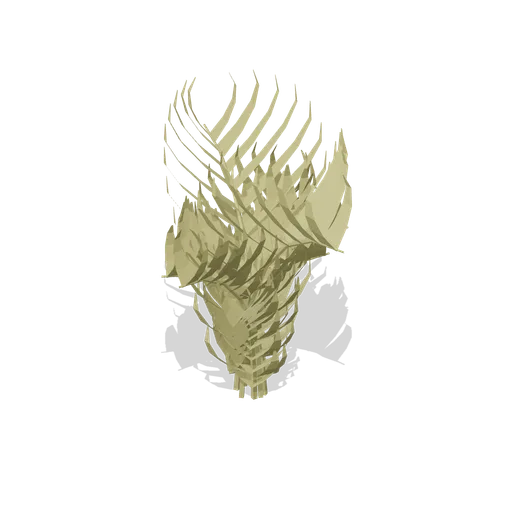
Bracken clump (Forest Trees and Woodland Plants)
Nine bracken fronds on long stipes forming a waist-high shuttlecock, the dominant fern of acid clearings. 1.32 x 1.31 x 1.02 m.
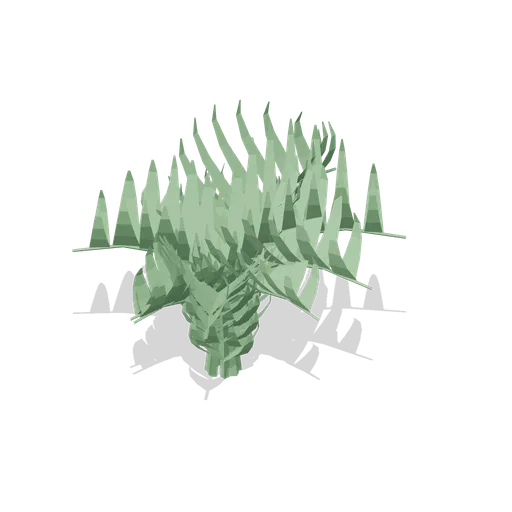
Male fern clump (Forest Trees and Woodland Plants)
Twelve arching fronds in a tight shuttlecock about eighty centimetres high, for damp shaded banks. 0.95 x 0.74 x 0.96 m.
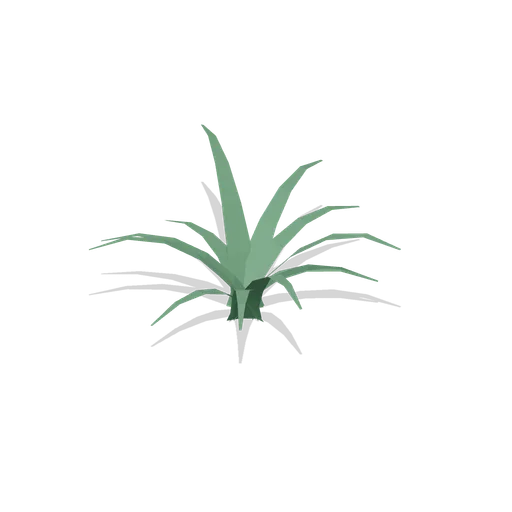
Hart's tongue fern clump (Forest Trees and Woodland Plants)
Eleven undivided strap leaves in a shining rosette; the ferns of limestone banks and shaded gullies. 0.95 x 0.35 x 0.88 m.
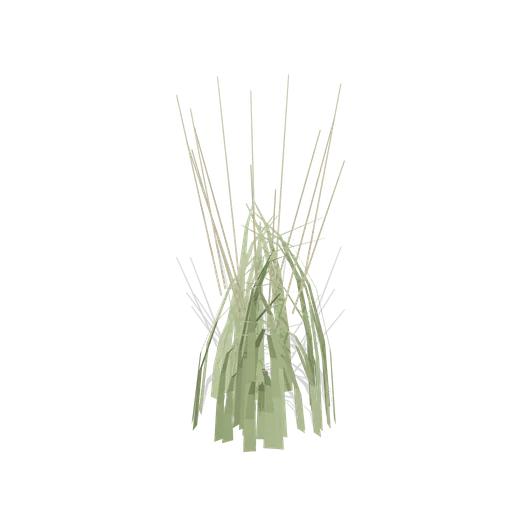
Tufted hair grass (Forest Trees and Woodland Plants)
Dense tussock of forty-six blades with fourteen tall flowering stems above; a metre-high wet-woodland grass. 0.75 x 1.14 x 0.72 m.
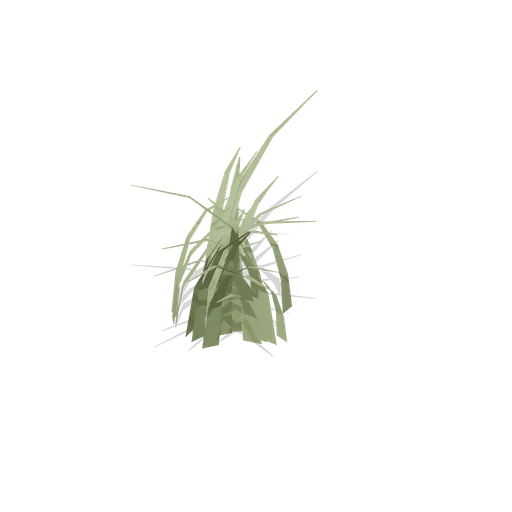
Wood sedge clump (Forest Trees and Woodland Plants)
Lax sedge clump of thirty-two broad arching blades that fall well outside the crown; for shaded ride edges. 0.90 x 0.56 x 1.27 m.
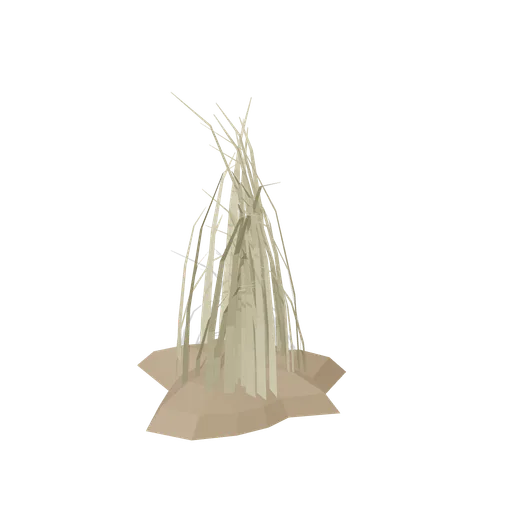
Purple moor grass tussock (Forest Trees and Woodland Plants)
Tall stiff tussock of fifty-four upright straw-coloured blades on a raised litter base, typical of wet flushes. 0.86 x 1.01 x 0.79 m.
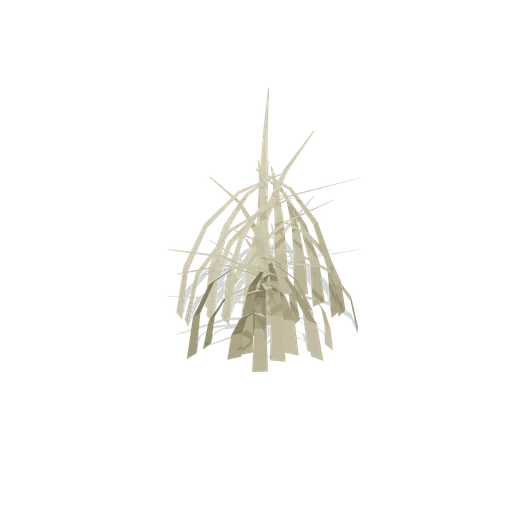
Dry grass tussock (Forest Trees and Woodland Plants)
Collapsed straw-coloured grass tuft spilling outward, for path verges, clearings and late-season ground. 0.97 x 0.47 x 1.08 m.
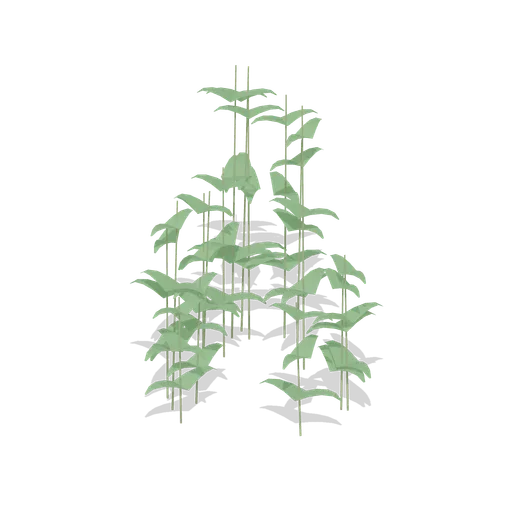
Nettle patch (Forest Trees and Woodland Plants)
Sixteen nettle stems with opposite paired leaves in a chest-high patch, marking nutrient-rich disturbed ground. 1.30 x 1.39 x 1.33 m.
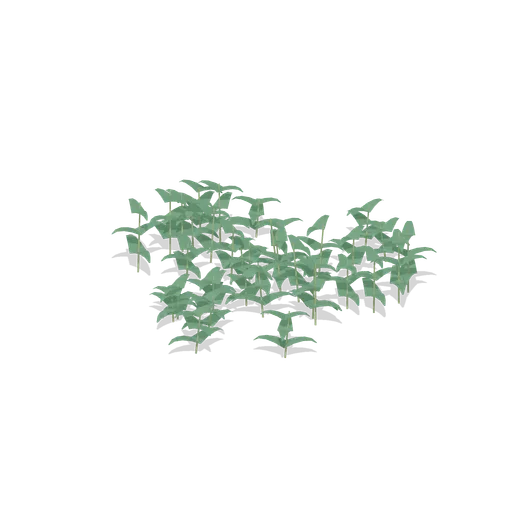
Dog's mercury carpet (Forest Trees and Woodland Plants)
Low even sward of twenty-six short leafy shoots covering 1.7 m of shaded woodland floor. 1.47 x 0.37 x 1.67 m.
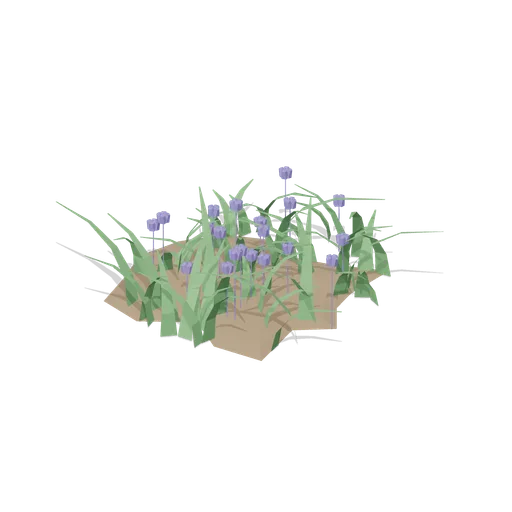
Bluebell carpet (Forest Trees and Woodland Plants)
Strap-leaved bluebell patch with nodding bell-shaped flower heads on 1.8 m of leaf litter. 1.88 x 0.48 x 1.67 m.
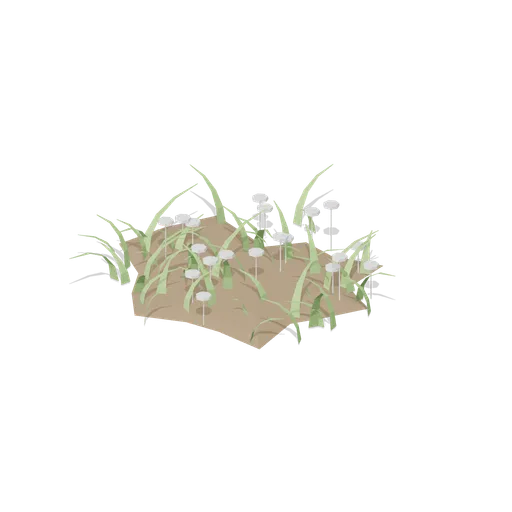
Wood anemone carpet (Forest Trees and Woodland Plants)
Early-spring anemone sheet: divided low leaves and flat open white flowers barely above the litter. 1.44 x 0.27 x 1.53 m.
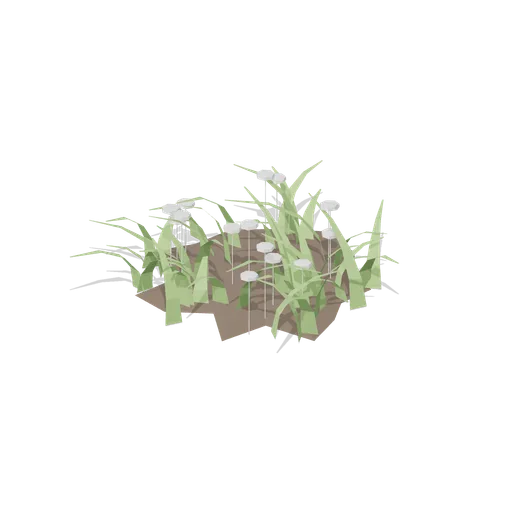
Wild garlic carpet (Forest Trees and Woodland Plants)
Broad-leaved ramsons carpet with rounded white flower heads held above the foliage on 2 m of damp soil. 2.00 x 0.55 x 2.11 m.
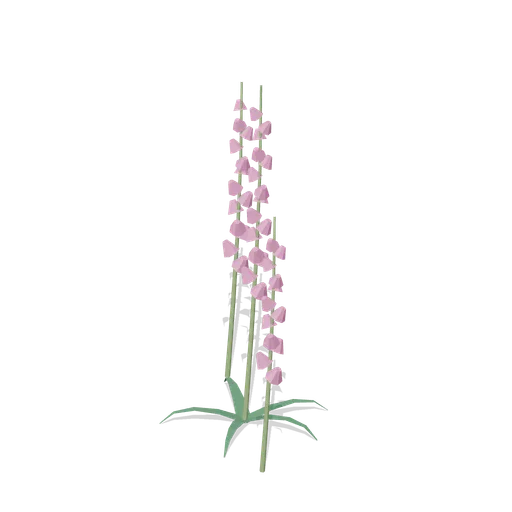
Foxglove group (Forest Trees and Woodland Plants)
Three foxglove spires of different height carrying tubular flowers down one side, over a basal leaf rosette. 0.66 x 1.25 x 0.50 m.
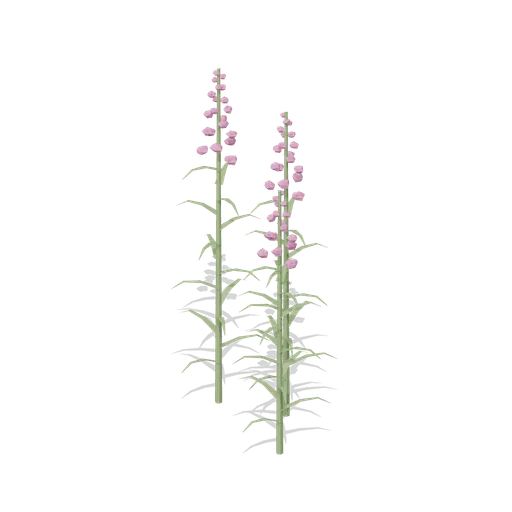
Rosebay willowherb group (Forest Trees and Woodland Plants)
Three tall slender fireweed stems with narrow pink flower spikes; a rapid coloniser of clearfell and burnt ground. 0.97 x 1.65 x 0.72 m.

Cow parsley group (Forest Trees and Woodland Plants)
Five hollow stems carrying flat lacy white umbels at about a metre, the standard ride-edge spring verge plant. 0.99 x 1.14 x 1.04 m.
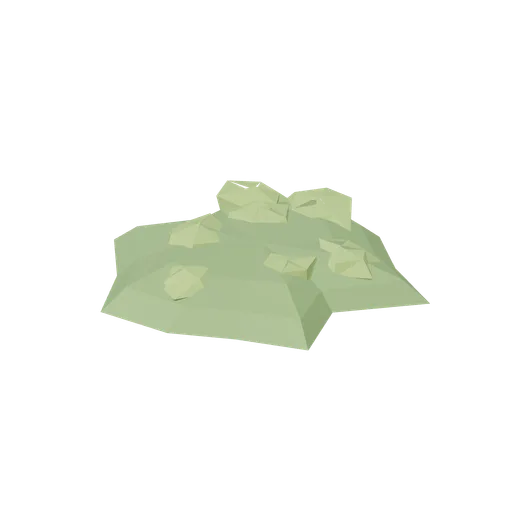
Moss mound (Forest Trees and Woodland Plants)
Soft bryophyte hummock about 1.1 m across, with seven raised cushions of brighter moss on a darker base. 1.25 x 0.23 x 1.25 m.
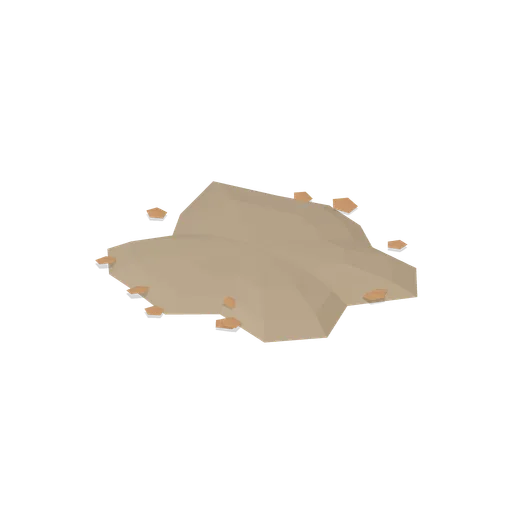
Leaf litter drift (Forest Trees and Woodland Plants)
Wind-drifted leaf litter mound with twenty-six individual rust-coloured leaves visible on the surface. 2.18 x 0.15 x 2.16 m.
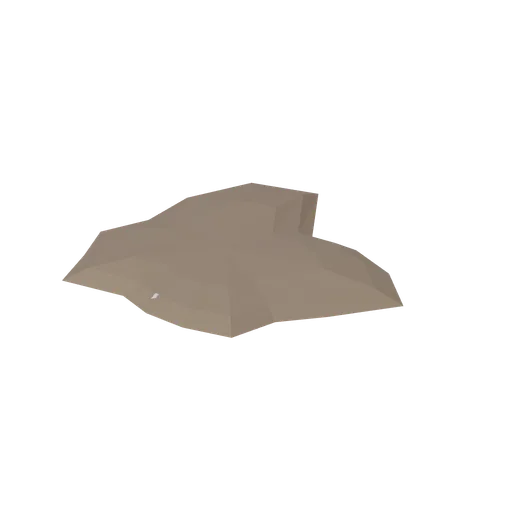
Bare soil scrape (Forest Trees and Woodland Plants)
Rooted-over patch of bare earth with exposed stones and severed roots, for boar diggings and track scrapes. 1.73 x 0.13 x 1.66 m.
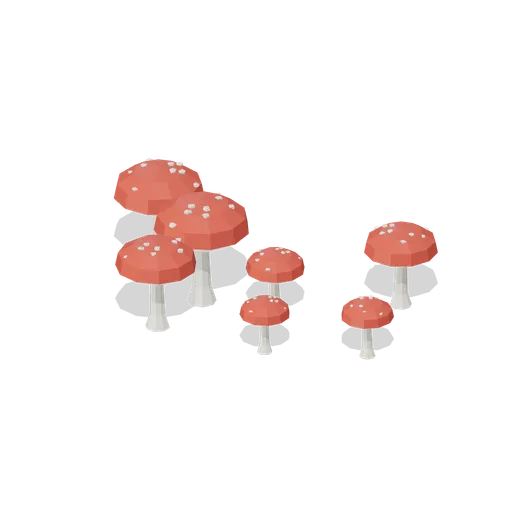
Fly agaric group (Forest Trees and Woodland Plants)
Seven red white-flecked toadstools with ringed swollen stems and warted caps, scattered over sixty centimetres. 0.69 x 0.21 x 0.53 m.
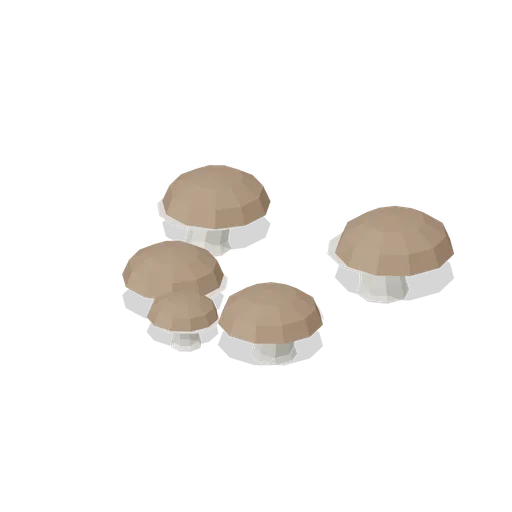
Penny bun bolete group (Forest Trees and Woodland Plants)
Five squat boletes with thick barrel stems and rounded brown caps, the classic edible under beech and oak. 0.53 x 0.14 x 0.52 m.
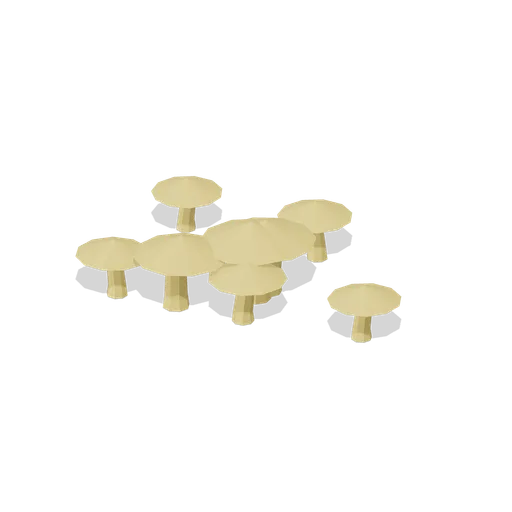
Chanterelle group (Forest Trees and Woodland Plants)
Nine small egg-yellow funnels with wavy in-rolled caps, in-rolled margins turned down at the edge. 0.41 x 0.09 x 0.31 m.
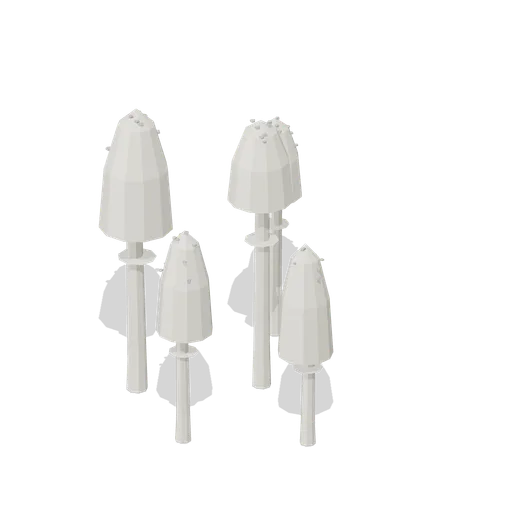
Shaggy inkcap group (Forest Trees and Woodland Plants)
Five tall cylindrical inkcaps of graded age with shaggy scaled caps, for grassy ride edges and lawns. 0.26 x 0.31 x 0.28 m.
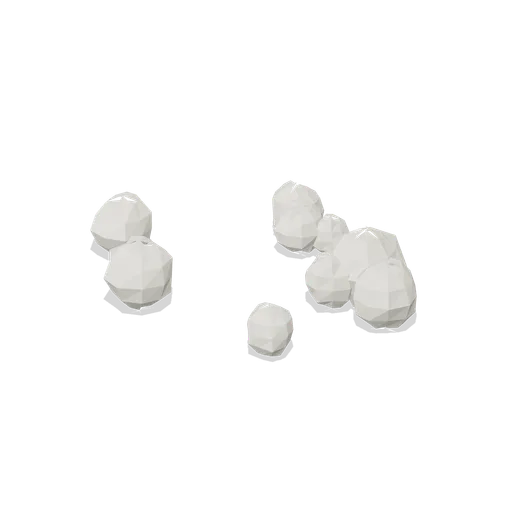
Puffball group (Forest Trees and Woodland Plants)
Nine rounded stemless puffballs of mixed size; no gills or cap, just a pale sphere resting on the ground. 0.58 x 0.14 x 0.47 m.
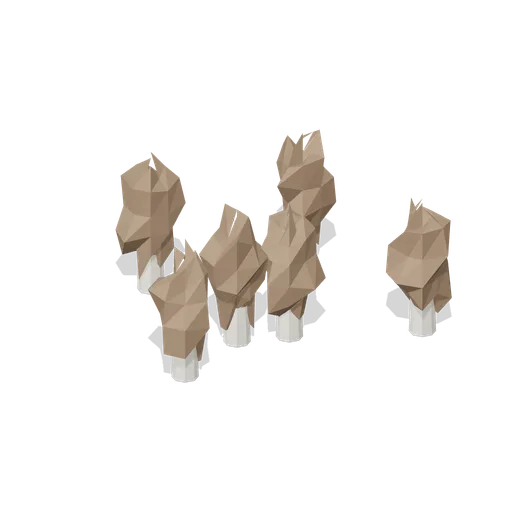
Morel group (Forest Trees and Woodland Plants)
Six morels with pale hollow stems and deeply pitted conical honeycomb heads. 0.38 x 0.18 x 0.38 m.
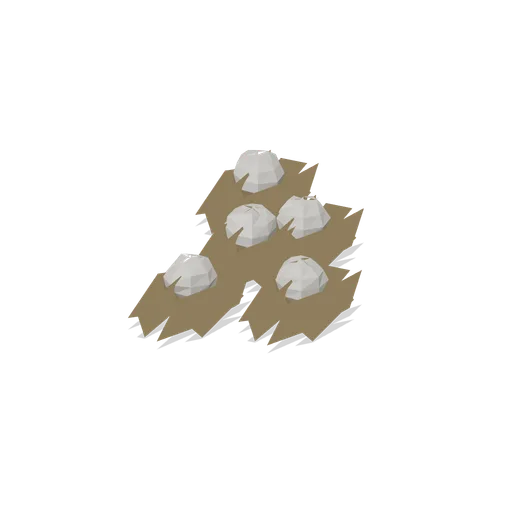
Earthstar group (Forest Trees and Woodland Plants)
Five earthstars, each a grey spore sac sitting inside seven splayed tan rays; distinctive litter-layer detail. 0.27 x 0.08 x 0.32 m.
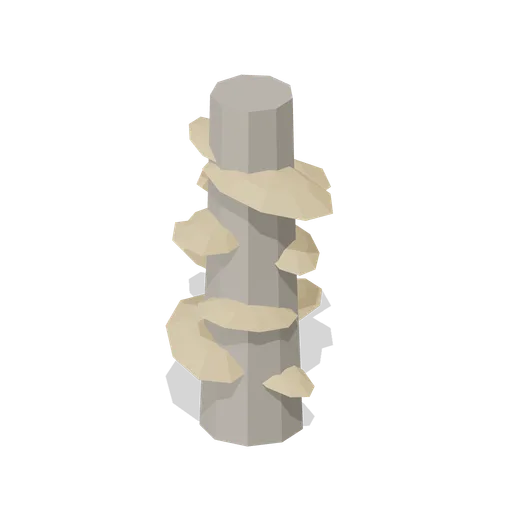
Bracket fungus on standing log (Forest Trees and Woodland Plants)
Standing dead log section carrying ten banded hoof-shaped brackets stepped up the trunk. 1.18 x 2.10 x 1.08 m.

Turkeytail-covered stump (Forest Trees and Woodland Plants)
Low decaying stump ringed by twenty-two thin overlapping fan brackets around its flanks. 1.13 x 0.45 x 1.24 m.
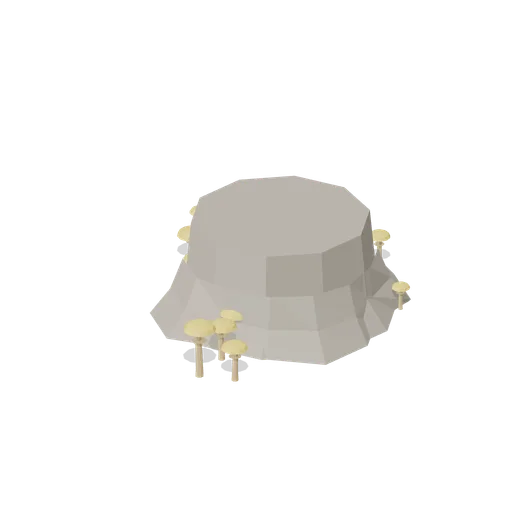
Honey fungus clump on stump (Forest Trees and Woodland Plants)
Fourteen tightly clustered honey-coloured mushrooms erupting round the base of a decaying stump. 1.06 x 0.36 x 1.24 m.
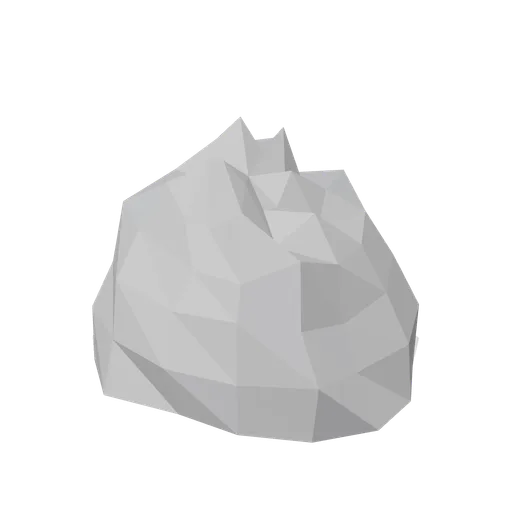
Large granite boulder (Forest Trees and Woodland Plants)
Rounded glacial erratic about two and a half metres across, faceted and flat-bedded on the ground. 2.54 x 1.88 x 2.10 m.
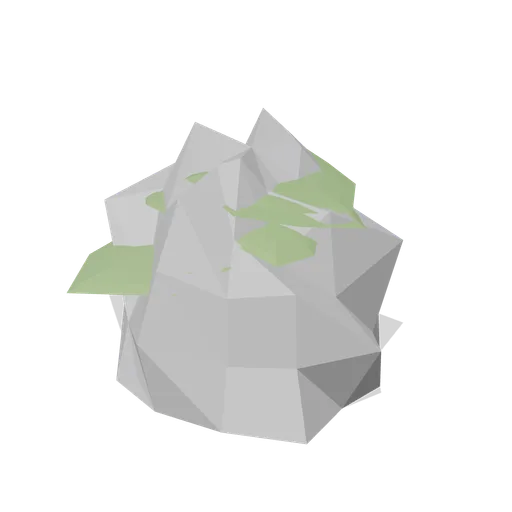
Mossy granite boulder (Forest Trees and Woodland Plants)
Medium boulder with a moss cap and five moss shelves down the shaded flanks; damp-woodland dressing. 1.68 x 1.33 x 1.54 m.
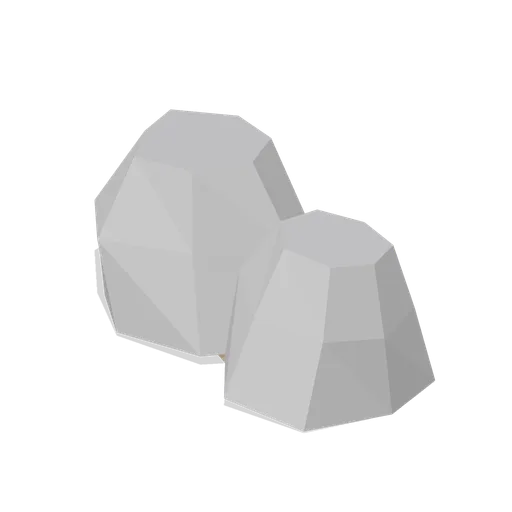
Split boulder pair (Forest Trees and Woodland Plants)
One boulder frost-split into two angular halves leaning apart, with litter gathered in the gap. 2.80 x 1.42 x 1.69 m.
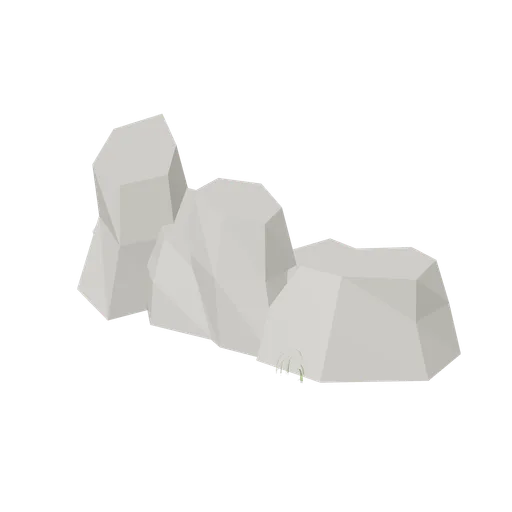
Limestone outcrop (Forest Trees and Woodland Plants)
Bedded limestone step of five stacked blocks with a grass tuft in a joint; about five metres wide. 5.26 x 1.73 x 2.57 m.
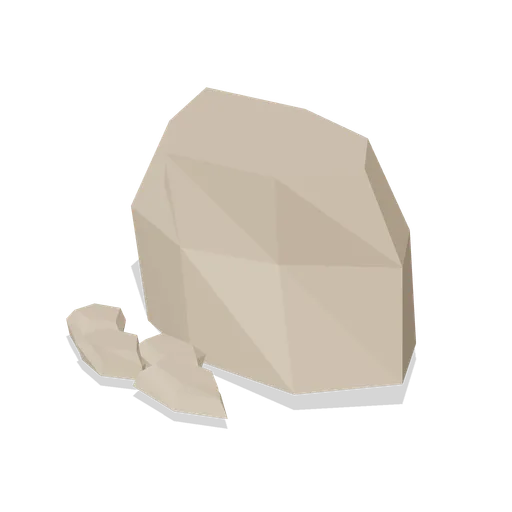
Sandstone crag slab (Forest Trees and Woodland Plants)
Leaning sandstone block over two metres high with four fallen slabs at its foot; for gorge and bank features. 3.45 x 2.54 x 2.83 m.
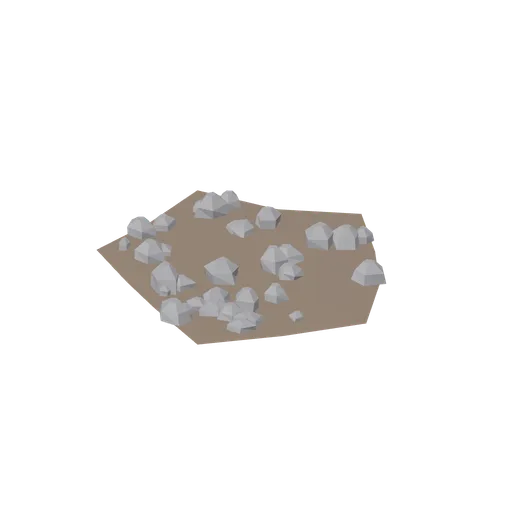
Scree scatter (Forest Trees and Woodland Plants)
Thirty-four angular frost-shattered stones spread over a three-metre soil patch below a rock face. 3.55 x 0.31 x 3.47 m.

Stream cobble bed (Forest Trees and Woodland Plants)
Twenty-six water-rounded cobbles of mixed size laid over a gravel base, for dry stream beds and fords. 3.22 x 0.37 x 3.08 m.
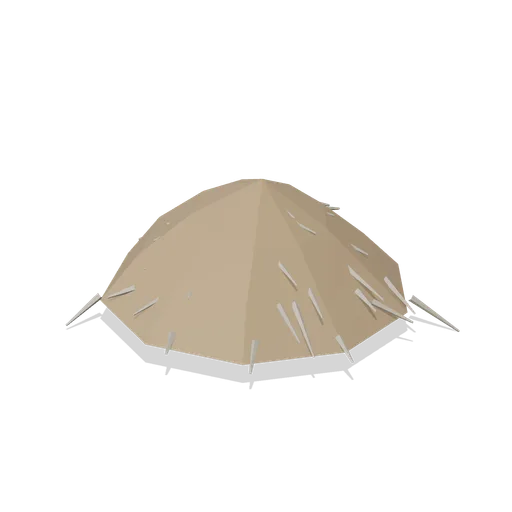
Wood ant nest mound (Forest Trees and Woodland Plants)
Conical wood ant nest of needles and twigs, 1.7 m across and 0.7 m high, with forty loose sticks on the surface. 1.90 x 0.97 x 1.81 m.
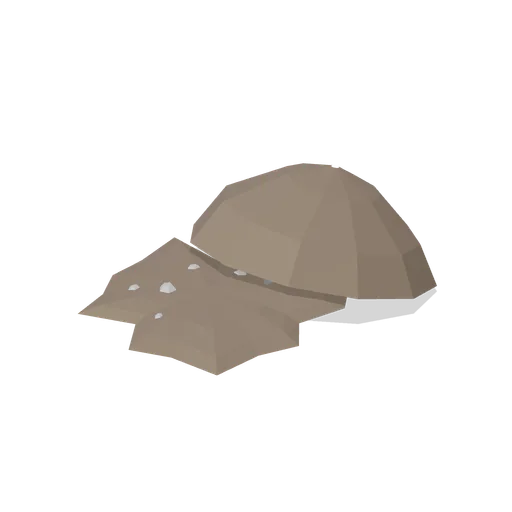
Badger sett entrance (Forest Trees and Woodland Plants)
Bank sett: an excavated spoil fan running downslope from a dark tunnel mouth cut into a soil bank, with stones thrown out below. 3.12 x 1.59 x 4.71 m.
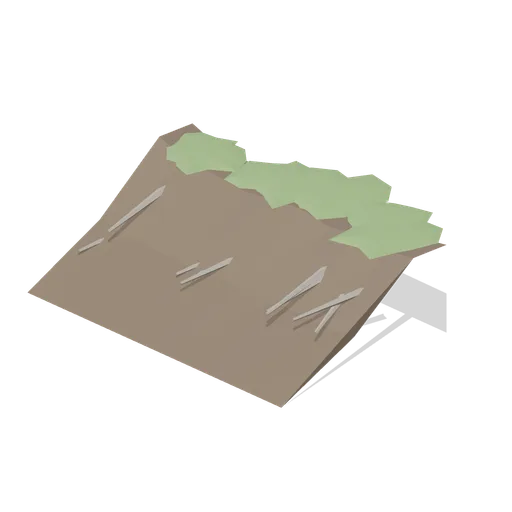
Woodland earth bank tile (Forest Trees and Woodland Plants)
Four-metre modular bank tile, one metre high, with exposed roots and moss on the crest. West and east ports at x = -2 and x = 2, type bank-4m, join tiles end to end. 4.00 x 1.20 x 3.20 m.
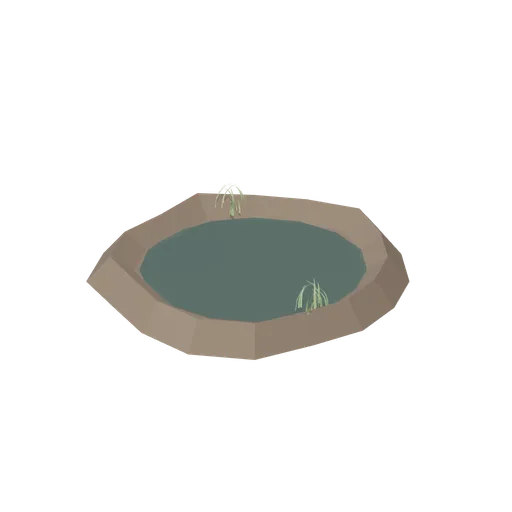
Woodland pool (Forest Trees and Woodland Plants)
Five-metre seasonal pool: a raised earth rim, a shallow basin, a still translucent water surface and two bank grass tufts. 4.68 x 0.75 x 4.96 m.
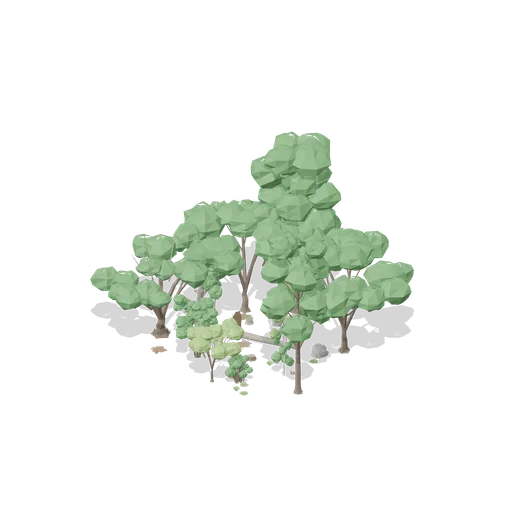
Oak woodland glade (Forest Trees and Woodland Plants)
A 30 m glade in mixed oak woodland: mature and veteran oak with birch, hazel and holly round the edge, a windthrown trunk, standing deadwood, boulders and a ground layer of ferns, moss and litter. 36 instances of 23 canonical designs on an eight-colour palette.
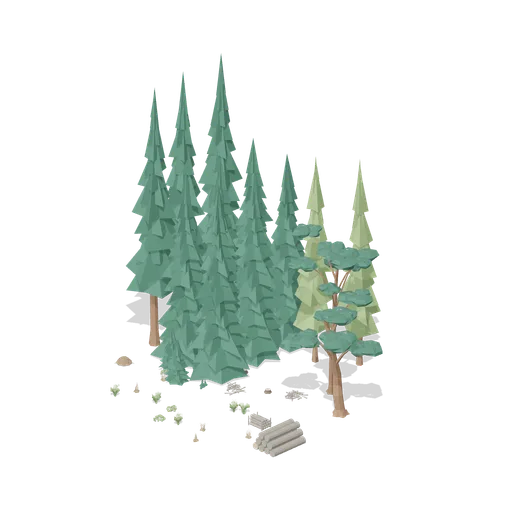
Conifer plantation edge (Forest Trees and Woodland Plants)
A worked spruce, fir and larch stand meeting an open ride: planted rows, a thinned edge with sawn stumps and brash, a cordwood stack, a sawlog landing and an ant nest, with bracken and moor grass on the ride. 40 instances of 16 canonical designs.
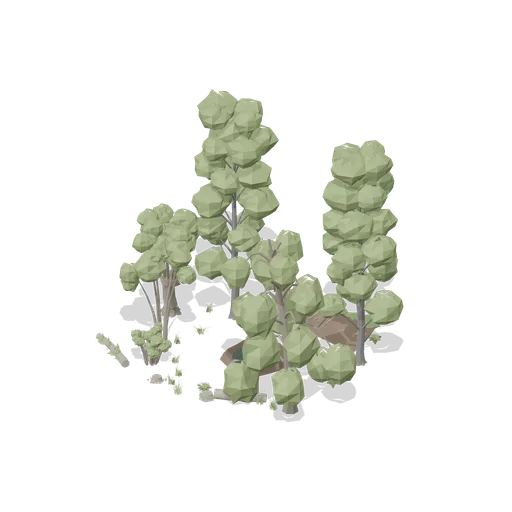
Wet woodland pool (Forest Trees and Woodland Plants)
A pool in a hollow of alder and willow carr, with two modular earth-bank tiles joined along the north side, sedge and hair grass at the margin, hollow deadwood and two fungus-covered stumps. 32 instances of 14 canonical designs.
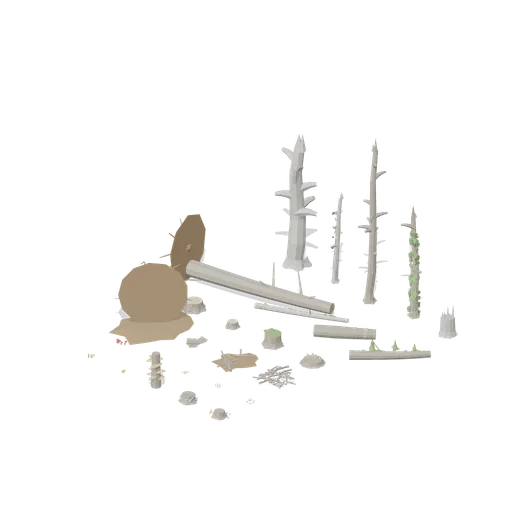
Deadwood and fungi study (Forest Trees and Woodland Plants)
Every decay stage and fungus design laid out in four rows on a 14 m plot for close inspection: standing snags, fallen and hollow timber, cut stumps, and ten fungus groups. 27 instances of 27 canonical designs.
Similar packs
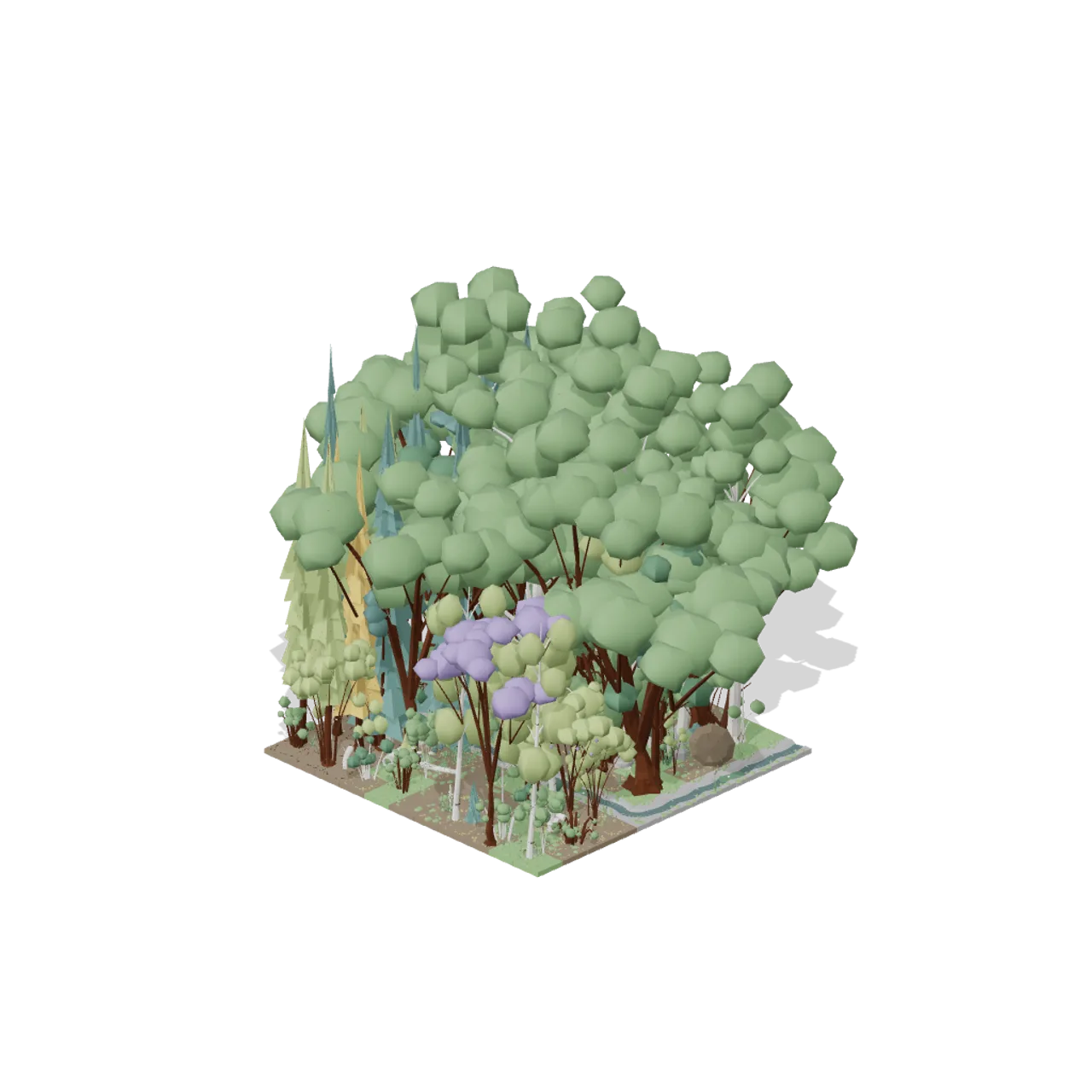 125 models
Dense Temperate Forest Flora
Free low poly trees, bushes, ferns, grasses, fungi, deadwood and forest floor tiles for a thick temperate woodland, with a dense starter scene.
AI used in 125 of 125 files · Claude Fable 5.1
 54 models
Tool Hire Depot and Plant Yard
A modern tool and plant hire depot: a ported trade counter run, racking loaded with the hire fleet, the wash and test bay, and a yard of small plant with a mini excavator, a dumper, a forklift and a lighting tower, all animated and on one 3 m grid.
AI used in 54 of 54 files · Claude Opus 5
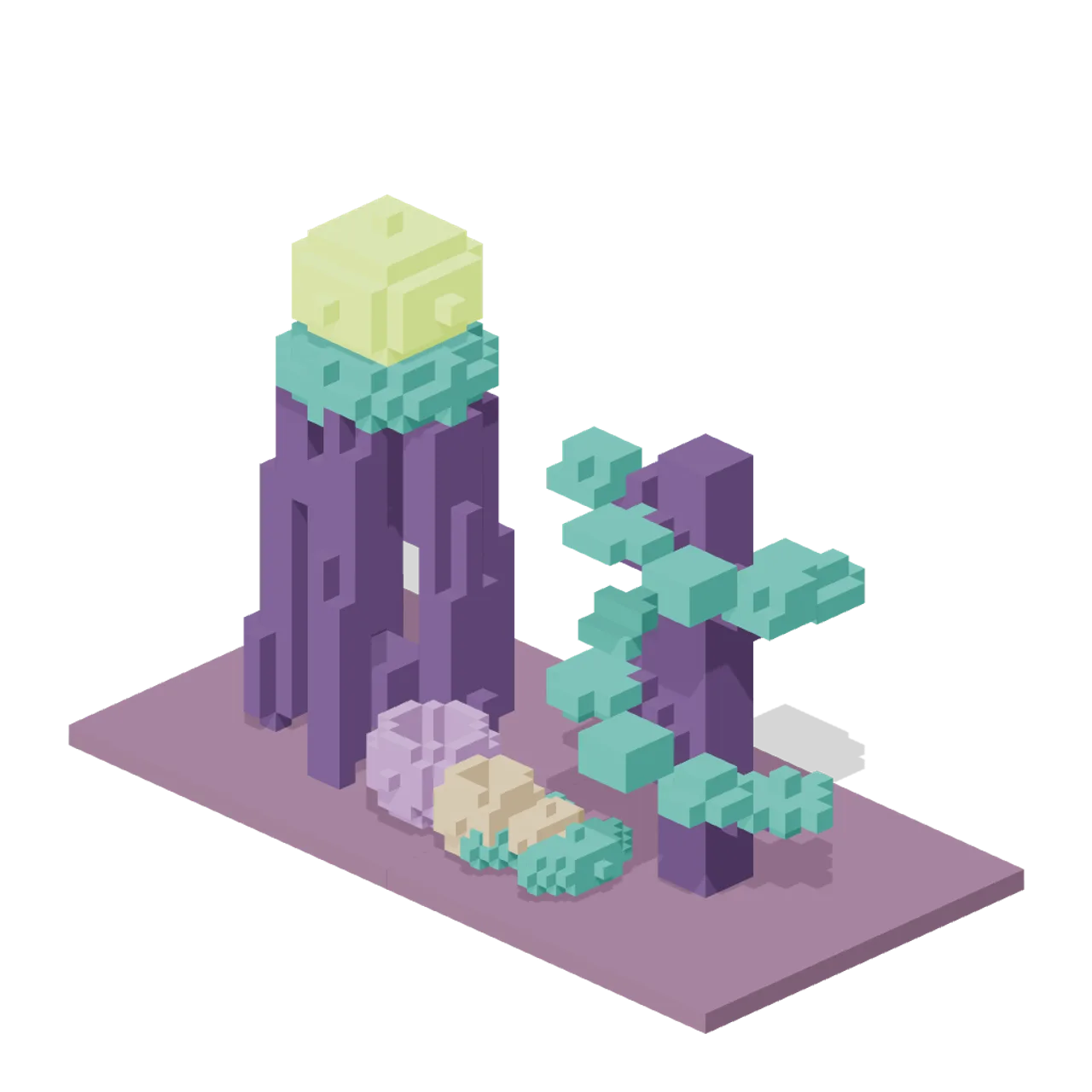 164 models
Alien Planet Plants and Terrain
Original voxel flora, minerals, terrain and strange biological habitats.
AI used in 164 of 164 files · Claude Fable 5.1
 70 models
Tropical Island and Palm Trees
Sculpted island palms, coastal trees, beach ecology and volcanic shores.
AI used in 70 of 70 files · GPT-6 via Codex
 56 models
Ore Processing and Haulage Plant
The fixed plant between a mine and a railhead: crushing, a modular conveying system, milling and separation, storage and rail loadout, tailings, water and site services.
AI used in 56 of 56 files · Claude Fable 5.1
 109 models
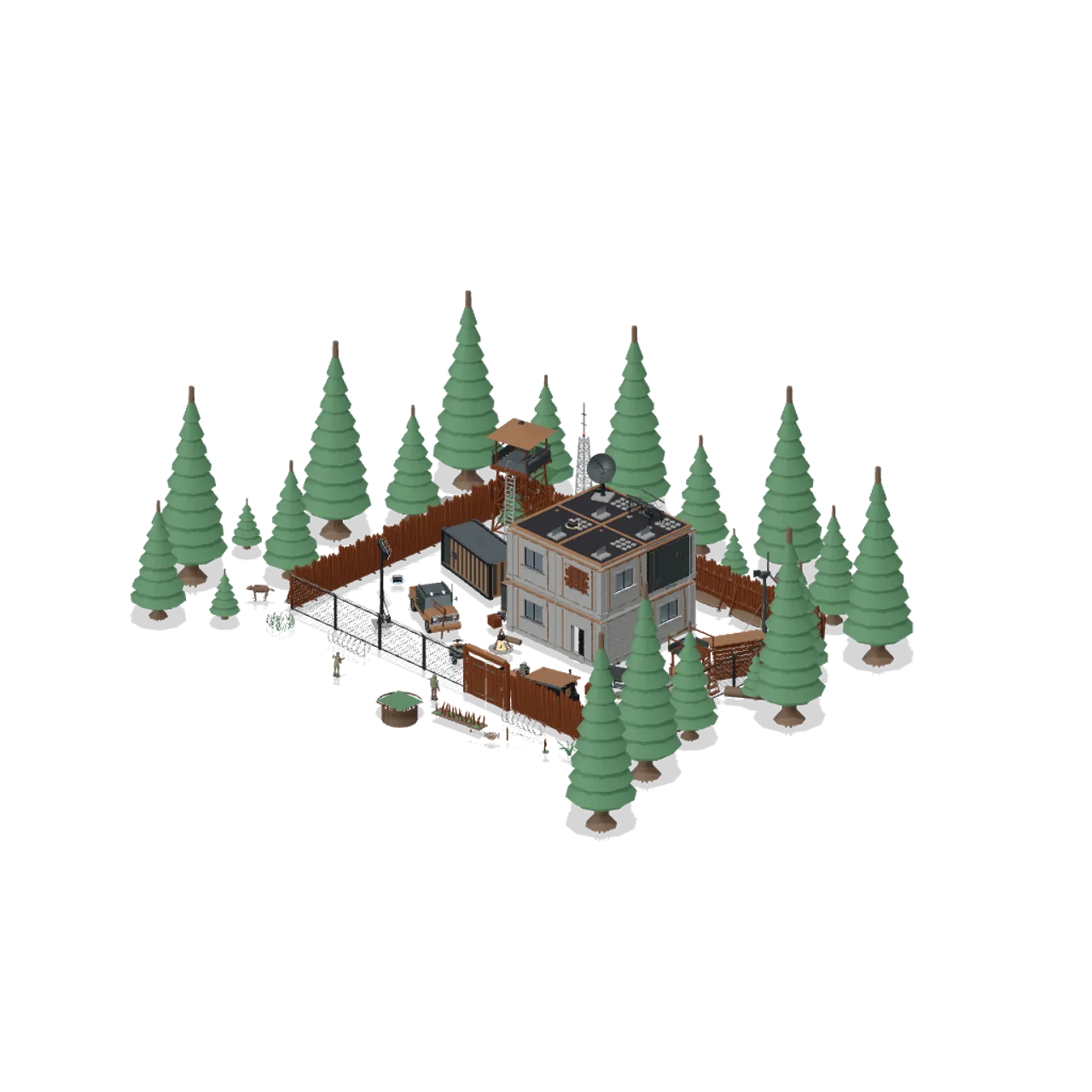
FPS Survival Forest Outpost
Free 3D game assets for a first person survival shooter: a modular forest station kit, crafting and power, a palisade perimeter with traps, five invented weapons on a rarity ladder, vehicles and twelve rigged characters.
AI used in 109 of 109 files · claude-opus-5
 49 models
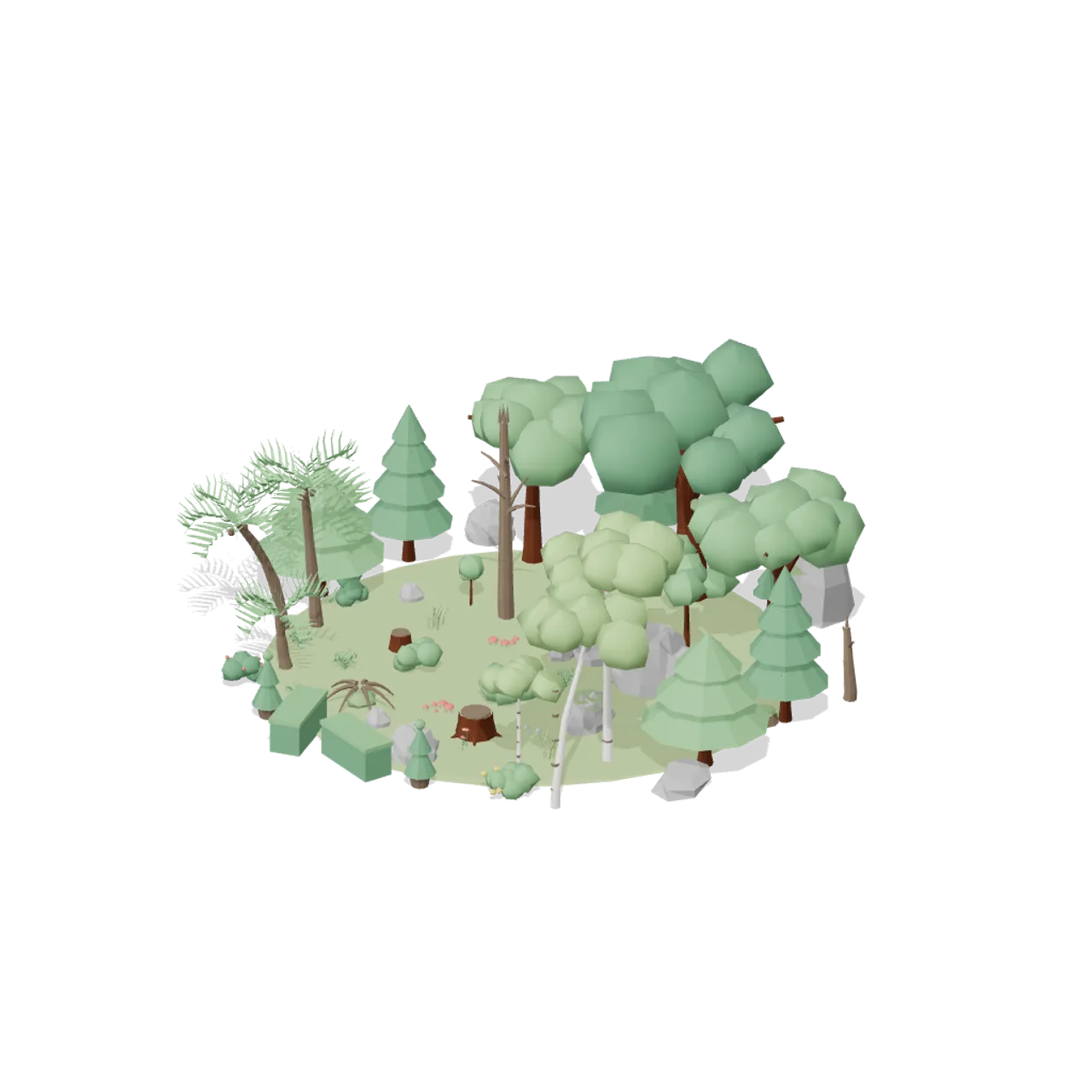
Stylized Trees and Rocks Kit
Free stylized 3D trees, rocks, bushes, grass, ferns and flowers: pines, oaks, birches, palms, boulders and garden props for games.
AI used in 49 of 49 files · Muse Spark via T3 Code
 29 models
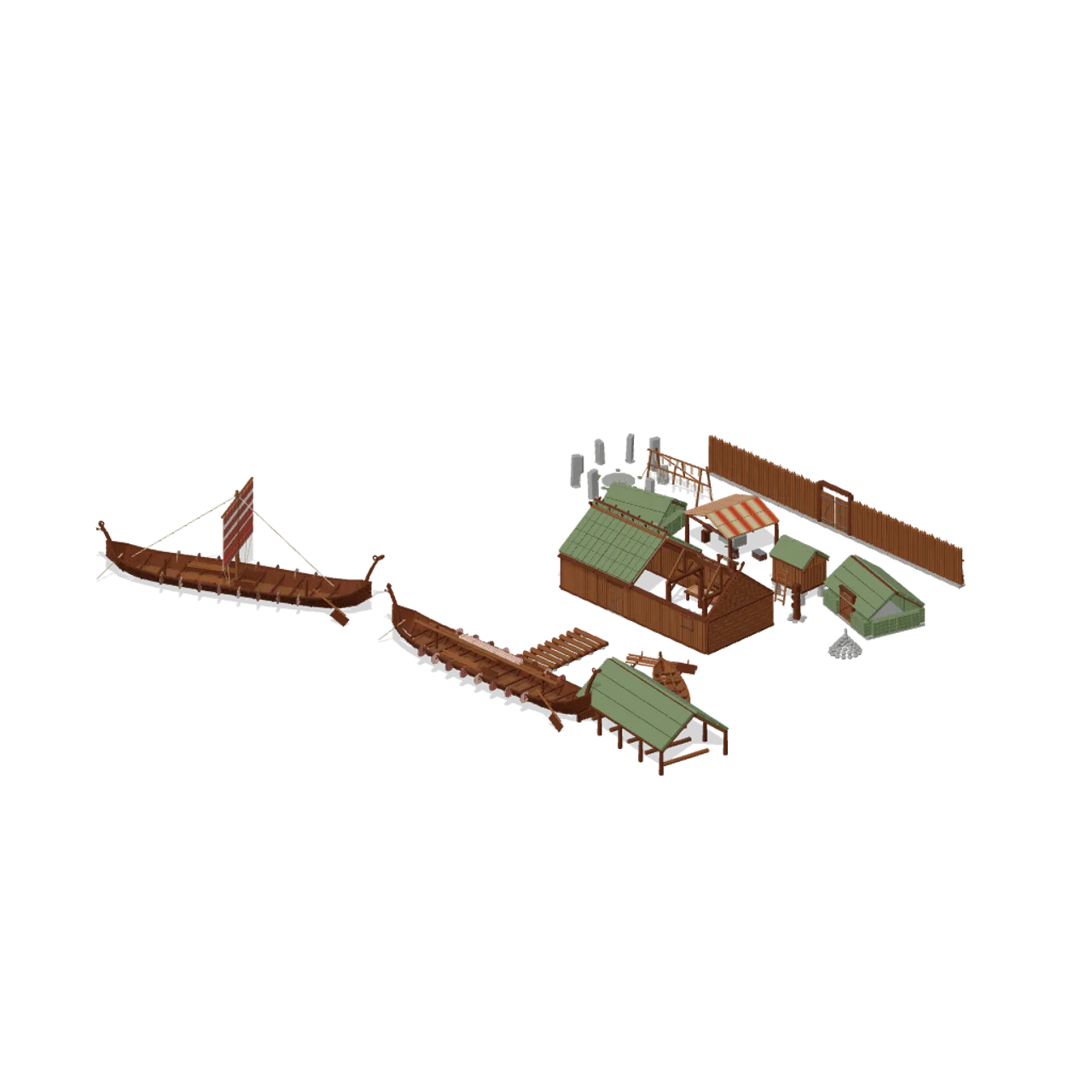
Viking Age Longhouse and Longship
A Norse steading and the ships below it: a 3 m longhouse system that closes into a turf roofed hall, the outbuildings, palisade and standing stones around it, and a longship, a beached longship and a faering on the shore.
AI used in 29 of 29 files · Claude Fable 5.1
 54 models
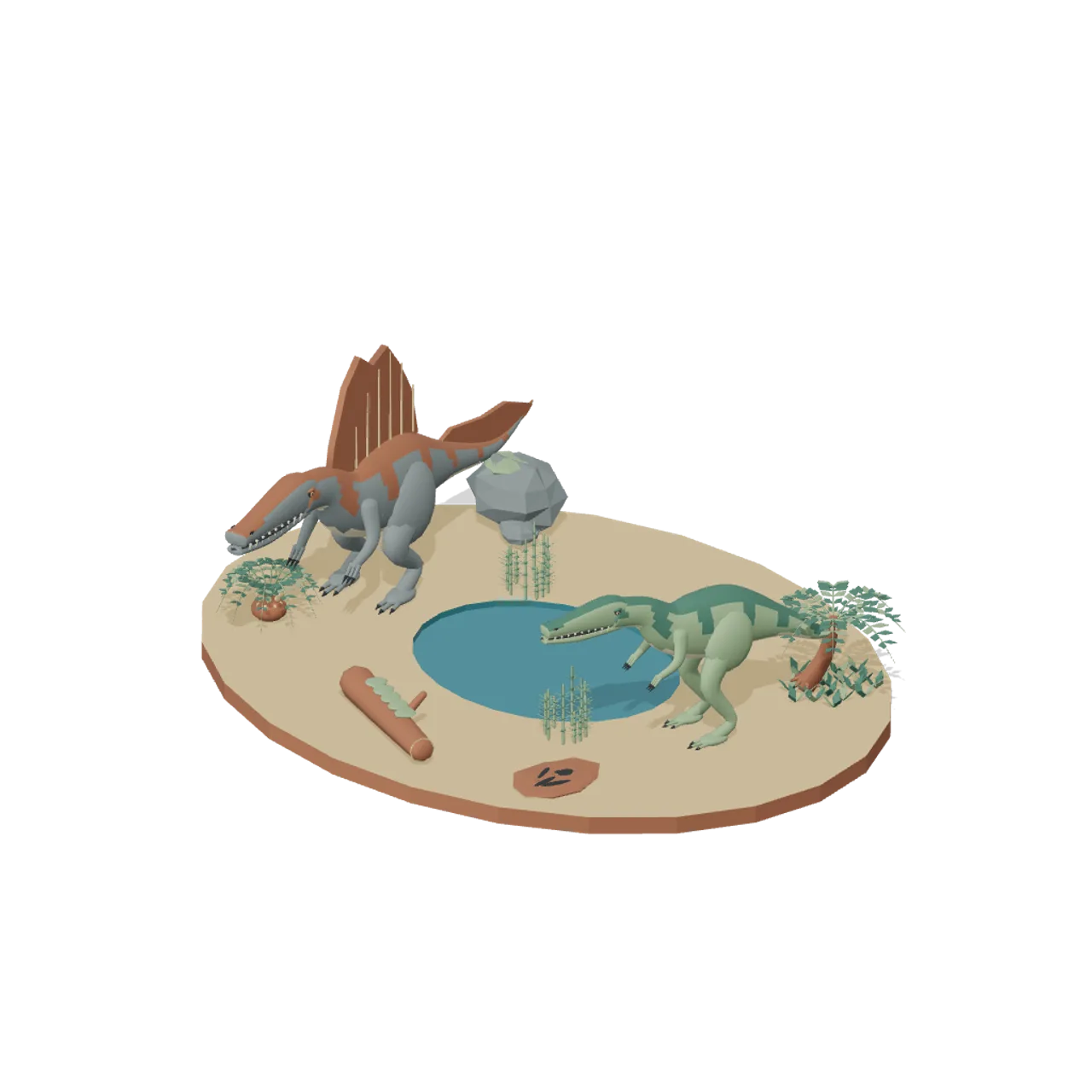
Primeval Frontier — Dinosaur Worlds
Twenty dinosaur species from Tyrannosaurus rex to Diplodocus, thirty habitat assets of tree ferns, cycads, basalt cliffs, nests and eggs, and four composed prehistoric scenes.
AI used in 54 of 54 files · GPT-6 via Codex
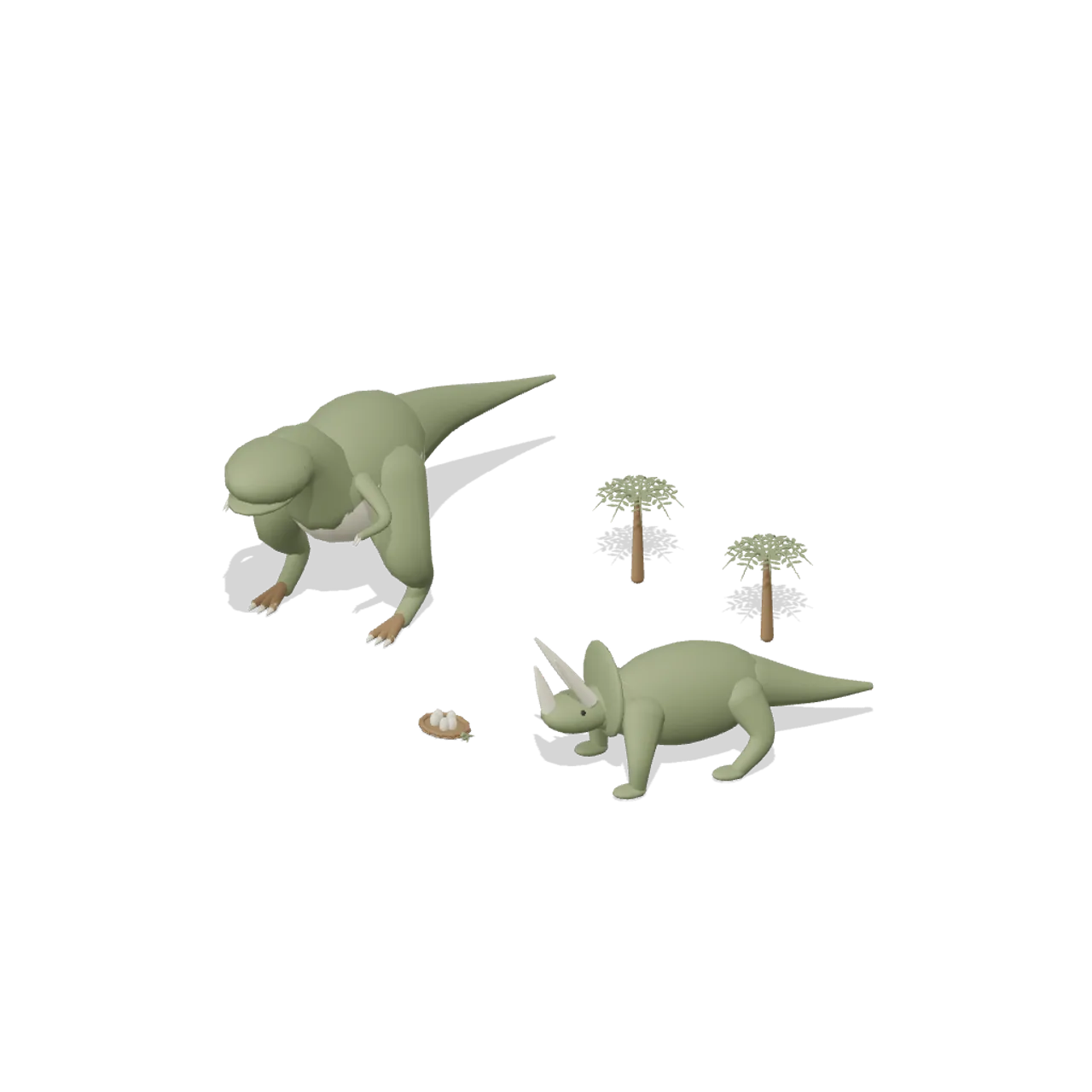 45 models
Dinosaurs and Prehistoric Life
Original dinosaur, prehistoric reptile and Ice Age mammal studies.
AI used in 45 of 45 files · Claude Fable 5.1; GPT-6 via Codex